Venus is one of the most hostile worlds in the solar system. Surface temperatures reach several hundred degrees Celsius, and the planet has no oceans comparable to those on Earth. For many years, scientists considered Venus geologically inactive. More recent findings, however, suggest that the planet is still geologically "alive" and may even contain active volcanoes.
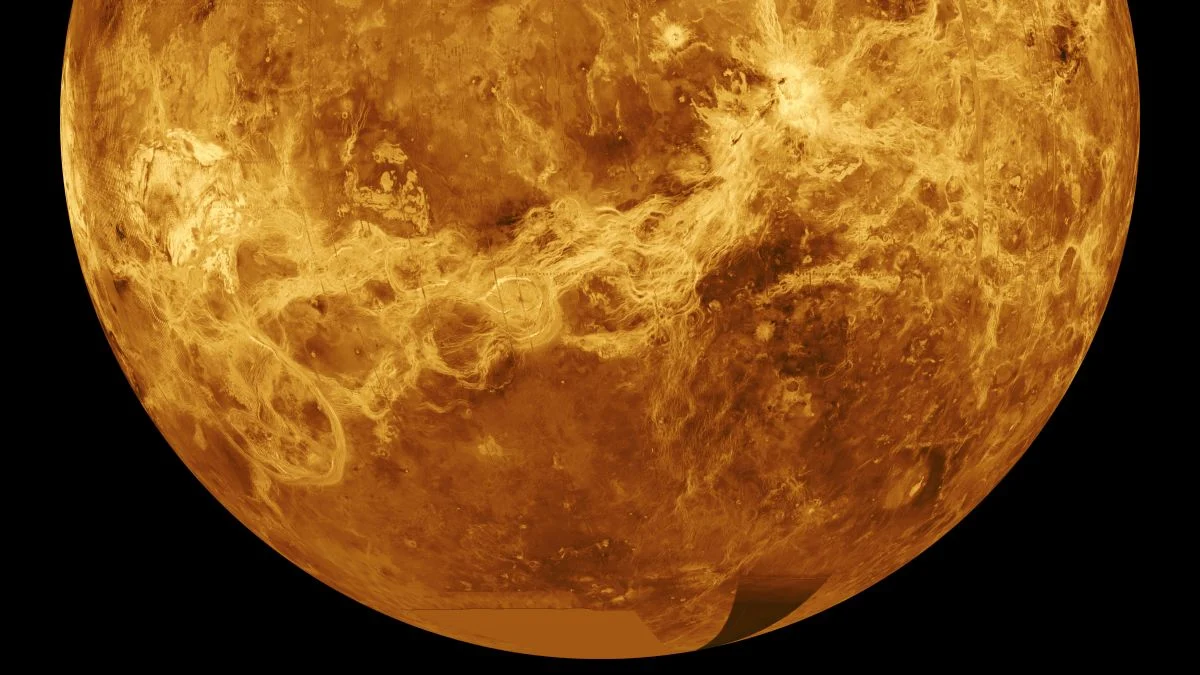
Among the strongest signs of tectonic activity are Venus's enormous rift valleys. Similar formations exist on Earth, including the African Rift Valley, but the Venusian versions can extend for as much as 10,000 kilometers.
Are Venus's Rift Valleys Still Active?
Scientists have not been certain when these vast rifts formed. Many geoscientists have assumed that they developed more than 100 million years ago and are simply ancient features preserved on the planet's surface.
A new study from ETH challenges that view. Researchers led by Taras Gerya, Professor of Geodynamics at the Department of Earth and Planetary Sciences, used an advanced computer model to show that some of Venus's rift valleys may be much younger than previously believed. Their work also offers new evidence in the long-running debate over whether Venus remains geologically active.