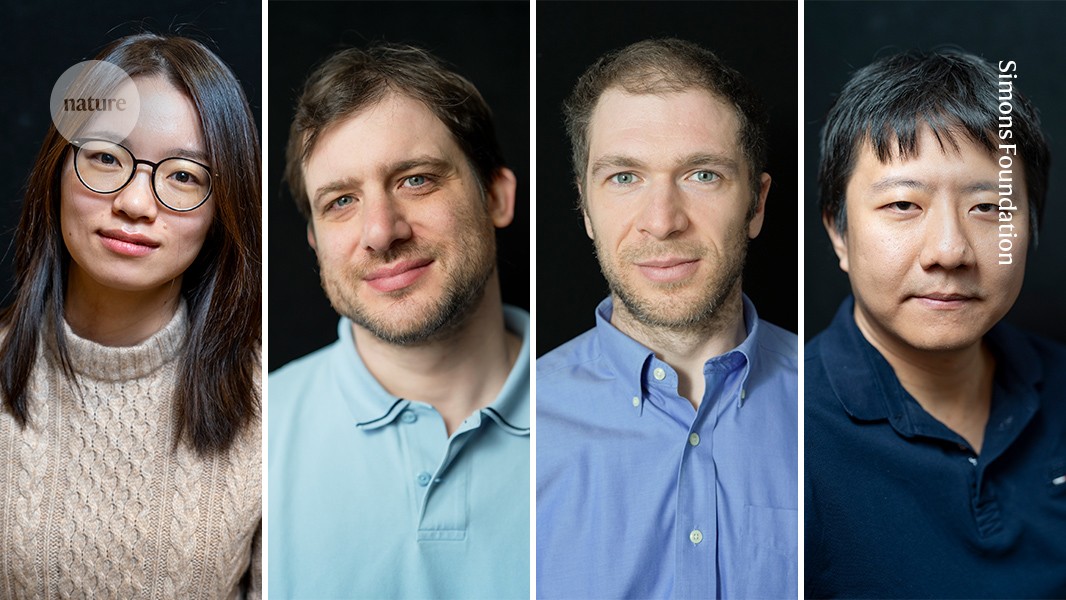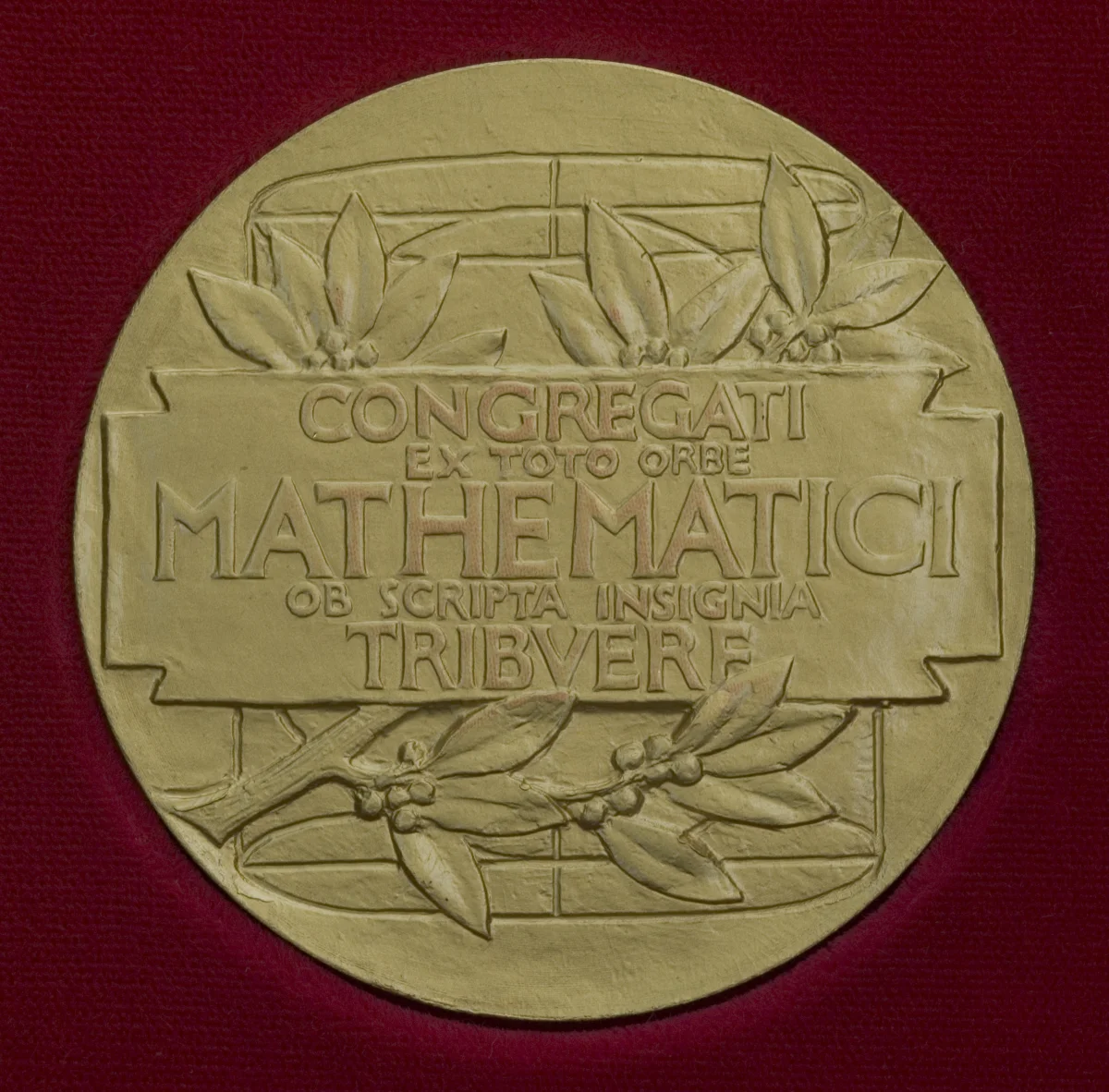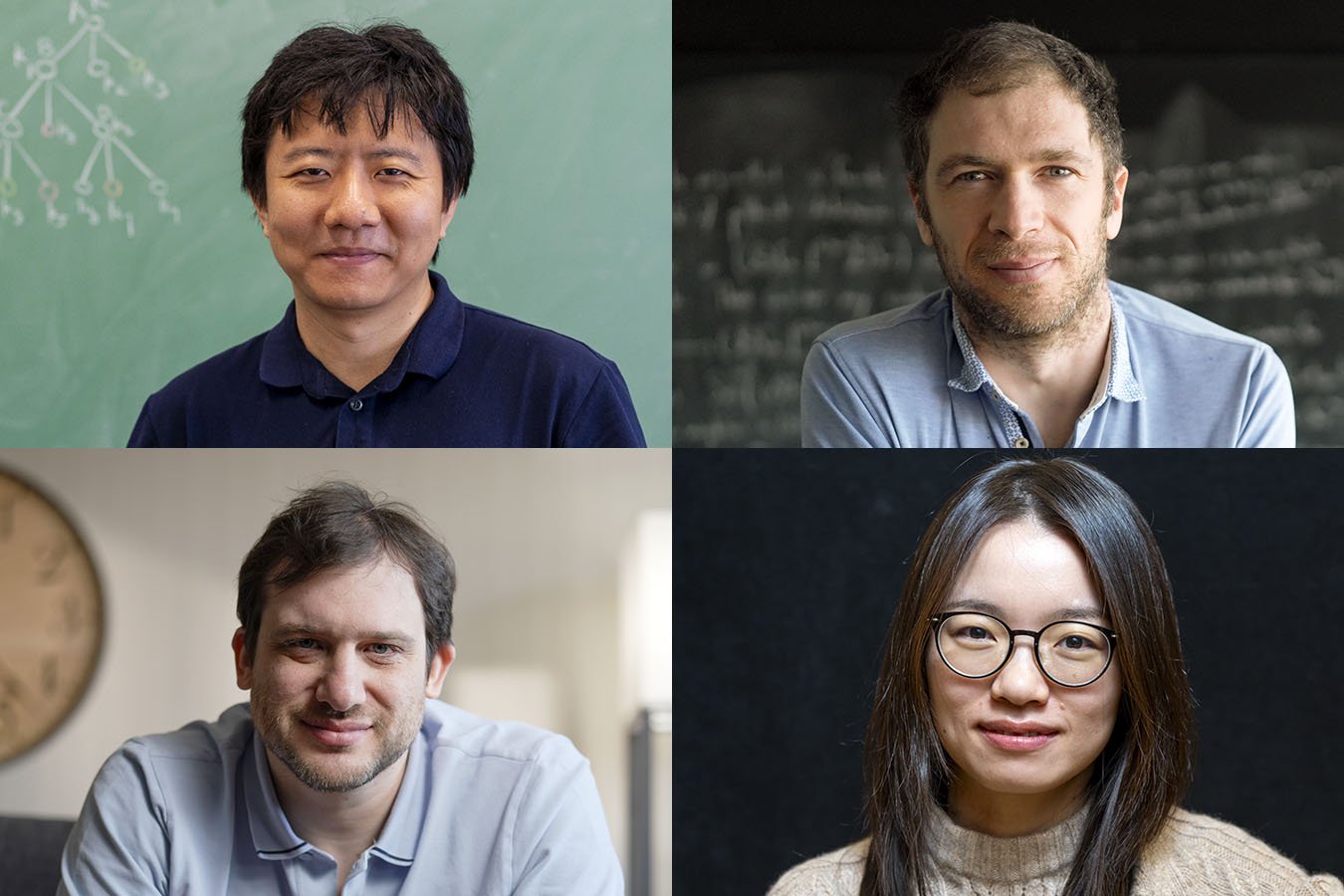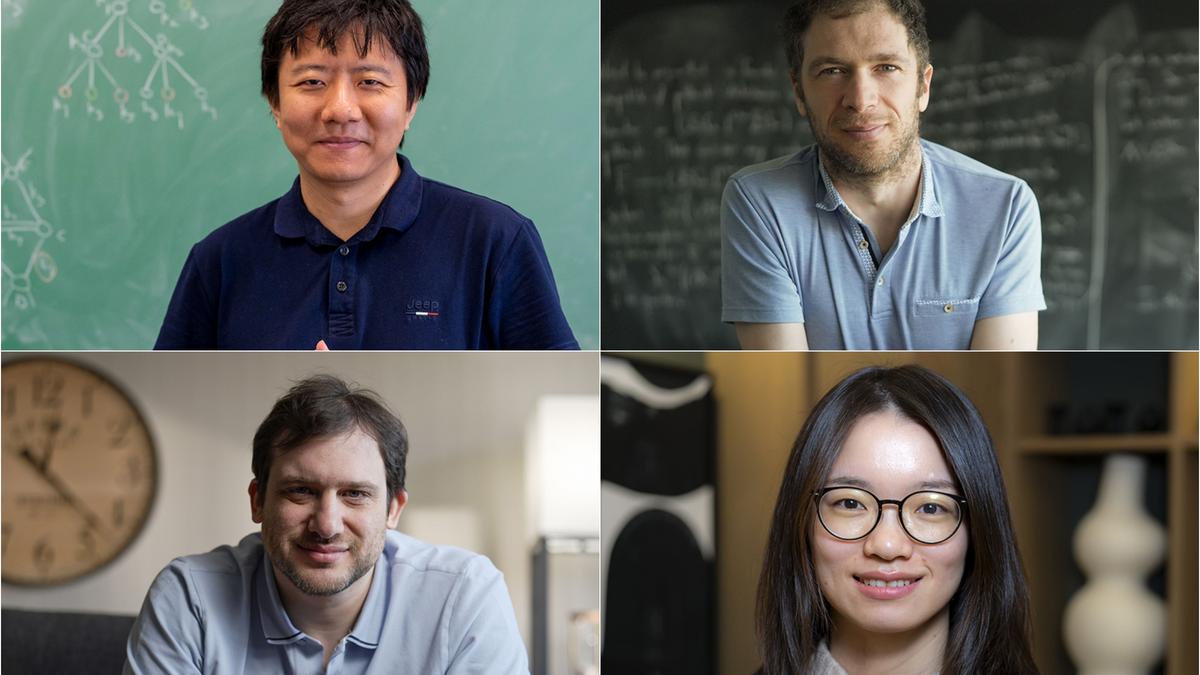
Four young mathematicians have been honored with a Fields Medal, the top recognition in the field.gettyThe four winners of the 2026 Fields Medal, often considered to be the equivalent of the Nobel Prize in the field of mathematics, have been named by the International Mathematical Union (IMU).The medals were awarded at the opening ceremony of the International Congress of Mathematicians held in Philadelphia, Pennsylvania on July 23.The Fields Medal is awarded every four years to two to four mathematicians who are younger than the age of 40. The medal recognizes outstanding mathematical achievement in existing work and the promise of future achievement. It is generally considered to be the highest professional recognition for work in mathematics. Each Fields Medalist receives 15,000 Canadian dollars (about $10,600) along with a gold medal bearing the image of the Greek mathematician Archimedes. The medals and cash prizes are funded by a trust established by John Charles Fields, a professor of mathematics at the University of Toronto. For 2026, the prize funds from the University of Toronto are supplemented by additional support from the Fields Institute.“The four medalists exemplify the depth, originality and vitality of contemporary mathematics, and we are delighted to celebrate their achievements at the International Congress of Mathematicians,” said Hiraku Nakajima, president of the IMU, in a statement.The Fields Medal was first awarded in 1936 to Finnish mathematician Lars Ahlfors and American mathematician Jesse Douglas, and it has been awarded every four years since 1950. To date, Fields Medals have been bestowed on only 68 individuals. The 2026 MedalistsThe four medalists, who work in a variety of subfields of mathematics, are: Yu Deng, 37, a professor of mathematics at the University of Chicago, for his contributions toward placing the laws of physics on a rigorous mathematical foundation. His citation credits Deng with combining techniques from partial differential equations, probability, and mathematical physics to achieve a rigorous analysis of complex dynamical systems, clarifying how macroscopic and statistical behavior emerge from microscopic dynamics.Hong Wang, 35, a professor of mathematics at New York University and the Institute for Advanced Scientific Studies in France. Wang is just the third woman to receive a Fields Medal in the history of the award. She is credited with a series of major breakthroughs in the fields of harmonic analysis and geometric measure theory.Jacob Tsimerman, 38, a professor of mathematics at the University of Toronto. Primarily interested in number theory, Tsimerman was recognized for his numerous contributions in extending the concept of o-minimality and combining it with other ideas to solve several major problems in arithmetic and complex algebraic geometry.John Pardon, 37, a professor at the State University of New York at Stony Brook (Stony Brook University) Simons Center for Geometry and Physics and Department of Mathematics. Pardon, whose work is concentrated in the neighboring fields of geometry and topology, was recognized as "a mathematician of extraordinary depth and originality, who has repeatedly had a significant impact on the fields of topology and symplectic geometry. He has both contributed to fundamental structure and solved problems that had stymied the community for decades.”
The 2026 Fields Medals Are Awarded To Four Young Mathematicians
The four winners of the 2026 Fields Medal, regarded as the equal of the Nobel Prize for mathematics, have been named. The medals are awarded to scholars younger than 40.
512 words~2 min read