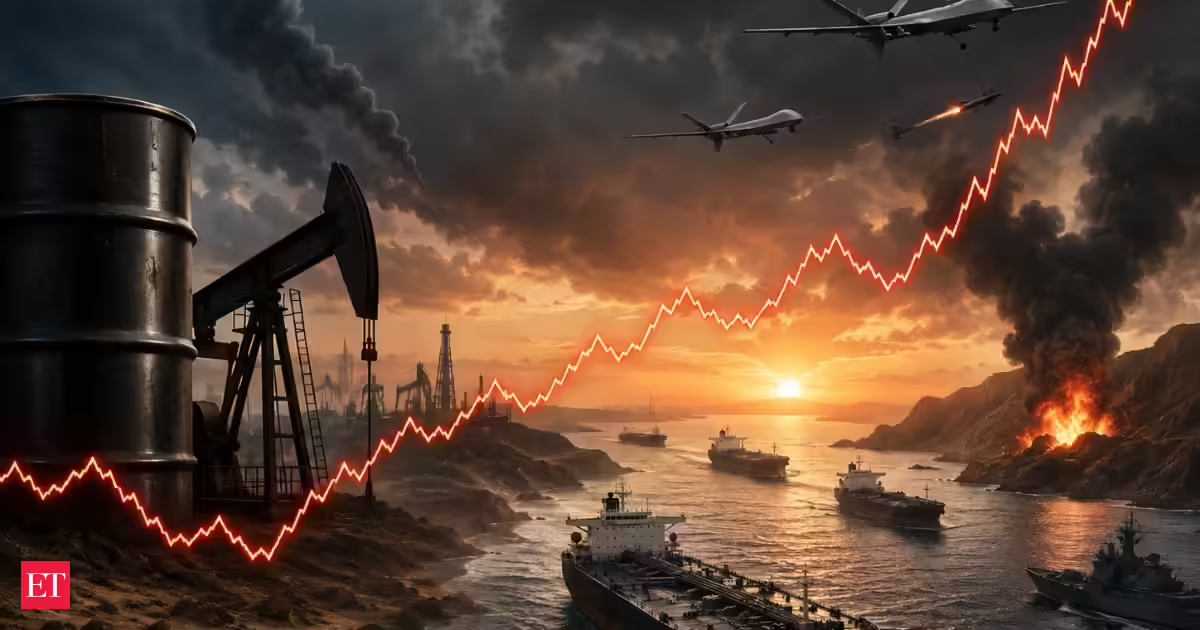
Live updates: Follow the latest news on US-Iran warThere could be a significant impact on the global economy if oil prices stay above $100 per barrel for an extended period, with inflation rising, and food and transport becoming costlier, analysts have said.The escalating US-Iran war, the effective closure of the Strait of Hormuz and the threat of the Houthis patrolling the Red Sea are combining to influence the rising oil price.“If prices remain above $100 for an extended period, the consequences for the global economy could be significant,” Noureldeen Al Hammoury, chief market strategist at Equiti Group, told The National.“Higher energy costs would gradually feed into transportation, manufacturing and food prices, slowing the recent progress on inflation and increasing the likelihood that major central banks keep interest rates higher for longer.”US consumer inflation slowed more than expected in June, as energy prices retreated following a temporary ceasefire between the US and Iran. However, the recent flare-up is reigniting fears of higher inflation and a slowdown in the global economy.The US Federal Reserve held interest rates steady last month, but officials signalled their next move may be a rate increase as inflation fears take hold.Oil prices pared gains on Friday and were headed for a weekly gain as attacks by Houthi rebels on tankers in the Red Sea sparked concerns that the Bab Al Mandeb strait would close.Brent, the benchmark for more than two thirds of global oil, eased 3.39 per cent to $97.28 a barrel at 1.14pm UAE time. The US gauge, West Texas Intermediate, fell 3.06 per cent to $89.37 a barrel.Brent surged 7 per cent on Thursday to a two-month high of $102 per barrel amid supply disruption concerns, as Houthi rebels launched attacks on ships in the Red Sea. The Yemen-based militant group announced a “maritime embargo” against Saudi Arabia and has been attacking ships carrying Opec members' crude.US President Donald Trump warned that “major military punishment” would be inflicted on Iran and the Houthis if the attacks continue.Mr Al Hammoury said financial markets, which have remained “remarkably resilient, largely supported by optimism surrounding artificial intelligence and strong corporate earnings”, are also expected to be affected.“If oil remains above $100 while economic activity begins to slow, markets could quickly shift their focus back to macroeconomic fundamentals, increasing the risk of a broader repricing across global assets,” he said. Geopolitical developments will play a key role in determining how long oil prices stay above $100 per barrel, he added.Play02:10Manus on Markets: Escalating regional tensions push oil above $100“If tensions ease, the geopolitical risk premium could unwind relatively quickly. However, any further escalation involving regional energy infrastructure or major shipping routes could keep prices elevated for an extended period.”Goldman Sachs this week predicted that Brent would rally to more than $120 a barrel by the fourth quarter if disruptions in the Strait of Hormuz persist. Oil prices traded close to $120 per barrel in March following US attacks on Iranian military sites. “With both Hormuz and the Red Sea now exposed to disruption, the market is increasingly pricing a broader logistic-driven supply shock, keeping the Brent vulnerable to sustained trading above $100 per barrel if hostilities persist,” said Soojin Kim, a research analyst at MUFG.
Oil above $100 per barrel could reignite inflation fears | The National
Geopolitical developments crucial in determining how long prices remain high, analysts say
536 words~2 min read