view more
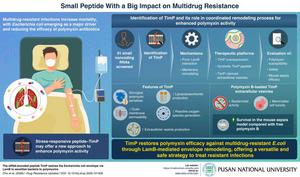
Antimicrobial resistance is one of the world's most alarming public health challenges, because the multidrug-resistant (MDR) gram-negative bacteria increasingly render even last-line antibiotics ineffective, leading to substantially higher mortality rates. Polymyxins are a class of antibiotics that remain among the few treatment options available for severe infections caused by resistant Escherichia coli. But their widespread use is limited by serious side effects, including kidney and nerve toxicity.
Driven by this gap, researchers have now developed an innovative strategy that makes bacteria more susceptible to these antibiotics, potentially allowing doctors to use lower, safer doses without sacrificing effectiveness. This transformative approach shifts the focus from antibiotic-centric to bacteria-control-centric therapy rendering bacteria more susceptible to the antibiotics by facilitating membrane gateways that enhance antibiotic uptake.
The research team was led by Professor Kwang-sun Kim from the Department of Chemistry and Chemistry Institute for Functional Materials, Pusan National University, Republic of Korea. This study was made available online on April 22, 2026, and was published in Volume 87 of the journal Drug Resistance Updates on July 01, 2026.