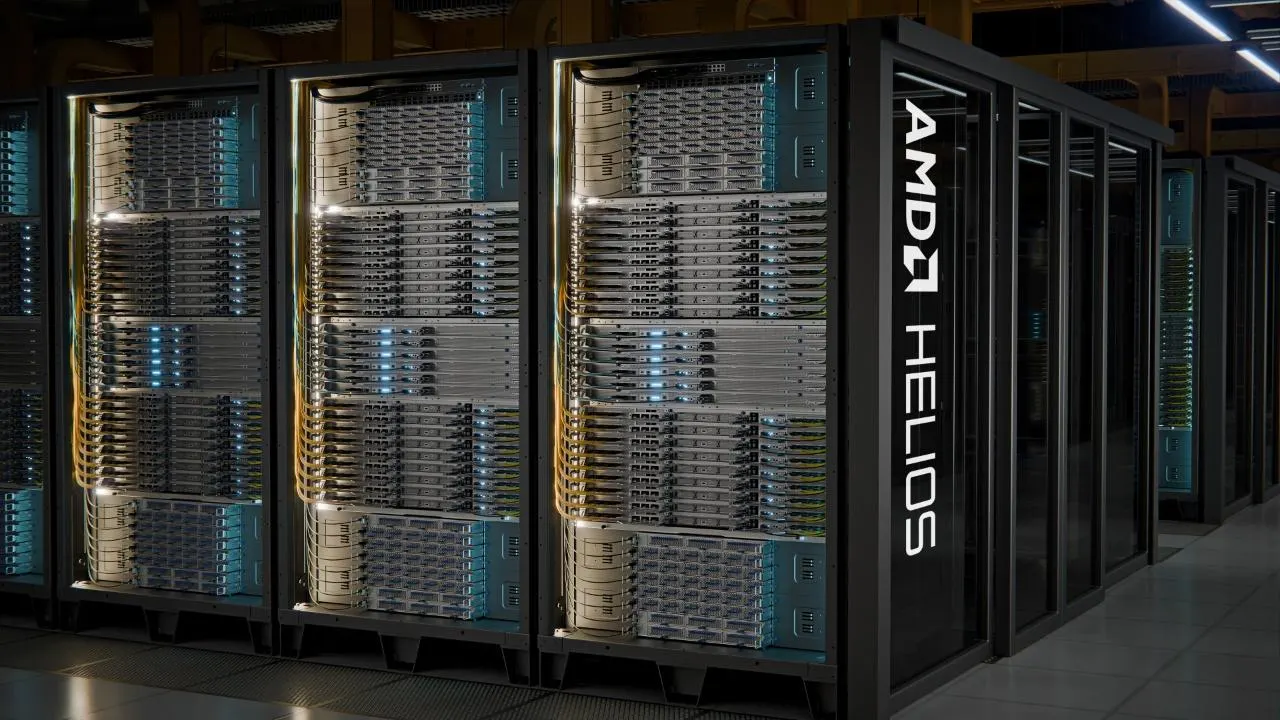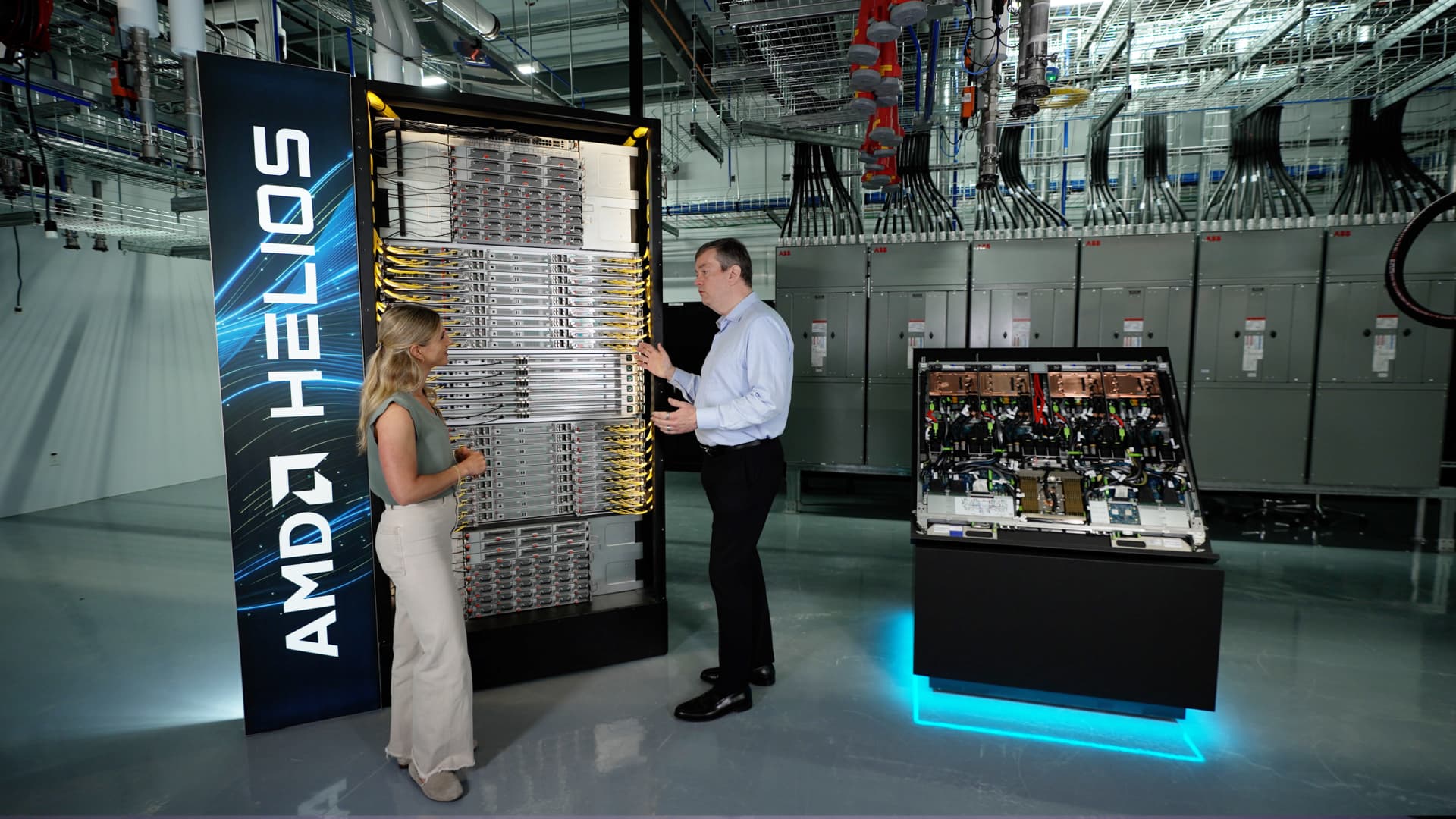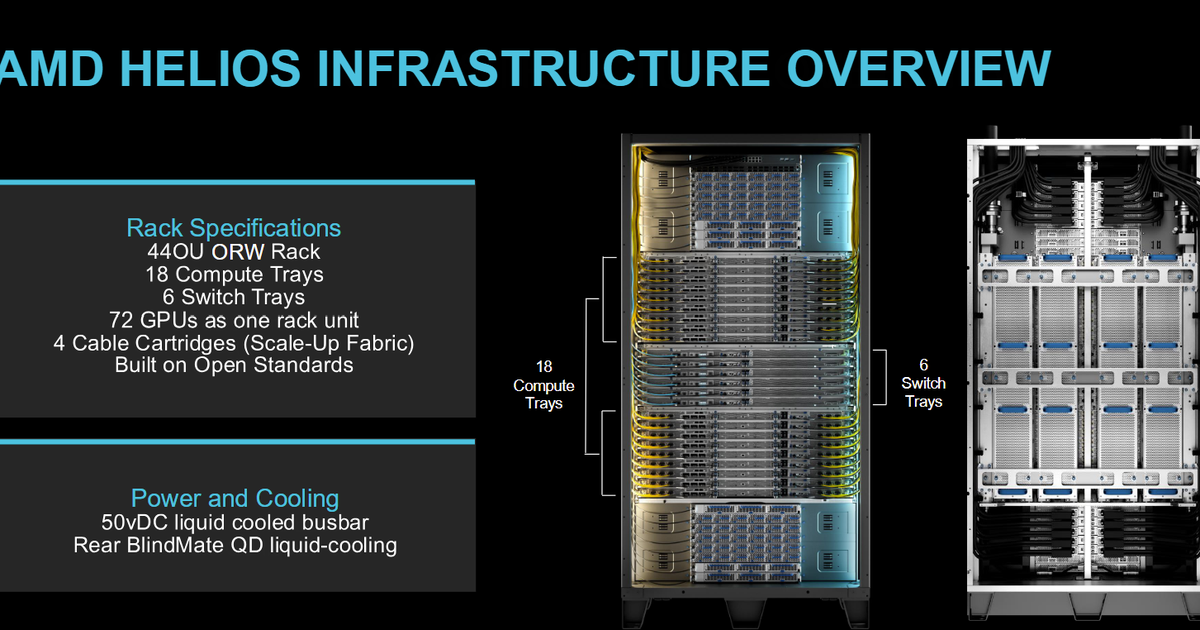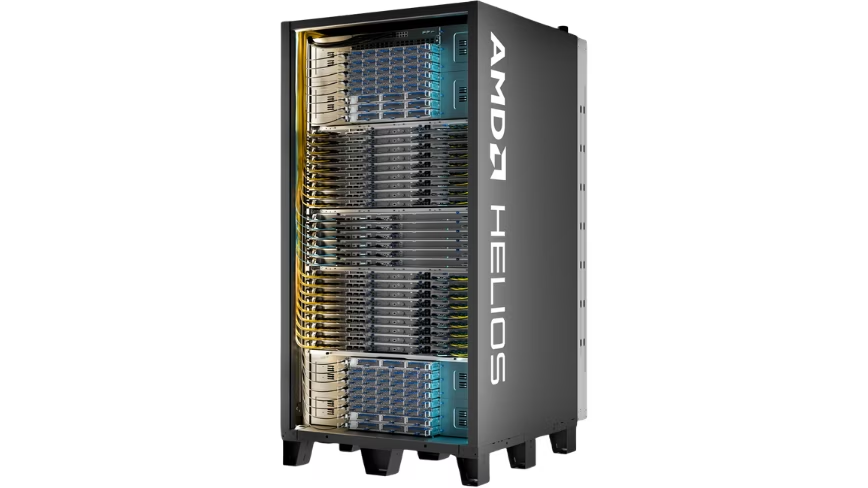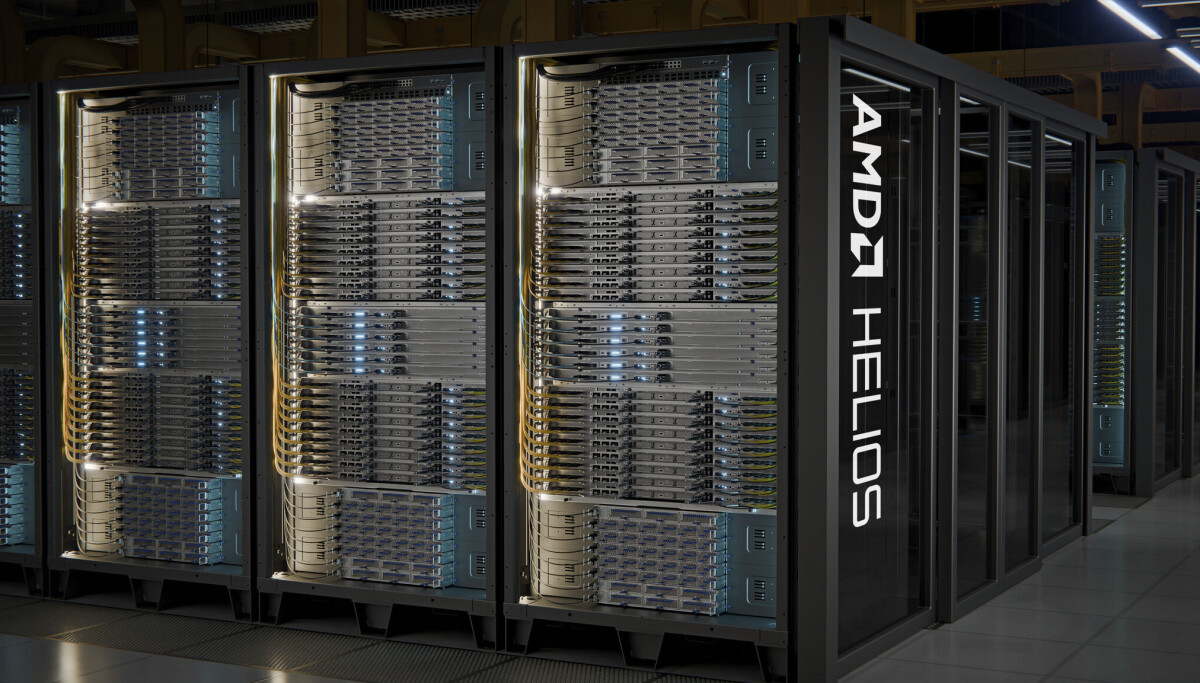
Could Nvidia's days of datacenter dominance be threatened? With the launch of Helios, AMD’s first true rack-scale AI platform, the House of Zen is done playing catch up.The company claims the rack system is powered by the fastest AI accelerators on the market. And, at least on paper, the 72-GPU system is not only bigger and faster by nearly every metric than Nvidia’s existing Blackwell-based rack systems but Vera Rubin as well, and that includes the rack.Measuring in at 1.2 meters wide and 44OUs high, the OCP Open Rack Wide form factor is nearly twice the size of Nvidia's NVL72, and AMD has clearly put the extra space to good use.
Compared to Vera Rubin, Helios boasts 50 percent more HBM4 and scale out bandwidth and between 15 and 25 percent higher performance for AI training.
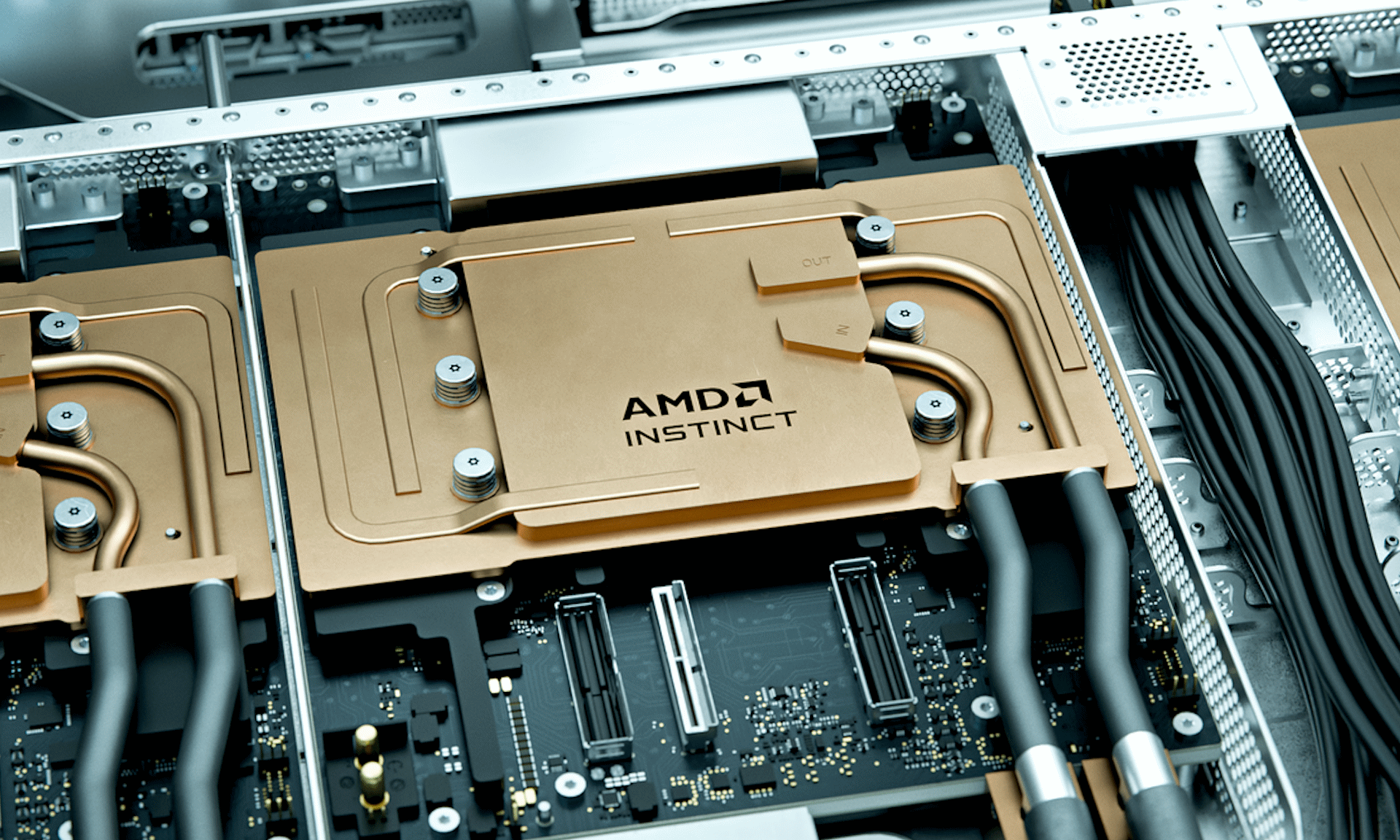
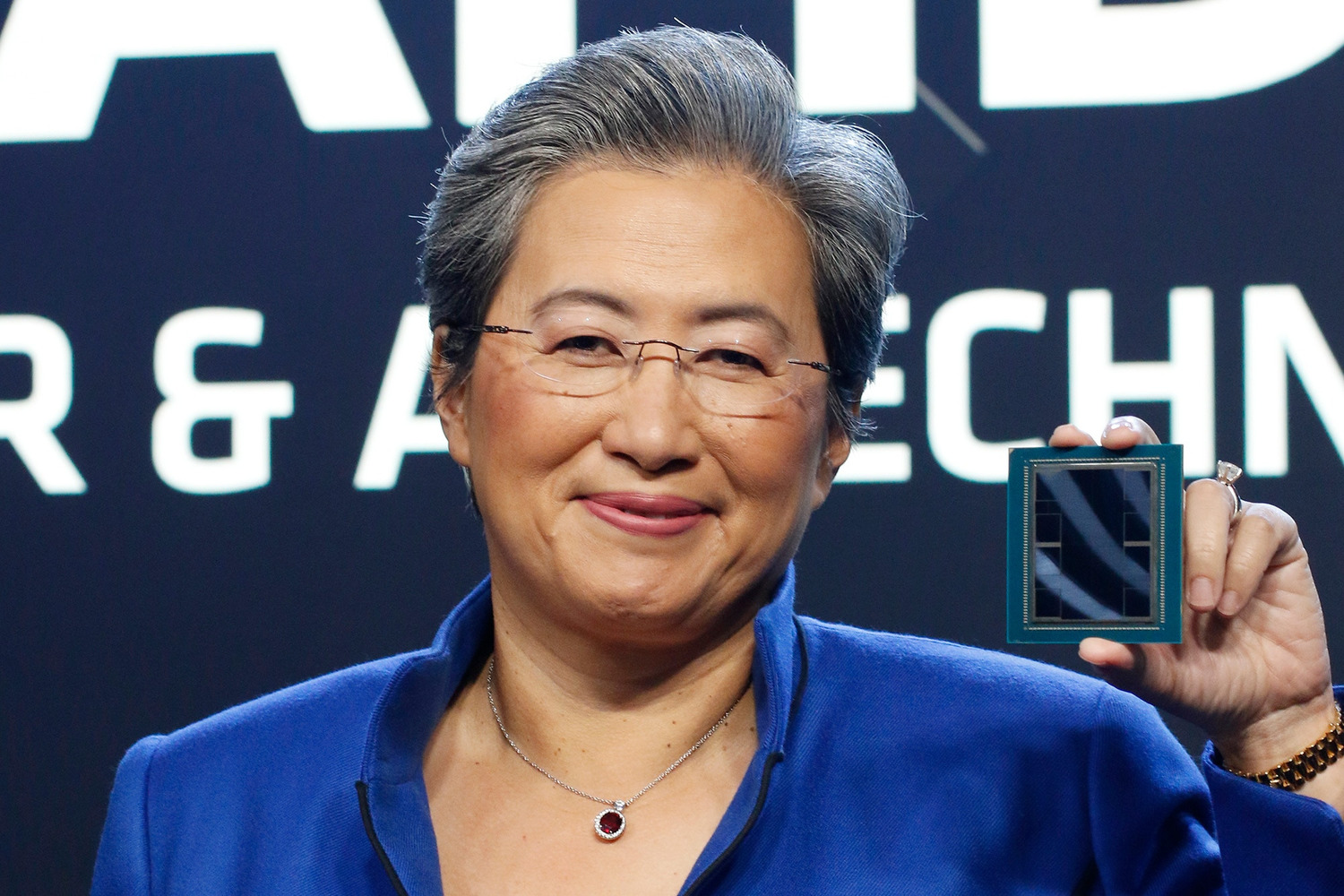
Vera Rubin’s adaptive compression tech will supposedly give it a 25 percent lead over Helios at FP4, but, as we understand it, that’s only for inference workloads. For applications that can’t, Helios offers 15 percent higher peak FP4 FLOPS.To be clear, it’s not the first time we’ve seen AMD pull ahead on memory or FLOPS. The difference is those products usually launched a year after Nvidia’s equivalent part. Helios launches right in time with Nvidia’s Vera Rubin platform.AMD estimates Helios' higher peak performance will give it a 30 percent performance per dollar lead over the competition.The belly of the beastHelios' performance gains are rooted in an all-new GPU built on AMD’s 5th-gen CDNA compute architecture.Much like the rack it powers, the Instinct MI455X is massive, though the chip is underselling it a bit. Just like the MI300 series, AMD’s latest datacenter GPU is a silicon sandwich that stitches together I/O, compute, and memory in a single package.