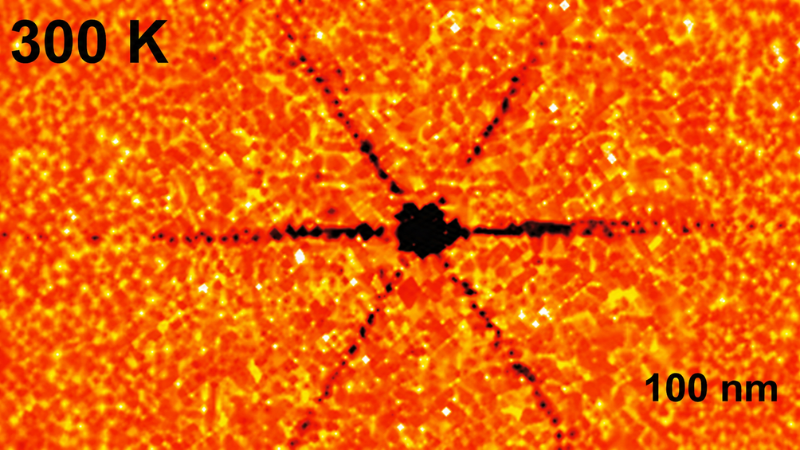
Efficient heat management in solids is key to advancing the next generation of electronics. However, wavelike heat movement — known as phonon focusing — had only been observed at extremely low, or cryogenic, temperatures, limiting its study and practical use.
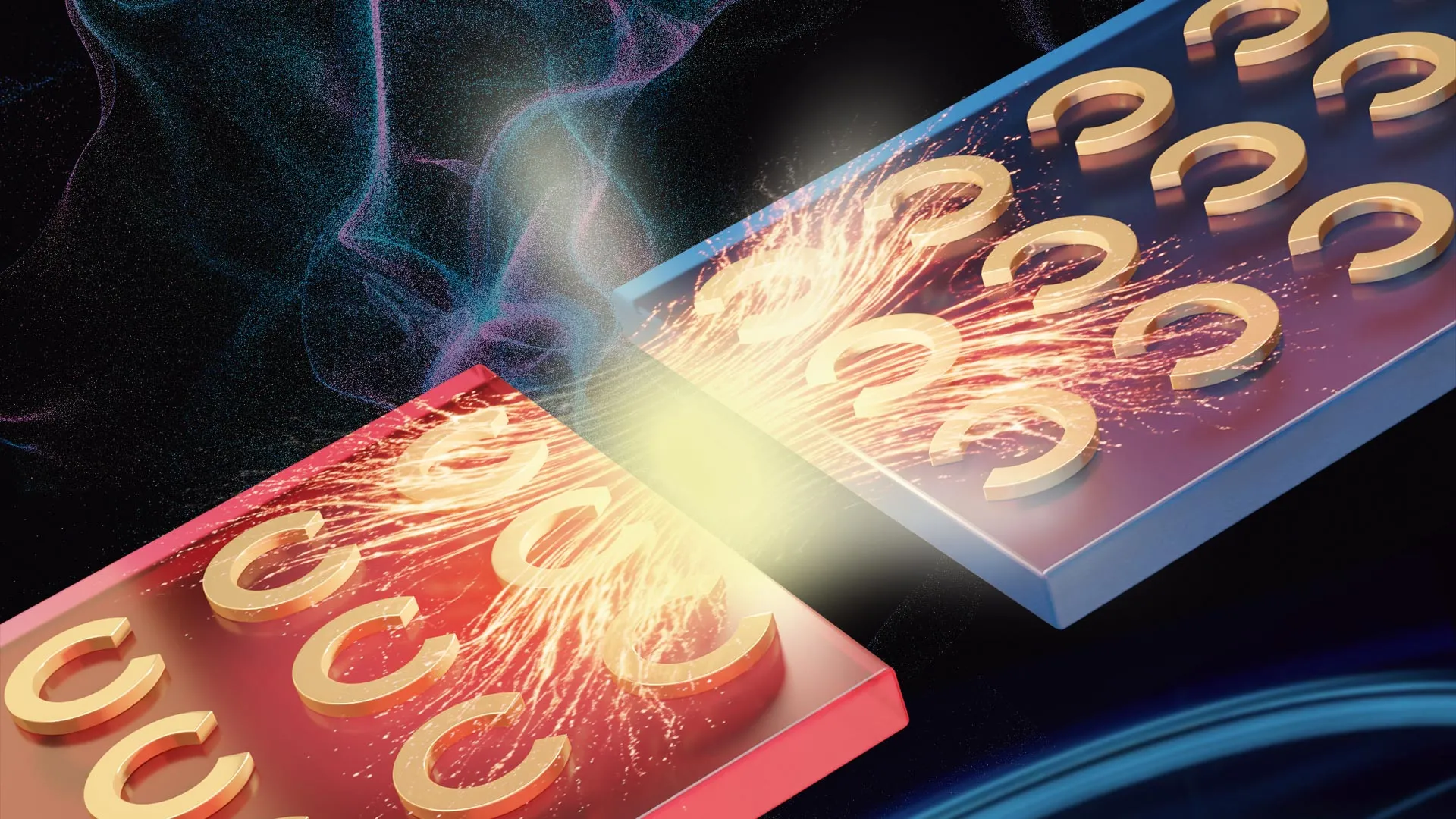
Now, researchers at the UCLA Samueli School of Engineering have demonstrated that phonons, atomic heat-carrying vibrations with quantum properties, can travel in focused, ray-like paths at room temperature. Instead of spreading uniformly in all directions, heat can move along guided pathways defined by a material’s crystal structure, opening up new possibilities for managing heat flow in future electronics and quantum technologies.
Published today in Nature Physics, the study is led by Yongjie Hu, a professor of mechanical and aerospace engineering at UCLA Samueli. The team demonstrated phonon focusing at room temperature in boron arsenide, a crystalline semiconductor material with high thermal conductivity. Instead of removing heat after it spreads, materials like boron arsenide could enable heat to travel along predetermined routes with nanoscale precision, much like how optical fibers guide light.
To capture the effect, the researchers developed a nanoscale temperature-mapping technique. In conventional materials, the team observed circular heat-spreading patterns, consistent with ordinary diffusive heat conduction. In boron arsenide, however, the researchers saw striking ray-like temperature patterns, demonstrating that heat was being guided along specific crystal directions.