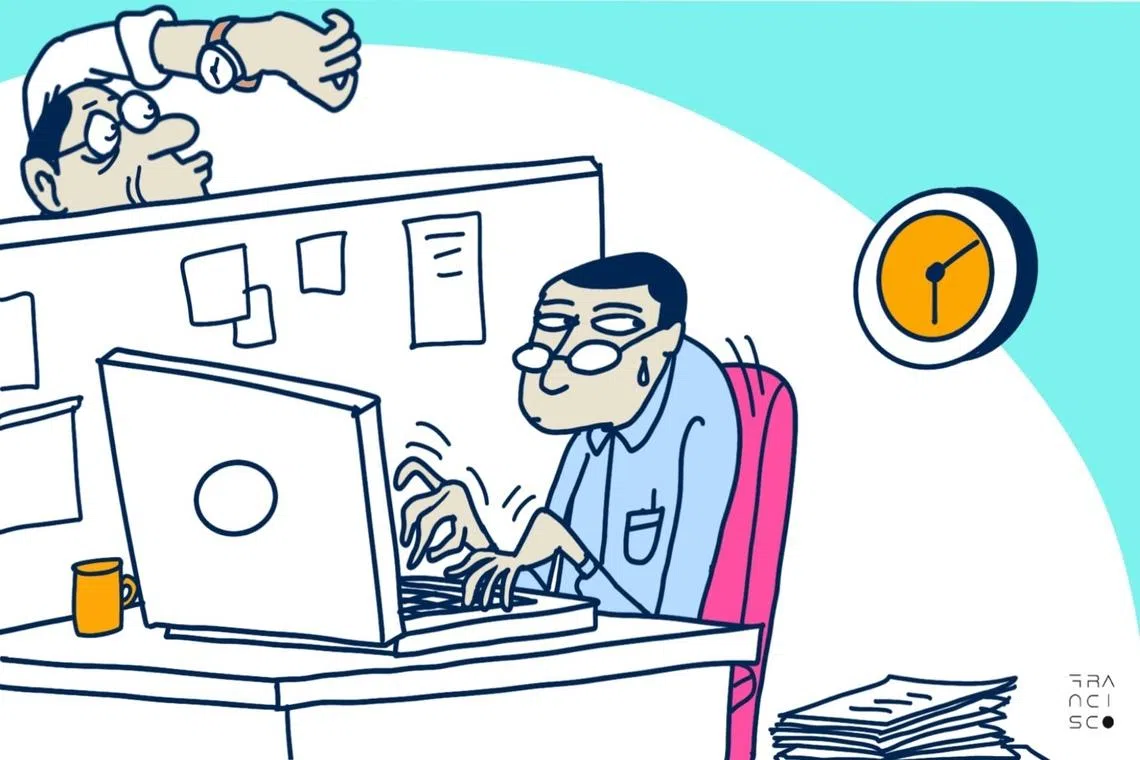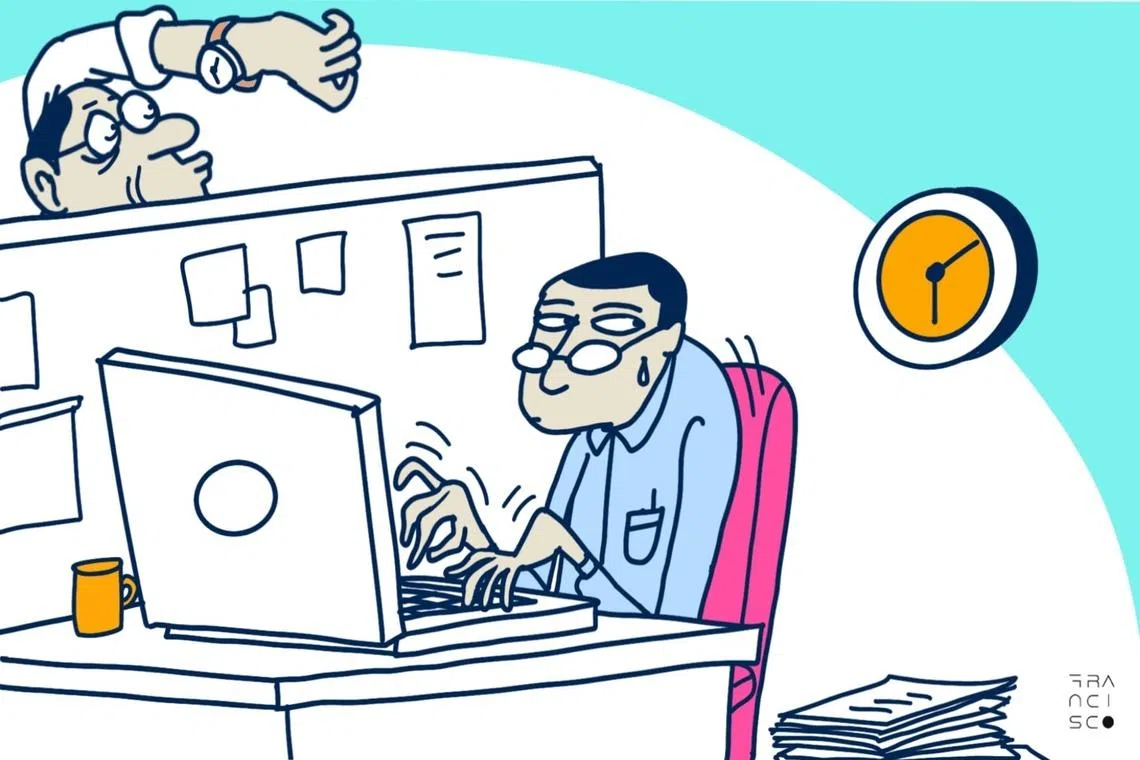
Efficient employees may slow down or appear busy to avoid the productivity performance trap of being rewarded with more work.gettyFinishing work early used to feel like a win. But for a lot of employees today, it feels like a trap. More than half of workers (64%) say they’ve intentionally slowed down their work to avoid finishing too early, according to a 2026 survey of 1,003 full-time U.S. professionals by Software Finder. The reason has less to do with laziness than self-preservation. Completing tasks quickly often signals that an employee has more capacity, and organizations tend to reward those employees with more work rather than more pay, recognition or flexibility. That vicious cycle is called the productivity performance trap. Here's why so many workers are choosing to slow down instead of speeding up, and what they can do about it.Busyness Still Beats ResultsMost workplaces still focus on what's easy to see rather than what's hard to measure. Online status, quick replies, hours logged at a desk, full calendars and frequent status updates all look productive, even when they say little about the actual quality or impact of the work.Research backs up why that dynamic persists. A study published in Human Relations found that performance management practices, including goal setting and close monitoring, can intensify how employees experience their workload. That intensification is linked to more presenteeism, meaning employees working while sick just to keep up appearances. When activity is easier to measure than impact, employees learn to optimize for activity.Finishing Early Comes With A CatchThe pattern isn't confined to one office or one industry. A systematic review published in the journal Work screened 2,823 records and analyzed 74 quantitative studies on what researchers call work intensification. It found consistent links between heavier workloads, long hours, time pressure and negative outcomes for employees.The research doesn't claim every efficient employee ends up buried in extra assignments. Instead, it documents that escalating workloads and compressed expectations are a well-studied workplace problem, not just an individual complaint.Here's how the cycle tends to play out. An employee finishes a project early. A manager notices the extra bandwidth and assigns more work. That new volume becomes the new normal rather than a one-time exception. The employee rarely sees a raise, a promotion or even acknowledgment to match the added output. Do it well enough, often enough, and the reward for speed becomes more work.Why Employees Learn To Hide Their CapacityThe 64% of workers who admitted to slowing down on purpose don’t underestimate their ability. They've learned something about what happens when that ability becomes visible.Once an employee understands that finishing quickly leads to more work rather than more reward, hiding capacity starts to look like the smarter move. That shows up in small, deliberate choices like waiting an extra hour to announce a project is done, spacing out status updates instead of sending them all at once, stretching a two-day task into three, declining to volunteer for anything beyond what's assigned or staying visibly occupied even when the real work is finished. The intention is self-preservation rather than dishonesty.Workplace Monitoring Can Make The Problem WorseSurveillance tools were supposed to fix the trust problem. Instead, they're deepening it. Among employees at companies that monitor productivity, 63% said monitoring made them more likely to fake activity, according to the Software Finder survey. Only 3% said it made them less likely.That's a wide gap between what monitoring is meant to do and what it actually does. Once employees know their mouse movement, login time, message responsiveness or screen activity is being tracked, effort shifts toward whatever the software can measure. Real output matters less than performance theater.Monitoring doesn't stop the problem it was built to solve. It just teaches employees to appear busy instead of deliver results.How Employees Can Avoid The Productivity Performance TrapSlowing down is an unsustainable short-term strategy. These steps can help you protect your career instead of waiting for the system to reward you:Make outcomes visible on your own terms: Share what you finished and its impact, not just that you're online and available.Ask what should move before you take on more: When new work lands on your desk, ask your manager what gets deprioritized to make room for it.Clarify how performance is actually evaluated: Find out whether your role rewards outcomes, hours or visibility, then act accordingly.Track what gets added to your plate: Keep a running list of new responsibilities so scope creep is documented, not just felt.Watch for a return on your effort: Recognition, autonomy, compensation or advancement should eventually follow added output. If none of them do, it’s time to ask why.Notice when speed only buys you more volume: If finishing early never changes anything except your workload, it's worth having a conversation with your manager.No single step fixes this issue on its own. Together, they make it harder for valuable work to go unnoticed.The Real Cost Of Looking BusyEmployees hide their capacity because workplaces have taught them that finishing early creates more work, while keeping their head down offers protection. That’s not a flaw in individual employees. It's a flaw in how organizations define productivity. Until performance gets measured by outcomes instead of visibility, employees will keep doing exactly what the system rewards them to do.Join 10,000+ professionals who subscribe to the free Corporate Escape Artist newsletter for practical guidance on layoffs, toxic bosses, job searches, career transitions and AI at work.
How The Productivity Performance Trap Punishes Efficient Employees
A new survey found that 64% of workers slow down to avoid finishing assigned work early. See how the productivity performance trap affects efficient employees.
899 words~4 min read