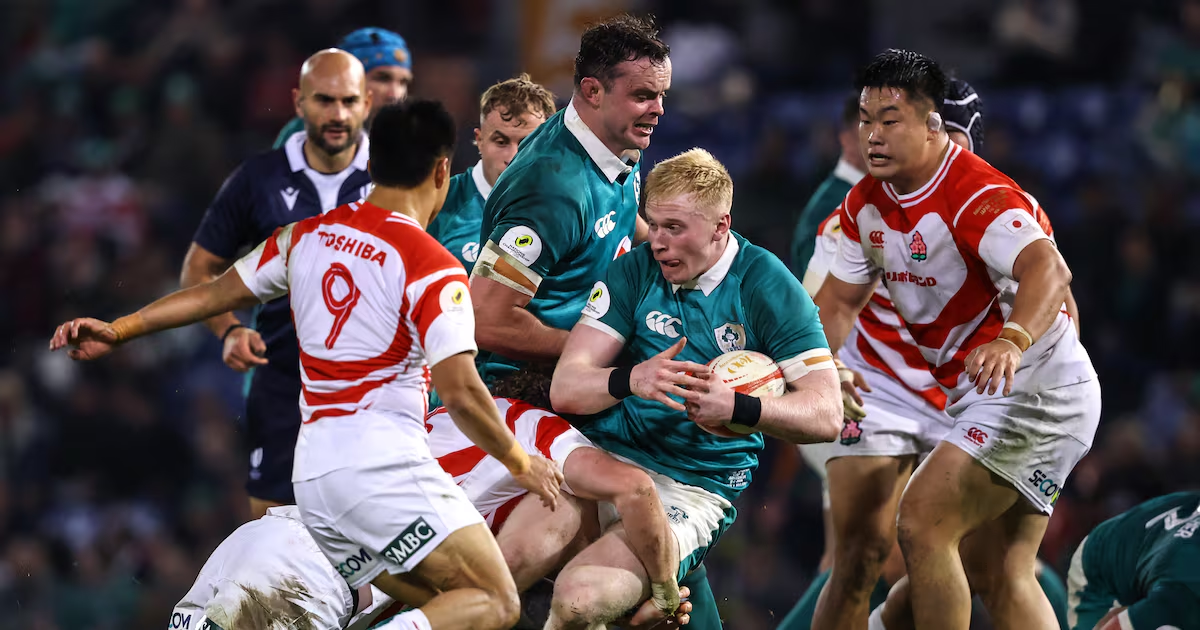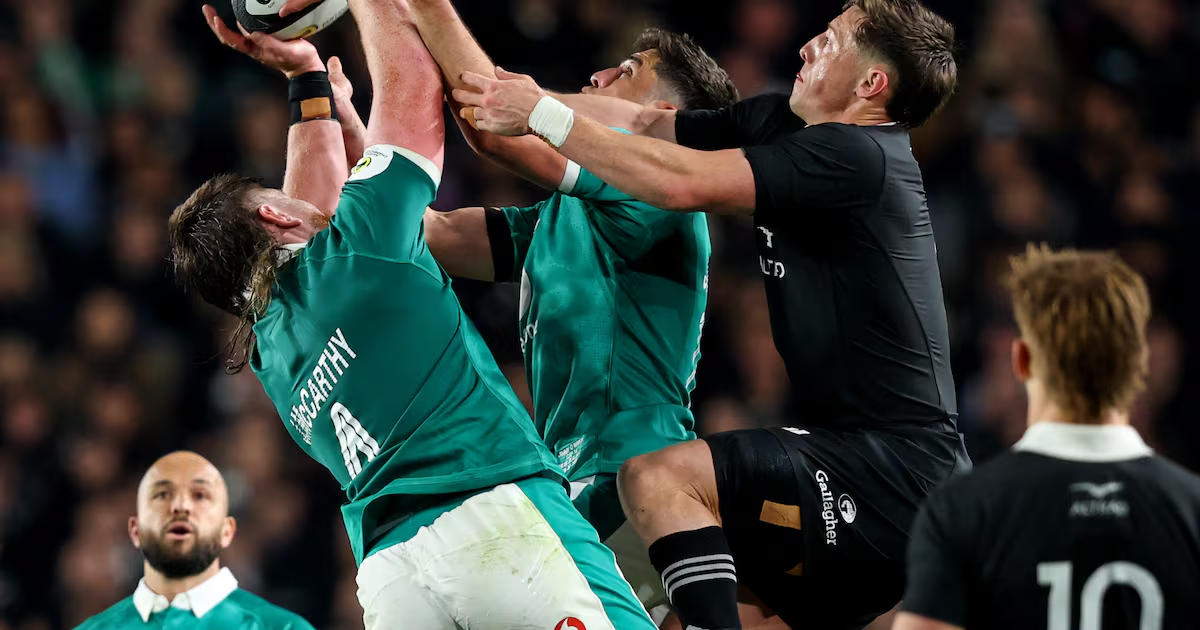
Ireland are kicking less. Rejoice.Or should we? Insipid is a word that springs to mind when recalling what Ireland did when holding on to the ball – instead of kicking it – over the last three weeks.Irish rugby’s obsession with evolution requires regular check-ins on what Andy Farrell and co are doing to close the much-publicised gap between themselves and South Africa, France and the All Blacks. At the start of this international season, way back in November, we looked at the comments of attack coach Andrew Goodman, who highlighted a desire to become a better transition and counterattack team. Time to catch up with the global trends.To be fair to Ireland, they tried this with a decent degree of success. Kicking went up in a bid to create loose ball opportunities. This year’s victory against England, and images of Robert Baloucoune plucking balls out of the sky and linking with Tommy O’Brien, dominated the memory of Ireland’s best performance of a new transition era.Then they stopped kicking. Well, not quite, but the nuance can come later. Across this July slate of fixtures, Ireland took their contestable-kicking, transition-creating approach and put it in the filing cabinet. To be used on a different day? We’ll see. Having started out trying to hone a new approach, Ireland backtracked in recent weeks. You could argue it cost them. It remains to be seen why they did it.In crude terms, Ireland averaged 28.4 kicks in open play during the Six Nations. This figure dipped to 19.7 in the Nations Championship. The biggest culprit here was the defeat to the All Blacks, when Ireland kicked on just 14 occasions. That is a staggeringly low figure.Against Wales in the Six Nations, Ireland kicked 22 times. The same figure was recorded against Scotland and then Australia. Facing Japan, it increased to 23. The kick-to-pass ratio has hovered consistently around the one kick for eight passes in the last three matches.Ireland's Robert Baloucoune makes a catch during the Six Nations victory against England at Twickenham in February. Photograph: Billy Stickland/Inpho Evidently, since a kick-heavy approach led to multiple tries via the high ball in Twickenham, Ireland have put their kicking boots away.It’s not quite that simple. Kicking as a whole has stayed consistent since England, but look at Ireland’s kick totals against certain opposition. Prior to this summer tour, in games against New Zealand, Australia, South Africa, France and England, Ireland averaged 35 kicks per match (compared to that 19.7 in the last three weeks). Their kick-to-pass ratio had not gone above 1:5 in those games.Then, in the southern hemisphere, Ireland kicked once for every 8.5 passes against Australia. The figure became once for every 15.4 passes against New Zealand. It’s a huge jump against teams that are widely considered more athletic, unstructured sides.Another important divergence is the volume of Ireland’s contestable kicks. In the pursuit of becoming a better transition side, these are the kicks that should go up in volume. Win the ball back higher up the pitch and strike while the opposition is not yet set.In the last three weeks, Ireland kicked five, eight and five contestable kicks respectively. The Six Nations doesn’t hold contestable kick data in the same way as the Nations Championship, but more often than not, contestables come via scrumhalf box-kicks. In the spring, Ireland averaged 12.8 box-kicks per match.Against so-called big teams, Ireland kicked both less often and looked to create fewer transitions via contestable kicks. Holding on to the ball against sides such as Italy, Wales and Scotland – teams that can be overpowered – is one thing. Why, though, did Ireland suddenly change their path of evolution against Australia and New Zealand?You can’t blame the identity of the outhalf. Prior to the recent tour, when Sam Prendergast started Ireland matches this season, he averaged 10.4 kicks per match. Jack Crowley averaged 7.6. It stands to reason that Prendergast would have been expected to kick more once he had the outhalf jersey back following Crowley’s injury. That did not happen.Were Ireland wary of the counterattacking threat of the Australian and Kiwi back threes? They weren’t last November, producing two of their most kick-dominated performances of the season against men in black and gold.Ireland's Jamison Gibson-Park was called upon to kick just four times against the All Blacks at Eden Park last Saturday. Photograph: Ben Brady/Inpho The identity of the Irish back three may hold a clue? With no Tommy O’Brien, and Baloucoune missing two of the three summer games, perhaps Ireland figured they lacked the pace required for a transition game.Against New Zealand, maybe Nic Berry’s at times overly-stringent approach of barking at would-be breakdown poachers encouraged Ireland to play more possession, conscious that they had more chance of retaining the ball. We can speculate all day.What can be said for certain is that this drop in kicking must have been a conscious decision, rather than a three-game variance. Against the All Blacks last weekend, Jamison Gibson-Park kicked just four times. The only other time this season he registered fewer than 10 kicks was when coming off the bench against Italy. In games that he started, his lowest kick total all year was 11 against Wales.Graph embed: That sort of drop doesn’t happen by accident. As a proponent of the box-kick, Gibson-Park is responsible for most of Ireland’s contestables, the option used to create transition attacks further up the pitch.Ireland’s attack registered little, if any, damage on transition. Their average line breaks dropped from 6.4 in the Six Nations to 5.3 in the summer. They beat 27.8 defenders per contest in the spring, 19.7 in recent weeks.Countless factors play into that; injured personnel, end-of-season fatigue, opposition tactics. Kicking as a whole is on a downward trend across rugby. Nonetheless, there is an argument that relying too much on set-piece attack, as opposed to kicking and transition, has also had a negative impact.Ireland’s attack and kick strategy changed from one window to the next. This after they told us evolution was coming, which had started being delivered on, only for progress to then stall.With different players back in contention and a refreshed playing group, maybe the positive trends return in November. Or, Ireland have decided to go back on their previous good work just over a year out from a World Cup. Answers, alas, will have to wait until November.
Nathan Johns: Ireland’s aversion to kicking wasn’t part of the grand evolution we were sold
Drastic change of approach difficult to fathom after progress was made in Six Nations
1,060 words~5 min read