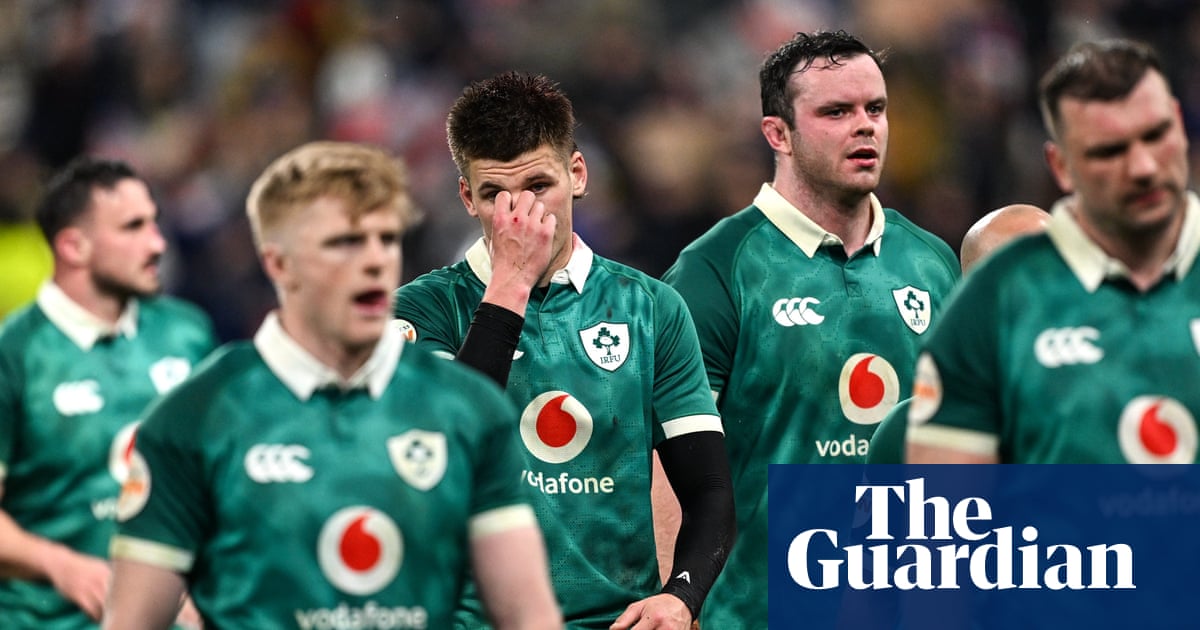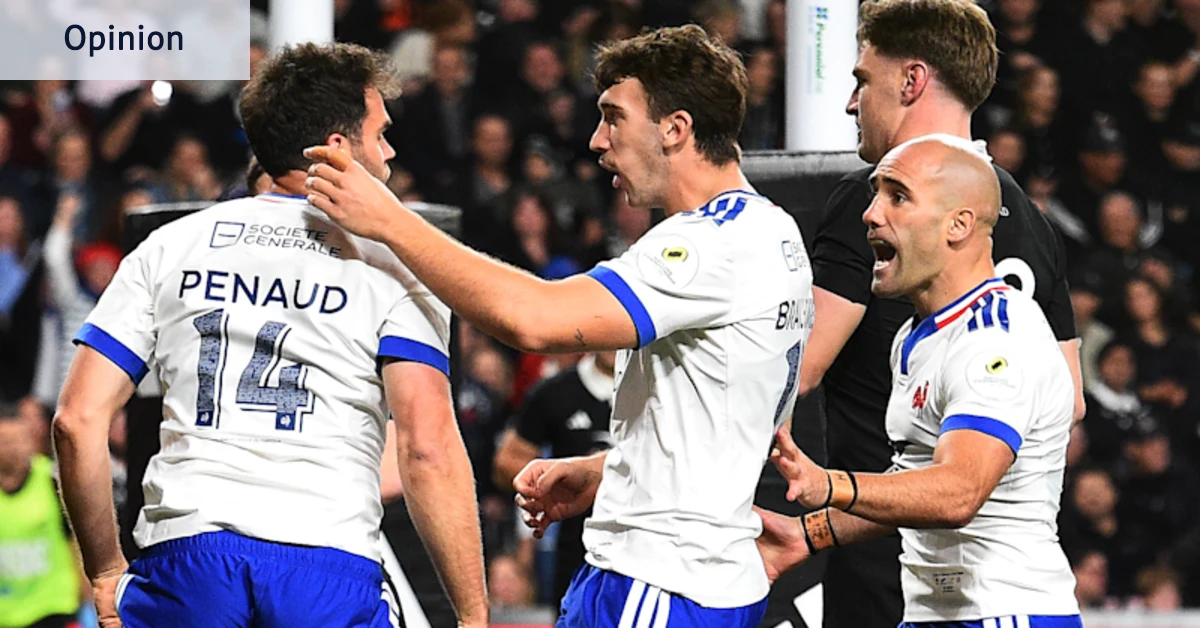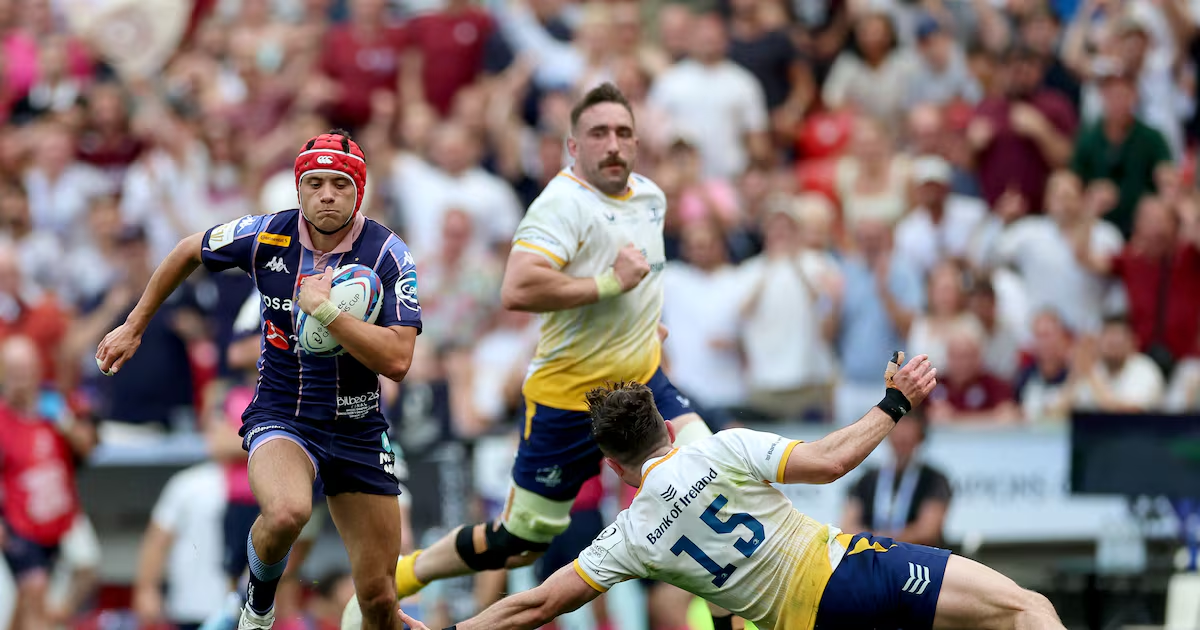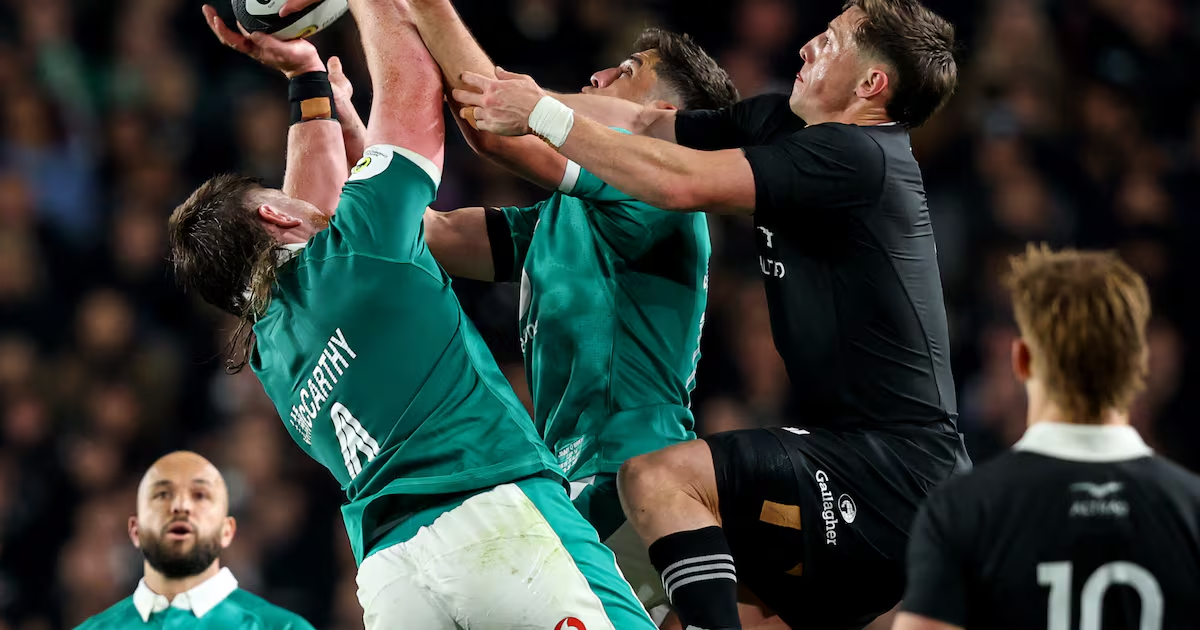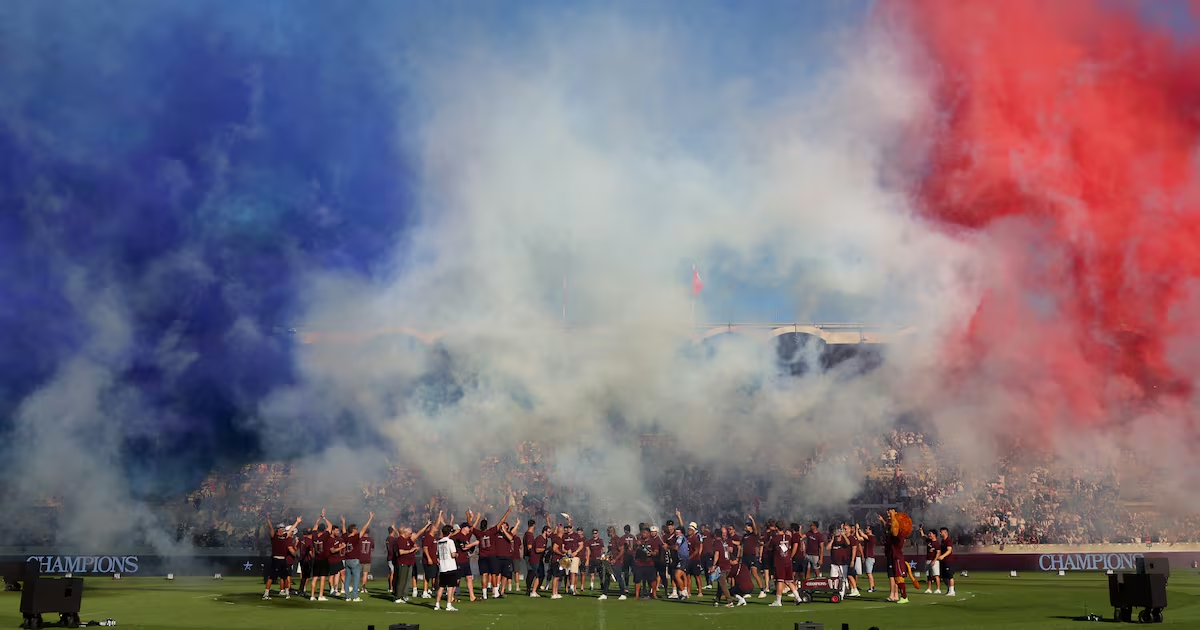
They say comparison is the thief of joy, but it’s only human nature to look at our Gallic neighbours with envy these days. Not for the first time in recent years an Irish team was left in the wake of French opposition wondering how to narrow the gap. Two teams, even, after Ulster and Leinster’s defeats in European finals.Recency bias is definitely at play. We were all left feeling this way when Ireland lost to France in February’s Six Nations opener, only for Andy Farrell and co to restore the feel-good factor thanks to an uptick in Ireland’s performances as the competition went on.Still, France continues to be a difficult obstacle to overcome. There is a clear buzz surrounding French rugby. Both with on-field results and off-field cultural cut-through. One may well beget the other, but neither happens in isolation. French rugby has found a winning formula and while Irish rugby is hardly floundering, it clearly is not in the same place.There are aspects of France’s rise which are unique. Distinctly French. No point in trying to copy them. Others, though, may well serve as some inspiration as Irish rugby attempts to find a way to stop being felled on big occasions by French opponents.The first unchangeable difference is quite straightforward; numbers. France has two professional leagues and 30 clubs. More than 300,000 amateur players are registered in the country. Ireland has the four provinces, plays its part in one professional competition and has anywhere from 75,000 to 90,000 registered in the club game.Numbers continue to be relevant when counting the Benjamins. Much has been made in recent times of the value of France’s domestic TV rights deal for the Top 14 and ProD2. The next deal, from 2027 until 2032, is valued at €696.8 million. Exact figures for any Irish equivalent earnings from the URC have not been released, but based on Munster CEO Ian Flanagan’s recent comments that not enough revenue has been extracted from the broadcast market, it’s a safe bet to assume a disadvantage there.It’s worth adding to the numbers argument the volume of players progressing through the French system. It’s another oft-used comparison, but take the match day squads from Ireland’s defeat to France in the 2023 World Rugby Under-20 Championship final. Just three Irish players from that day have been capped at senior level – Paddy McCarthy, Gus McCarthy and Sam Prendergast. None of those have yet become dominant match-winners for club and country.France celebrate winning the World Under-20 Championship. Photograph: Darren Stewart/Steve Haag Sports/Inpho Now look at France. Lenni Nouchi dominated the Ulster pack last weekend in Montpellier’s victory. Ditto Marko Gazzotti at number eight for Bordeaux. Oscar Jegou was part of the French forward bomb squad that blew Ireland away at the Aviva in 2025. Théo Attissogbe has kept France’s record try scorer Damian Penaud out of the senior squad. Nicolas Depoortere tormented Ireland in February and could well have done the same to Leinster for UBB if fit. Louis Bielle-Biarrey would have been in that French Under-20 side three years ago if not already fast-tracked into Fabian Galthié’s senior World Cup squad.France do things at speed both on and off the pitch, the size of their domestic structure allowing their top young talent senior domestic game time that accelerates their development. Hence a relatively constant refreshing of players at senior level.This helps explain why Ireland boasted more than 1,000 caps in a starting line-up during the most recent World Cup, while France didn’t break 800. Leinster brought 979 international caps to Bilbao last weekend, Bordeaux 385. Century-cap celebrations have become a reasonably regular occurrence in the Irish senior team. French players tend to not get that far simply because there’s nearly always a younger, better option nipping at the heels.Speed of development is matched by speed of play. Saturday was a ruthless display of Bordeaux’s ruck speed, power and transition scores stemming from broken field. “That’s probably the bit where we’re noticing the speed of the way they’re doing things,” said Leo Cullen after the match. That’s a mindset that we need to adopt in our league as well.”Union Bordeaux Bègles' Matthieu Jalibert and Damian Penaud celebrate with the Champions Cup trophy. Photograph: James Crombie/Inpho Cullen’s hints at something within the control of Irish teams. On-field decision making, skills and rucking can all be accelerated. But it’s all well and good Leinster demanding improvement. You can’t force other URC teams with smaller budgets to come up to that standard, becoming the iron that sharpens the blade akin to the Top 14.What, if anything, can Leinster and Ireland actually do about the above on-field factors? They’ll never match France’s numbers, but further expansion of playing opportunities has to be considered.London Irish’s name regularly gets brought up in this discussion. There has been a recent interest within the club in linking with the URC as opposed to rejoining the English system, only updates on that process have been scant. Should entering into the same competition as the Irish provinces lead to an unofficial fifth province of sorts is another question entirely. Is the IRFU likely to give up control of players to an entity they don’t oversee? Or does the experience of someone like a Harry Byrne, taking a short-term loan to a different competition, show the value in broadening horizons abroad?One thing that certainly can be improved is the size of the net cast to find talent. Again, this is no new observation, Ireland’s talent pool comes from a narrow section of the population. Not only does France recruit from its more sizeable resource of athletes, but overseas as well. Might it be time to find Georgian tightheads or Fijian wings and placing them with rugby scholarships in the likes of Blackrock and St Michael’s?Little of the above is new. What did seem more novel while walking the streets of Bilbao was the off-field success of French rugby. It is a genuine cultural phenomenon. Depending on where you draw the line of its suburbs, Bordeaux has a population anywhere from 300,000 to a million. Dublin has anywhere from 1.3 million to 2.1 million. Yes, Bilbao is much easier to get to for French fans than Irish, but the extent to which UBB supporters dominated Leinster ones was a sight to behold. Leinster have been the largest professional sports team in its hometown a lot longer than Bordeaux.Bordeaux-Begles' players gather during celebrations at the Chaban-Delmas Stadium in Bordeaux after their Champions Cup triumph. Photograph: Romain Perrocheau/AFP via Getty UBB draw a healthy proportion of younger fans, low ticket prices and a febrile atmosphere proving a significant draw. Kind of like the League of Ireland on a bigger scale.When stopping to talk to media on their way out of the ground on Friday, Noel McNamara was already sporting a back-to-back European champions T-shirt. Joey Carbery had a cravat with the same branding. You could buy your own versions online on the same day they won the cup.When France played England in the most recent Six Nations, they released a commemorative light blue jersey to mark the anniversary of the fixture. Replicas sold out in minutes, leading to a backlog of orders that took three months to fill. They’ve since given up printing the shirts due to the overwhelming demand.Barring the viral TikTok Ireland fleece during the World Cup, when was the last time Irish merchandise created such a buzz? Maybe it’s Parisian fashion sense combined with Ireland’s fear of notions, but the French do cool and culture better than us. They make a fortune out of it.All of which creates a vibrant rugby ecosystem that is difficult to copy. But not impossible. The basic blueprint, finding ways to expand, developing younger players faster, raising standards all while winning more and developing into a cultural behemoth off the field is replicable. Irish rugby is limited by the size of its system, but it nevertheless can expand.The words of David Nucifora, speaking in Brendan Fanning’s book Touching Distance, seem relevant: “Irish rugby needs to continue to get better at squeezing every little opportunity to find high-performing talent to bring them through.“And that’s either by putting kids into Sevens, by looking at IQ [Ireland-qualified], by looking at club rugby, by looking at whatever means you’ve got. You’ve got to use all of them. And traditionally the game would fall back on just using the traditional mechanisms, and if they go back to doing that, they will suffer. “They’ve got to keep trying to expand, not contract.”Ultimately, time is the biggest factor. One of the most heavily referenced reasons for French club success is their JIFF rules, ones that dictate a higher volume of local-grown talent in match day squads than what was previously seen during the Toulon overseas galactico heyday. By developing plenty of French talent that progresses quickly to international level, the whole ecosystem is thriving.Those rules came in back in 2009/10. We’re seeing the fruits now, but it took time. Ireland has attempted to expand with A interpros, Emerging tours and Ireland XV fixtures. More probably can and should be done, but they were behind France in the process of expanding opportunities for their own players and they’ll continue to be behind in seeing any comparable results.
Speed on and off the pitch: What Irish rugby can learn from France
Ireland need to consider expansion and finding a way to tap into the cultural zeitgeist to increase funds and playing numbers
1,542 words~7 min read