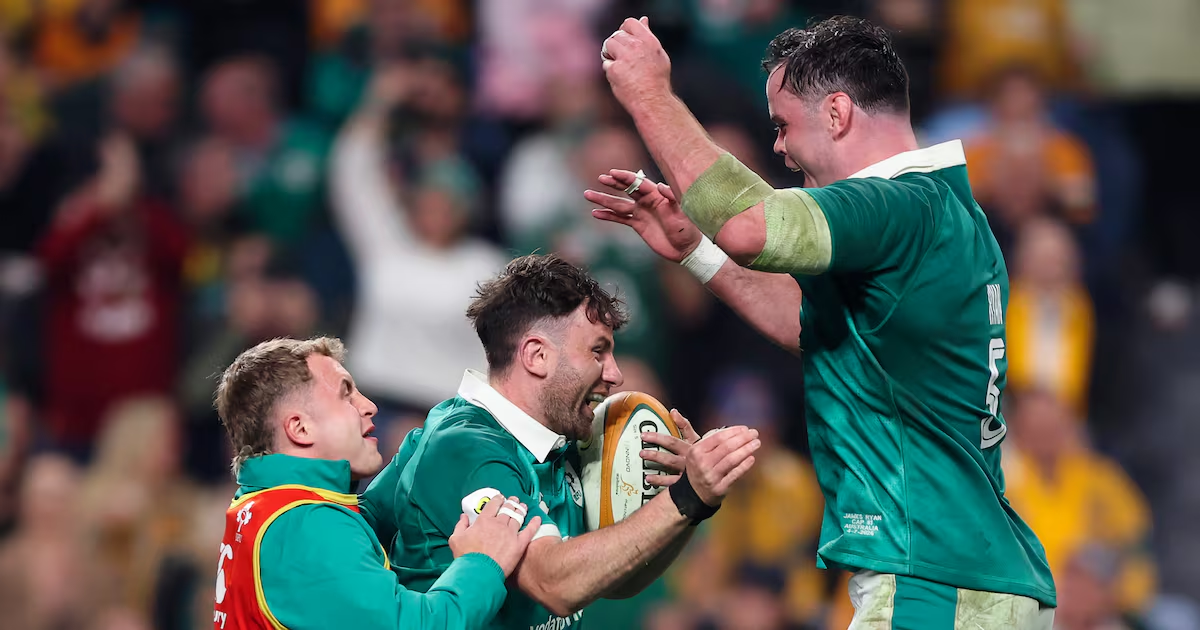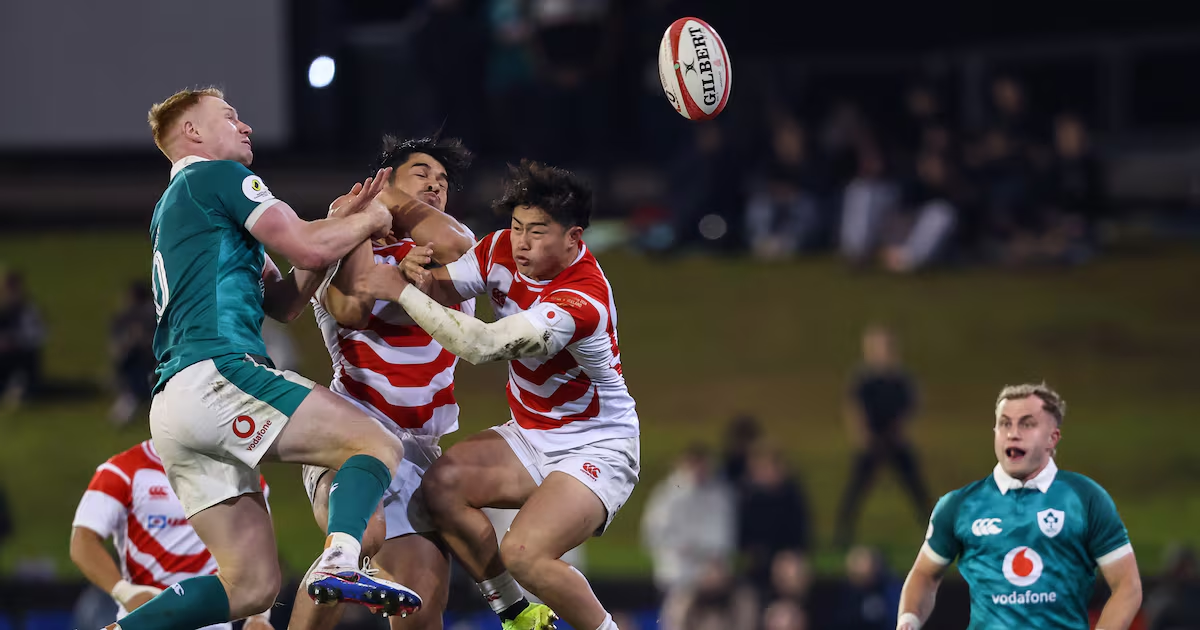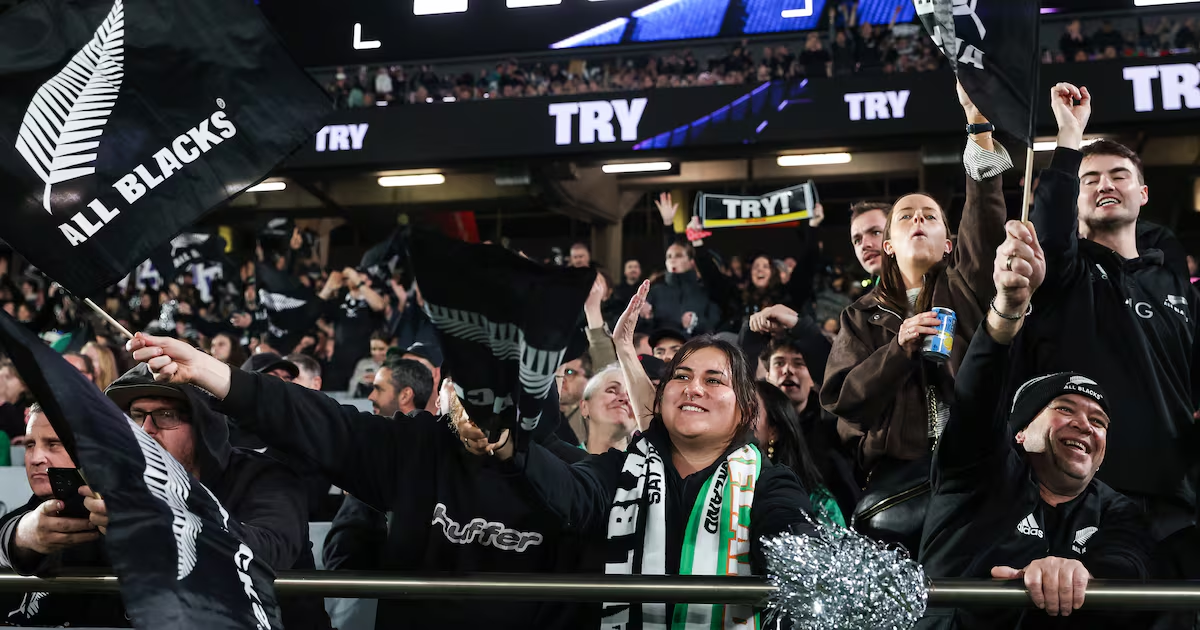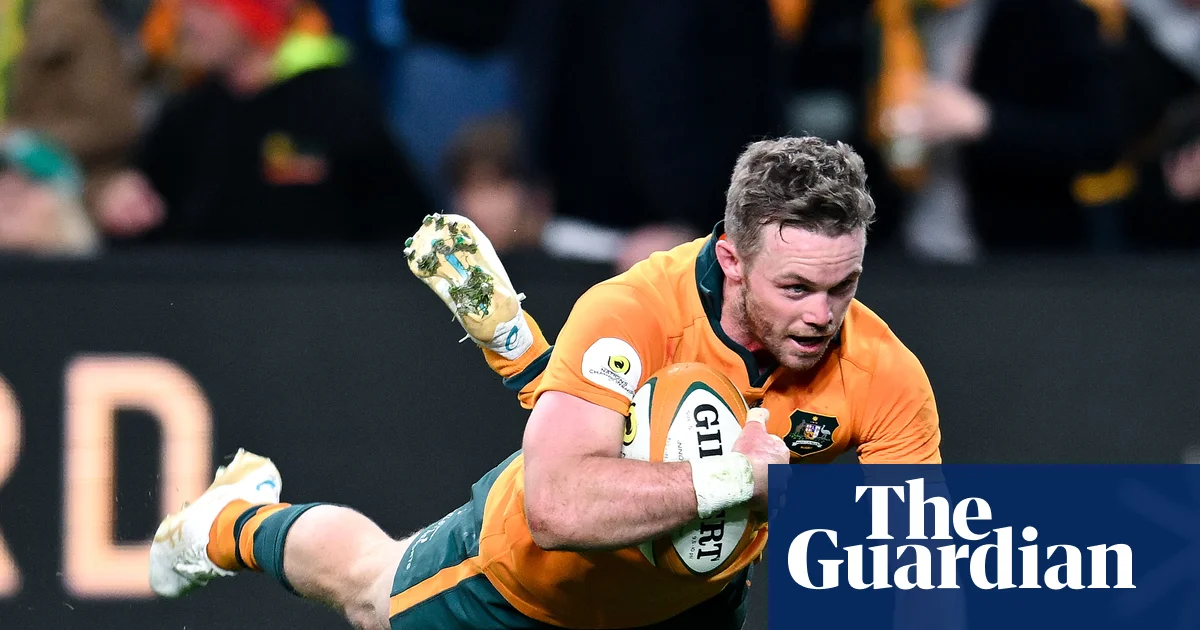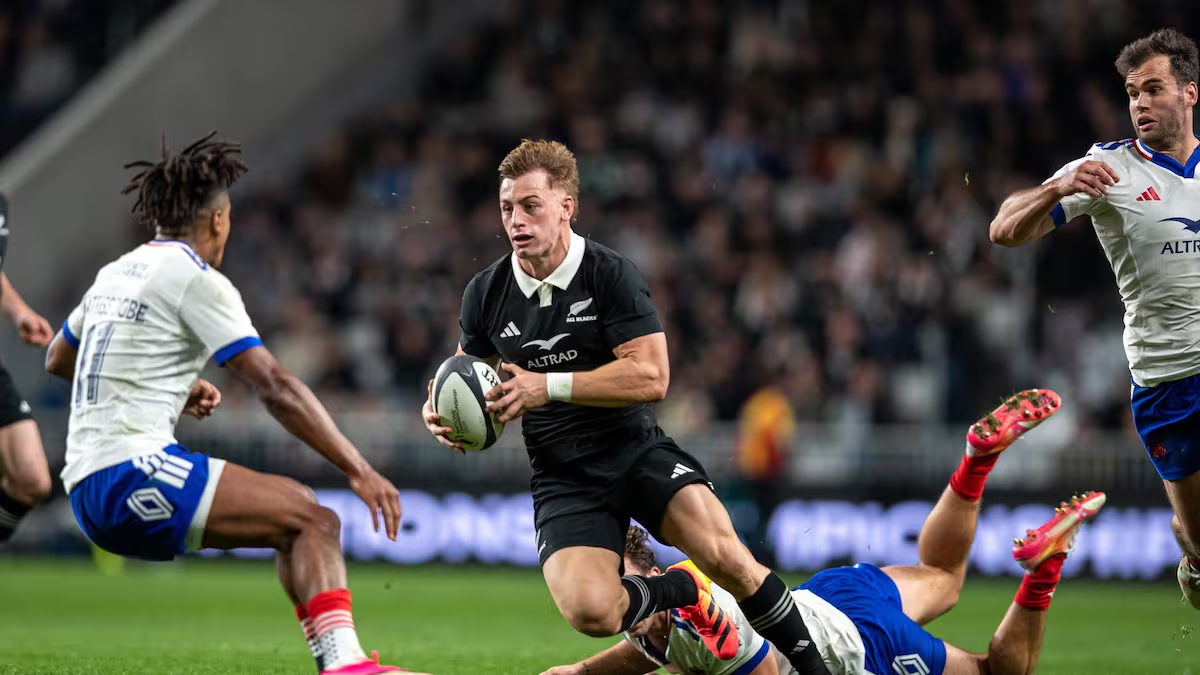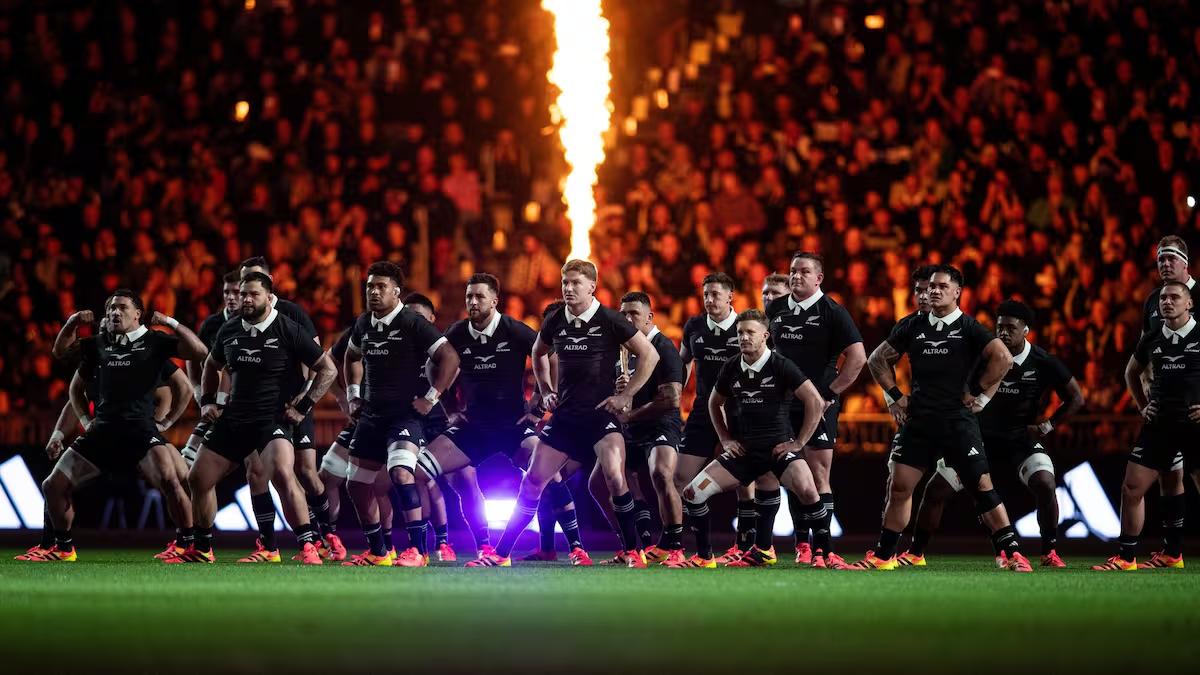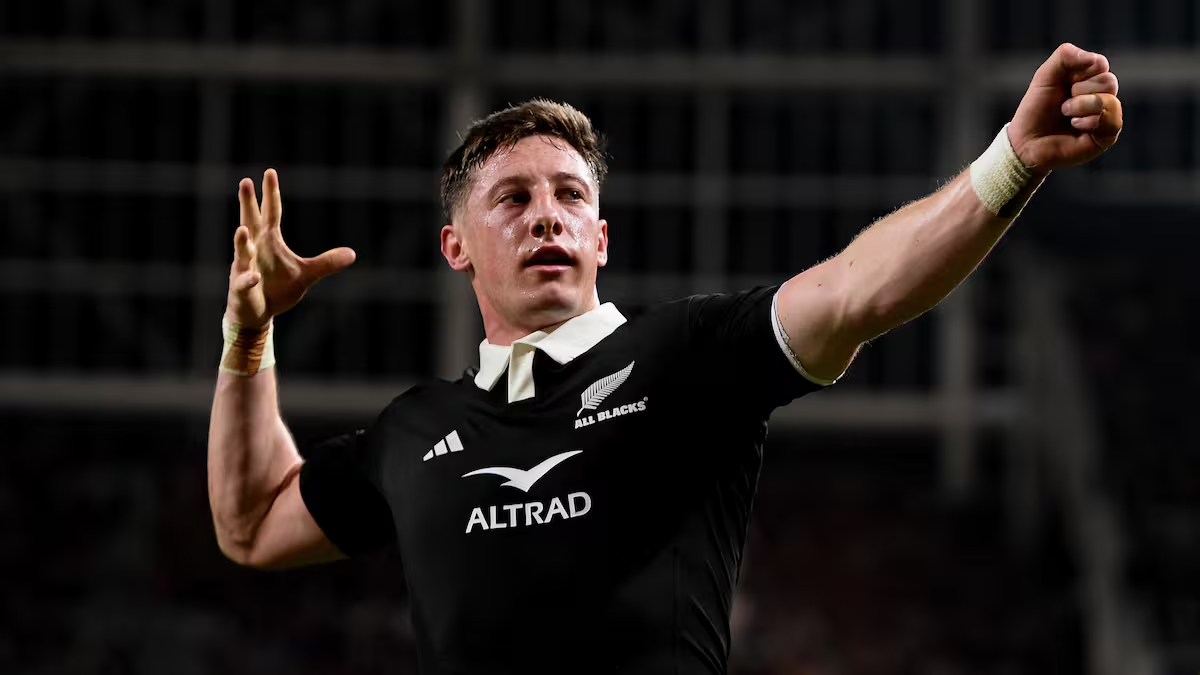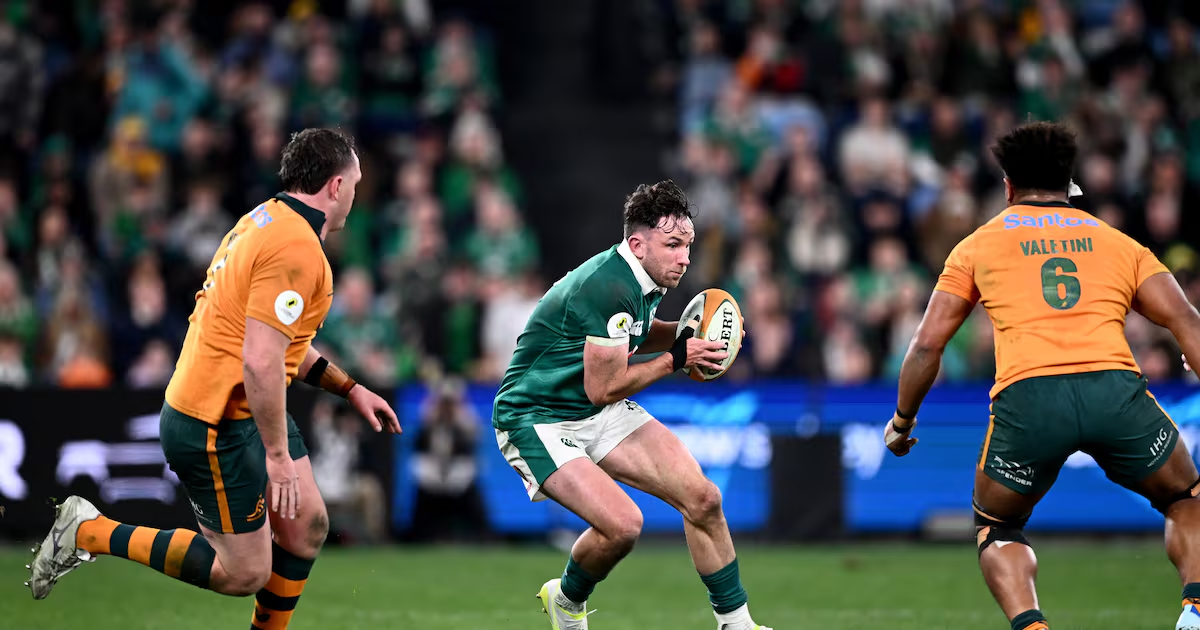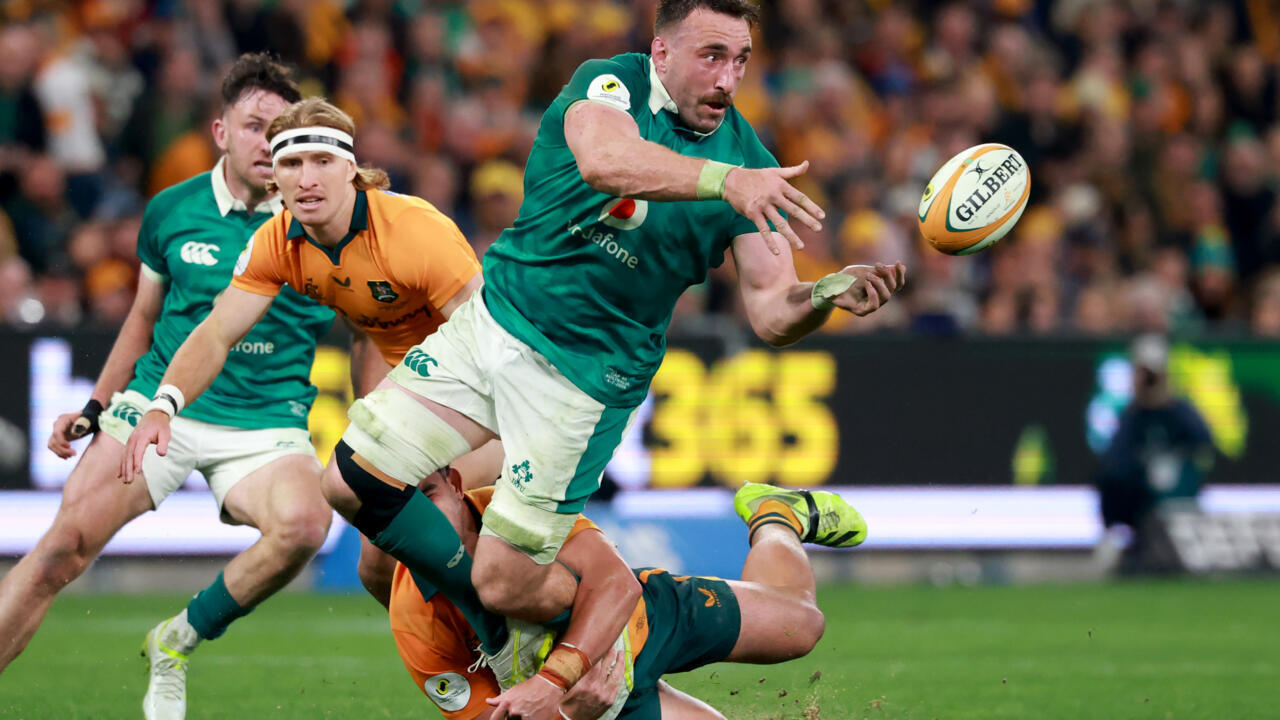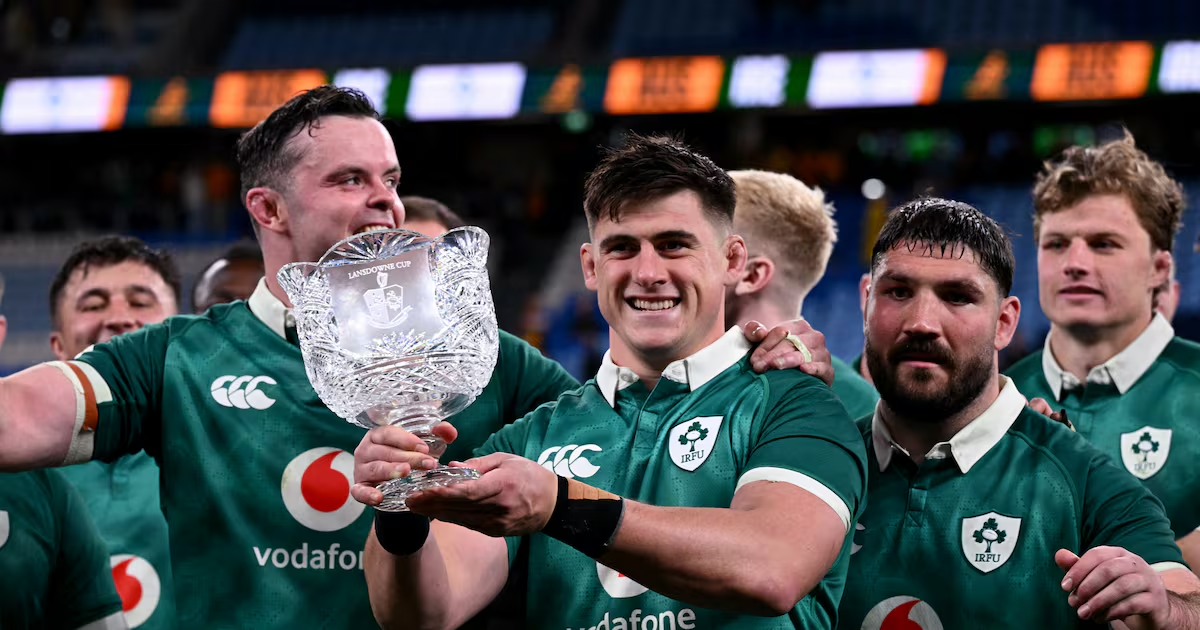
Leaky lineout still providesThe official statistics said Ireland lost three of the 22 lineout throws, but despite Australia’s pressure and consistent hustle competing in the air, the set piece was a pivotal platform in Ireland’s try-scoring exploits.The work of the Irish pack in the maul was first-class, tightly constructed and powerful, and it either yielded penalties or forced the Wallabies to give up yardage. It could have been even more lucrative if Dan Sheehan’s try had been allowed to stand, but the home side were given a reprieve when James Ryan was penalised for blocking Rob Valetini.Did it prevent a try-saving tackle, not on your nelly, but the letter of the law, rather than a practical appreciation, was applied. It doesn’t diminish the effectiveness of Ireland’s maul and the impact it had on the final scoreline, while honourable mention must go to the tap penalty move for Josh van der Flier’s try, creative and well executed.Speed at the breakdown causes issuesThe speed of ruck ball that Australia generated, particularly in the first half, created a double-edged advantage in that it allowed them to play at a high tempo, get their big ball carriers over the gain-line, and use pivot plays to get the ball out the back to width where they caused Ireland problems.Ireland's Tadhg Beirne wins a linout. Photograph: Saeed Khan/AFP via Getty Images It goaded Ireland into making rash decisions defensively, exacerbated by some players racing out of the line, while others sat on their heels. The disconnect physically and verbally, doglegs, and the alignment meant Ireland gave up large swathes of easy territory. Were it not for two try-saving tackles by Hugo Keenan it might have had more severe consequences.Wallaby outhalf Carter Gordon played flat on the advantage line. His passing and ability to make breaks with his footwork caused Ireland significant issues. When he departed, their attacking patterns were nowhere near as effective, which was further exasperated by the positive impact Ireland replacements Tadhg Beirne and Nick Timoney had on the breakdown.Resilience earns rewardsFor all the flaws and blemishes, the issues with defence, breakdown and a lack of penetration in the wider channels, Ireland still found a way to win the game. That should never be underestimated. When things are going against a team, character, belief and a willingness to drag out a win from a perilous position should not be underestimated.Hugo Keenan, Stuart McCloskey, Jamison Gibson-Park, Dan Sheehan and Jack Conan came up with some big plays at crucial times and it inspired team-mates around them. Small moments knitted together can have huge consequences when it comes to the outcome.Sam Prendergast’s placekicking, one mis-hit aside, the energy and momentum from the bench, and a willingness to keep playing, whether in first-half injury time or in chasing down the victory, enabled Andy Farrell’s side to prevail. Ireland never gave up and that brought the ultimate reward.New Zealand fire warning shotsIreland are in Auckland to face New Zealand in Round Three. The All Blacks got their Nations Championship campaign under way with a 34-32 victory over a French side shorn of 11 starters. It was a brilliant contest, full of flair, imagination and played at a cracking pace.France were unlucky to lose, but when Farrell reviews the game he’ll see some areas in which Fabien Galthié’s side caused their hosts serious discomfort.New Zealand's Will Jordan comes up against France's Killian Tixeront. Photograph: Billy Stickland/Inpho Under new coach Dave Rennie, New Zealand are playing with high tempo. Scrumhalf Cam Roigard scored two tries and ran the game superbly in tandem with outhalf Reuben Love, a threat with ball in hand. Captain Ardie Savea was a constant threat at the breakdown as they relentlessly chased turnovers, and Jordie Barrett played a key distribution role.The All Blacks looked to carry hard round the fringes, use forwards as pivots in the midfield and then hustle to width, with late switches from short to the open side of the pitch. Roigard admitted afterwards that he box-kicked a great deal less than normal. Plenty to ponder.The power of the big screenA TV director once again came to the fore in Christchurch. France had a try disallowed after a replay of an aerial contest was shown on the stadium screen despite TMO Marius van der Westhuizen having already checked Fabien Brau-Boirie’s try in the background, judging everything to haven been above board.The incident was replayed several times before the game restarted and, as a result, referee Luke Pearce asked for the TMO to take a second look, surmising the ball had gone forward off the hand of French fullback Max Spring. A knock-on wasn’t clear and obvious because there was no side-on camera, but the try was chalked off after Pearce reached his conclusion.There’s no question that it hit Spring’s hand, but the question was whether it went forward. If the replay wasn’t shown on the stadium screen, the try would have stood. The home broadcaster earned a beer.Later in the game a debatable clear-out on a French player didn’t get a second look from the TV director despite Pearce’s attention being drawn to it by French scrumhalf Maxime Lucu.Rugby’s integrity is being held to ransom by what’s shown and when. Not a good look.
Resilience pays off for Ireland, All Blacks sizzle against France: Five things we learned from the Nations Championship
Ireland must learn from the All Blacks’ win over France ahead of their third-round trip to Auckland
871 words~4 min read