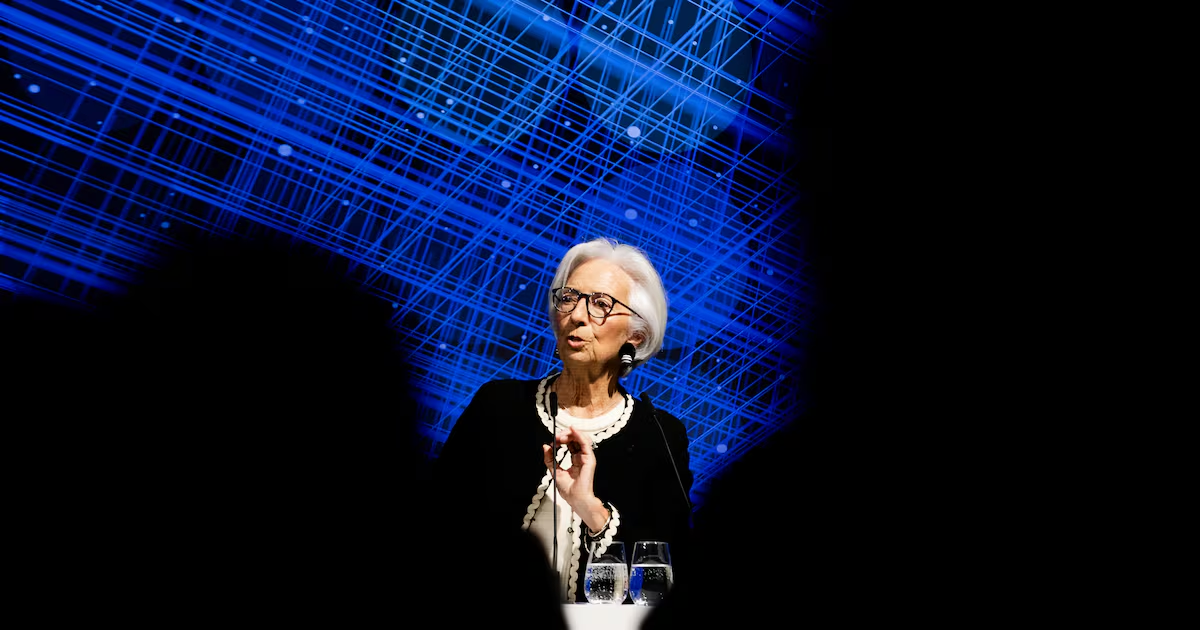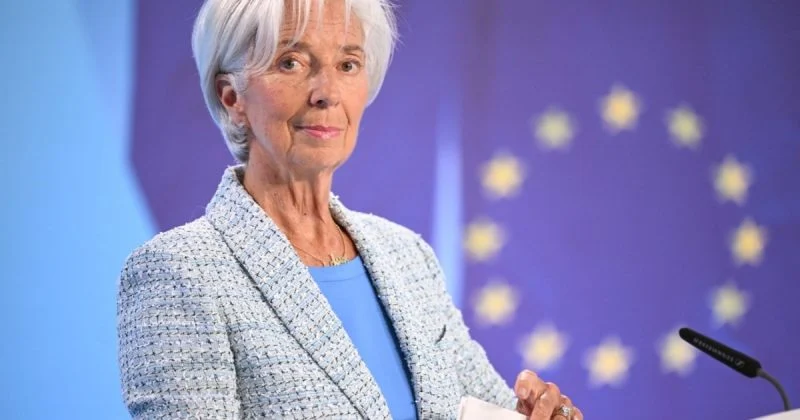
The European Central Bank is all but certain to keep interest rates unchanged on Thursday but will hold the door wide open to another rate hike in September, as a fresh jump in energy prices threatens to put more upward pressure on inflation.The ECB raised rates in June and hinted at more to come but a string of benign data on prices, wages, economic activity and inflation expectations in the weeks since has made a quick follow-up step less urgent and policymakers called for patience.But with oil prices back above $95 a barrel as conflict continues in the Middle East, the euro zone central bank will likely be forced back into action by the autumn to prevent the energy shock setting off a broader price spiral.“Despite renewed tensions in the Gulf, the milder June forecast scenario still seems to hold,” Societe Generale economist Anatoli Annenkov said.“This keeps the door open for a further hike in September, as fully priced by the markets, although we are less convinced about additional tightening beyond that,” he said.Financial markets now anticipate close to three more rate increases, with the first move fully priced in by October and the second by next February.This pricing reflects oil prices more than fundamentals, however, and most economists polled by Reuters say the 21-country euro zone will need far less policy tightening to keep a lid on inflation, which could hover around 3% in the coming months, above the 2% target.“A significant portion of the inflationary damage from the energy shock has already worked its way into the broader economy and will not simply or quickly reverse even if energy prices fall further,” Nordea’s Jan von Gerich said.Given this mixed outlook, ECB president Christine Lagarde is likely to attempt a balancing act on Thursday.She will want to signal that policymakers remain concerned about price pressures and further monetary policy tightening remains on the cards. But she needs to avoid stoking market expectations as much of such action is already priced in.The key reason the ECB can afford to be patient is that long-feared second-round effects of the energy price spike have yet to materialise.High energy costs tend to raise the price of all goods and services and eventually force workers into demanding higher wages, setting off an inflationary wage-price spiral.But wage growth is continuing to ease, the labour market is relatively soft — particularly in Germany, the bloc’s biggest economy — and firms surveyed by the ECB are anticipating even more muted pay pressures.“We believe that the second-round effects will be weaker,” Morgan Stanley’s Jens Eisenschmidt said.“There is good chance that industrial weakness will persist in Germany and result in downside wage pressures compared to expectations, which would also impact core inflation,” he said. “So, core inflation could undershoot the ECB’s own projection.”Consumers have dialled back their price expectations, while detailed figures are showing next to no evidence of second-round effects. Services inflation actually slowed last month.Moreover, continuing trade tensions, high energy costs and China’s expansion into some of Europe’s key export markets suggest that the bloc’s industries will continue to struggle for years to come, putting downward pressure on labour demand.Policymakers nevertheless argue that even if second-round effects are smaller and delayed, they are still coming and the ECB needs to be ready to act.Scorching summer weather in much of Europe this month is also a potential risk. The heat may have damaged crops and could push up food prices, while low water levels on key rivers could create shipping bottlenecks.“While food inflation has generally trended lower in recent months, reflecting softer prices for commodities such as sugar, cocoa and coffee, an unusually warm summer in Europe, combined with the effects of El Niño, could renew upward pressure on food prices,” Barclays said in a note. - Reuters(c) Copyright Thomson Reuters 2026
ECB to pause rate hikes but may signal that more is needed
ECB-POLICY/ (UPDATE 1, PIX):UPDATE 1-ECB to pause rate hikes but may signal that more is needed
634 words~3 min read