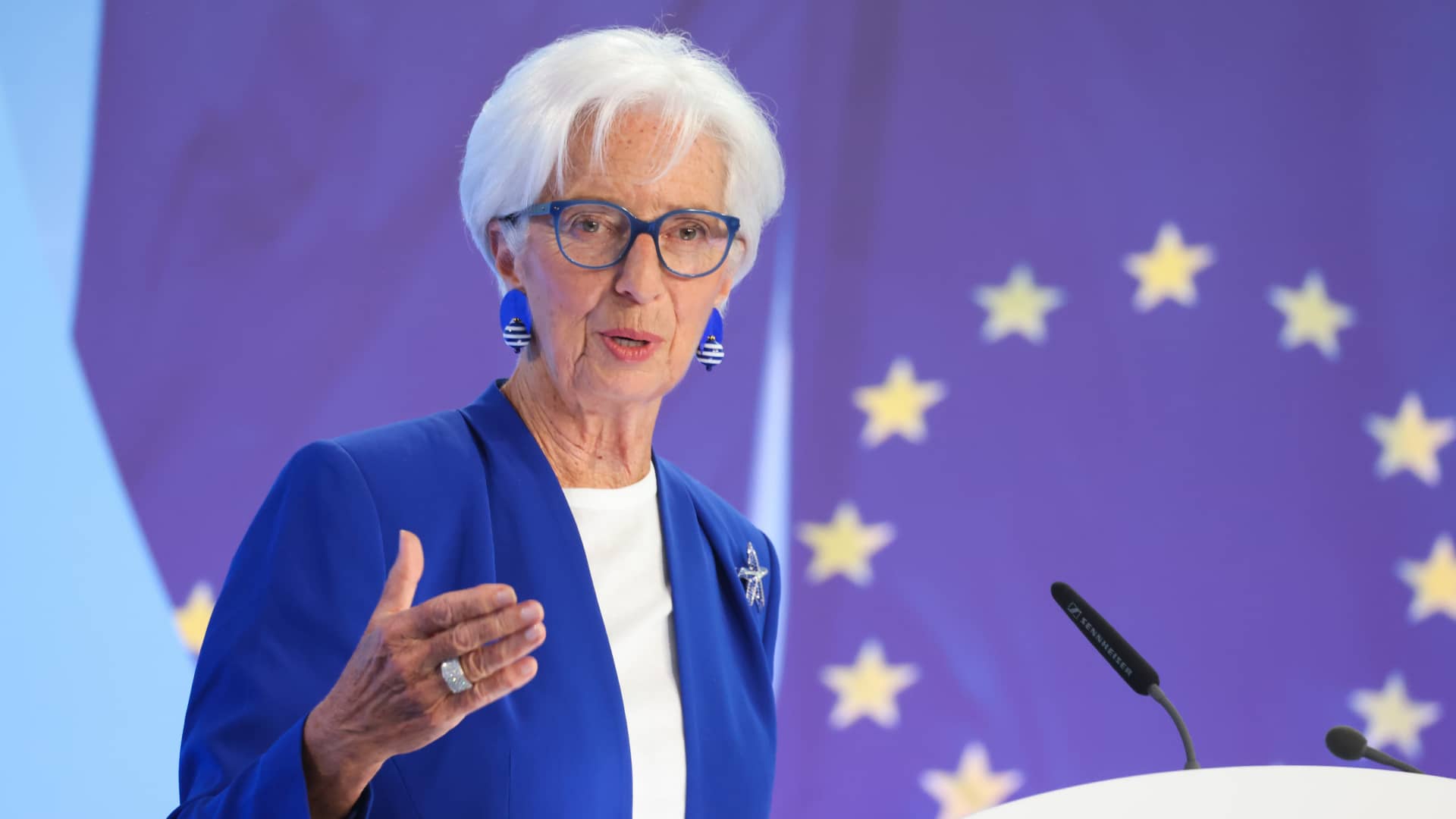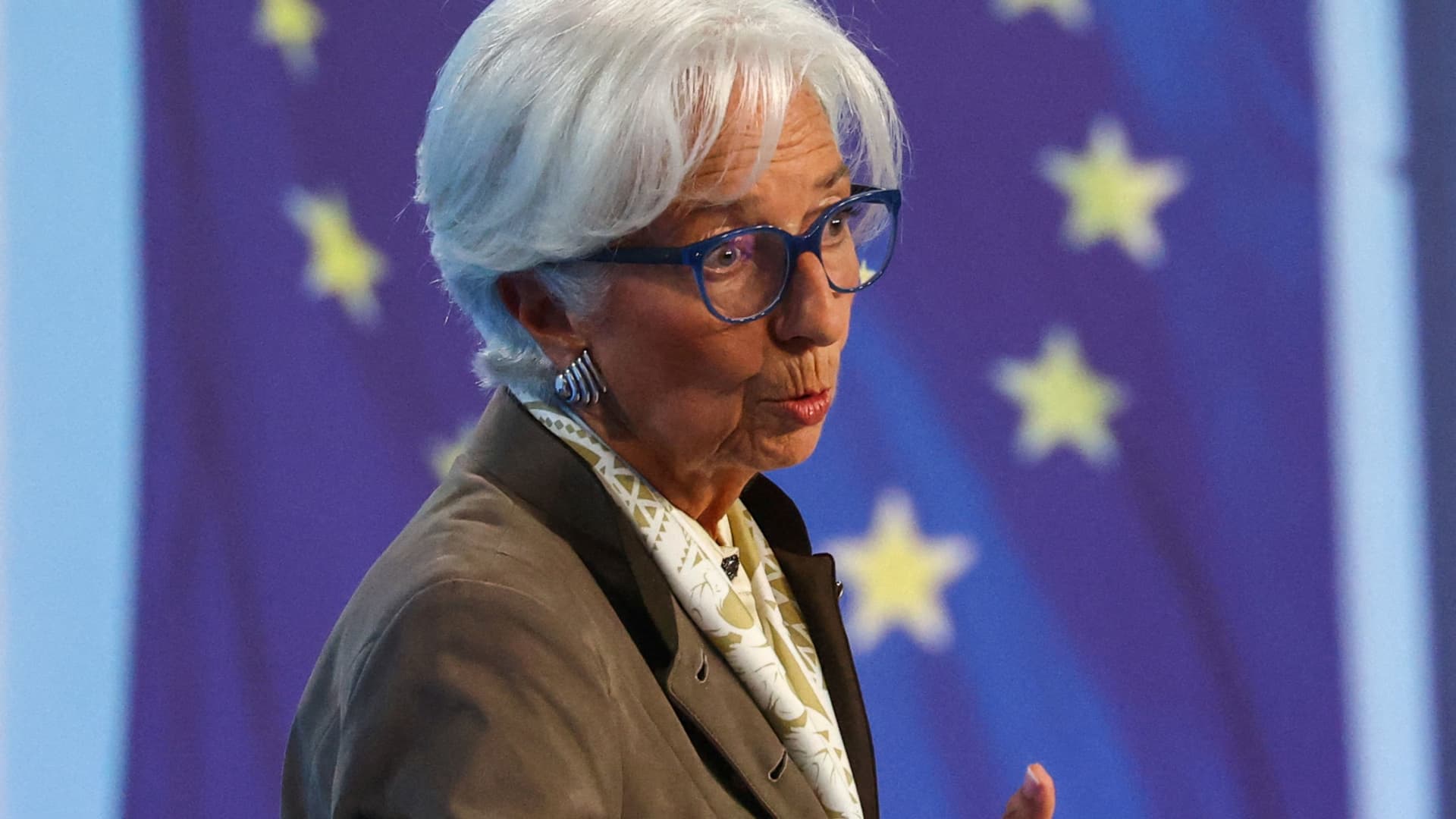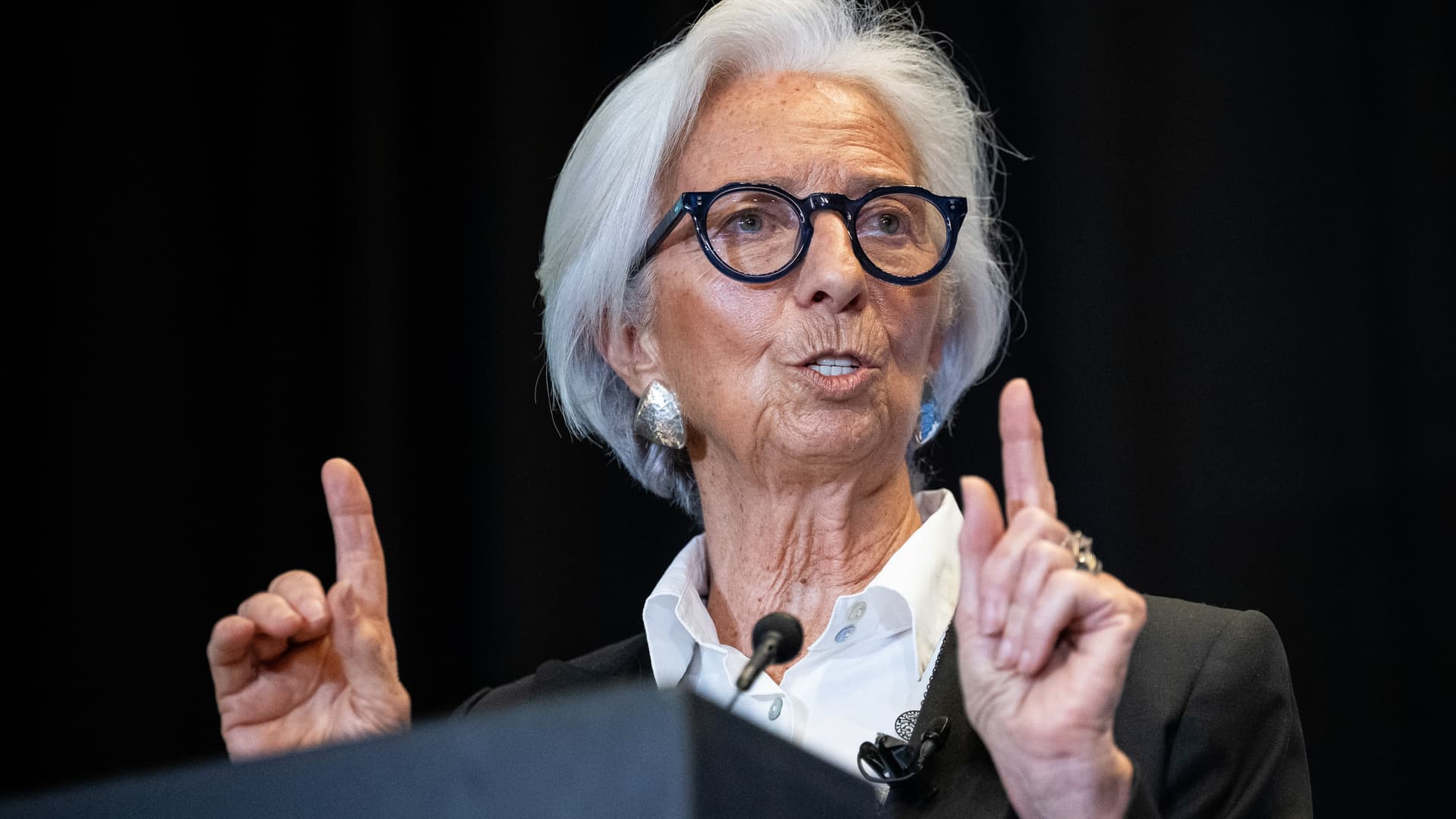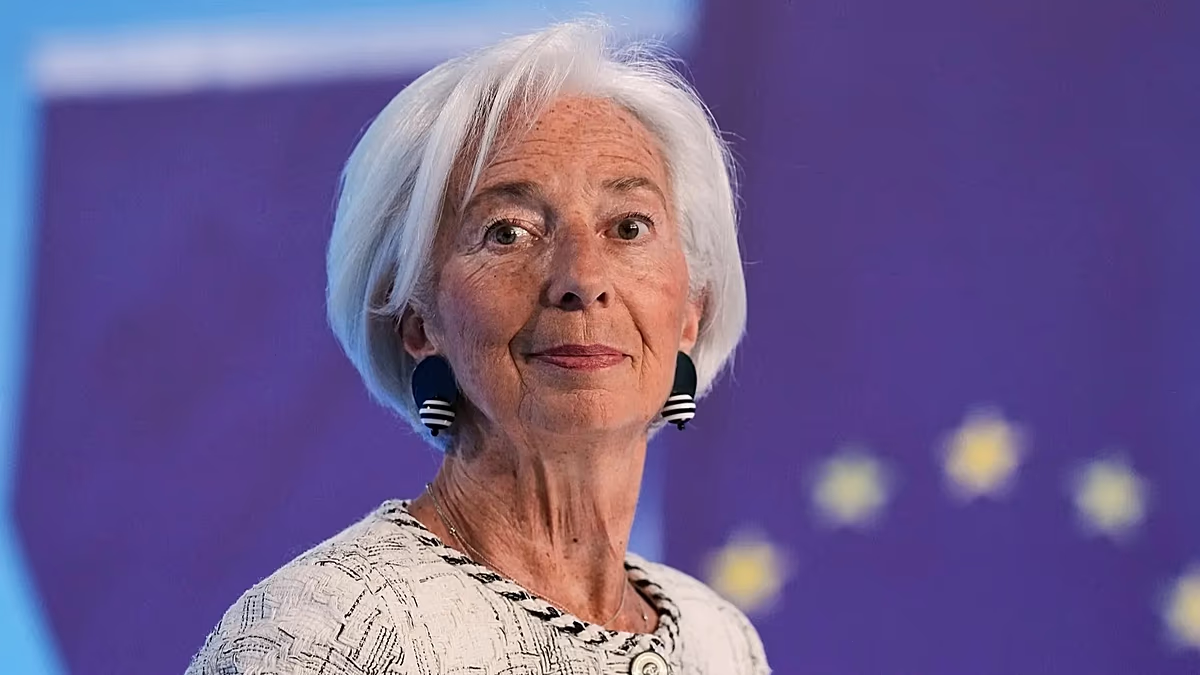
The European Central Bank (ECB) is expected to follow up an almost-certain quarter of a percentage point hike to its key interest rates on Thursday, the first in almost two years, by laying the path for another increase in September, according to economists. The bank’s president, Christine Lagarde, has previously outlined that its governing council could take three potential responses to the energy price shock sparked by the Iran war: “look through” the fuel price rise and see if inflation falls back, “measured tightening” or “forceful or persistent” rates action. More than 60 per cent of 80 economists polled by Reuters last week said they expected the ECB to follow up a rate increase with one additional rate increase this year, likely in September. This is broadly in line with what money markets have priced in. “All in all the ECB looks set to embark on a measured tightening of policy rates but when they stress the uncertainty of events in the Middle East they mean it. Were oil prices to fall rapidly the rationale for further rate hikes might suddenly disappear,” said Conall Mac Coille, chief economist at Bank of Ireland. Euro-zone inflation rose to an annual rate of 3.2 per cent in May, well above the ECB’s 2 per cent target, as energy prices soared 10.9 per cent, according to Eurostat, the European Union’s statistics agency. Within that, core inflation – which excludes energy and food – rose by 2.5 per cent, indicating that the energy shock is having a broader influence on consumer prices across the single-currency region. The ECB’s chief economist, Philip Lane, has already flagged that his staff will likely raise their inflation forecasts in June. A number of ECB governing council members have signalled that a June increase is certain. However, the council will have to balance addressing inflation risks against signs that the outlook for the wider economy is weakening when setting monetary policy.[ Top ECB policymakers lay groundwork for June rate riseOpens in new window ]“There is little doubt about Thursday’s rate decision itself – markets fully price a hike. Instead, the focus will be on any forward guidance,” said HSBC economist Anja Sabine Heimann, adding that signs of slowing underlying economic growth across the euro zone “underscore that the ECB hiking cycle will likely be limited”. The ECB moved its key deposit rate from minus 0.5 per cent to 4 per cent between June 2022 and September 2023 as euro-zone inflation soared to as high as 10.6 per cent, driven by the effects of the Covid-19 pandemic and Russia’s invasion of Ukraine. It subsequently lowered the rate to 2 per cent through a series of cuts over 13 months to September last year. While moves in ECB rates have an automatic impact on loans, like such as tracker mortgages, where costs are tied to policy rates, they also influence how lenders generally price credit and deposits. Irish banks were among the laggards across the euro zone in increasing non-tracker mortgage rates during the last tightening phase, but also trailed when it came to increasing deposit rates. The average rate on new Irish home loans was 3.5 per cent in March, while the average rate on on-demand, or overnight, deposits was 0.14 per cent, according to the Central Bank. The reaction by financial markets to the ECB decision on Thursday “will be shaped by the extent of the [inflation] forecast revisions and by any comments alluding to how high the bar is for the next hike – and when it could come,” said Roman Ziruk, senior market economist at foreign exchange and payments firm Ebury, which is controlled by Spain’s Santander.
ECB set to hike interest rates with another increase in September likely
European Central Bank looks to tamp down inflation fears
609 words~3 min read