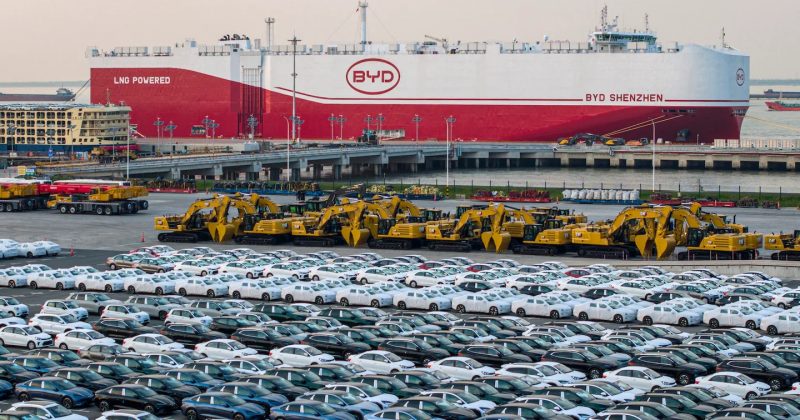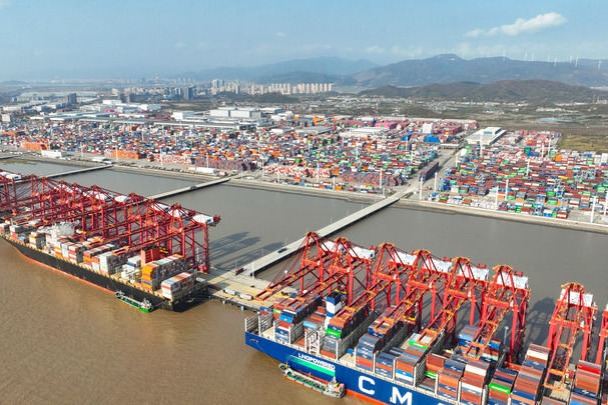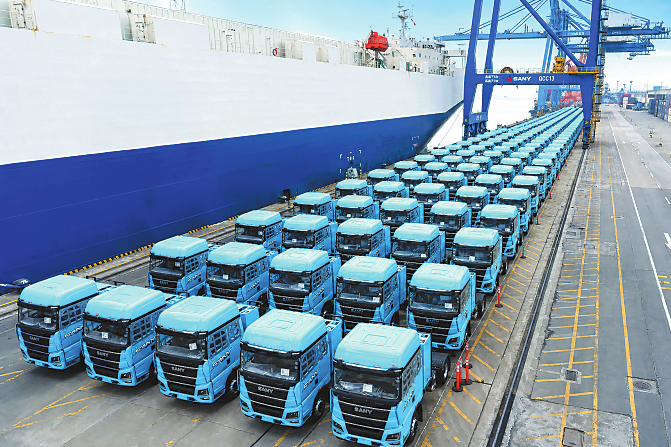
Electric heavy trucks made by Sany Truck await shipment at Guangzhou Port in Guangdong on June 26. CHINA DAILY
Since the second half of 2025, some Western media outlets, politicians and scholars have been promoting the so-called "China Shock 2.0" narrative, portraying China's progress in new energy, electric vehicles, biomedicine and other sectors as a threat. Behind this rhetoric is a familiar purpose: to provide a new justification for protectionist policies.
The phrase may sound new, but the argument is old. "China Shock 2.0" is merely the latest version of the "China overcapacity" theory and the "China threat" narrative. Twenty years ago, some in the West spoke of a "China Shock 1.0", claiming that China's low-cost, labor-intensive goods had disrupted developed markets. But a broader look at world economic history shows that every major technological revolution and industrial shift has produced anxiety among vested interests. British machine production replacing Indian handloom weaving in the 19th century, the rise of the United States auto industry relative to Europe's in the 20th century and the effect of Japanese cars on Detroit in the 1980s all followed this pattern. What is now called a "shock" is, in essence, a normal adjustment of dynamic comparative advantage.