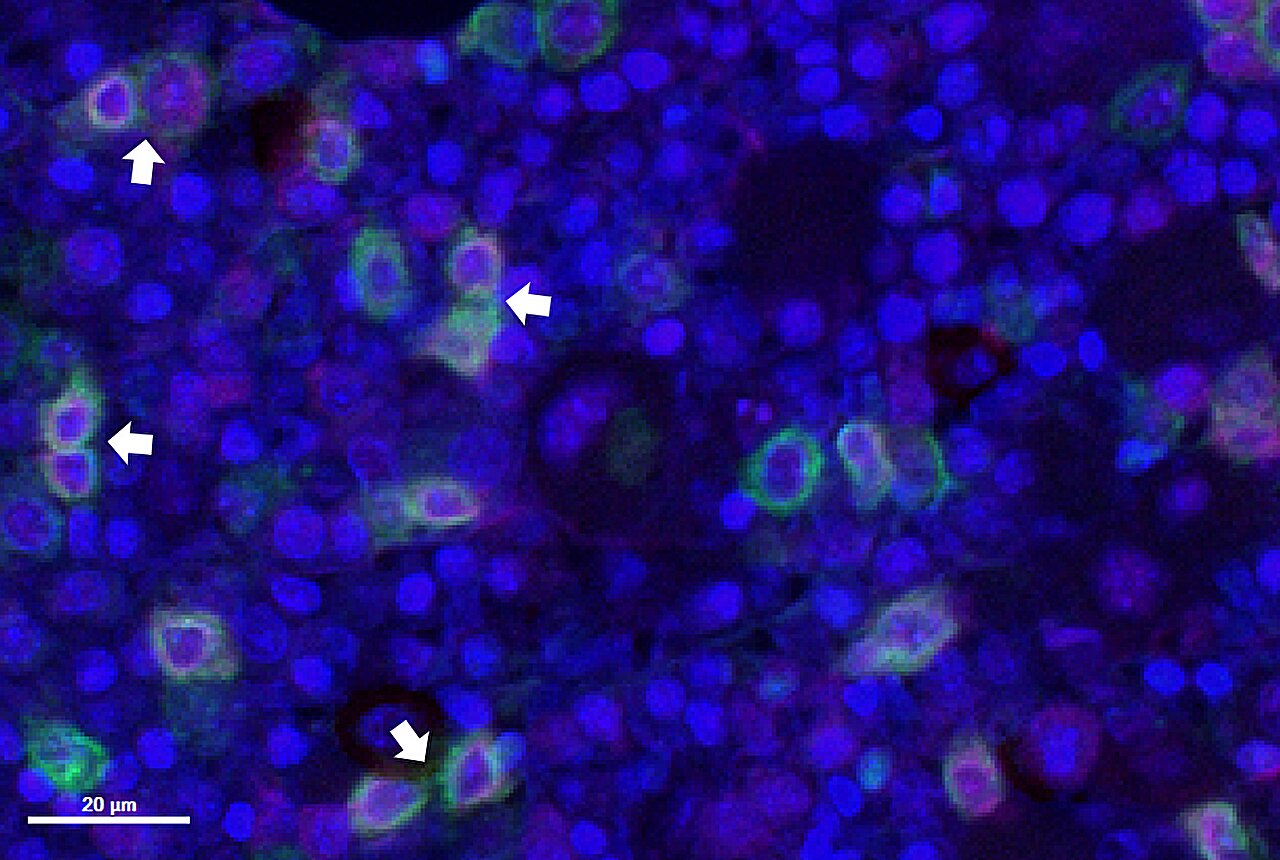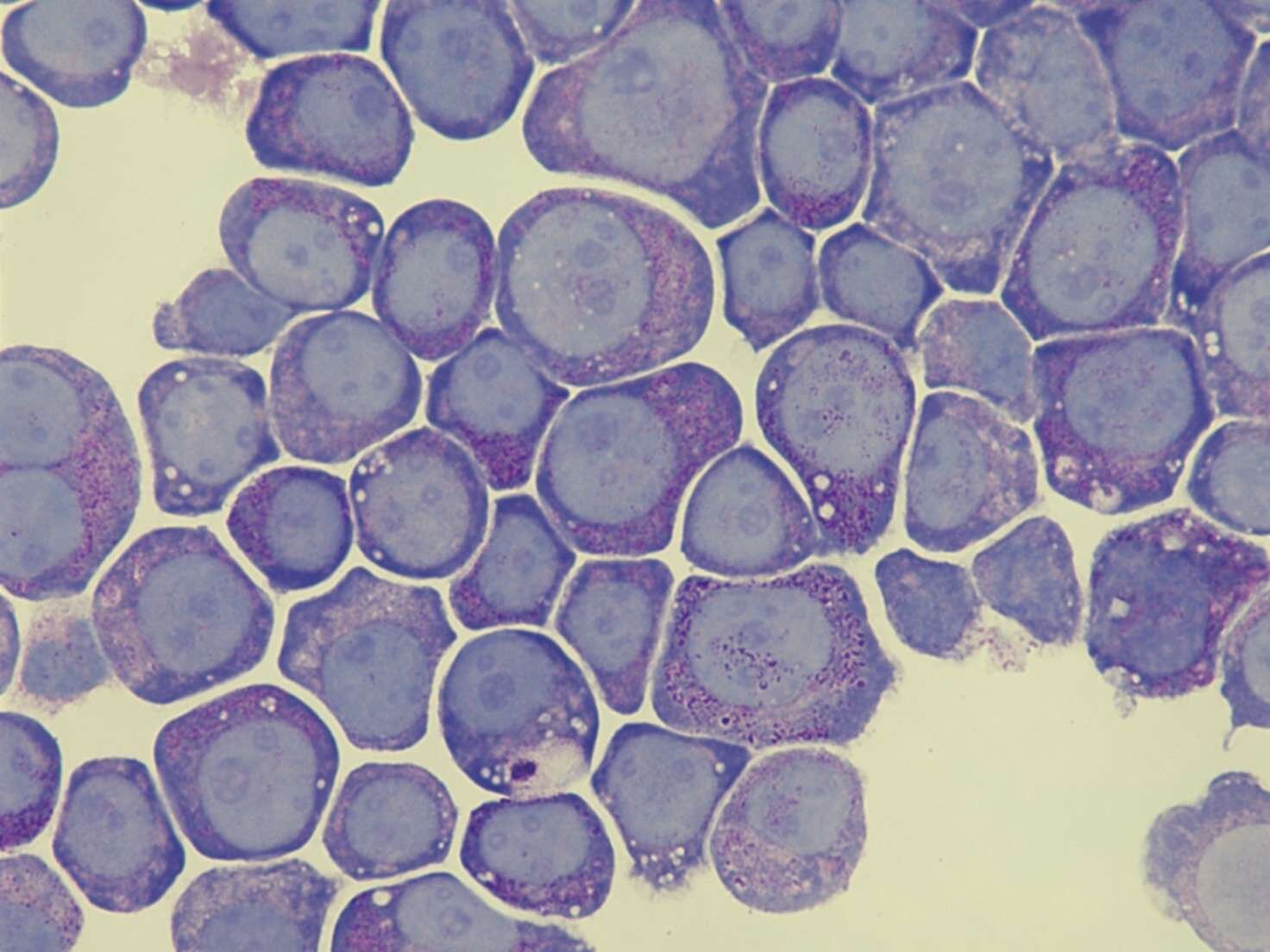
An image of human leukemia cells. A research team discovered two essential components to the formation of some types of white blood cells, which could lead to a new treatment option for some leukemia patients. Credit: Raquel Espin Palazon/Iowa State University
In leukemia's most aggressive forms, the blood cell factories in our bone marrow falter. Instead of dividing and multiplying at their usual prolific pace, generating hundreds of billions of new cells daily, some precursor cells stall out at an immature stage.
"They never finish. They never become what they should be. Because they are progenitor cells, they don't really have a function and just expand and collapse our bone marrow," said Raquel Espin Palazon, an associate professor of genetics, development and cell biology at Iowa State University.
New findings by a research team led by Espin Palazon identified two essential components—a pervasive protein and a crucial cellular signaling pathway—needed to make some types of blood cells, a discovery that could lead to a new treatment for leukemia.
Puzzling protein levels