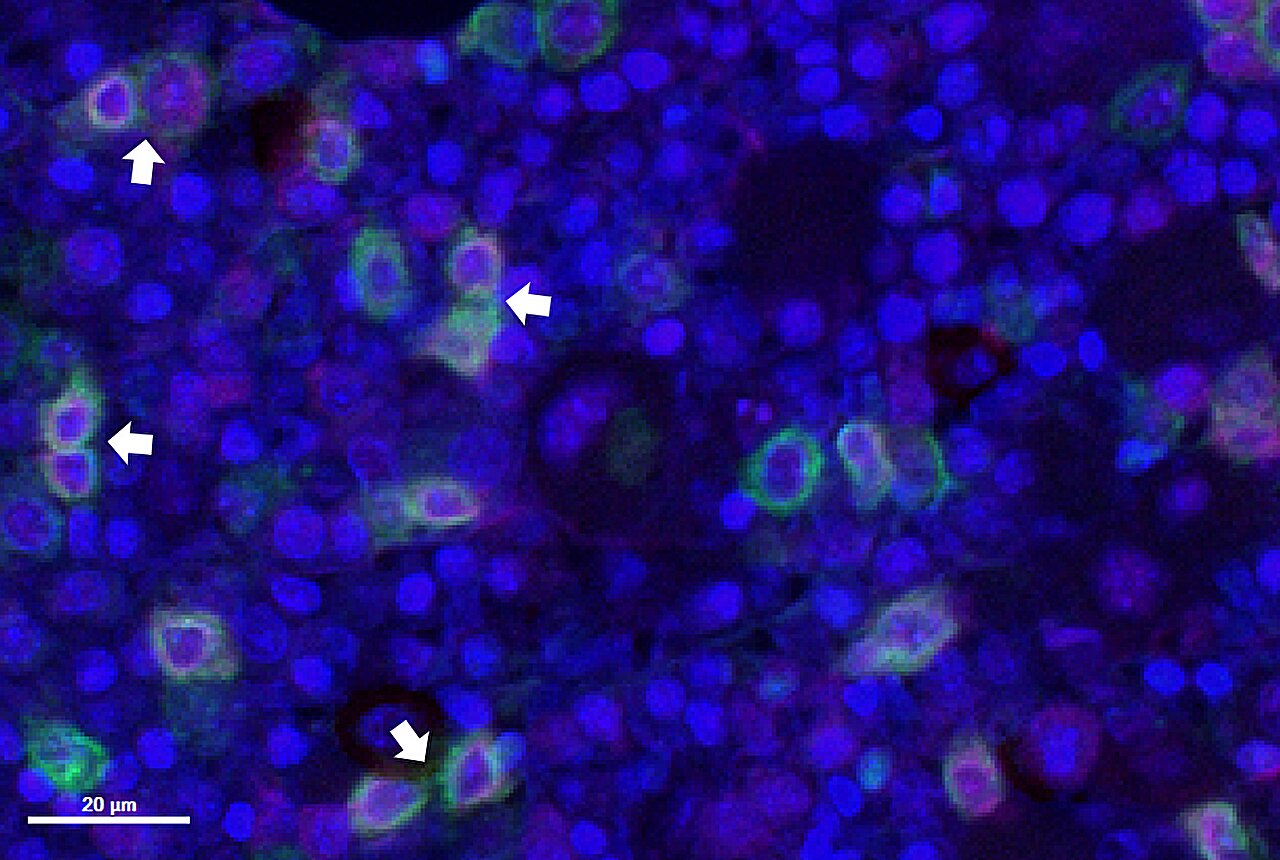
Atypical clustering of myeloid progenitor cells called "myeloblasts" (white arrows), defined by their co-expression of CD34 (magenta) and CD117 (green), in a bone marrow biopsy tissue from a patient with MDS. Credit: Dr. Sanjay Patel
Weill Cornell Medicine investigators have developed a new AI-based method to assess patients with a form of blood cancer called myelodysplastic neoplasms. The method, published June 30 in Leukemia, compares the physical locations and morphometric (size and shape) characteristics of every hematopoietic cell in a patient's bone marrow sample with those in healthy bone marrow to generate a score that reflects disease severity.
Myelodysplastic neoplasms (MDS) are a form of blood cancer that usually affects older adults. About one-third of patients progress to a more aggressive cancer called acute myeloid leukemia. Patients with MDS must undergo frequent biopsies to identify signs of remission or worsening disease.
"It's fundamentally a chronic and progressive disease," said Dr. Sanjay Patel, clinical chief of hematopathology and an associate professor of pathology and laboratory medicine at Weill Cornell Medicine. "With the current methods pathologists use to assess MDS samples, there are some clear-cut cases and a lot of gray area."