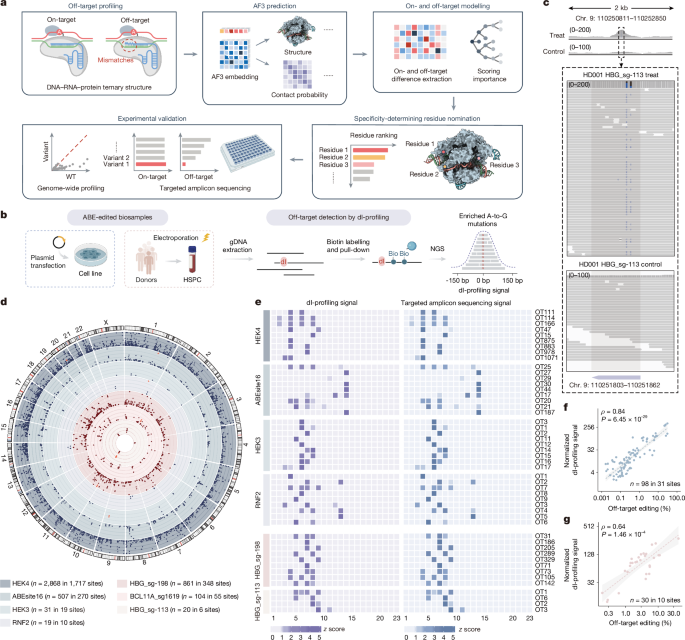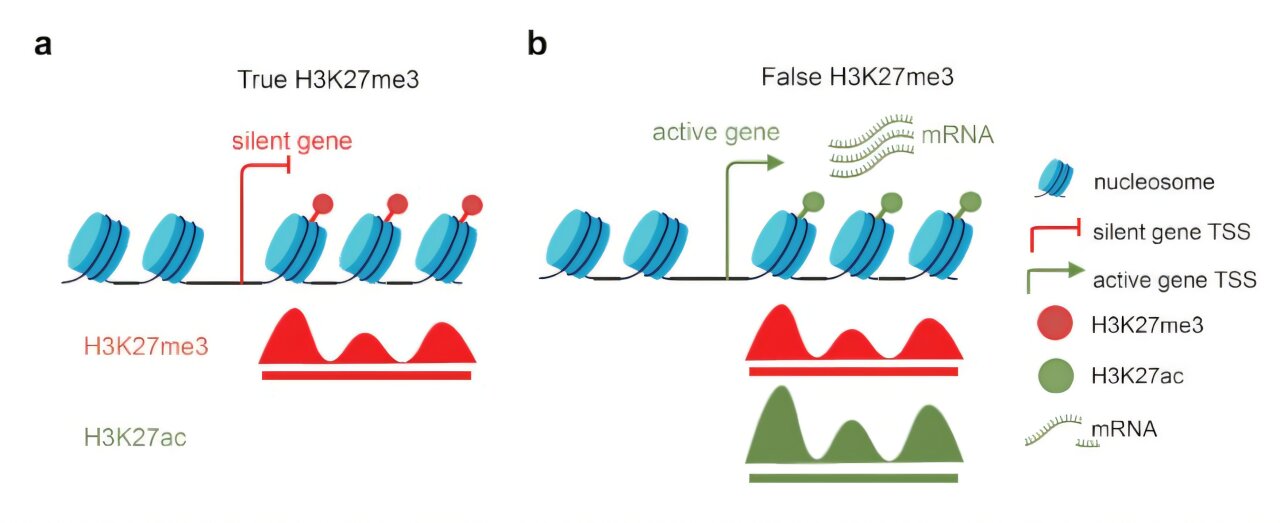
Selection of true and false H3K27me3 CUT&Tag signals. (a, b) Schematics of genomic regions with true (a) and false (b) H3K27me3 CUT&Tag signals. Credit: bioRxiv DOI: 10.1101/2025.09.02.673784
University of Virginia School of Medicine scientists have identified a widespread source of error in a popular method for studying the genome and created a machine-learning tool to correct it. The free tool could improve the reliability of both conventional and single-cell data generated using this method, giving researchers a clearer view of how gene activity is controlled in health and disease and providing stronger foundations for future diagnostic and drug-development efforts.
Although nearly every cell in the body contains the same DNA sequence, different cells use different sets of genes to maintain their identities and functions. Much of that control comes from the "epigenome"—chemical modifications and structural features of chromosomes that influence whether genes are turned on or off without changing the DNA sequence itself.
The CUT&Tag (Cleavage Under Targets & Tagmentation) method can map these epigenomic features efficiently from very small samples and even from individual cells. However, the UVA researchers, led by Chongzhi Zang, Ph.D., found a "hidden bias" in the method that creates artifacts resembling genuine biological signals.