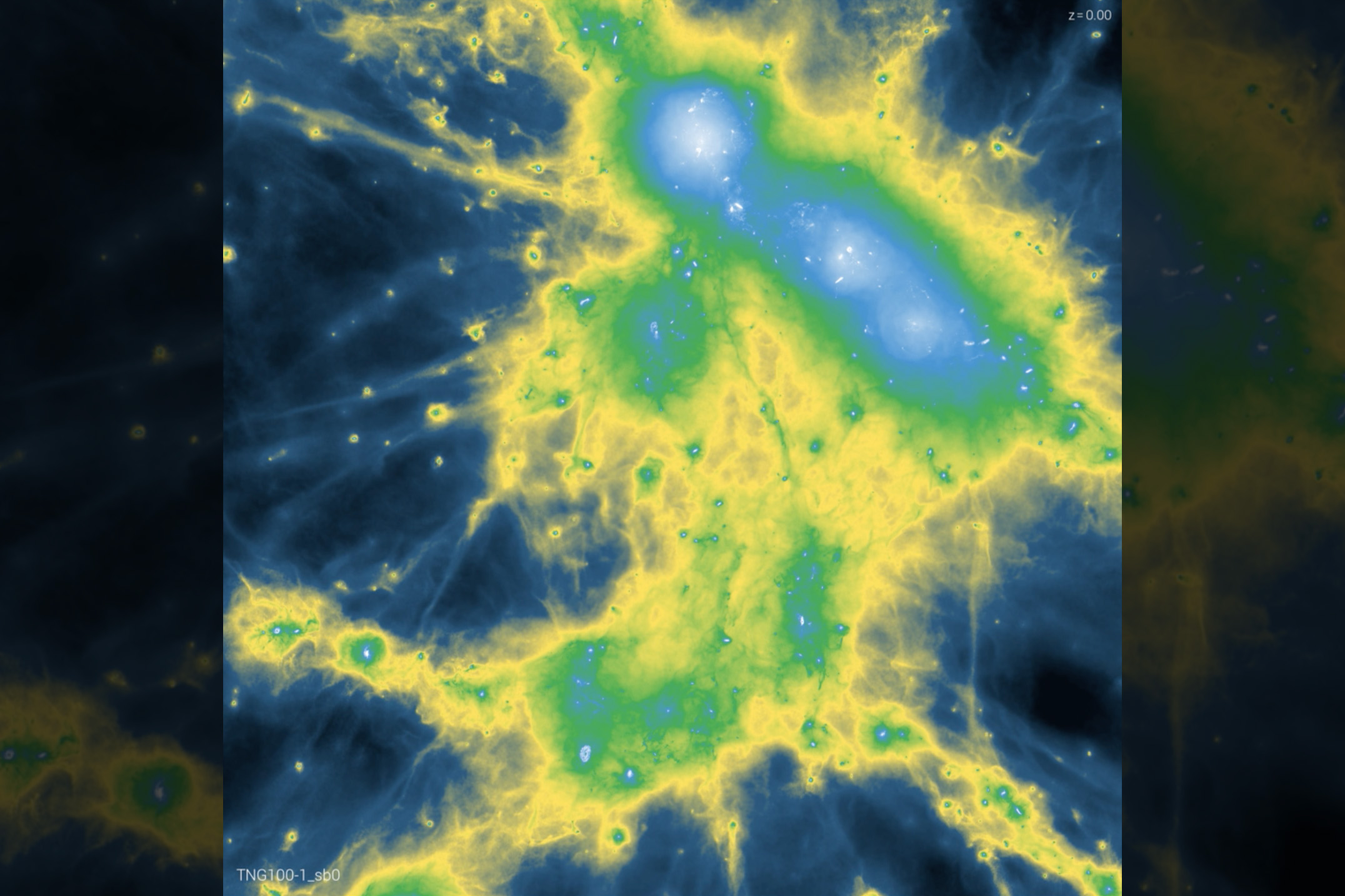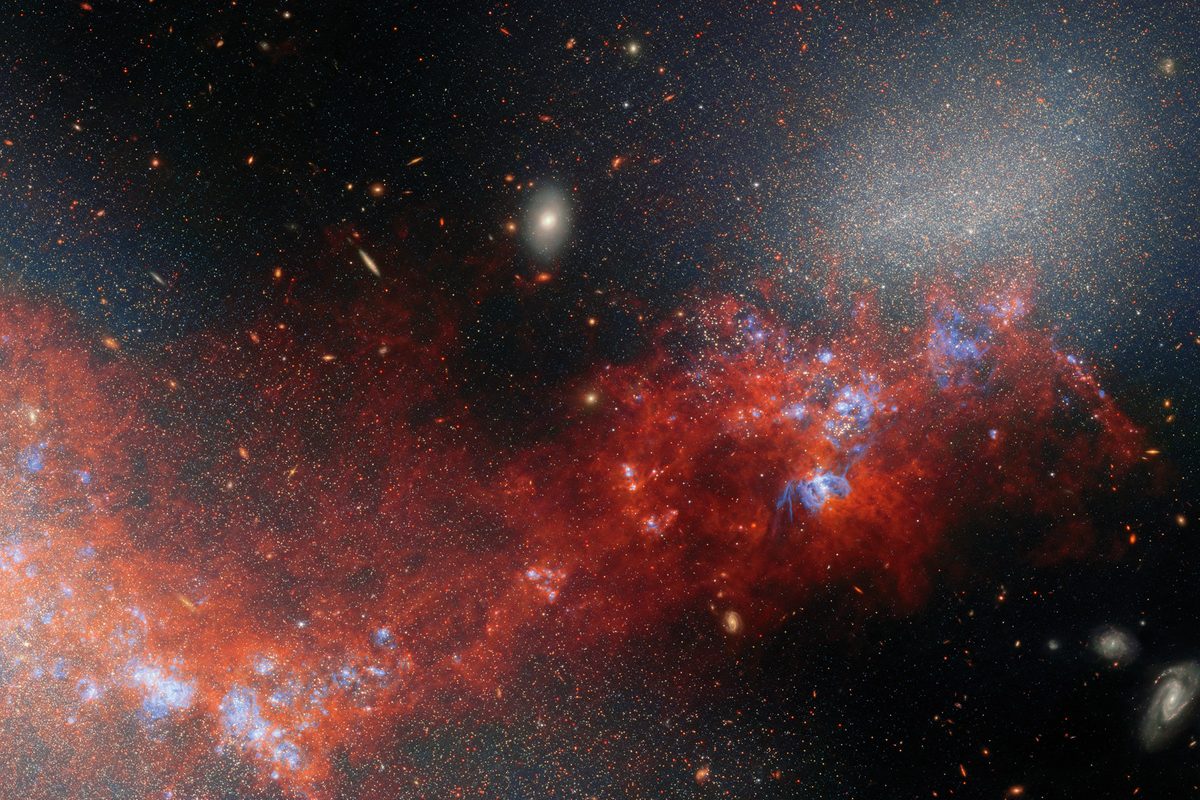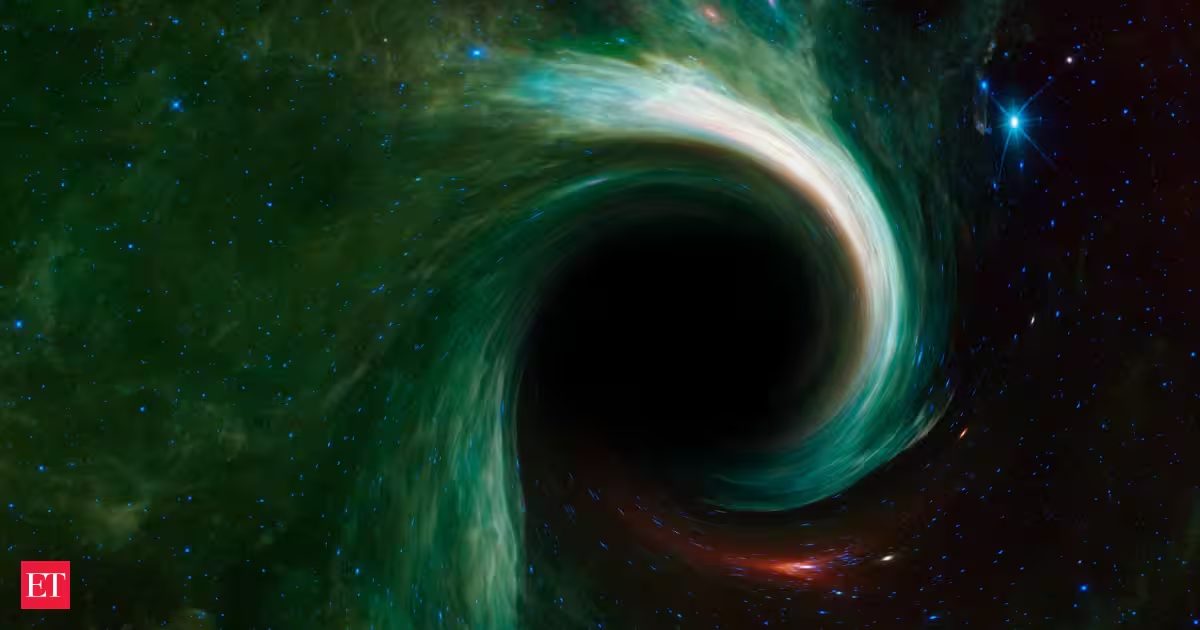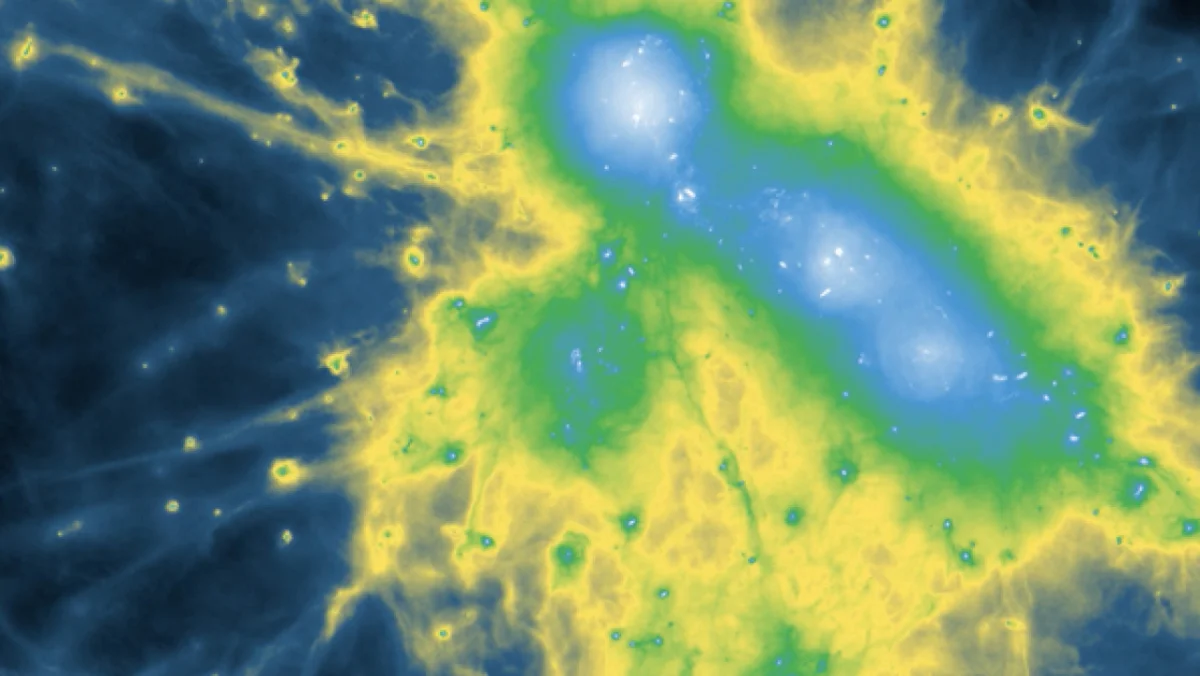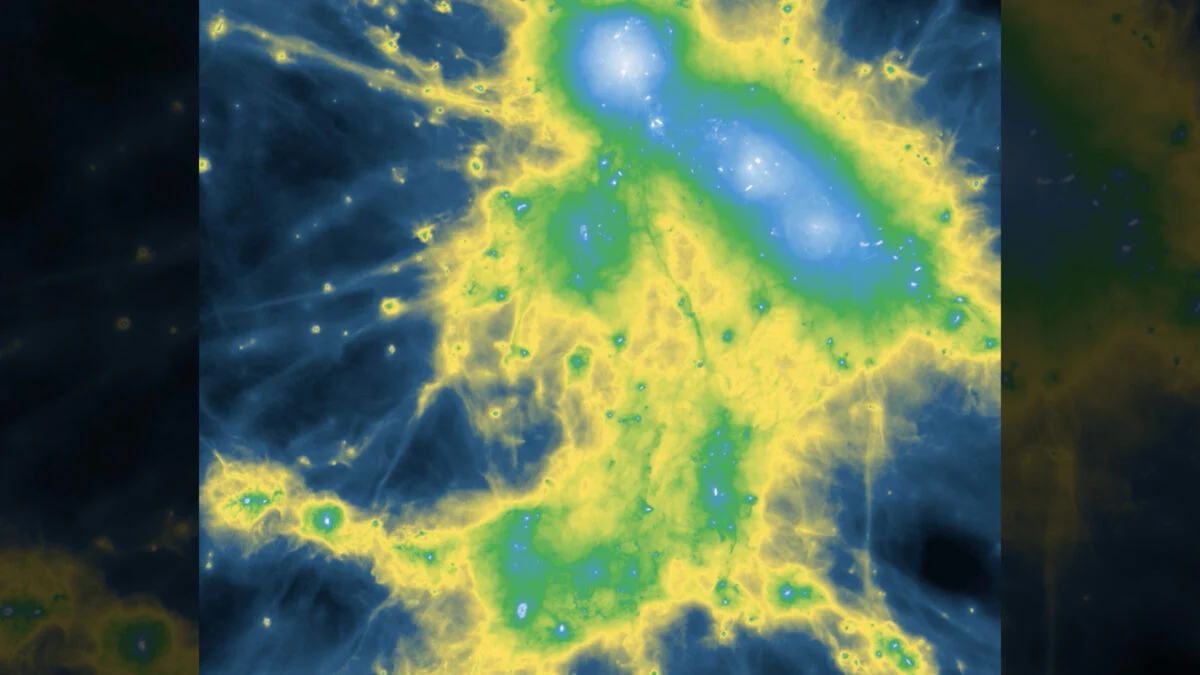
A huge missing chunk of our universe has been found at last, but I’m not talking about dark matter. For decades, there’s been a discrepancy between the amount of ordinary—neither invisible nor dark—matter that we should see and that which we actually observe. A new study published today in Physical Review Letters suggests that, fortunately, this conflict does not reflect poorly upon leading astrophysical models. By studying “smears” in fast radio bursts, researchers successfully mapped the distribution of this missing ordinary matter, which turned out to be diffuse clouds of baryonic gas surrounding galaxy clusters. These diffuse clouds may be flung outside galaxies through black hole jets, according to the researchers. “We are finding that the activity in galaxies is messier than we thought,” Haochen Wang, the study’s first author and a graduate student at the Massachusetts Institute of Technology (MIT), told MIT News. “They’re more like fountains and really push out gas to very large distances.” Ordinarily elusive More formally, “ordinary” matter in this context refers to matter consisting of baryons, a family of particles that include protons and neutrons. Estimates posit that about 17% of the early universe consisted of baryonic matter, some of which evolved to become planets, stars, galaxies, and more. However, the total mass of all visible objects in the universe adds up to a measly 10% of that 17%, according to the paper.
Scientists Finally Found the Universe's Missing 'Ordinary' Matter
Two mysteries come together to address a decades-long puzzle.
699 words~3 min read