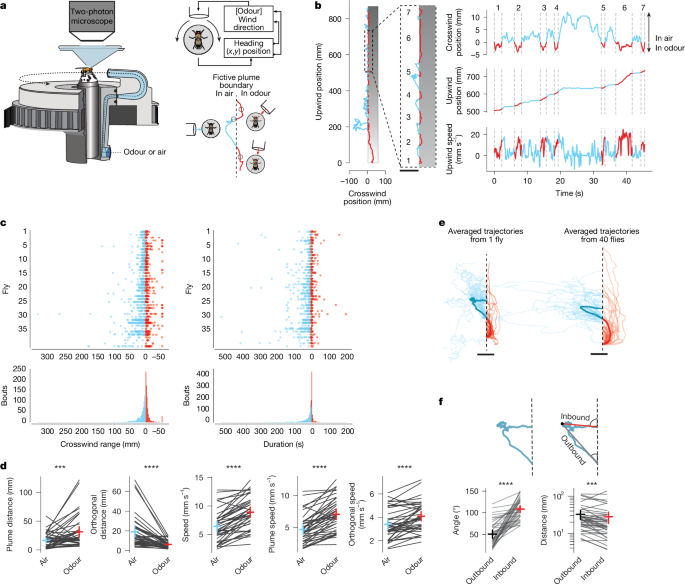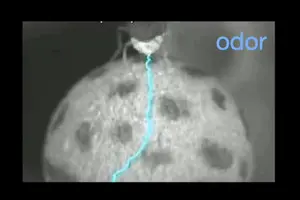
video: Video footage from software that tracks the trajectories of fruit flies as they weave in and out of an odor plume. The Ruta lab's latest study reveals how flies store a memory of how to relocate a scent, even after it disappears.
view more
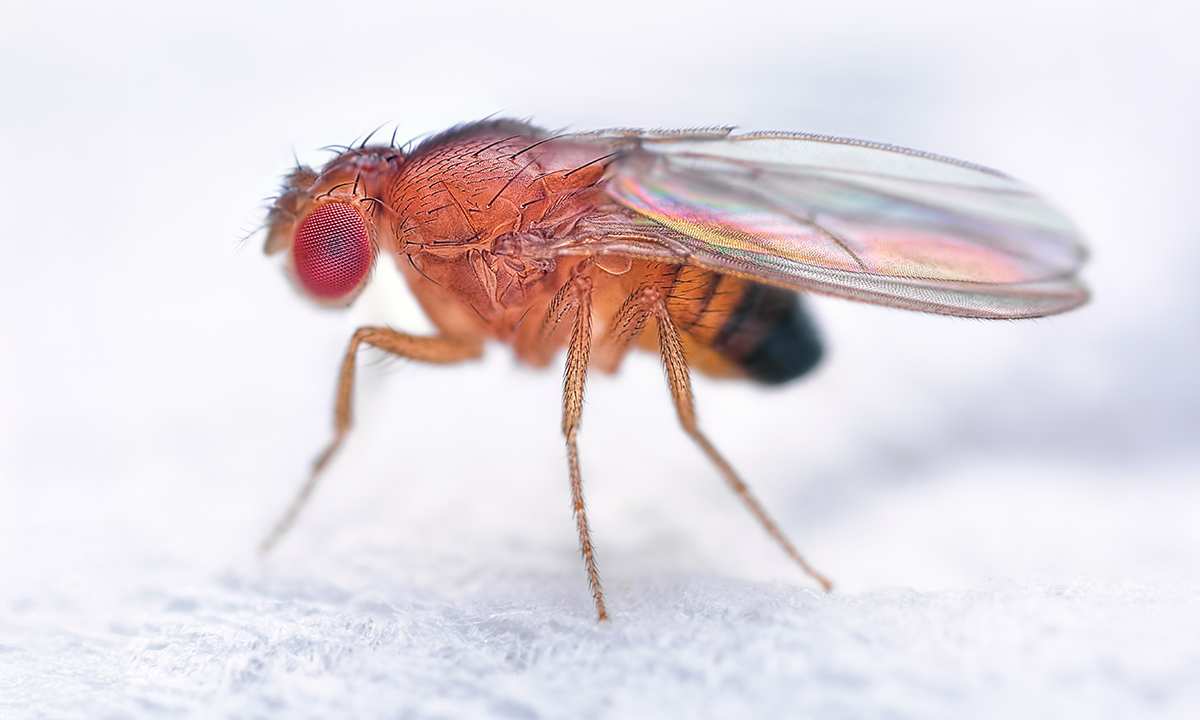
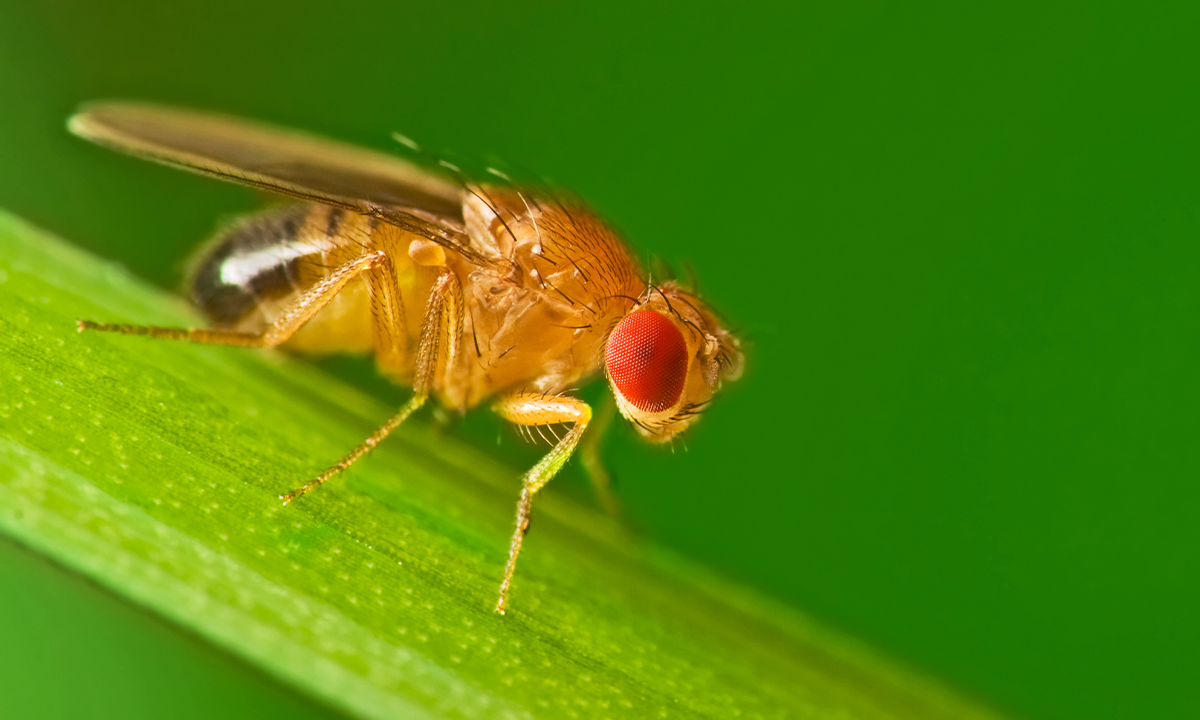
When a fruit fly catches a whiff of a ripe peach, it quickly heads toward it. Time after time, it finds the fruit—even from many feet away and even if the scent arrives only as a few drifting, disconnected puffs.
How do they home in with such unerring accuracy? Scientists have long assumed that all insects track smells with simple reflexes, turning straight upwind when they smell something appetizing. Now, researchers in Vanessa Ruta’s lab at Rockefeller University have found that flies use a more complex navigational strategy, which relies on a sophisticated memory system. As flies track an odor, they weave along the edge of the odor’s plume. Each time they cross into and out of the plume, they store a directional memory that points back toward the scent plume, transforming a fleeting odor encounter into a spatial memory. This stored memory is what allows them to keep navigating towards the odor source even if the plume is not aligned with the wind or wafts away.