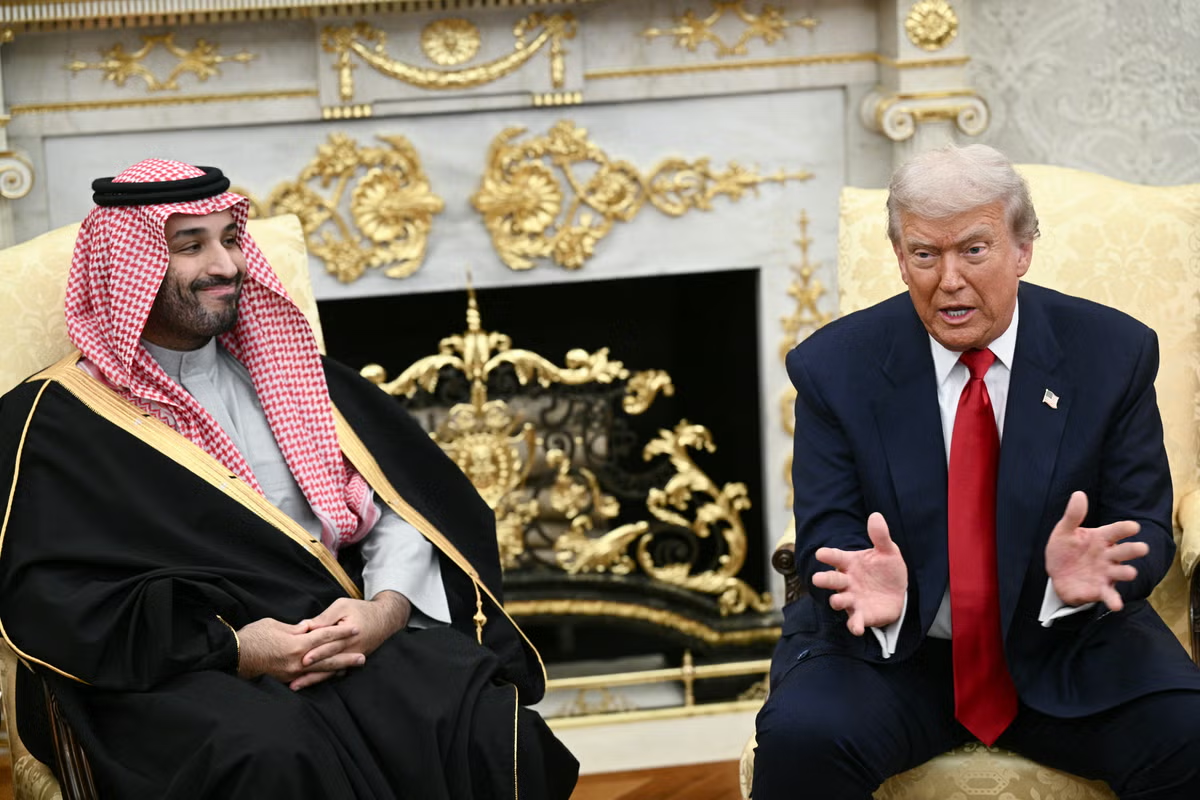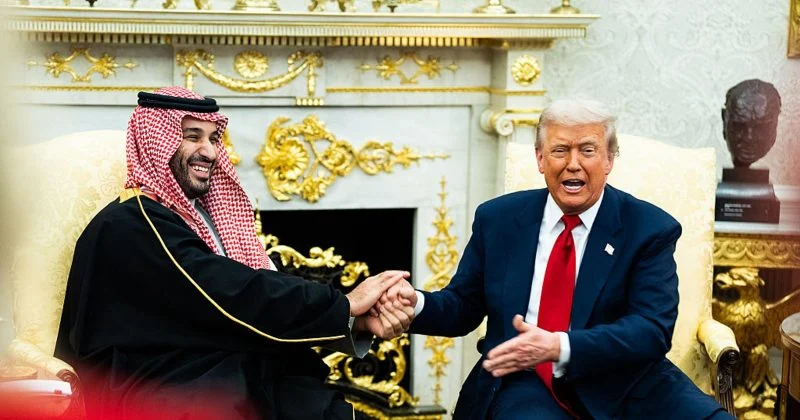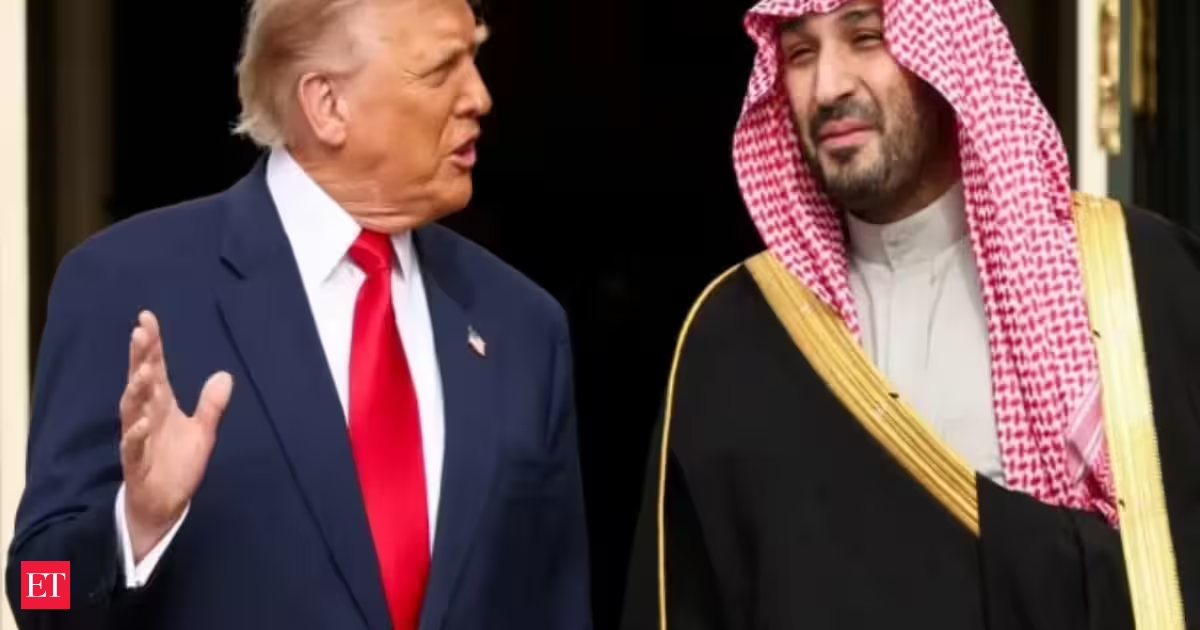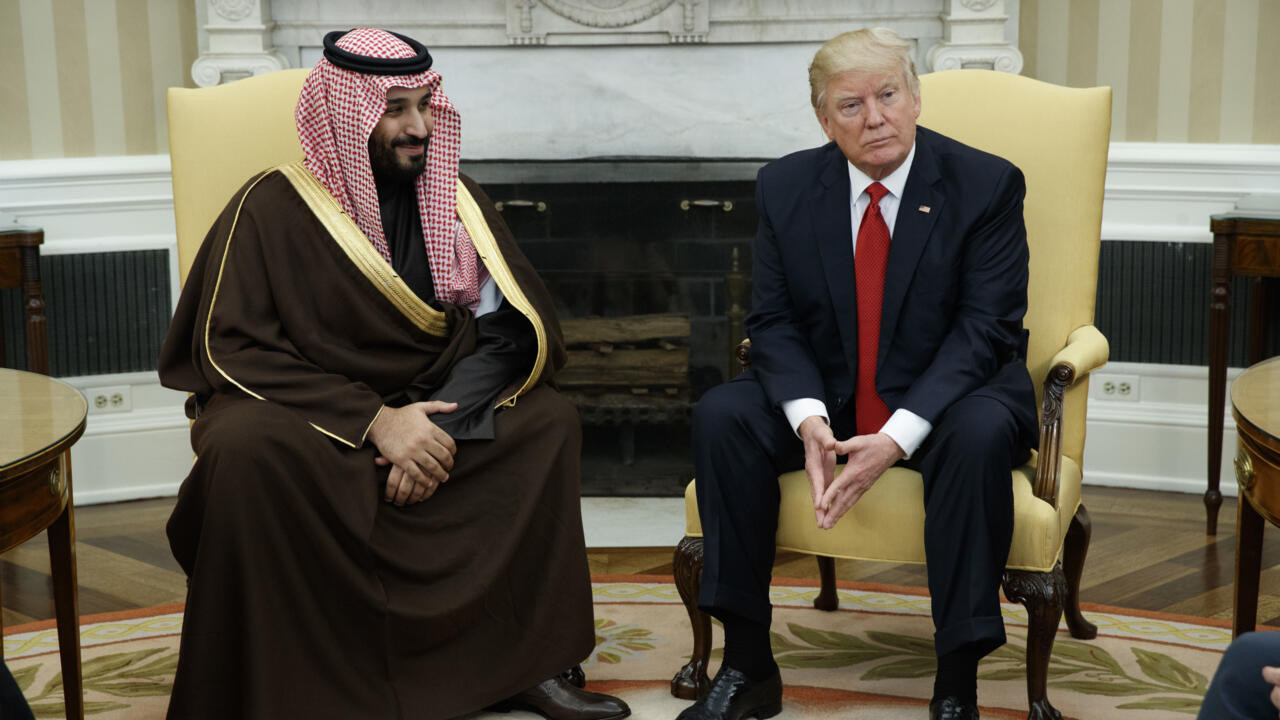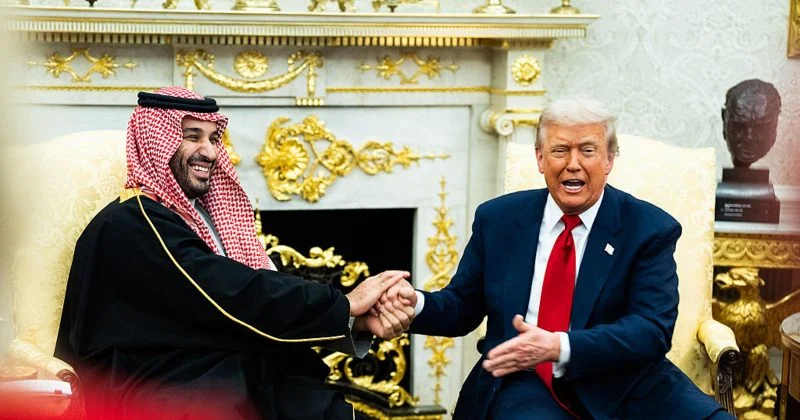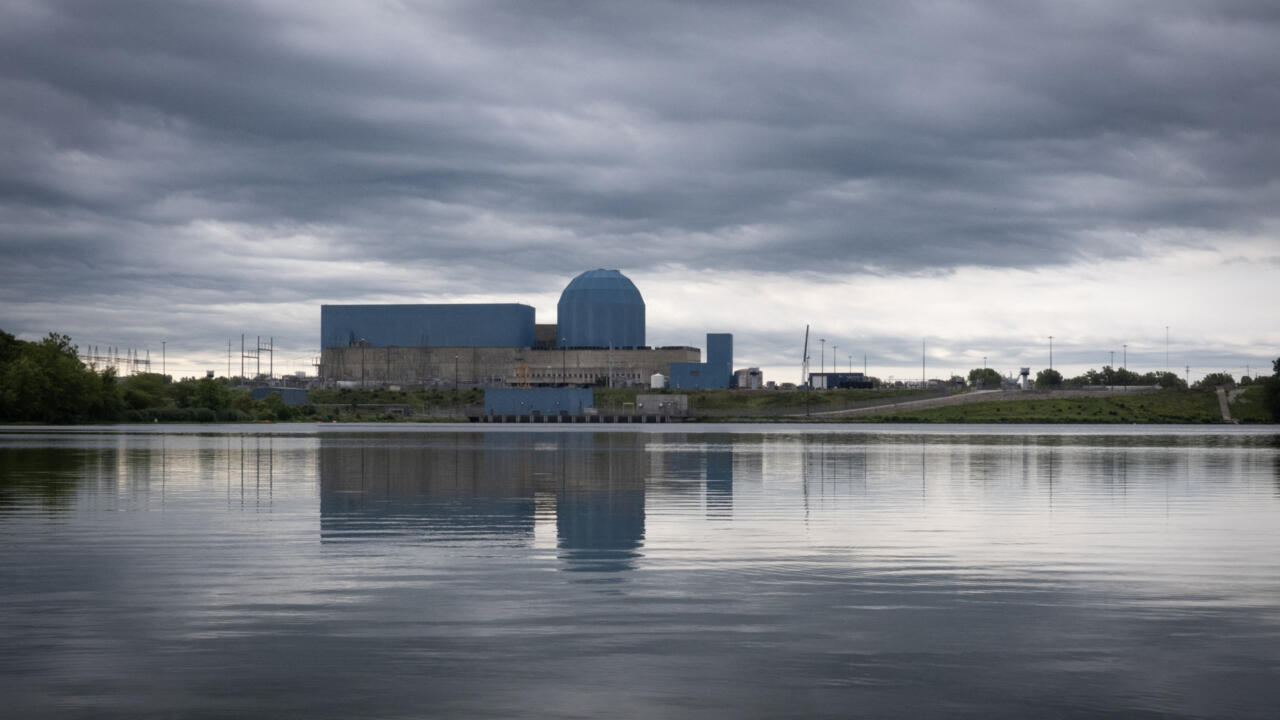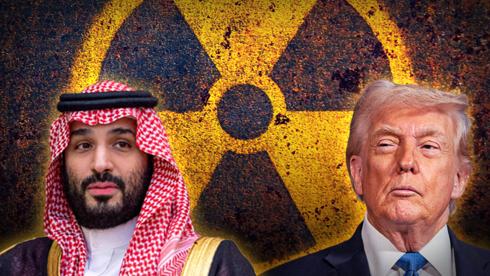
CBS says 30-year agreement will allow US firms to develop Saudi nuclear power and launch a study into uranium enrichment, without requiring normalization with Israel or Riyadh’s adoption of the IAEA’s strict Additional Protocolynet|The United States is expected to formally sign an agreement with Saudi Arabia on Wednesday evening under which Washington will help Riyadh develop a civilian nuclear program, without requiring the kingdom to normalize relations with Israel or accept the “gold standard” of strict international oversight intended to prevent civilian technology from being used to develop nuclear weapons. CBS reported that the agreement was expected to be signed at around 8:30 p.m. Israel time.Negotiations between the United States and Saudi Arabia over a civilian nuclear program have continued for years. During the Biden administration, the assistance was proposed as part of a broader package conditioned on Saudi normalization with Israel.GalleryTrump and Mohammed bin Salman meet at the White House last November (Photo: Win McNamee/Getty Images)With normalization talks deadlocked, however, the Trump administration removed that condition after continuing the nuclear negotiations with Riyadh last year.According to reports, a draft agreement was completed as early as October 2025, but the deal was not advanced toward final signature because of the war with Iran and concerns over opposition in Congress. The Wall Street Journal reported Tuesday night that President Donald Trump gave final approval for the signing last week.According to reports in the U.S. media, the agreement will remain in force for 30 years and allow American companies to help Saudi Arabia develop a civilian nuclear program, including nuclear power plants that CBS said would be operated by U.S. firms.The agreement has raised concern among nuclear nonproliferation experts and in Israel because it gives Riyadh a potential path toward enriching uranium on Saudi soil.Under the agreement, Saudi Arabia and the United States will conduct a two-year study as the project advances to determine whether it would be economically viable to establish a uranium enrichment facility in the kingdom rather than rely on shipments of enriched uranium from the United States under strict supervision.The Journal reported that if the study concludes enrichment in Saudi Arabia is economically justified, U.S. companies would develop the facility under a secret arrangement known as a “black box,” designed to prevent Saudi Arabia from gaining access to sensitive enrichment technology.The newspaper also reported that if Washington opposes establishing the facility after the study, Saudi Arabia would be barred from pursuing domestic enrichment or receiving assistance from another country, but only for 10 years.Trump administration officials have argued that U.S. involvement in the Saudi program would ensure enriched uranium is not diverted for military purposes and that Saudi Arabia would not be able to reprocess spent reactor fuel to extract plutonium, which, like enriched uranium, can be used as fissile material in a nuclear weapon.Nonproliferation experts, however, have warned that the agreement could create a loophole allowing Saudi Arabia to develop a nuclear weapon in the future.Some have raised the possibility that Riyadh could one day nationalize an enrichment facility built under the agreement, forcing the United States to decide whether to attack it.Saudi Arabia has refused to commit to renouncing uranium enrichment. The concern is heightened by Crown Prince Mohammed bin Salman’s previous warning that the kingdom would develop a nuclear weapon if Iran did so.The terms are also seen as problematic in the context of Iran because they undercut the Trump administration’s demand that Tehran completely abandon uranium enrichment on its territory under any future nuclear agreement.The Barakah nuclear power plant, developed by the United Arab Emirates with US assistance under the ‘gold standard’ requiring strict international oversightThe Saudi deal also reportedly does not require Riyadh to sign the International Atomic Energy Agency’s strict Additional Protocol.The United Arab Emirates agreed to that protocol as part of its 2009 civilian nuclear agreement with the United States, which has since been considered the “gold standard” for such cooperation agreements.CNN reported Wednesday evening that Saudi opposition to the IAEA’s stricter inspections was allegedly driven by concern that inspectors could be allowed to enter the holy city of Mecca or royal palaces.The U.S.-Saudi agreement reportedly includes oversight measures similar to those in the Additional Protocol, but without the provisions that raised concern in Riyadh.The Trump administration insists those safeguards will be sufficient, but anonymous officials told CNN that the agreement limits the types of inspections that can be applied to the Saudi program, a provision expected to generate opposition in Congress.Although the administration must submit the agreement to lawmakers in Washington for review, even fierce opposition would be unlikely to stop it.The Journal reported that a two-thirds majority would be required to override a Trump veto of any congressional resolution seeking to block the deal.Saudi Arabia is the world’s largest oil exporter but argues that it needs a civilian nuclear program as part of Crown Prince Mohammed bin Salman’s broader effort to diversify the country’s energy sources.Riyadh says nuclear power would allow it to consume less oil domestically, increase exports and operate artificial intelligence data centers.Trump and Netanyahu (Photo: JOE RAEDLE / GETTY IMAGES NORTH AMERICA / AFP)Experts fear the agreement could set a dangerous precedent and encourage other countries to demand similarly lenient terms that could also offer them a potential path to a bomb. “Where Saudi Arabia goes, the United Arab Emirates, Turkey and Egypt will follow,” Henry Sokolski, executive director of the U.S.-based Nonproliferation Policy Education Center, told the Journal. “The idea that this agreement will lead to a happy ending is delusional.”Israel has also expressed concern about the agreement, particularly disappointment over the Trump administration’s decision to abandon the normalization condition.Senior Israeli officials familiar with the issue have acknowledged in closed discussions that the development is negative for Israel. They said removing the normalization requirement reduces the leverage Israel held over Saudi Arabia and reflects a further erosion of Jerusalem’s standing with the Trump administration.The officials said the move joins a series of U.S. decisions viewed in Jerusalem as problematic, including efforts to advance the sale of F-35 fighter jets to Turkey and Washington’s willingness, in negotiations with Iran, to set aside issues Israel regards as red lines, including Tehran’s ballistic missile program and its continued support for terrorist organizations and militias across the Middle East.
US set to sign Saudi nuclear deal within hours, dropping normalization and strict safeguards
CBS says 30-year agreement will allow US firms to develop Saudi nuclear power and launch a study into uranium enrichment, without requiring normalization with Israel or Riyadh’s adoption of the IAEA’s strict Additional Protocol
1,040 words~5 min read