Introduction
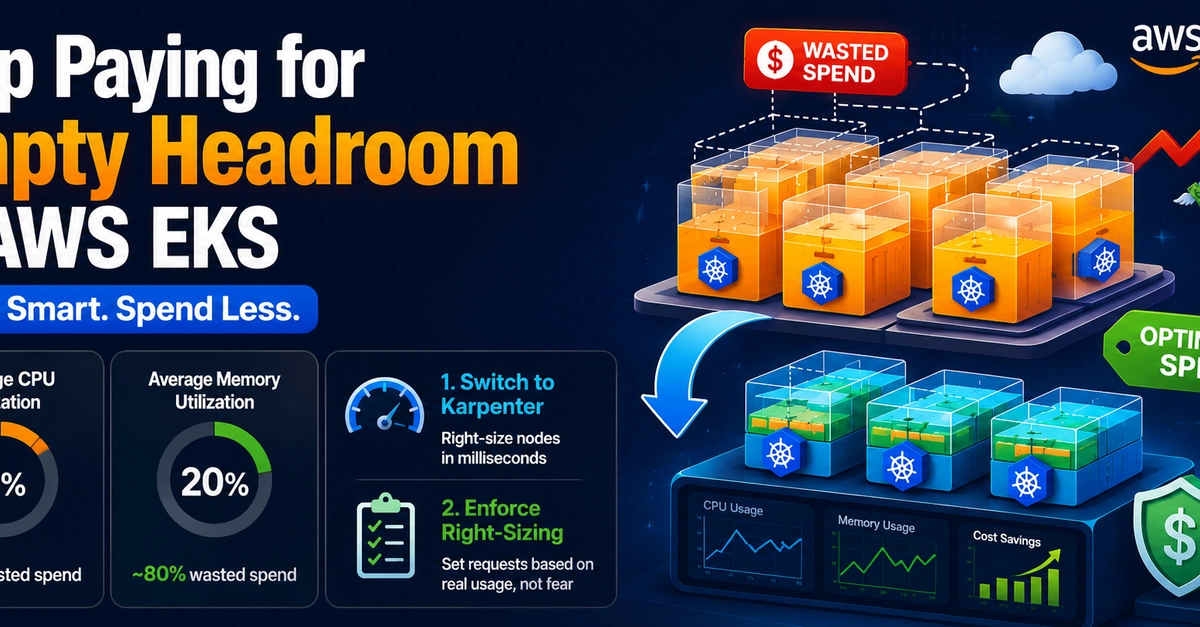
Kubernetes has emerged as the cornerstone of modern cloud-native infrastructure, yet its resource management paradigm is marred by systemic inefficiencies. Contrary to common assumptions, the primary issue is not a lack of technical knowledge but a structural deficiency in feedback mechanisms. Teams establish resource requests with insufficient empirical data, often defaulting to over-provisioning as a risk mitigation strategy. These values, once set, rarely undergo revision, leading to persistent resource wastage. Consequently, clusters become overburdened with idle CPU and memory, inflating costs and impairing scalability.
The Anatomy of Over-Provisioning
Consider a representative scenario: a service benchmarked at 300 millicores (mCPU) is allocated 1000 mCPU. This inflation stems from organizational incentives prioritizing outage avoidance over efficiency optimization. The absence of alerts for resource wastage ensures these values remain unchallenged across deployment cycles, perpetuating inefficiency. New services inherit these inflated values from legacy manifests, creating a self-sustaining cycle of over-provisioning. Analogously, this resembles operating a vehicle’s engine at maximum capacity continuously, despite peak power being required only intermittently. The resultant heat dissipation, fuel consumption, and mechanical wear are unnecessary, yet the system lacks a regulatory mechanism to modulate resource utilization.