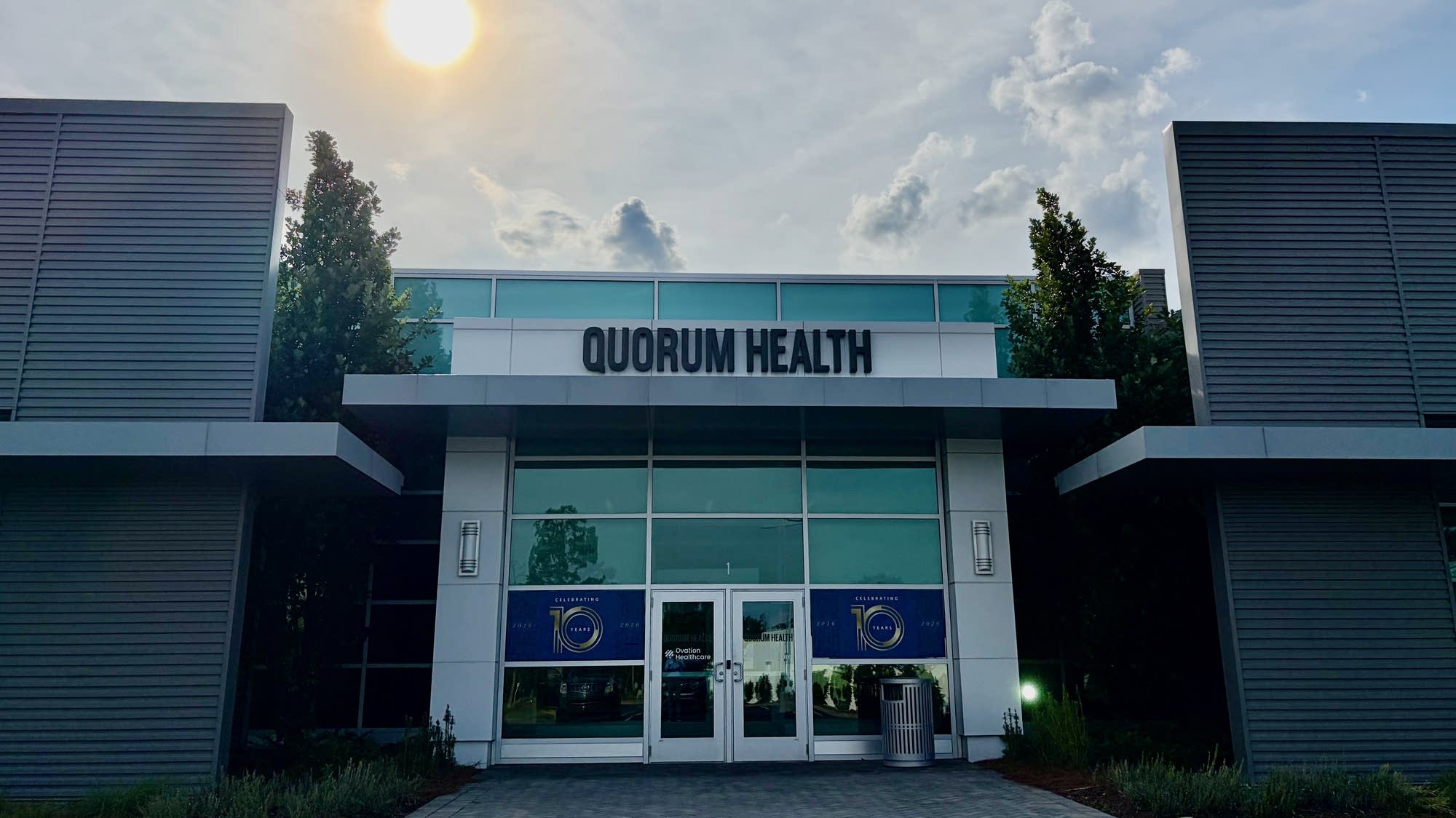
In late May, Gregory Brentano attended a meeting with about 50 community healthcare leaders. At the time, he was the interim CEO of McKenzie-Willamette Medical Center in Springfield, Oregon. “I asked if I could make an announcement. And I told our audience that McKenzie-Willamette Medical Center was converting to a nonprofit,” he said.News of the hospital’s move away from private equity ownership to nonprofit status got a big response. “The ovation was deafening,” said Brentano. “I mean, it was just so much positivity. It was pretty incredible.”Brentano later shared the positive reception with Chris Harrison, the CEO of Quorum Health, the private equity backed company that owns McKenzie-Willamette and 10 other hospitals.Chris Harrison plans to stay on as CEO as Quorum Health if the company’s move to become a nonprofit receives regulatory approval. Blake Farmer/WPLN NewsHarrison sees the change in tax status as a financial move, not a change in mission. “ We already kind of operate like a nonprofit, so we really don't have to change a lot of the culture, mission, values,” said Harrison. “All we do is change that the entity that owns us now doesn't pay taxes.” Private equity backed firms now own about one in 10 U.S. community hospitals – but takeovers don't guarantee profits.A capital heavy business that requires large buildings and staff to operate, hospitals are also highly regulated with thin margins.Quorum’s had a bumpy road. The company started with 38 hospitals in 2016. Since then, it has sold more than half and filed for bankruptcy.Harrison said the company’s biggest financial problem is its debt.“Candidly, if you took our income statement and you looked at it, you'd probably be like, ‘Wow, you know, 11% margins. Company's doing pretty well,’” Harrison said. “And if I said, "OK, now here's the balance sheet,’ you'd be like, ‘Oh my gosh, this thing is just hemorrhaging. How is this even staying afloat?’”By turning into a nonprofit, Quorum’s hospitals will have some immediate financial benefits: a lower tax bill, lower interest rates on borrowed money, and the ability to raise money from the community for capital investments. While it is unclear what the transition means for Quorum’s investors, what is clear is that they will lose out on any future returns.Melinda Buntin studies health and economics at Johns Hopkins University. “ I had to read it a couple times to make sure I was reading it correctly, because this is so unusual,” said Buntin about Quorum’s nonprofit plan.Struggling companies, including hospitals, often simply go out of business. Steward Health Care, once the nation's largest for-profit hospital chain, filed for bankruptcy in 2024. For now, Quorum will keep serving patients. “Yeah, I would imagine this is a last resort, right? Like, this is an admission of defeat here,” said Buntin. The transition is still subject to regulatory approval. And whether for-profit or nonprofit, Quorum will still need to make money to keep its hospitals open.
Quorum Health, a private equity-backed hospital chain, is going nonprofit
After years of trying different strategies, one private equity backed company has decided its best, and maybe only, option is to turn its 11 hospitals back into nonprofits.
486 words~2 min read