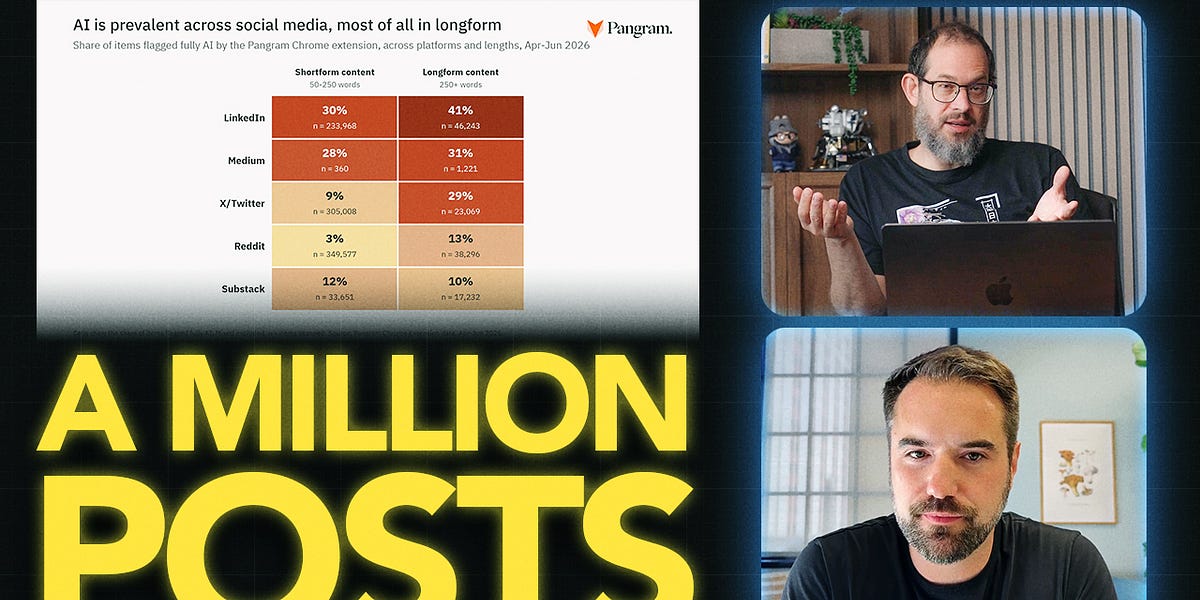
Over the weekend, I watched Christopher Nolan’s The Odyssey. Afterward I opened X and found people arguing about the story all over again—where our stories come from, why we keep retelling them, and how this one still connects people across centuries.The story has always been personal for me. I grew up overseas, including in places where conflict raged, and a story about someone coming out of war and trying to find his way home never felt remote. I’ve spent much of my life wondering what home is and where it is. Three thousand years on, we still have to argue about it. To me that’s the mark of writing that lasts.Nearly three millennia after the poem took shape, it still hasn’t settled into one meaning. Every generation arrives with different problems and finds something else inside it. Nolan’s film has brought the argument around again, and that’s part of how a shared story stays alive: it gives us somewhere to meet, then lets the people who gather there change what it means.The pieces I’m most proud of are the ones that began a conversation I could never have had alone. Being “right” matters less. Open Brain did that.I published it because I wanted people to be able to build a memory system for themselves. The conversation became larger than the build itself: should the memory we create with AI belong to us, or to whichever provider happens to hold it? The response was more than I expected, and people kept carrying the question forward.That, to me, is what the public square is for. It’s where a private intuition becomes something another person can question, where the experience of one life runs into the experience of another, and where a shared story gives us somewhere to gather even when we cannot agree on what it says.AI can help us mean what we say. For me, it has become part of how I find out what I think, and making the words prettier is the least interesting thing it does.Sometimes I begin with a thesis I understand. I talk it through for ten or fifteen minutes, give the transcript to a model, and then work with it to turn speech into prose without losing the thought. Because I know what I meant, I can tell when the model has made the idea worse.Other times I have three or four threads and no finished thesis. I tell Codex where the uncertainty is and ask it to go back and forth with me, the way I might hit a tennis ball against a wall. What comes back gives me something to resist: an interpretation feels too easy, two claims don’t actually fit, or the part of the argument I almost ignored turns out to be the part I care about most.The model is doing more than recording my thought when it finds research I didn’t know to look for, follows an implication through several parts of the argument, or offers a connection that changes the direction of the piece. Sometimes it’s wrong in a way that helps me locate what I believe; sometimes it’s simply right.That back-and-forth gives more people something intelligent to think against. Some worthwhile ideas only appear because there was an answer to push on. I wouldn’t have found them alone.A field experiment with 791 professionals at Procter & Gamble found that individuals using AI matched the performance of two-person teams working without it. The result I keep returning to crossed expertise: with AI, both R&D and commercial specialists produced proposals more balanced across technical and commercial concerns.In the Habermas Machine experiments, members of small groups first stated their own views, then read and critiqued a model’s synthesis before it revised the statement. Participants generally preferred the result to statements written by nonprofessional human mediators. What matters to me is the order: people formed their own views before the model spoke, then got another chance to challenge what it produced.That order doesn’t guarantee deeper understanding. A balanced proposal can still be bland, and a fluent synthesis can make a real disagreement appear settled. It does give the AI real differences to work with while keeping people close enough to the result to see what has been softened or left out.This is the AI I want much more of: AI that meets a person in the middle of a thought and helps them go farther. Someone may have the experience but not yet the words; a group may need to hold several perspectives in view long enough to see where the disagreement actually lies. The model may also make the connection no one in the room had seen. Human beings don’t have a monopoly on useful ideas.The trouble is that fluent prose gives us no way to tell whether any of that thinking happened.When I spoke with Substack co-founder Chris Best, he gave me the other end of the spectrum: ask Claude for a thousand viral posts, make no mistakes, then publish whatever comes back. One of them might contain a good idea; it might even begin a worthwhile conversation. But the publisher has handed the first acts of reading and interpretation to everyone else.Publishing makes a claim on another person’s attention, which is why Chris described generated language at sufficient scale as a denial-of-service attack against the public square. The reader now has to do all the work the publisher skipped: decide whether there is a thought here, whether it’s true, and whether anyone will be present if they answer. The person who hit publish may not even know what everyone else has been asked to read.Slop begins for me right there: asking for another person’s attention without first showing up to the material yourself.The number of hours can’t tell us whether somebody showed up. A great editor may change a piece with one question; a bad argument can survive a month of prompting. What I care about is whether somebody chose the thought and is prepared to answer for it once it enters the world.For me, meaning what I say requires knowing why I’m publishing a thought and being willing to stand behind it. Once it’s public, other people get to test it. Their response becomes part of the work.Substack’s new Pangram integration lets readers ask how much of an eligible post or Note appears human-written or AI-assisted. In a comment thread, I may care a great deal whether I’m arguing with a person or with generated text the account owner has never read.Pangram cannot tell me whether anyone meant what the text says. Writing is no longer a sign of effort, and it was never a reliable sign of thought. One person can type every word of an idea assembled from familiar defaults, while somebody else can use AI throughout and arrive with a view that’s deeply considered and entirely theirs.I try to be that somebody else. Run Pangram on this post and it will come back AI-assisted. That shouldn’t surprise anyone reading this. The thoughts are mine, the arguments are mine, the meaning is mine. AI helps me get them out, usually after a fair amount of fighting.Pangram looks at the words. I proposed a different kind of signal to Chris, one that would look underneath them: an Ideas Graph.Imagine taking the sentences away from a piece and mapping what remains, with concepts as nodes and the relationships among them as edges. The graph would also preserve valence—whether an idea is treated as promising, dangerous, trivial, or central—and omission, because leaving out an expected idea can change the meaning of everything around it.My version of the graph would compare that shape with the conceptual distribution frontier models tend to produce by default. After working with these systems every day, I recognize their intellectual gravity. Ask for a formal document about AI and the model will usually find its way to ethics and governance whether those ideas belong at the center or not. Ask for a bold argument and it may produce a familiar argument in a more emphatic voice.The models keep improving, but this gravity remains, and an Ideas Graph could make it visible. It might show that a piece introduced an unusual relationship, approached a familiar concept from a different angle, or left out something nearly every default answer includes.I first ran into the need for this while writing fifteen short commandments for teams trying to become AI-native. One told product teams to stop making roadmaps, another required product to work in the terminal every day and jam directly with engineering, and a third made one profoundly helpful customer experience the shared test for both groups.“Stop making roadmaps” is a terrible idea on its own. It worked in the piece only because the other rules replaced the coordination a roadmap would normally provide. The commandments were brief, but together they formed a system.I gave the seed to a capable model and asked it to expand the piece. It preserved every commandment and explained each one fluently, but in the process it destroyed the idea.The model kept the nodes and erased the edges.The meaning had been in the relationships. Once they disappeared, the document still contained my points but no longer said what I meant.The first use I imagine for an Ideas Graph is discovery. A 2024 short-story experiment shows why I want one: access to AI-generated ideas improved ratings of creativity and writing quality, especially for less creative writers, while also making the stories more similar to one another.An individual writer may reach farther with AI even as the public conversation contracts around a shared conceptual center. I want the writer to keep reaching; I also want the public square to get much better at finding the edges they add.Distance from a model’s default tells us only that something is different. At the edge we will find nonsense, lies, empty contrarianism, and insight, sometimes from a model and sometimes from a person. An Ideas Graph might help us notice the difference. People still decide whether it’s coherent, useful, beautiful, or true.Public conversation is part of that judgment. Readers test a proposed relationship against their own lives, find its limits, and carry it into domains the writer didn’t know. Sometimes the exchange produces a third perspective neither person brought into the room.I brought the graph to Chris as a possible proxy for care. He named what had broken. Length used to be its own proof of work — somebody had at least spent the attention to write the thing out, even badly. That signal is gone. Effort was never the thing I actually wanted to measure. By the end of our conversation he was calling the proposal “a Pangram for ideas,” and I left with a better idea than the one I brought.A useful idea doesn’t become less useful because a model introduced it. If I publish it, though, I owe other people more than passing it along: I need to know why I brought it and remain present when they respond.Pangram can help me understand how a piece may have been made. I would love a second kind of signal, one that helps me find the work I cannot stop turning over because it challenges an assumption, makes a connection I had not seen, or starts a real argument. The Ideas Graph is one way I can imagine building it.AI can make language effectively infinite, but it cannot give me another life in which to read it.As a parent, I keep coming back to the same question: am I teaching my children how to spend their attention well? They’re growing up in a world where another answer will always be available. I want them to stay with a hard thought, notice when a reason doesn’t hold, and let another person’s experience change their own. The attention we give one another is part of how we learn what it means to be human.They will have extraordinary thinking machines beside them, and I hope they use those machines without apology—to notice what they missed, put language around an intuition, or change their minds. Then I hope they bring that clearer thought to other people and leave room for its meaning to change again.The Odyssey is still alive in part because each generation brings the story into new lives and new arguments. I found my own questions about conflict and home inside it; someone else will bring different ones and make something different of the same story. I hope an article can enter that kind of conversation too.Beyond AI slop: learning to write (and think) with ChatGPT without losing my voiceI asked Fable and Codex what my business should automate. They disagreed.The chameleon web: 57% of online text may already be AII got tired of AI slop so I built 20 prompts to fix itThere is too much AI hype: how to defend your brain and stay calm
Substack co-founder Chris Best on AI slop, detection, and what still counts as thinking.
A special conversation with Chris Best. In the age of AI, what do our tools help us bring into the public square?
2,148 words~10 min read