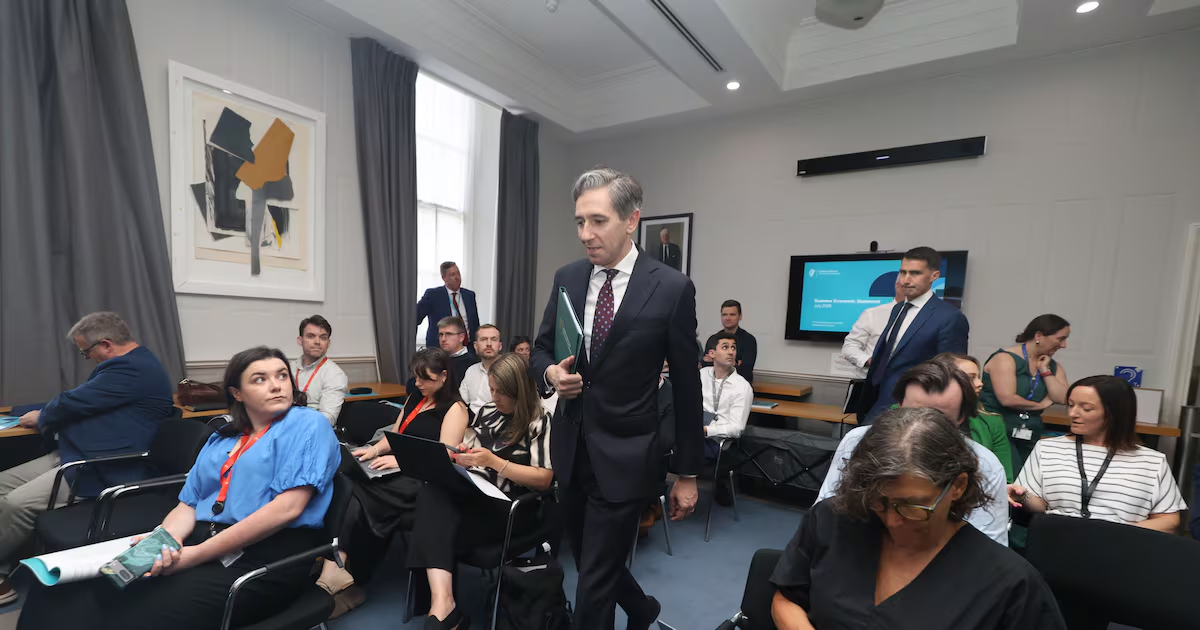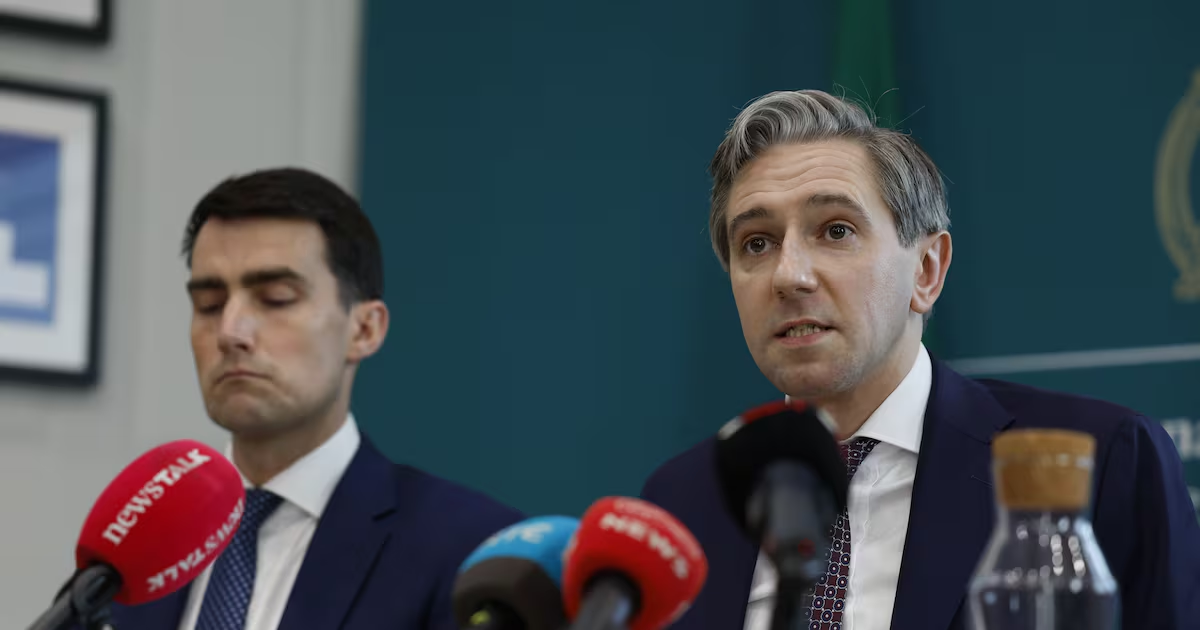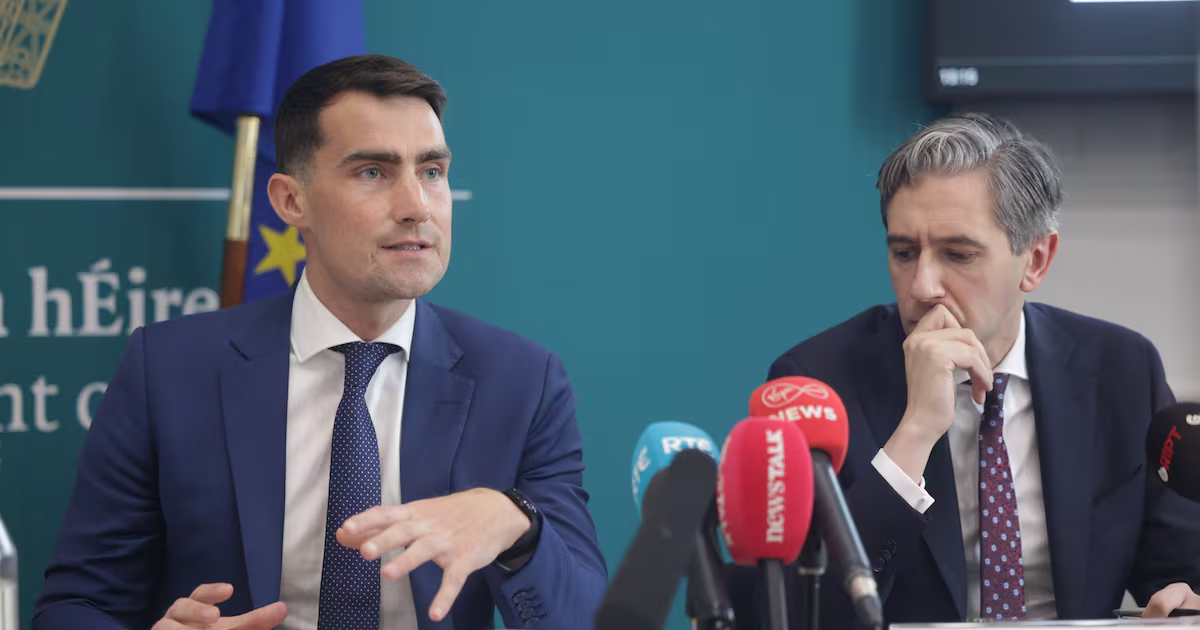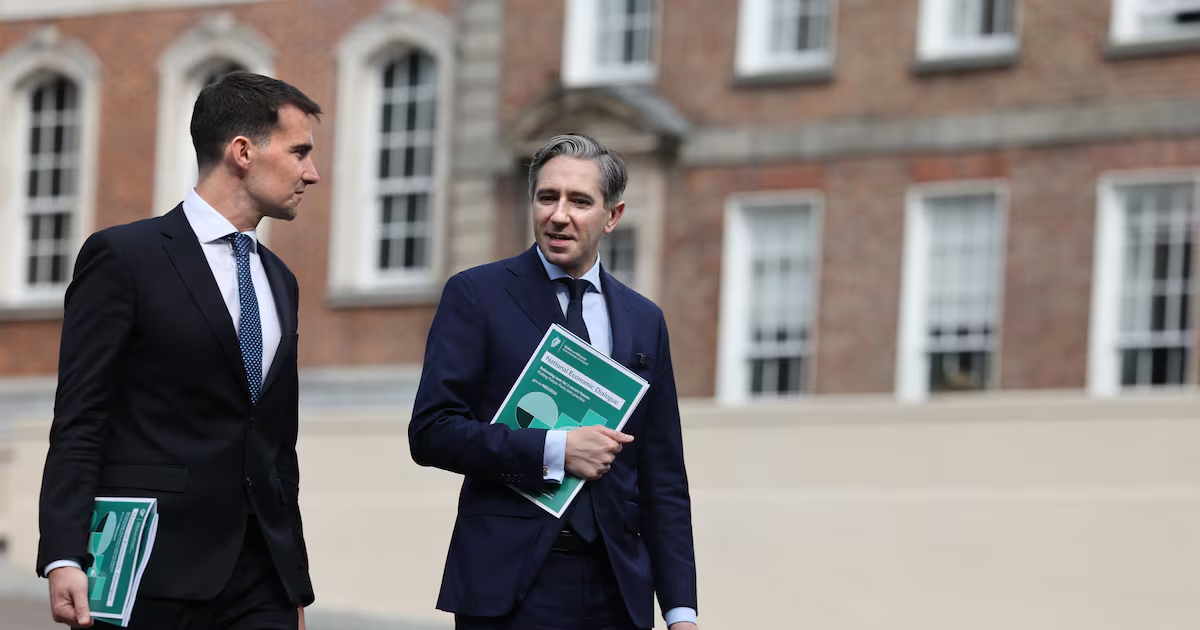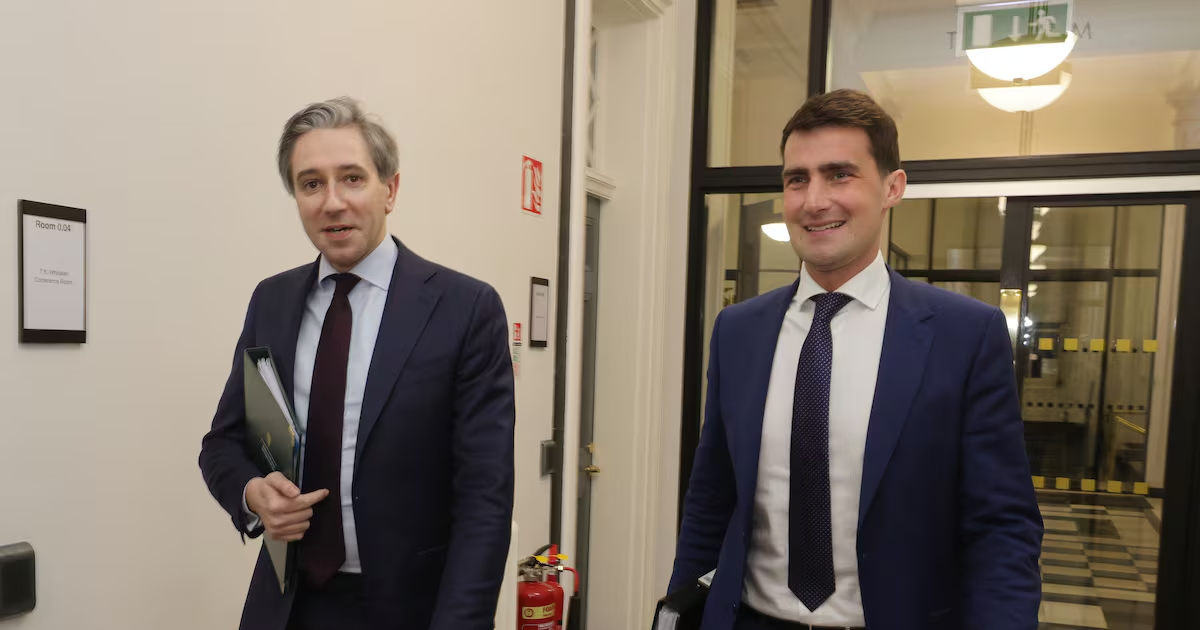
Government spending on day-to-day services and new infrastructure will grow by €7 billion next year to €125.5 billion, it was announced after the Cabinet approved the summer economic statement on Wednesday.The statement, one of the key budgetary documents published by the Government, shows the budget-day package of new spending and tax adjustments is planned at €8.5 billion, with €1.5 billion in tax changes, likely to mostly comprise changes to tax bands to ensure rising wages do not lead to workers paying more tax.It was published at Government Buildings by Tánaiste and Minster for Finance Simon Harris and Minister for Public Expenditure Jack Chambers. The document, which contains an up-to-date economic assessment, says the Irish economy remains in a healthy position, with threats diminishing slightly since the last update in the spring. However, the risks posed by the unsettled international situation, especially in the Middle East, which the document says “threatened to put a spanner in the works”, and the potential for an AI “correction” in global markets, remain considerable.While acknowledging the strength and resilience of Ireland’s economic backdrop, the document states bluntly: “this does not mean that the economy is shock-proof”.The document also points to the highly imbalanced nature of the revenue base for the State. Just 10 companies, it says, account for nearly 20 per cent of total tax revenues, while the top 5 per cent of income taxpayers account for one euro in every six collected across all tax headings. However, there is no sign of any slowdown in revenues. The document suggests the overperformance in corporation tax receipts seen in recent years will be repeated this year.The Government’s budget strategy, it says, will be organised around four “pillars” – “rewarding work and effort”; “improving public services”; “investment in critical infrastructure”; and “investing for the future”. Overall, expenditure growth will reduce from 9.4 per cent in the period 2019-2024 to 6 per cent between 2025-30.
Spending will grow by €7bn in 2027 but economy not ‘shock-proof’, says summer statement
Risks posed by unsettled international situation and potential for AI ‘correction’ in global markets remain considerable
317 words~1 min read