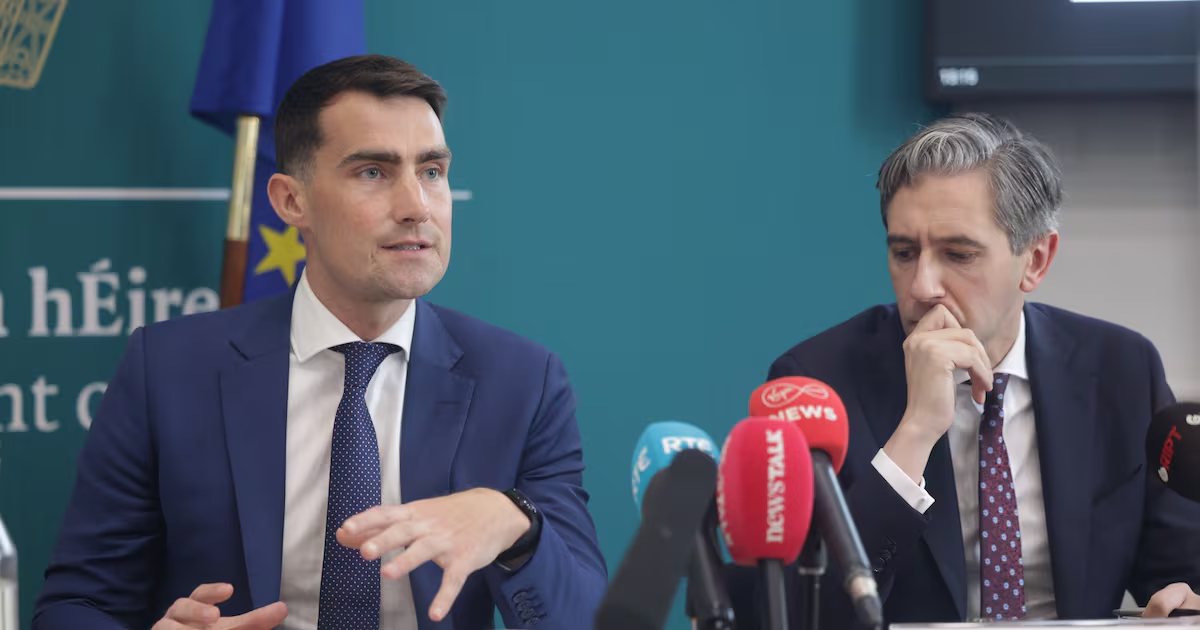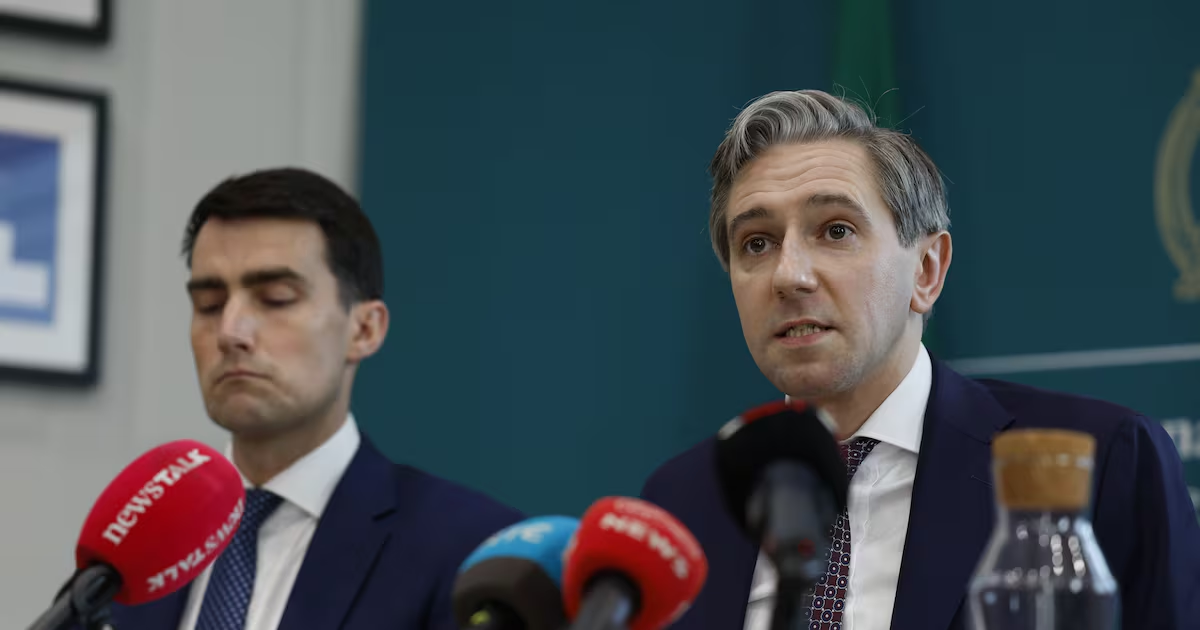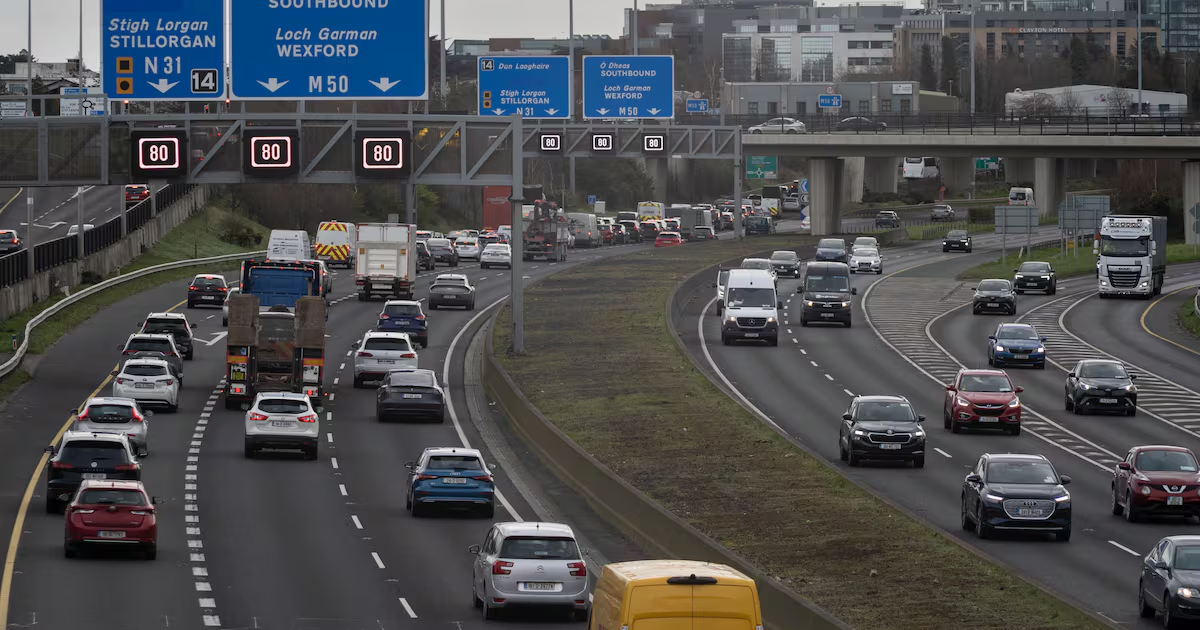
The noise is building in advance of October’s budget. Next week’s Summer Economic Statement will raise the sound level further, signalling that €9 billion to €10 billion is “available” for spending increases and tax cuts. Ministers love these big numbers, but politically they are toxic, fuelling demands from right, left and centre. The conundrum of Irish budgeting is that a lot of this money is already committed to various spending programmes – the key budget decisions will centre around a tax and welfare package of €3 billion to €4 billion, with a few additional add-ons for other departments. That is a limited amount in a budget of €100 billion plus. So my first prediction is that this will be one of the most fractious budget negotiations we have seen in recent years. There is already position taking – Minister for Finance Simon Harris has spoken repeatedly about income tax cuts. He told the Dáil recently – in an advance on Leo Varadkar’s focus on those who get up “early in the morning” that there are those “who got up at a ridiculous hour in the morning, sit in horrific commuter traffic and are looking for a bit of a break too”. The Fianna Fáil side is also supporting income tax reductions, though whether it is signed up to the Harris plan is questionable.Harris will argue for a rise in the share of budget cash put aside for tax cuts, but this will leave less elsewhere. And the strained relations between the two big parties will make the negotiations all the harder. By mid-September, this could all get quite fraught. My second prediction is that some of the single-issue campaigners will strike gold. These lobbies focus on the perceived unfairness of a particular policy and target backbenchers, ministers and the media to build up a head of steam. They thrive in a populist economic environment, as shown by the response to the fuel protests. So, for example, inheritance tax campaigners point out that people with no children face landing those who they leave money to – be they nephews, nieces or neighbours – with a much bigger bill than faces those inheriting from parents. This is a tautology. But it then becomes central to decisions on the issue, as does the political gain of pleasing a defined group. There is no attempt to take a wider focus and look at whether such a move requires, for example, tax to be raised elsewhere to compensate, or what the correct position should be on taxing wealth, as opposed to income. These are debates Ireland will face sooner rather than later – but, washed along by the corporate tax surge, they are not happening yet. My third prediction is that there will indeed be significant income tax changes this year, though at perhaps €30 or €40 a week for two-income households it is wise not to get too excited. The key rationale is that Irish taxpayers enter the higher 40 per cent income tax rate at too low a level – €44,000 for a single person, or €53,000 for a one-income couple. This was not adjusted in last October’s budget because the Government decided instead to cut the VAT rate on hospitality – another example of the single-issue lobby. [ Income tax cuts, energy, childcare: Here’s what we know so far about Budget 2027Opens in new window ]Part of the calculation last year was that the Coalition would get more kudos for giving the cut to a defined sector, rather than a few euro a week to households. But there has been a political cost to this, never mind a requirement for the Government to drop its “example” families in the budget documents – Brenda and Arthur and their three children in Naas, and so on – because a lot of them got little or nothing. So this year income tax cuts are back and our Naas couple, together with Claire, the single civil servant, will be back.Ministers will also try to do more for households in other areas. But my fourth prediction is that promises of wider moves to address the cost-of-living squeeze are going to be hard to deliver – and this is where the real rows will surface within the Coalition. Among the areas flagged are moves to reduce energy costs – a red button issue, as we saw in recent months – help with the costs of childcare, a new disability payment, a cut to the cost of third-level and so on. Many of these are tricky in policy terms and expensive. Meanwhile, the relentless pressure to increase spending to maintain current service levels continues and key departments, particularly education, are spending way above budget. And there is a public sector pay deal to be paid for.[ Three departments face closer supervision after exceeding budgetsOpens in new window ]All this means the cash available is limited. This is where promises by Minister for Public Spending Jack Chambers to reduce the rate of spending growth will meet the political demands to spend more of the budget surplus. Chambers risks being isolated, unless Harris supports him fully. And let’s be clear – holding spending to just 6 per cent is not exactly austerity. It is hard to see the Coalition holding back, and some kind of fudge is likely. One way out of this is to come up with budget forecasts that ostensibly meet the 6 per cent figure, while in reality – with a public sector pay deal still to come – everyone can see that the numbers are not realistic. Or there could be a spin of the 6 per cent being held to, before some once-off measures. Paying for once-offs out of this year’s budget is another tried and trusted route.So get ready for a few months of political spinning and fireworks that will seriously strain an already fractious Coalition. Populism will push Ministers towards addressing as many of the short-term, single-issue lobbies as possible. Energy costs will be key, as the Strait of Hormuz open again/closed again fiasco wanders on. Programme for Government commitments, such as moving towards a cap of €200 on monthly childcare costs, are adding to pressures. Between the promises to target support at those who need it, help the squeezed middle, address cost-of-living pressures and present a new savings scheme lies the politically dangerous territory of not really pleasing anyone. A lot of the annual noise in advance of the budget is performative, as Ministers scramble to position themselves. This year, however, the rows will be for real. Drawing up Budget 2027 is going to test the Coalition.
Cliff Taylor: If you get up at a ridiculous hour to sit in horrendous traffic, there may be good news
But you might not want to get too excited
1,104 words~5 min read