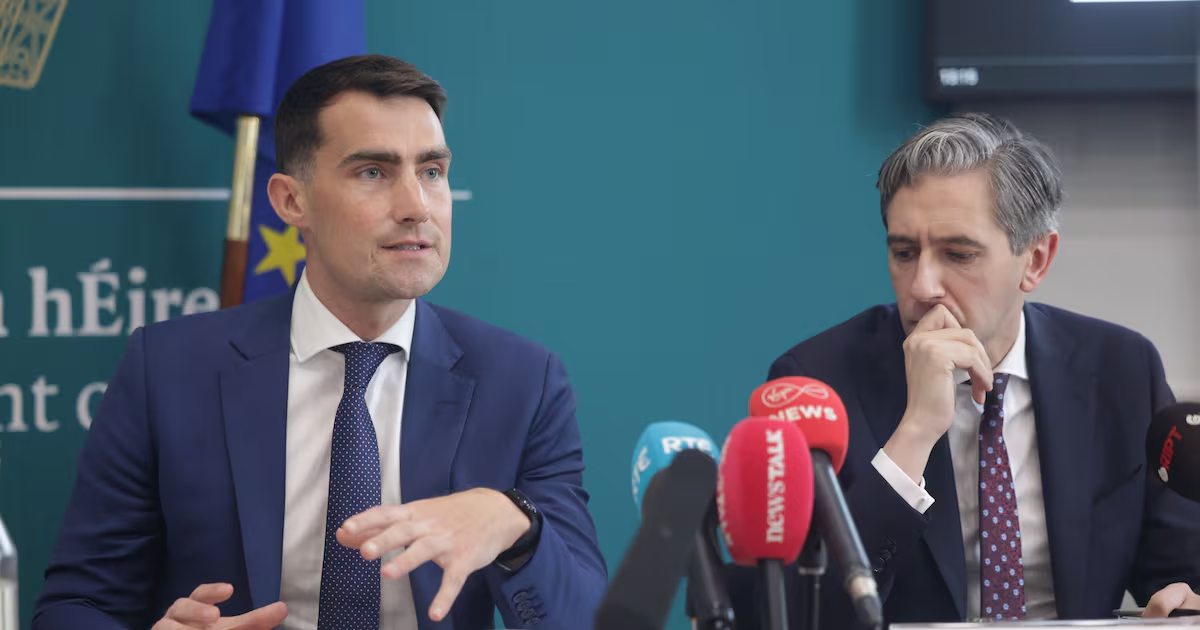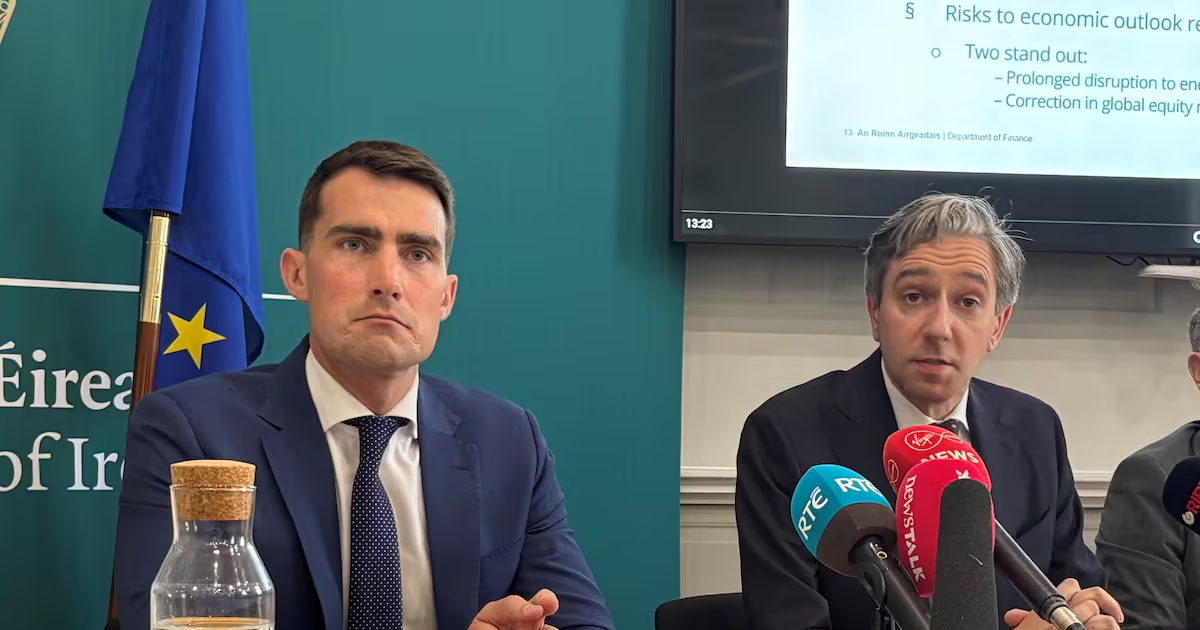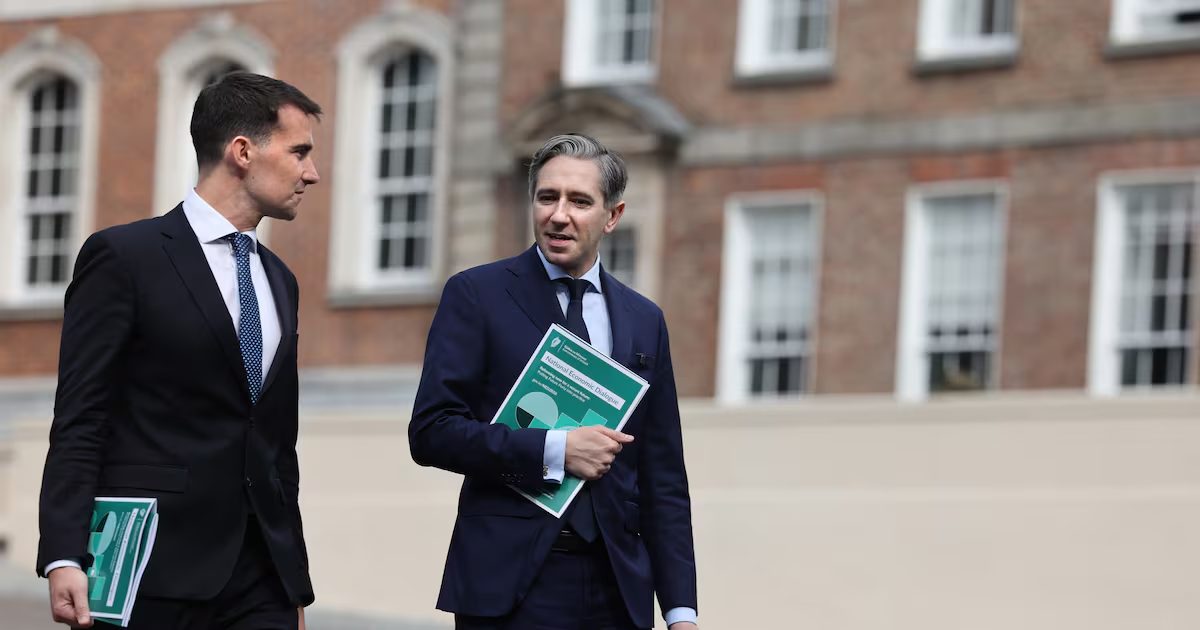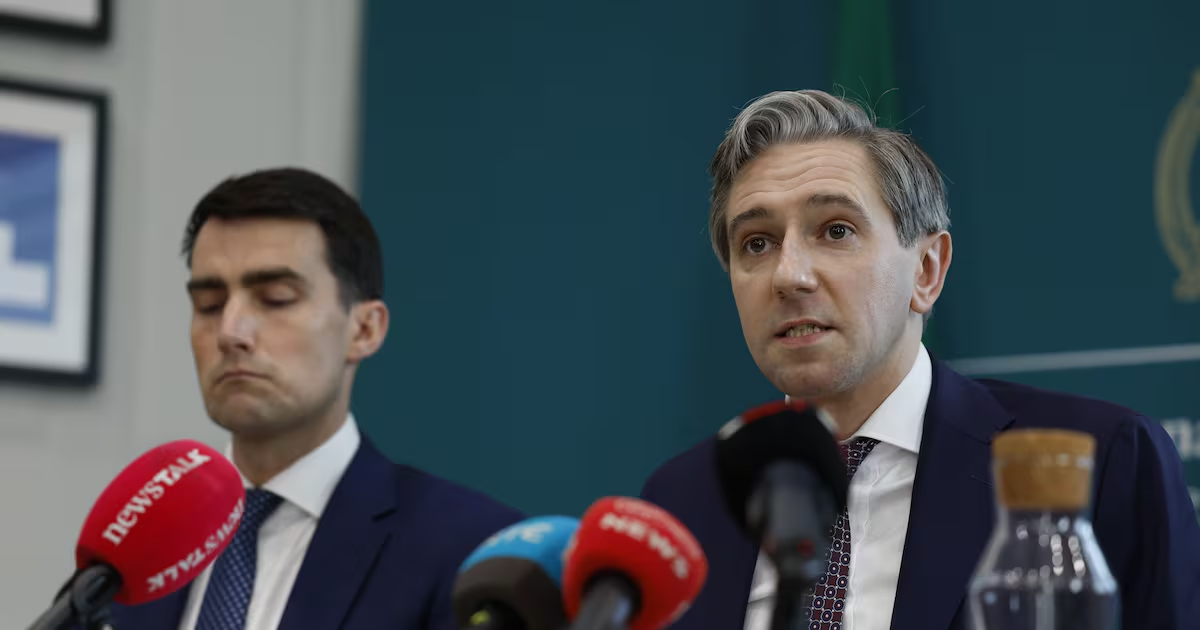
How do we interpret the billions allocated in the Summer Economic Statement, the key set-piece before the budget in October and what they mean for public services and for taxes? The first thing to note is that most of the additional resources – €7 billion – will go towards spending, with around €1.5 billion being allocated to tax reductions. This is a slightly higher tax package than the €1.3 billion last year, though the key difference will be that most of the resources go towards income tax, while last year they went towards a VAT cut for hospitality, the rental tax credit and a few other measures. Much of the additional cash in the spending package will be eaten up by the cost of maintaining existing services at a time of higher inflation. The actual amount of money for budget day measures will be a lot less – and much of it will be taken by increases in welfare payments, the size of which will be one of the budget battlegrounds. A public sector pay deal also has to be paid for out of the €7 billion increase. So there is going to be serious row in Government about the final shape of the spending package. [ Spending will grow by €7bn in 2027 but economy not ‘shock-proof’, says summer statementOpens in new window ]Promises have been made to address the cost of living through measures in areas like childcare, education, a new payment for those with a disability and additional supports to help less well-off households deal with energy costs. There are also demands on capital, or investment spending with sources saying that the Department of Housing is looking for a significantly increased allocation. This is all going to be difficult – perhaps impossible – to fit into the €7 billion additional spending indicated in the Summer Economic Statement. This is designed to keep spending growth at 6 per cent next year, taking into account expected overruns in departmental budgets of €700 million already estimated for 2026. Increasing pressure further is the fact that the overruns this year are likely to be ahead of this figure.Minister for Public Expenditure, Jack Chambers, said at Wednesday’s press conference that there will be fewer new spending measures than in recent years and also that the Government was also looking to increase the value it is getting from total spending, which will rise to over €125 billion next year. If he succeeds in holding the spending increase to 6 per cent next year it will represent a slowdown in the runaway spending growth seen in recent years – which has averaged 9 per cent plus, due in part to repeated overruns.Will the State’s plan for the Carlton Cinema site revitalise O’Connell Street? Listen | 25:33Chambers and Minister for Finance, Simon Harris, insisted on Wednesay that the new fiscal strategy would be held to. But while the Cabinet signed off on it, it remains to be seen if the spending ministers had their fingers crossed behind their backs when they did so. Is the €125.5 billion spending ceiling for next year really set in stone, or will Ministers look for ways to fudge it, or publish a budget where everyone knows overruns are inevitable? [ If you get up at a ridiculous hour to sit in horrendous traffic, there may be good news in the budgetOpens in new window ]The tax package will not be easy to negotiate, either. The €1.5 billion is a net figure – in other words it is open to the Minister for Finance, Simon Harris, to raise new taxes to help pay for cuts elsewhere. There won’t be too much of that, though renewing the bank levy will provide another €200 million.But on the other side, as well as the income tax package, the Government faces the real question of whether to phase out the excise tax cuts on fuel, as it has indicated it will do by December.These will be traded off against the size of the income tax package. Harris indicated yesterday that income tax will be the priority of the tax package and that increasing the income level at which taxpayers enter the higher 40 per cent tax rate will be a priority, along with some increases in tax credits which give benefits to lower paid employees. What this means for other tax measures will be interesting to watch. The political problem for the Coalition is that the cash gains from a tax package are inevitably limited. Harris may pursue a “jam tomorrow” strategy, promising more to come in future packages and try to focus as much as possible this year on middle earners caught paying the higher tax rate.
Serious Government row looms over who gets what in Budget 2027
Promises made on tackling the cost of living could be well-nigh impossible to honour
784 words~4 min read