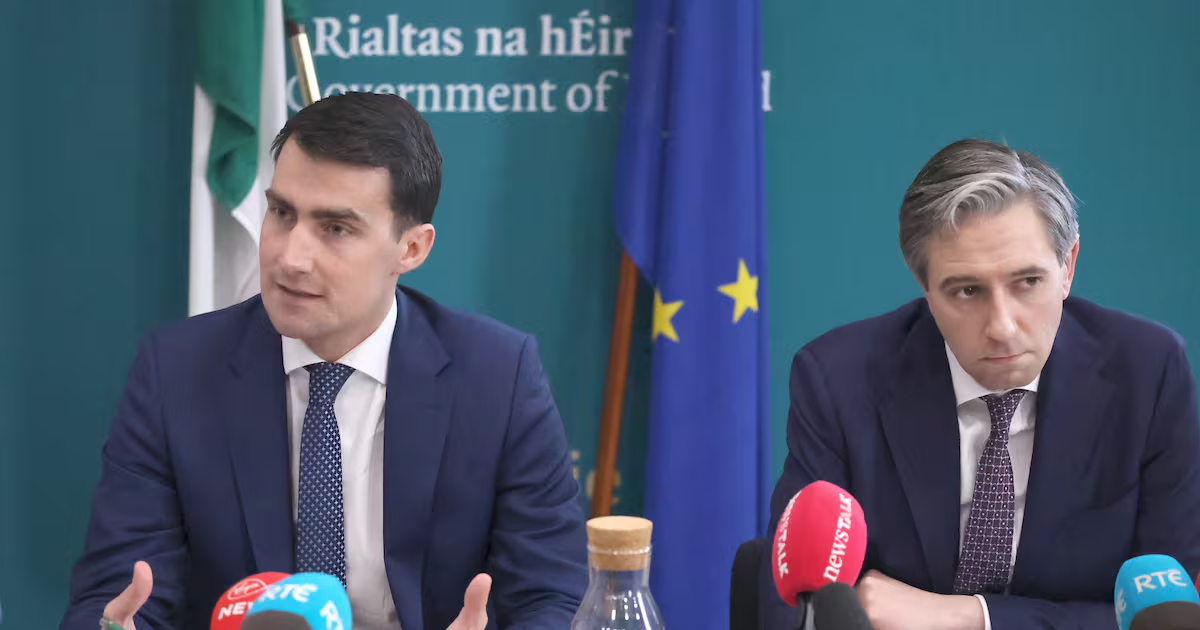
We are at the stage of the budget cycle where Ministers are promising everything to everybody, because they can’t help themselves. This is the consequence of a budget surplus and populist politics. The risk, as ever, is of frittering away buoyant revenues that will not last forever. There is a lot of ground to cover before the big day in early October and an unpredictable international backdrop that could still change things. If the Gulf crisis deepens and energy prices head sharply higher again, then there will be intense pressure to react. There is also a threatening stock market bubble ready to pop. But from what we know – and from a bit of informed guesswork – we can tell a lot already about the budget and what it will mean for the economy and the public. And the bottom line is that the Coalition is going to struggle to produce a package to remember, by which I mean one that makes a measurable difference to people’s lives, or sets a particular policy direction. In a Government with such fractious working relationships at the top it will, at best, be a series of grudging compromises. Promises of “reform” in various areas – childcare, energy costs, tax reform and so on – will largely remain just that. Promises. Programme for government commitments, such as cutting the cost of childcare to €200 per month, or really tackling child poverty, remain far away. Some useful things are done, but it is all incrementalism.To understand the backdrop to this year’s negotiations, you need to realise that the two budget Ministers – Simon Harris and Jack Chambers – are trying to end the practice of budget figures each year being redundant as soon as they are published. Everyone has known in recent years that the “estimates” for spending produced with the budget were too low. Top-up – or supplementary estimates in the jargon – were always going to be needed.This is, first, because the figures failed to start from the right place. If you are doing a budget for the next year and don’t take account of overspending this year, then inevitably there will again be overruns. And, second, there has also been a failure to budget properly for a rising population and the impact of inflation. And so spending has ratcheted up each year, as one overrun adds to another.One budget watcher refers to “Potemkin budgets”, facades designed to confuse the viewer, as when – so the story goes – Russian minister Grigory Potemkin was said to have constructed fake painted wooden town fronts along the Dnieper river in 1787 to fool the visiting Catherine the Great into thinking Crimea was rich and happy. Behind the budget facade, all has not been as it seemed.The average spending overrun since 2023 each year has been €5 billion, according to work by Killian Carroll, economist at the Irish Fiscal Advisory Council. He attributes about half of this to the – understandable – impact of unexpected events, such as helping people with soaring energy bills. But the other half is down to poor forecasting and budgeting, which does not reflect well on the Department of Public Expenditure.[ Why Simon Harris will really struggle to move the dial on income tax in the BudgetOpens in new window ]Now Chambers, the Minister in that department, is promising to get control of the figures and stick rigidly to the cash spending target for next year. This is despite spending overruns that look certain for this year. He is also promising to get better value for the €120 billion or so already being spent. These are laudable goals, though the spending departments no doubt feel that politics will, at some stage, defeat this drive. They are displeased, to put it mildly, that he is holding to a plan to levy them next year to claw back overspending this year. They will try to wait him out. Whether this new budgetary discipline will hold is debatable, but it explains the cut in the size of the budget package, as outlined in this week’s pre-budget Summer Economic Statement, to €8.5 billion, close to €1 billion less than last year. And this will mean shortages of money to do all kinds of things that have been promised. So although the income tax package will probably ensure that inflation next year does not take more of workers’ pay as wages rise, it will not provide much in real gains. Middle earners will do best from this, but the problem with income tax cuts, politically, is that they are so expensive that it is really difficult to do enough to ensure that people really notice. Cash gains of €20-€25 a week for single earners or €40-€50 for two-income couples are good to have, but will not transform their finances. And by his incessant focus on the early risers, Harris risks overpromising and underdelivering.Meanwhile, a lot of the big reforms promised in areas such as childcare, child poverty, energy supports and disability payments will be signalled as progressing, but there will not be enough cash for them all to happen next year. There will be a fight over the scale of welfare rises. Talk of reform in areas such as inheritance tax will probably be pulled back to some modest increases in the tax-free allowances. It will be a “jam tomorrow” budget for many of the programme for government commitments. That is as things stand now. If the energy situation worsens, then the Government could again go down the route of more temporary measures – payments to households or extending excise tax cuts. These might be carved out from the main budget figures to make it appear that the main targets are being adhered to. Either way, energy is going to be a hot button budget issue. [ We can now identify who will gain most from the budget income tax packageOpens in new window ]The point of having control of the budget figures is that it gives the Government a better chance of responding to shocks in areas such as energy. The risk of the Potemkin budget is that no one is quite sure what the real position is and the only certainty is that Ireland will continue to rely on rising corporate tax revenues to pay the bills at the end of the year. The intense pressure to spend more risks a repeat this year of a set of budget figures that, while internally consistent, belong in the fiction section of the local library. We can only hope that soaring corporate tax will again cover over the cracks.
Cliff Taylor: Ireland’s Potemkin budget: figures belong in the fiction section of the library
The only certainty is that Ireland will continue to rely on rising corporate tax revenues to pay the bills at the end of the year
1,103 words~5 min read