Electron and proton motion often work together in both living systems and engineered materials. The most familiar example is proton-coupled electron transfer (PCET), a process that plays a central role in bioenergetics, cellular respiration, photosynthesis, and nitrogen fixation. PCET has also influenced the design of many artificial materials used for energy conversion and storage. More recently, scientists identified another related process known as proton-coupled singlet energy transfer (PCEnT).
Building on earlier studies of PCET and PCEnT, a team led by Prof. Kaifeng Wu at the Dalian Institute of Chemical Physics of the Chinese Academy of Sciences investigated another important but poorly understood process: triplet energy transfer linked to proton movement.
Triplet energy transfer is a major pathway for moving energy in both natural and synthetic systems, but it operates differently from singlet energy transfer. Understanding how proton motion influences this process could open new ways to control energy flow in advanced materials.
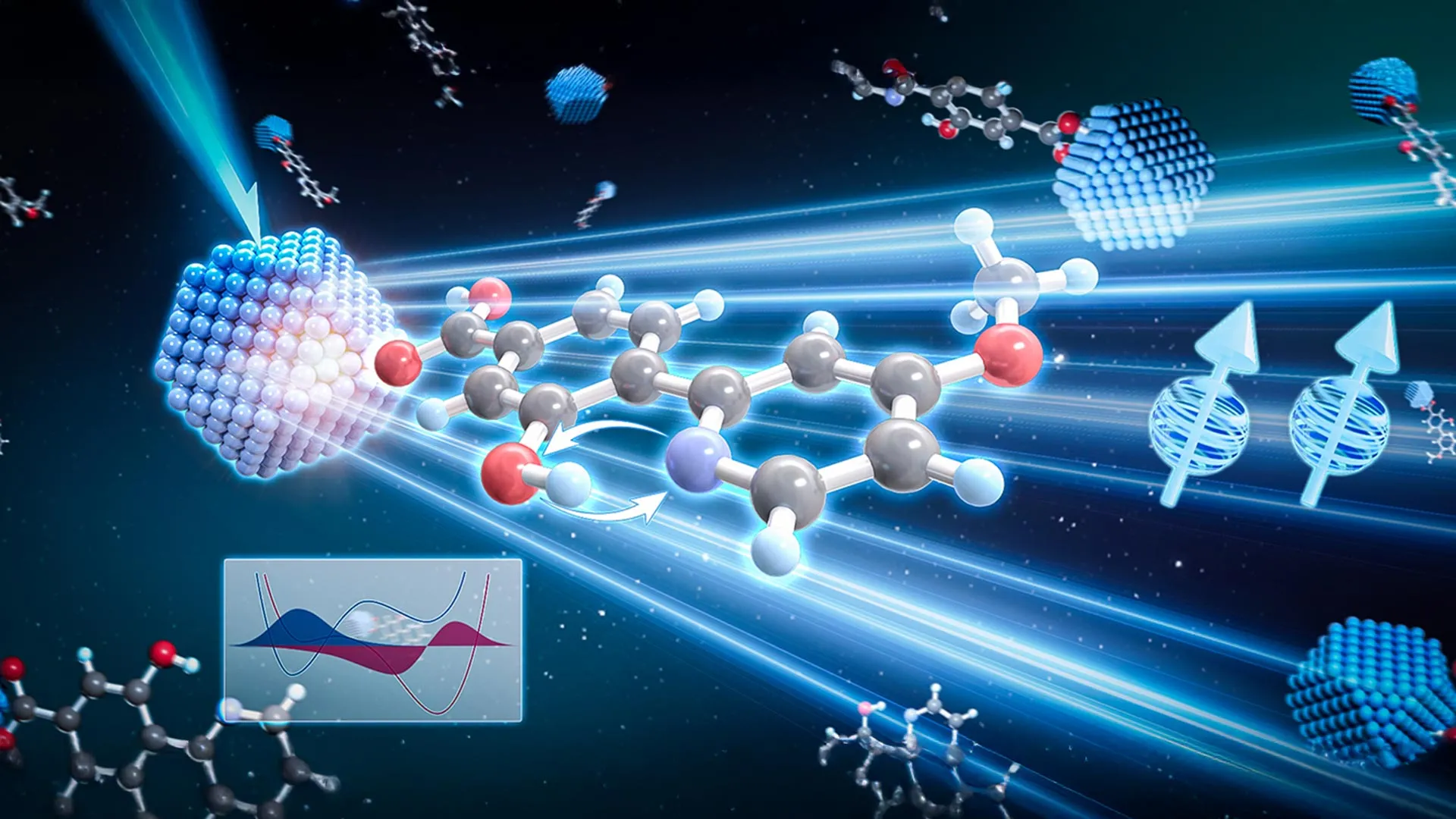
In a study published in Nature Materials, the researchers reported a previously unknown mechanism called proton shuttle-assisted triplet energy transfer (PS-TET). The process was observed as energy moved from ZnSe-based colloidal quantum dots (QDs) to phenol-pyridine dyadic acceptors attached to their surfaces.