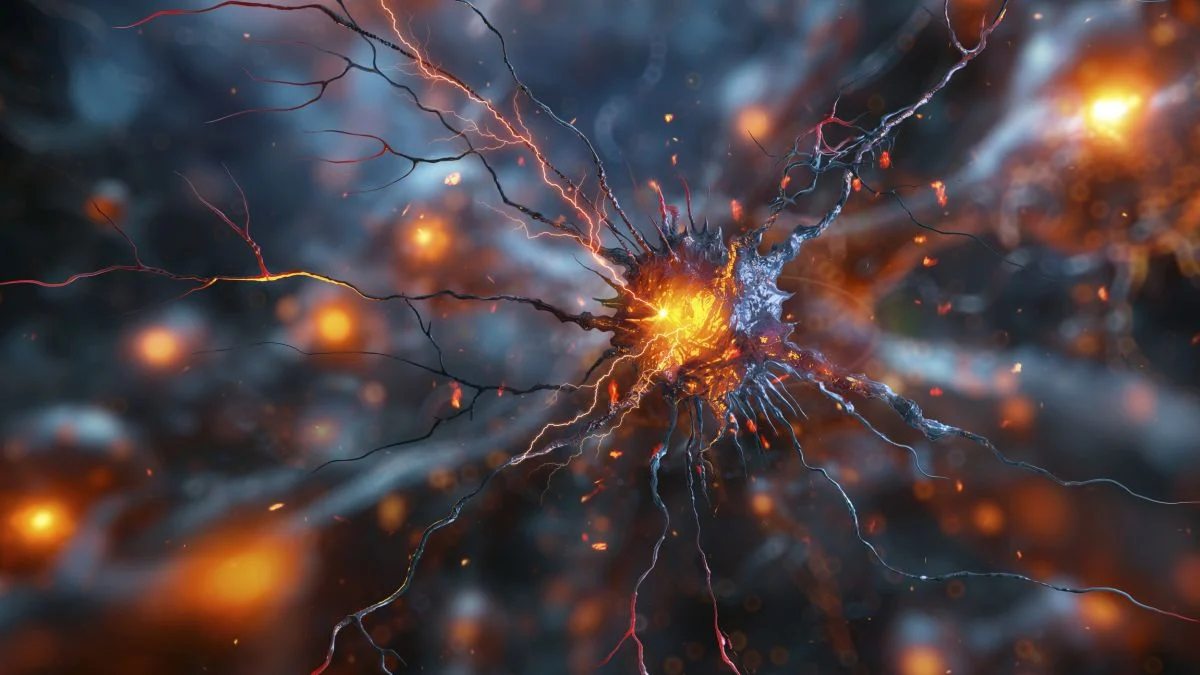
Long-lived neurons in the brain are among the cells most vulnerable to the gradual accumulation of somatic DNA mutations, according to the new model. (Ruslanas Baranauskas/Science Photo Library/Getty Images)
When the iconic rock band Queen asked, "Who wants to live forever?" the question was rhetorical, but for many people, the answer was "Yes".Well, a new study suggests immortal life may be scientifically impossible, even if we somehow found the perfect anti-aging medicine.If scientists managed to overcome every other aspect of aging, humans still couldn't live forever, the new research shows. Random DNA mutations would continue accumulating in our cells until the body could no longer function.Simulations conducted by a team at the Skolkovo Institute of Science and Technology in Russia suggest this process could impose a fundamental limit on human lifespan, with most people living no longer than about 150 to 190 years under this optimistic scenario.That's roughly double humans' current longevity, of about 79 years in fortunate circumstances, but it's still a hard limit on the human lifespan.But rather than predicting how long humans might live, the researchers say their framework offers a new way to measure the contribution of different biological processes to aging."We thus present a robust framework for evaluating the impact of somatic mutations on aging and propose a novel approach to modeling aging," they write in a paper published in npj Aging.