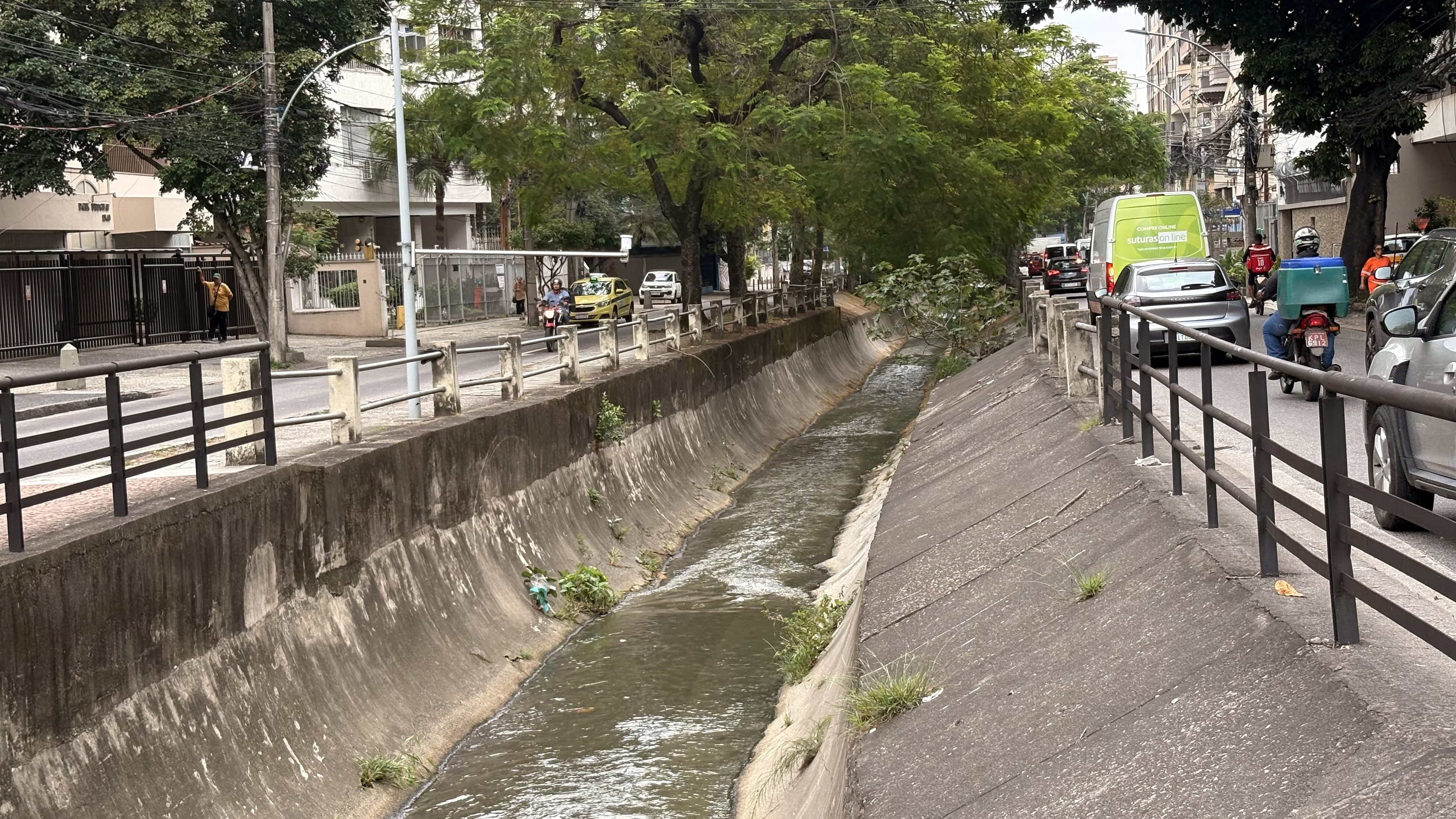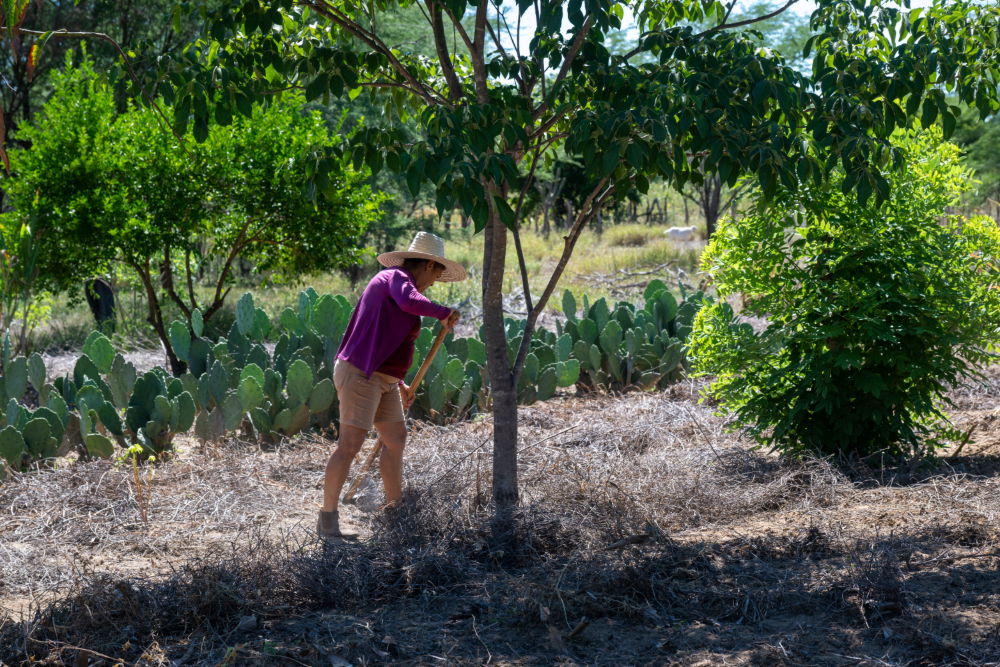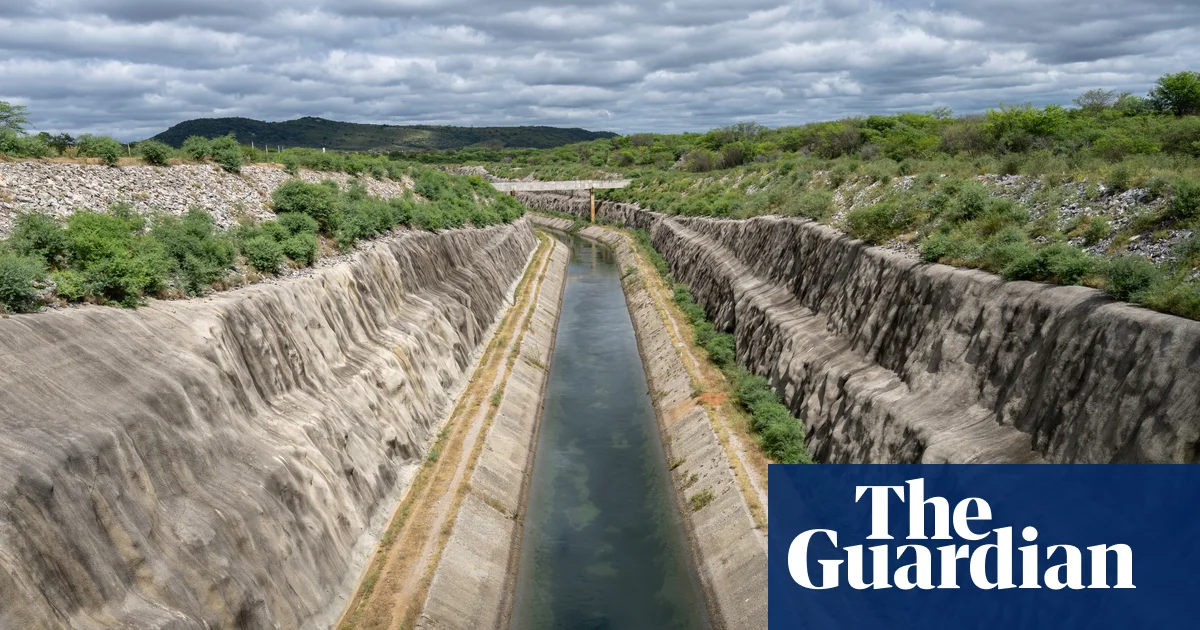
A concrete canal cutting through the Caatinga scrubland feeds a surface reservoir two and a half miles from Maria de Fátima Ferreira da Silva’s home in rural Brazil. The canal passes Sertânia and continues until it reaches Monteiro, the next town along, where it spills its precious cargo into the bed of the Paraíba River – a human-directed inflow into the seasonally dry waterway.Such proximity to a reliable water source would usually be considered a blessing in the sertão, a vast outback in Brazil’s north-east known for its punishing droughts. But not for Ferreira, who was displaced nearly 20 years ago by the construction of the canal and now lives in a house without any water supply, despite the nearby reservoir.“There’s no water; what are we supposed to do without water?” says the 54-year-old, who depends on what she can grow on her smallholding.
Maria de Fátima Ferreira da Silva in her maize crop at Salão productive rural village. She bathes at the reservoir and collects water there for her smallholding and donkey, and pays to fill her barrel with drinking water each month
The canal and reservoir are part of a big hydrological supply system billed as the solution to the sertão’s water scarcity: the diversion of the 1,700-mile-long São Francisco River, the longest river running entirely on Brazilian territory and the source of 70% of the north-east region’s water supply.The ever-present threat of drought in the sertão is only likely to increase with the climate crisis, which accelerates desertification and is already driving a shift to a hotter, drier climate in this region. While programmes such as Water for All and One Million Cisterns have improved water access across the north-east, the São Francisco diversion does so at scale, providing water security to 12 million people, the government says.But nine years after the canal first brought water to Monteiro, some continue to question the scheme’s success – particularly for the communities that were the most affected by the infrastructure project but feel its benefits the least.“In my view, the diversion has not been beneficial. It caused immense damage to the donor basin while yielding little effectiveness for the sertão,” says Janaína Andrade, a regional prosecutor for citizen rights, who acts like an ombudsman in Paraíba state, where Monteiro is located.