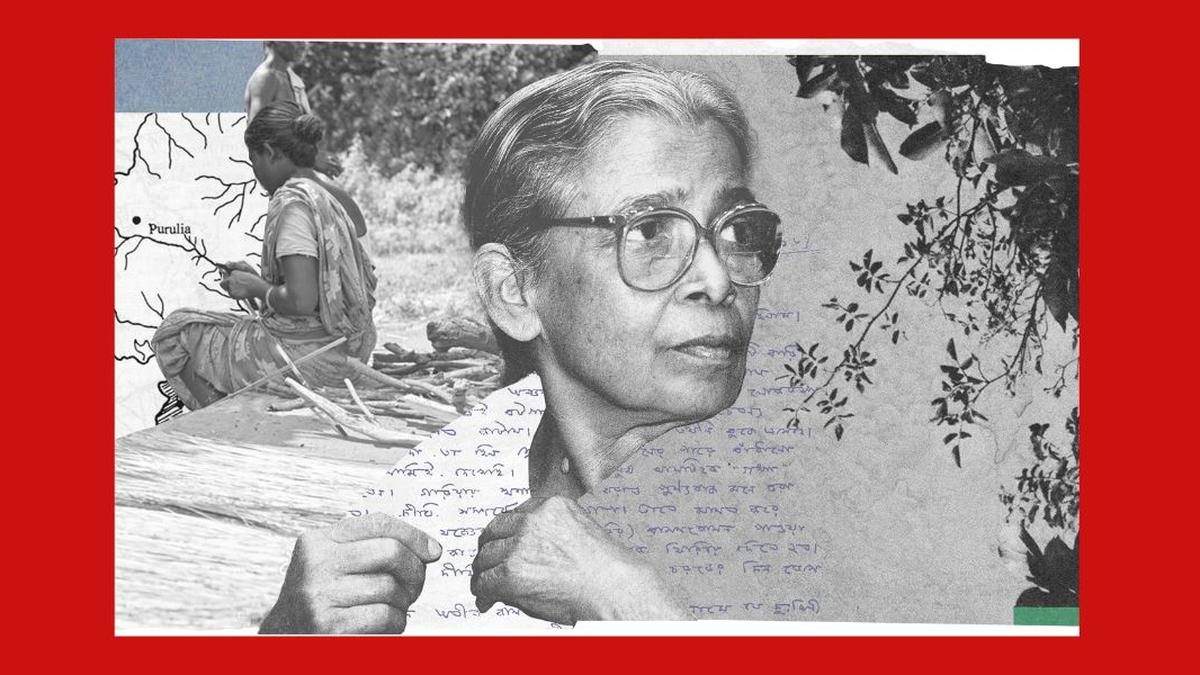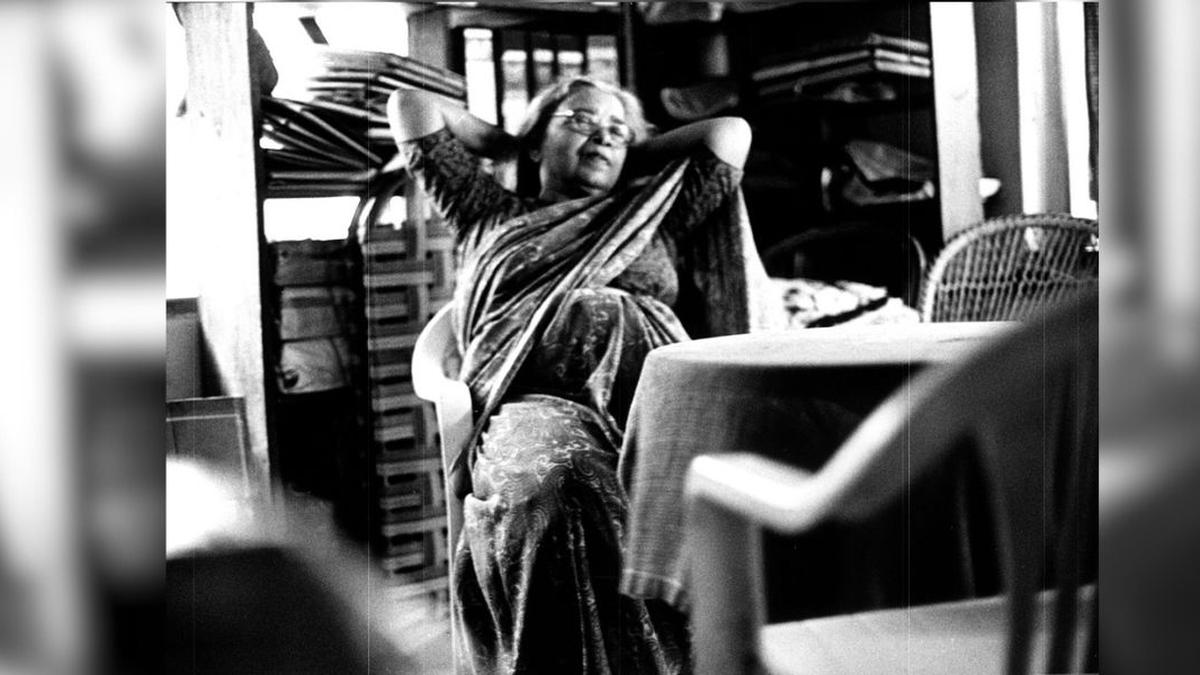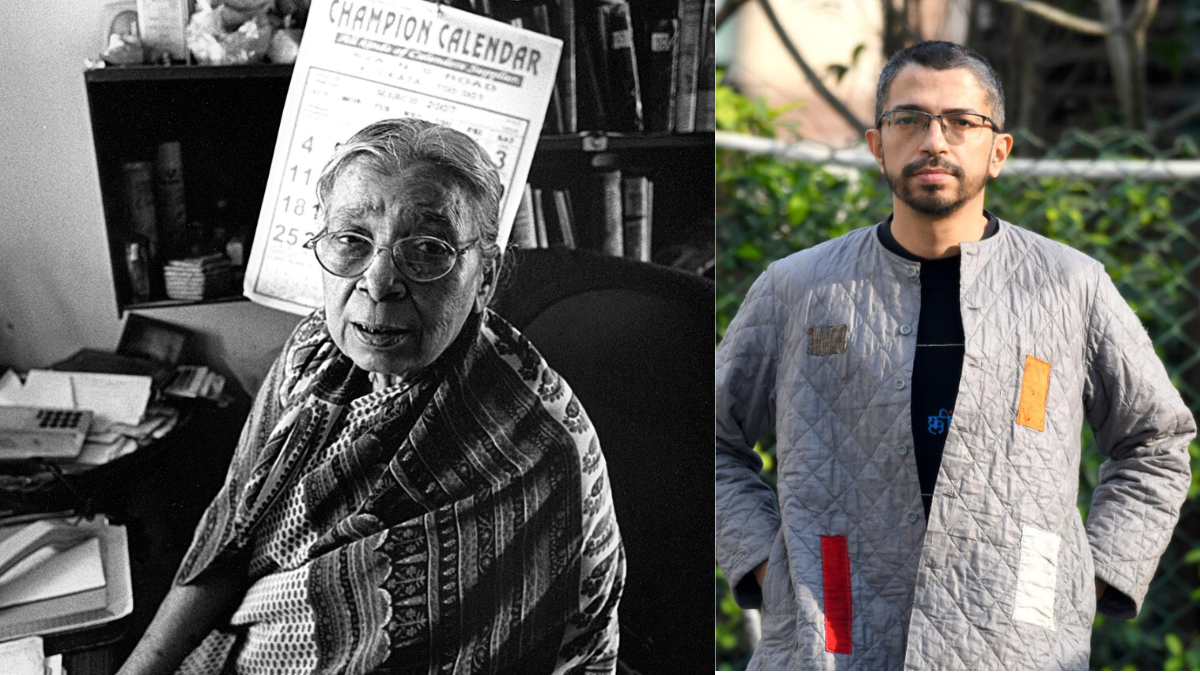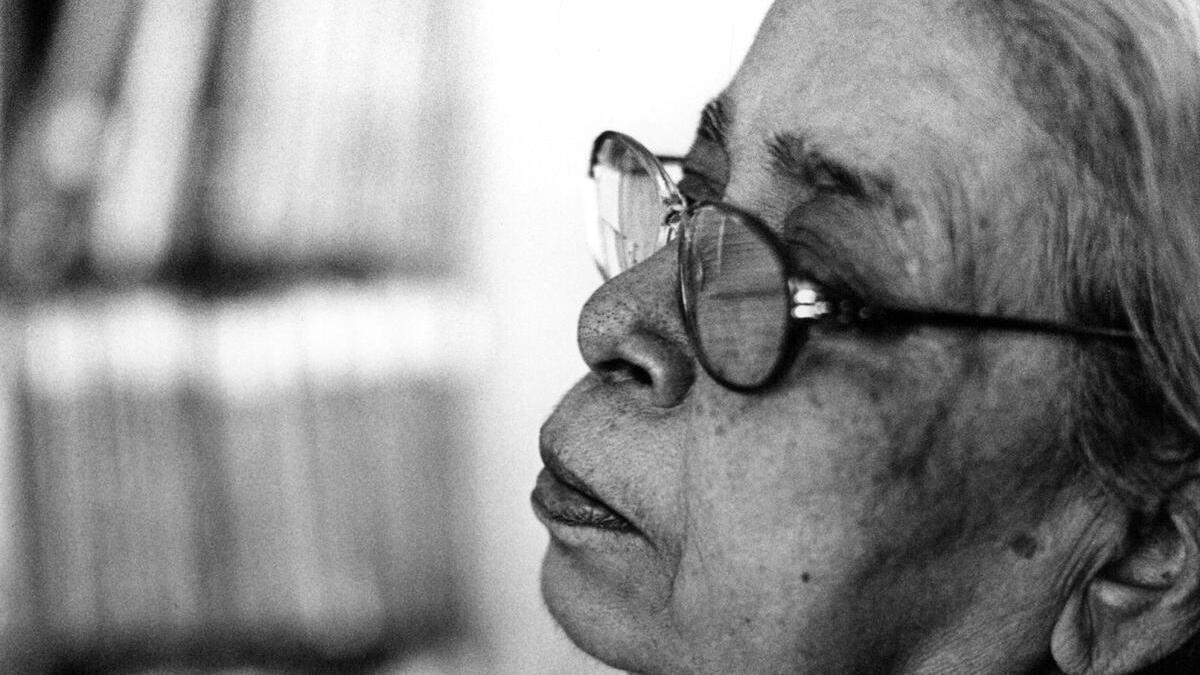
(This story is part of The Hindu on Books newsletter that comes to you with book reviews, reading recommendations, interviews with authors and more. Subscribe here.)Any time I hear or read about Mahasweta Devi, an image of hers comes to my mind. I saw it in a newspaper when she was in her 80s: she was wearing a green saree, large spectacles from another era perched on her nose, marching with a walking stick in hand. She looked as determined and indefatigable as she was in her youth.That, for me, encapsulates the essence of Devi’s life — a life spent always fighting for and shining a spotlight on those relegated to the shadows: tribal communities, sex workers, poor women, and landless labourers. In her piece, on the occasion of the centenary of Devi, Shrabana Chatterjee looks at her enduring impact on grassroots movements through her activism and her writing here.For Devi, writing itself was a form of activism, writes Naveen Kishore, the publisher of Seagull Books, here. Devi travelled across Bengal, to villages and forests, documenting the lives of those ignored by the administration. Her observations shaped her astonishing body of work. But though it was rooted in people’s experiences, her writing never read like reportage. She drew her characters from the real world and imbued them with literary depth. Her spare, unflinching prose confronted brutality and injustice as she saw them — without filters, without a smokescreen. Her writing was enriched by a lifetime of reading. As a child, she once told Rabindranath Tagore, “Please don’t write more books. I can’t read so many books.” Years later, she estimated that she had read more than she had eaten food.It is thus impossible to do justice to Devi’s work in a newsletter essay — she wrote more than 100 books, around 350 short stories, and hundreds of essays, columns, and reports. I have read only a fraction of them, but they may offer a glimpse of her extraordinary body of work.In Mother of 1084, one of her most widely read novels, translated by Samik Bandhyopadhyay, Devi writes against the backdrop of the brutal suppression of the Naxalite movement in West Bengal. She explores the grief of a mother, Sujata, on discovering that her son has died and been reduced to a number in the morgue, 1084. Sujata goes on a journey, trying to find out more about why her son rebelled and paid for it with his life. She finds, “Brati’s death is not just mine, it belongs to a thousand other mothers, to a thousand other lives lost for nothing.”In Bedanabala: Her Life, Her Times, translated by Sunandini Banerjee, Devi traces the lives of sex workers in pre-Independence India, exploring exploitation, survival, and redemption.Of her works, the one that I have recommended the most is Breast Stories, a collection of three stories translated by Gayatri Chakravorty Spivak — Breast-Giver, Behind the Bodice, and Draupadi. In these, the breast becomes a powerful metaphor through which Devi exposes the exploitation, objectification, and abuse of women, especially those from marginalised communities. “What is the breast?” she writes. “Fat tissue, this that, a lot of bother.”As you can see, these three works revolve around women because I am drawn to stories with female protagonists. But to know more about her best works, I recommend this piece by her grandson, Tathagata Bhattacharya. Devi once told him, “I am appreciated for the wrong reasons,” believing that her most celebrated works were not necessarily her finest. So, Bhattacharya lists what he considers her five greatest works — four already available in English translation, and one currently being translated.Devi received some of India’s highest literary and civilian honours, including the Sahitya Akademi Award, the Padma Shri, the Jnanpith Award, the Ramon Magsaysay Award, and the Padma Vibhushan. But awards mattered little to her. As G.N. Devy wrote in The Wire after she passed away, Devi wanted to live forever — not for immortality, but “for fighting injustice.”And that is perhaps the most fitting way to remember her: as someone who never stopped fighting, who knew no fear. Once, when asked whether she worried about the consequences of her activism, Devi replied, “I am Ritwik Ghatak’s niece, I am the wife of Bijon Bhattacharya. What should I be scared of? We don’t know what fear is.”Books of the weekIn non fiction, we have an interview with Nicholas Boggs, the author of Baldwin: A Love Story (Bloomsbury), by Gautam Bhatia. Drawing on unexplored archives and unpublished material, this biography of the American novelist, playwright, essayist, and civil rights activist is “a brilliant portrait,” Bhatia says. Read this extensive interview on Baldwin’s works and life, or watch it here.The House the Press Built (Rupa Publications) is about Chintamoni Ghosh, who built the Indian Press. It is written by Ghosh’s great granddaughter, Anjana Basu, who traces her family’s legacy with historical research and goes beyond publishing history to capture the memories and way of life of a bygone Allahabad, writes Chittajit Mitra here. Spanning five centuries — from Vasco da Gama’s arrival in Calicut to the present day — Keith Butler’s The History of Anglo-Indians (Anglo Ink publications), illustrated by Chennai-based filmmaker Harry MacLure, brings the community’s story to life. Shreya Banerjee writes about the graphic novel: “The book deliberately avoids becoming a dry historical document. Instead, history is carried through faces, gestures and conversations to make it accessible to children as well as adults.”In fiction, we have August 17 by S. Hareesh, translated from the Malayalam by Jayasree Kalathil (Harper Perennial). Thiruvithamkoor (Travancore) was a princely state founded in 1729 and ruled by the Travancore royal family under British influence until 1947. After India’s independence, it joined the Indian Union. But what if it hadn’t? What if Travancore had become an independent, sovereign nation instead? This question lies at the heart of this book. Read Stanley Carvalho’s review here.Elizabeth Strout’s The Things We Never Say (Viking) is widely touted to be a Booker Prize contender. The book follows Artie Dam, a high school history teacher in Massachusetts. Artie seems to have a perfect life, but he struggles with deep, silent loneliness. “Light as the book is, the pages ask for time, and the author, very understandingly, spoils you with ellipses and white spaces,” writes Cris here. The central figure in Kaayaa by Guruprasad Kaginele, translated from the Kannada by Narayan Shankaran (Penguin), is Bheem Malik, a Manhattan-based plastic surgeon who is meticulous, self-conscious, and quietly vain, devoted to sculpting bodies and erasing every trace of excess. Malik’s carefully ordered world is upended when a client, Lisa Salinger, accuses him of sexual harassment. “Kaayaa opens itself to a more complex meditation on beauty, illness, and the body’s fragility. Yet, the novel is unable to sustain this richer line of enquiry, and its narrative loses momentum,” writes Kinshuk Gupta in his review.In Egyptian writer Shady Lewis’s On the Greenwich Line (Peirene Press), which won this year’s James Tait Black Prize for Fiction in the U.K., the unnamed narrator finds himself “responsible” for the funeral of a stranger two decades his junior. In an interview with Saurabh Sharma, Lewis talks about the book.SpotlightThe Internet used to be a place that people escaped to. We accessed the Internet in little booths, surrounded by strangers. The world has changed so much since then. Now the Internet is a part of our lives. We spend our day chuckling at memes, sharing stories, creating posters and content, and posting our thoughts online. In short, it is where culture is now created. Abhishek Baxi writes about three books that explore how the Internet has transformed everyday life, suggesting extremely online humans are no longer an aberration, but a product of the world where identity and meaning are increasingly shaped by screens and algorithms. Read his essay here.NightstandIn what seems like a perfect read given what is unfolding in Delhi, I am currently reading my colleague Sobhana Nair’s book, Housing the Republic: A Biography of the Indian Parliament. Look out for an excerpt soon.And that’s all from me. Do write to me with suggestions, comments, and feedback to radhika.s@thehindu.co.in. Have a happy reading week!
The Hindu on Books newsletter Remembering Mahasweta Devi
The Hindu on Books newsletter Remembering Mahasweta Devi
1,355 words~6 min read