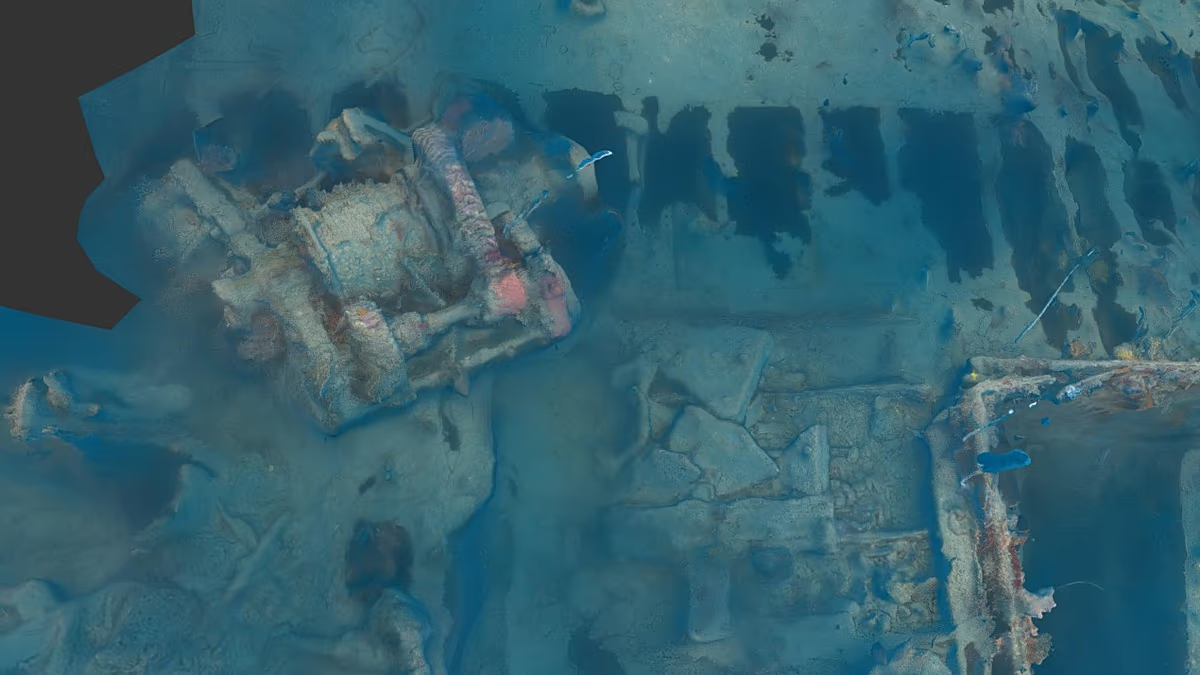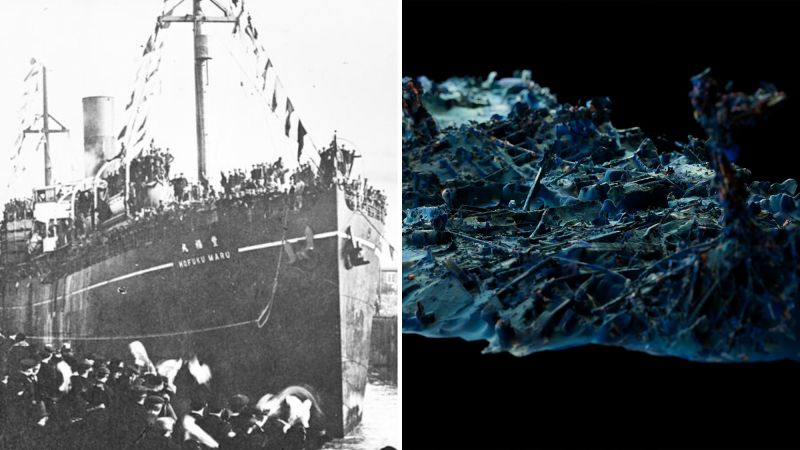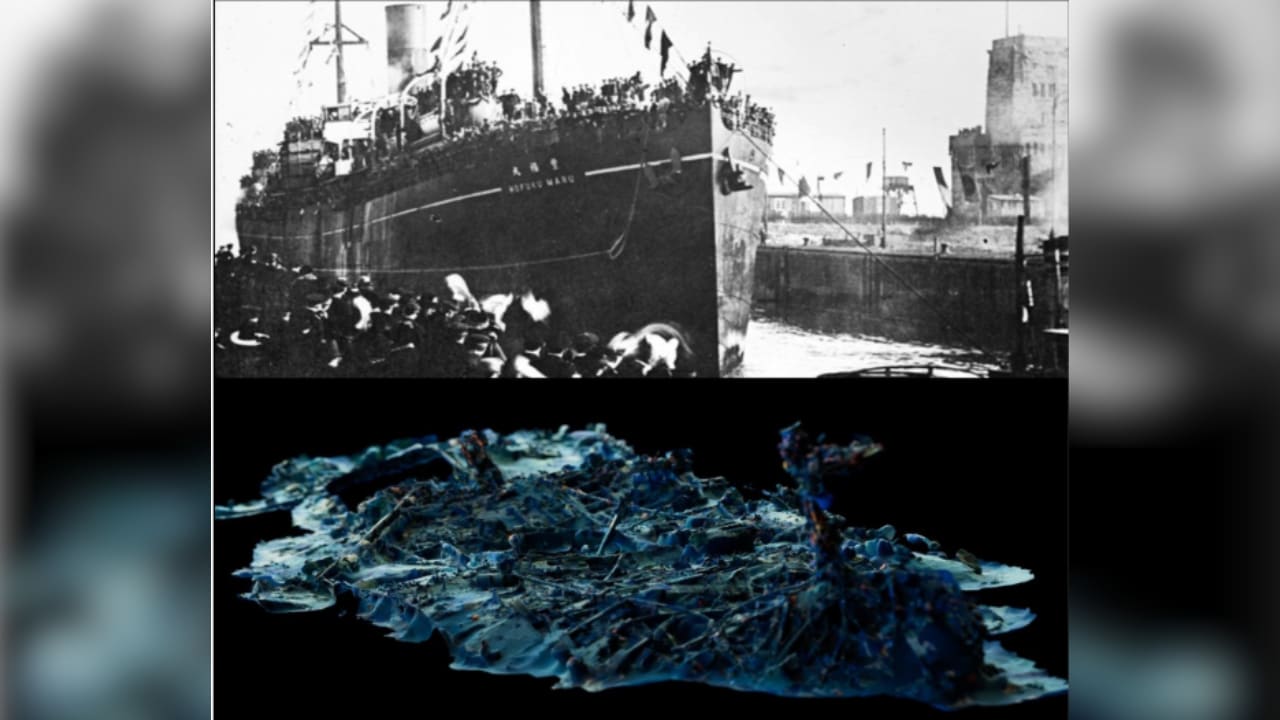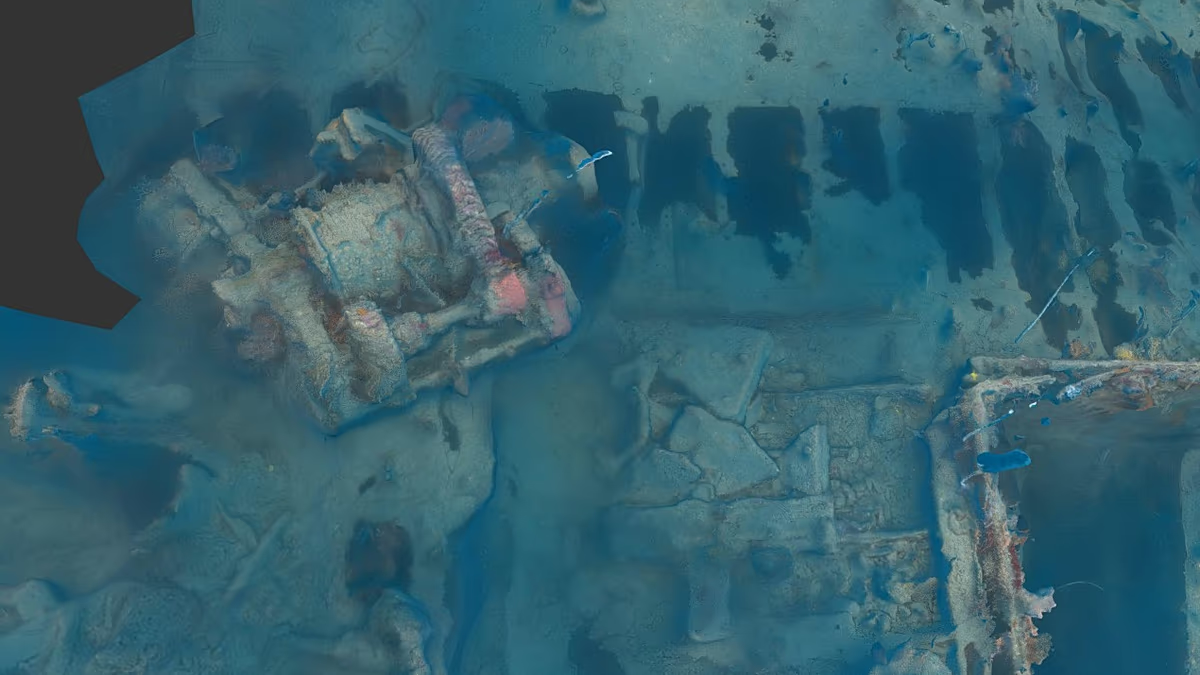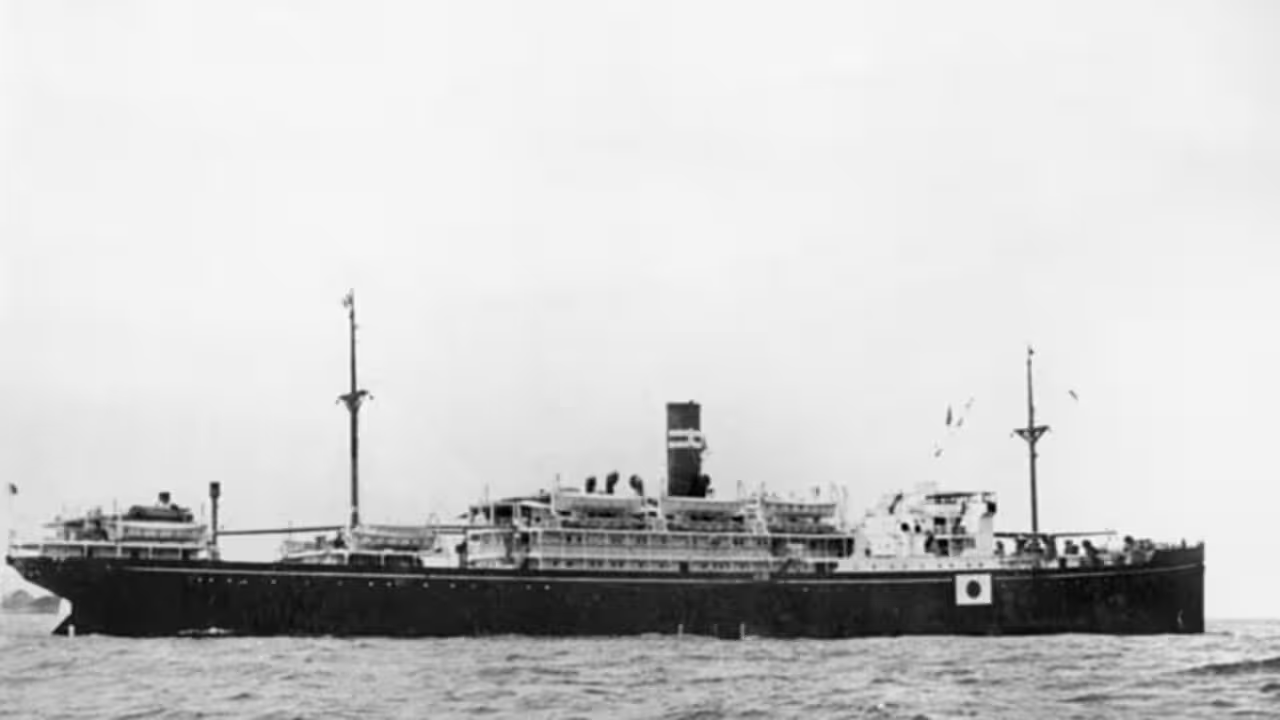
In 2023, searchers found Australia's worst maritime disaster four kilometres down, the Montevideo Maru, sunk in 1942 with over 1,000 prisoners of war aboard, lost for 81 years. Image Credits: Wikimedia Commons.For 81 years, the final resting place of the Montevideo Maru remained unknown. The Japanese merchant ship sank on July 1, 1942, after being torpedoed by the American submarine USS Sturgeon off the coast of the Philippines. The submarine's crew did not know that the vessel was carrying Allied prisoners of war and civilian internees captured after the fall of Rabaul, then an Australian-administered territory in New Guinea.According to the Australian War Memorial, the sinking of the Montevideo Maru was Australia's worst maritime disaster. More than 1,000 people died when the ship sank, including numerous Australian service members and civilians. For decades, their families had no confirmed information about where the ship lay. That mystery was resolved in April 2023, when an international expedition discovered the wreck more than 4,000 metres beneath the South China Sea, 81 years after the sinking.A wartime sinking that left families without answersAccording to the Australian Government, the Montevideo Maru was a Japanese cargo and passenger ship requisitioned for wartime transport. After Japanese forces captured Rabaul in 1942, prisoners of war and civilians were placed aboard the vessel for transport to Hainan Island. The ship was not marked as carrying prisoners of war. On the morning of July 1, the USS Sturgeon spotted the unidentified Japanese vessel and fired torpedoes. The submarine's crew did not know that the ship was carrying Allied prisoners. The Montevideo Maru was struck and sank rapidly.The vessel was carrying more than 1,000 prisoners of war and civilian internees from at least 14 countries, including hundreds of Australian service members. Estimates of the death toll vary slightly among historical and official sources, with figures generally placed at around 1,080 people. Differences in the totals reflect variations in historical records and casualty lists. Almost all of the men on the vessel perished. However, many of their relatives did not know for sure what happened to them. That uncertainty also made it impossible to pinpoint the wreck’s location and conduct a proper investigation. The search that solved an 81-year mystery The Montevideo Maru was found through a combination of historical research and modern technology. First, researchers reviewed historical records and the ship’s final voyage to identify the wreck’s likely location. According to Silentworld Foundation, in April 2023, a team of researchers began survey work in the waters north-west of Luzon Island in the Philippines. The wreck was identified using an unmanned autonomous underwater vehicle (AUV). The vehicle used sonar to locate the wreck. On April 18, 2023, only days after starting the work, the search team successfully located the wreck. It lies more than 4,000 metres below the surface, deeper than the Titanic.AUVs equipped with sonar and other remote sensing systems allowed researchers to survey deep seafloors and document shipwrecks without sending divers into extreme environments. The expedition did not attempt to enter the wreck or recover artefacts or human remains. Instead, the site was treated as a maritime war grave and a place of remembrance. That decision mattered because the wreck was not only an archaeological site. It was also the final resting place of more than 1,000 people.The USS Sturgeon, the American submarine that unknowingly torpedoed the Montevideo Maru in 1942, is shown underway. Image Credits: Wikimedia Commons.A Discovery that gave families a place to rememberFinding the Montevideo Maru did not change the outcome of the disaster. The people who died aboard the ship could not be brought home, and the wreck was not treated as a source of salvageable artefacts. But for many families, knowing where the ship lies brought an end to decades of uncertainty. For much of the postwar period, families had records of the deaths but no confirmed location for the ship.The wreck also helped bring renewed attention to the people who died aboard the Montevideo Maru. The victims came from multiple countries and included Australian military personnel, civilians and others affected by the war in the Pacific. The disaster was not only a major event in Australia's military history but also part of the wider history of prisoners of war and civilian internment during the Second World War. There was another reason to leave the wreck undisturbed. Shipwrecks can contain human remains, making some of them underwater war graves as well as sites of historical and archaeological importance. The team searching for the Montevideo Maru therefore focused on locating and documenting the wreck without disturbing it or removing anything from the site.
In 2023, searchers found Australia’s worst maritime disaster four kilometres down: the Montevideo Maru, sunk in 1942 with more than 1,000 prisoners and civilians aboard, after 81 years lost
For 81 years, the final resting place of the Montevideo Maru remained unknown. The Japanese merchant ship sank on July 1, 1942, after being torpedoed by the American submarine USS Sturgeon off the coast of the Philippines.
767 words~3 min read