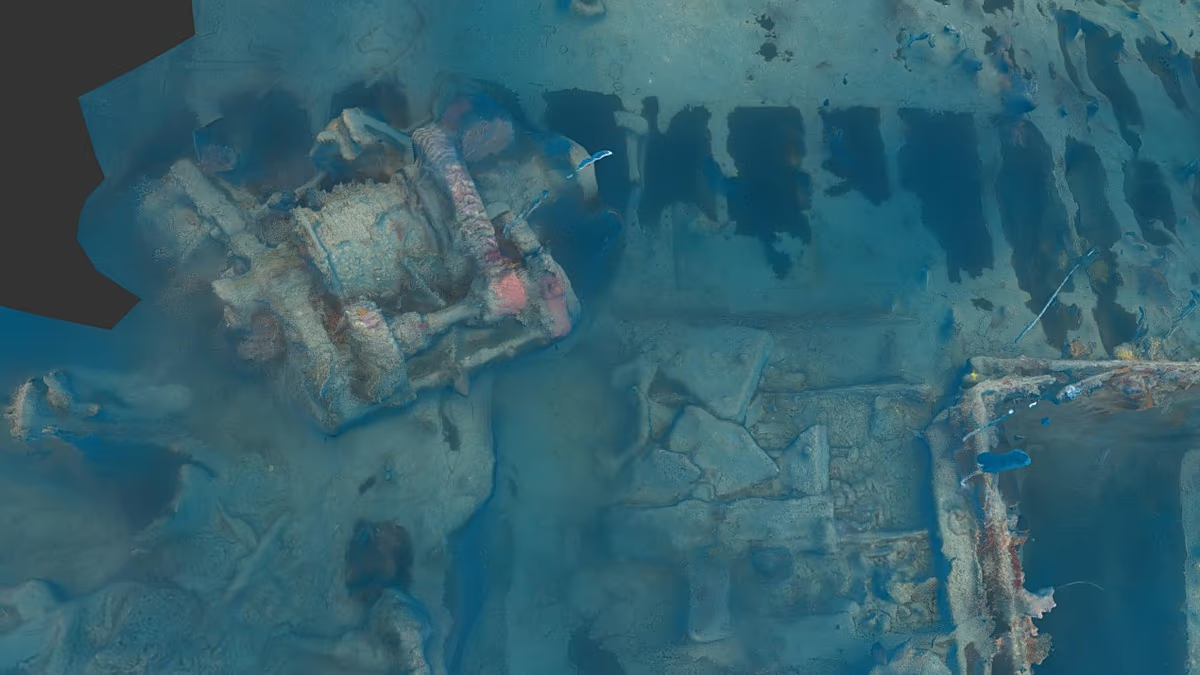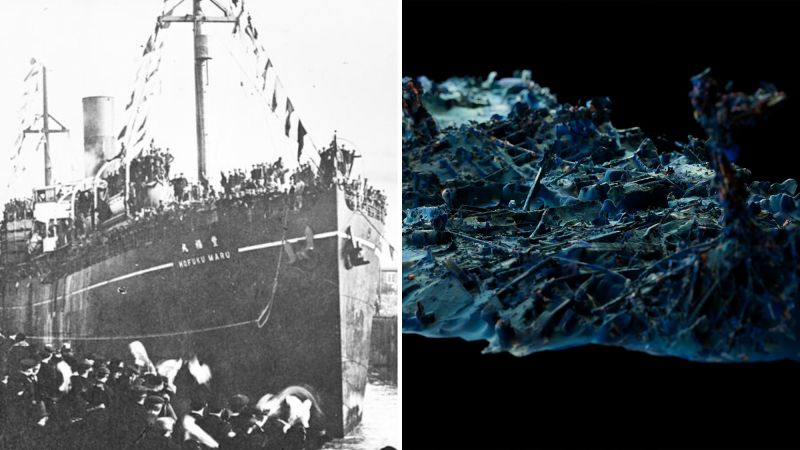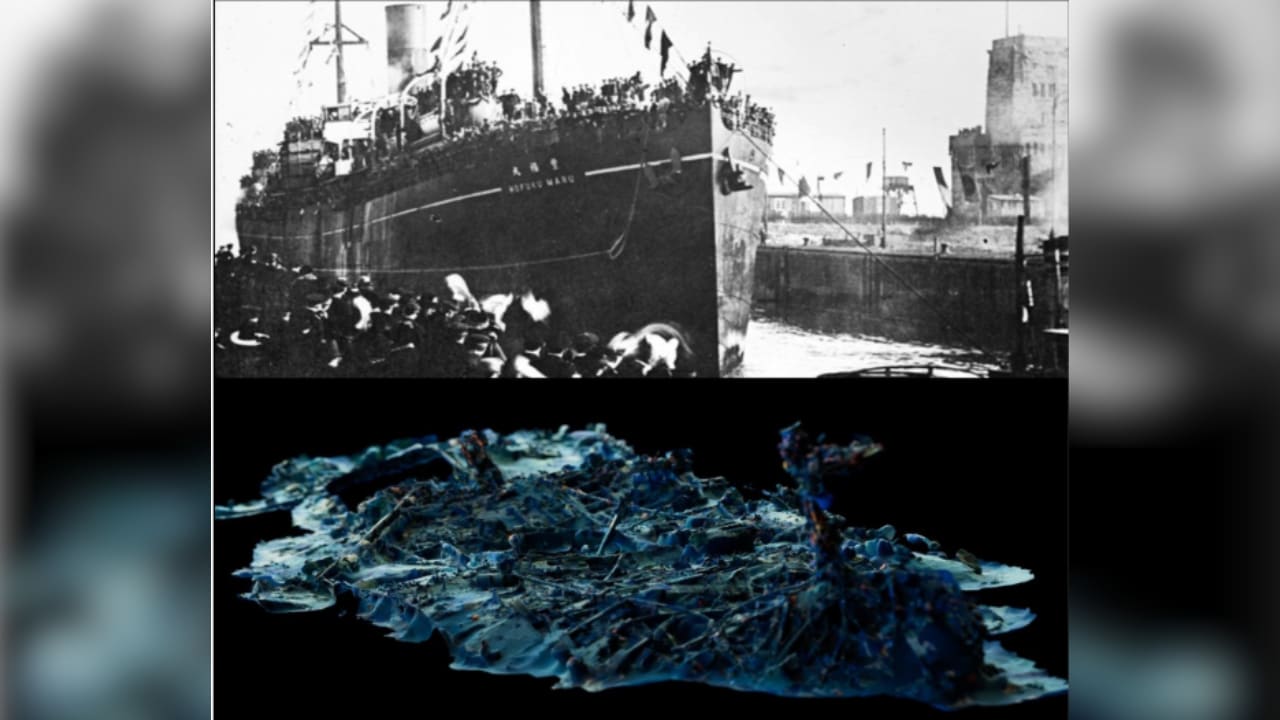
On 21 September 1944, the Hofuku Maru was sailing as the second ship in a Japanese convoy off the western coast of Luzon. On board were 1,289 British and Dutch prisoners of war, many of them already weakened after being forced to work on the so‑called Burma–Thailand “Death Railway”.
The conditions were extreme: no light, inadequate ventilation, no sanitation, and food and water rations barely sufficient to survive. The ship carried no markings to identify it as a prisoner transport.
When aircraft from Task Force 38 of the US Navy attacked the convoy, they fired their torpedoes at what, to them, was a legitimate military target. One torpedo struck the hull of the Hofuku Maru.
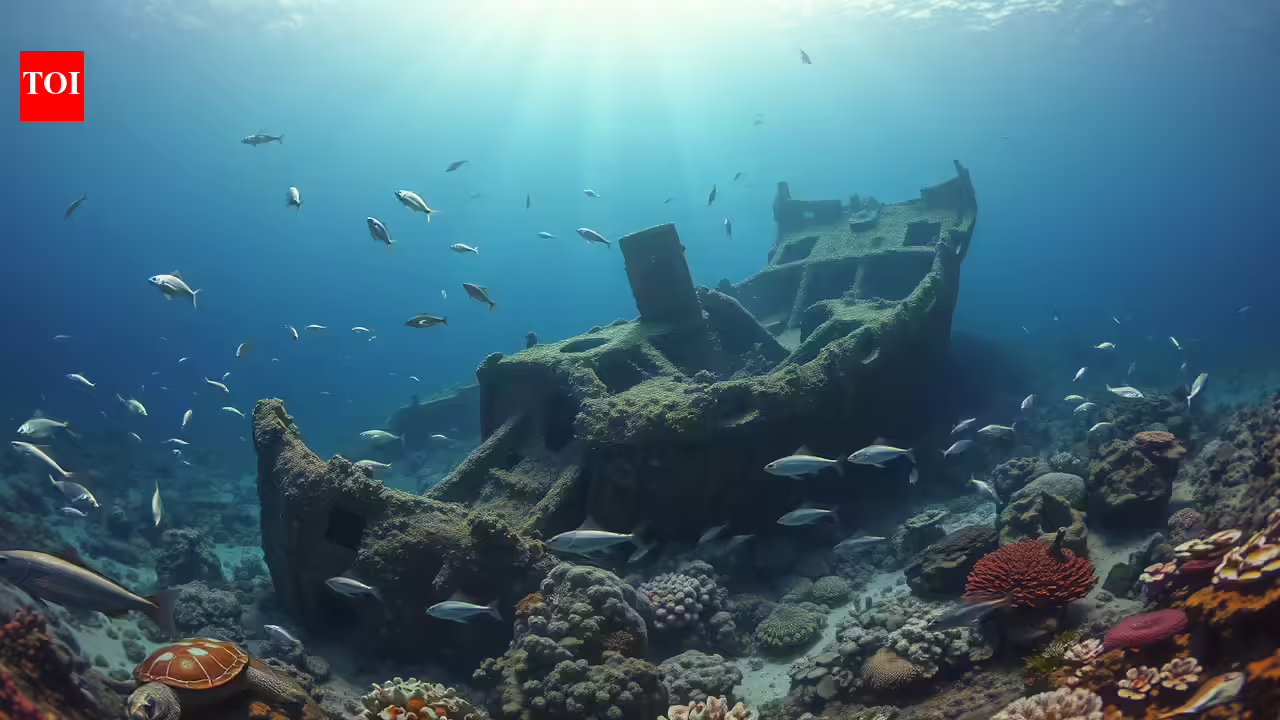
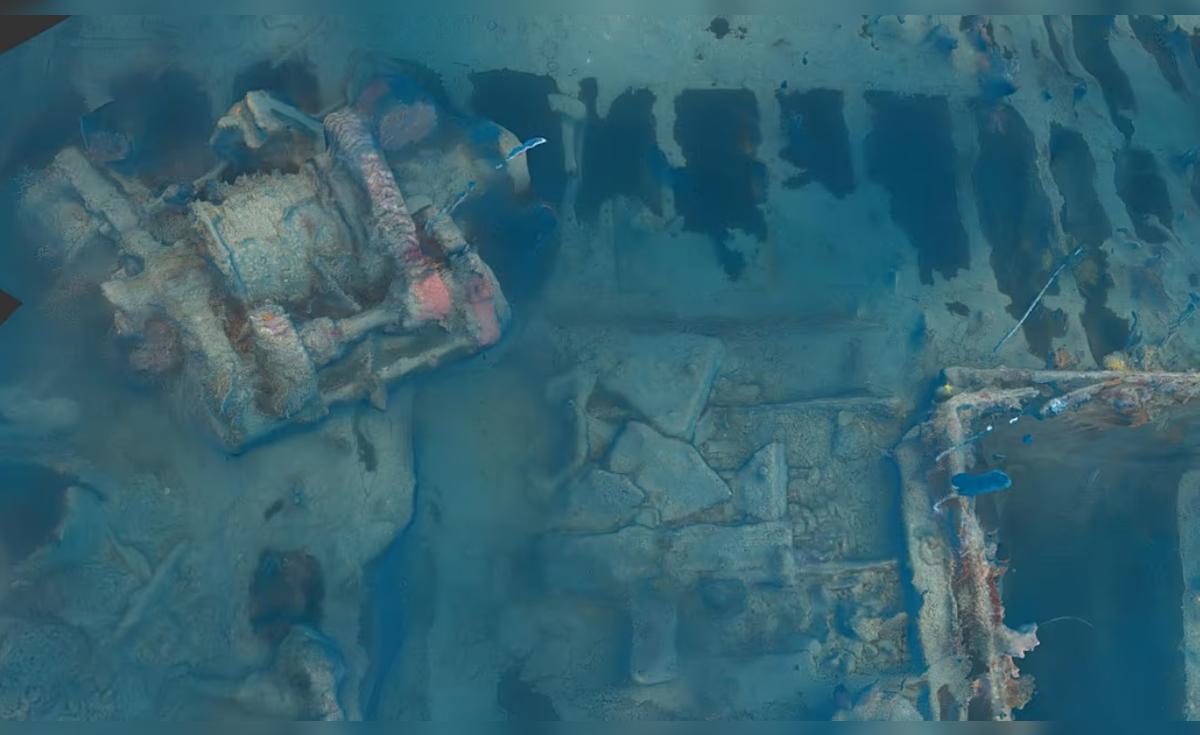
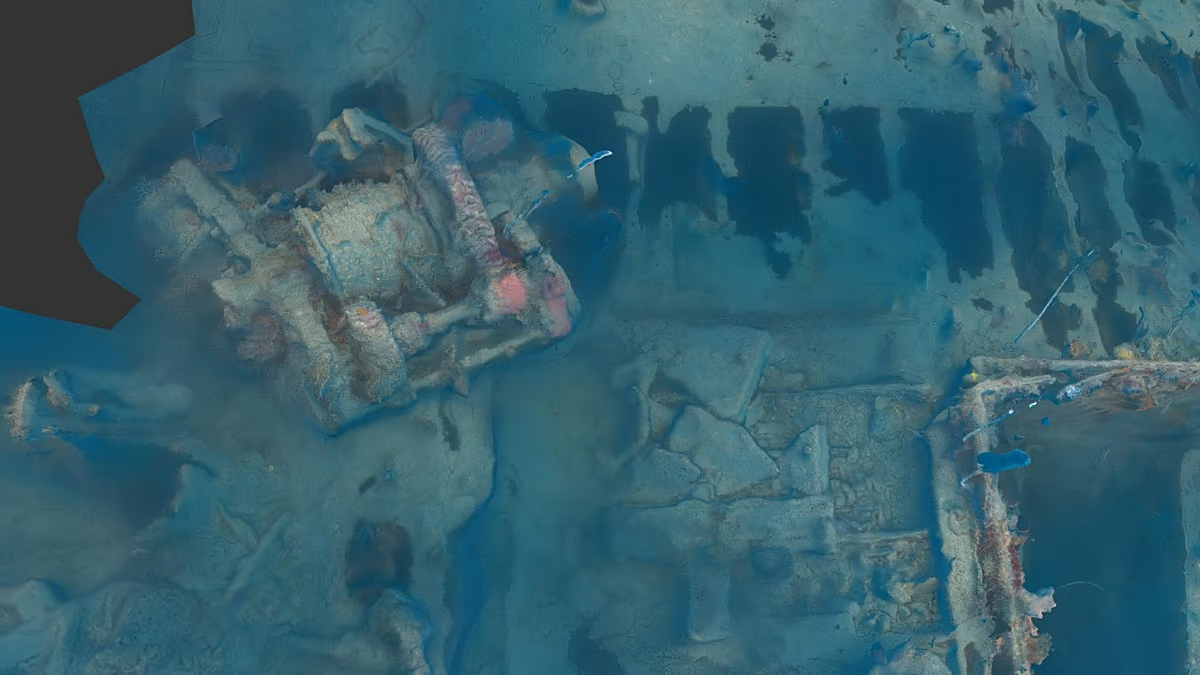
The ship broke in two and sank in less than three minutes, with up to 1,000 prisoners still trapped in the holds. Those who managed to swim to shore were recaptured by Japanese forces. Of the 1,289 prisoners on board, 1,047 died.
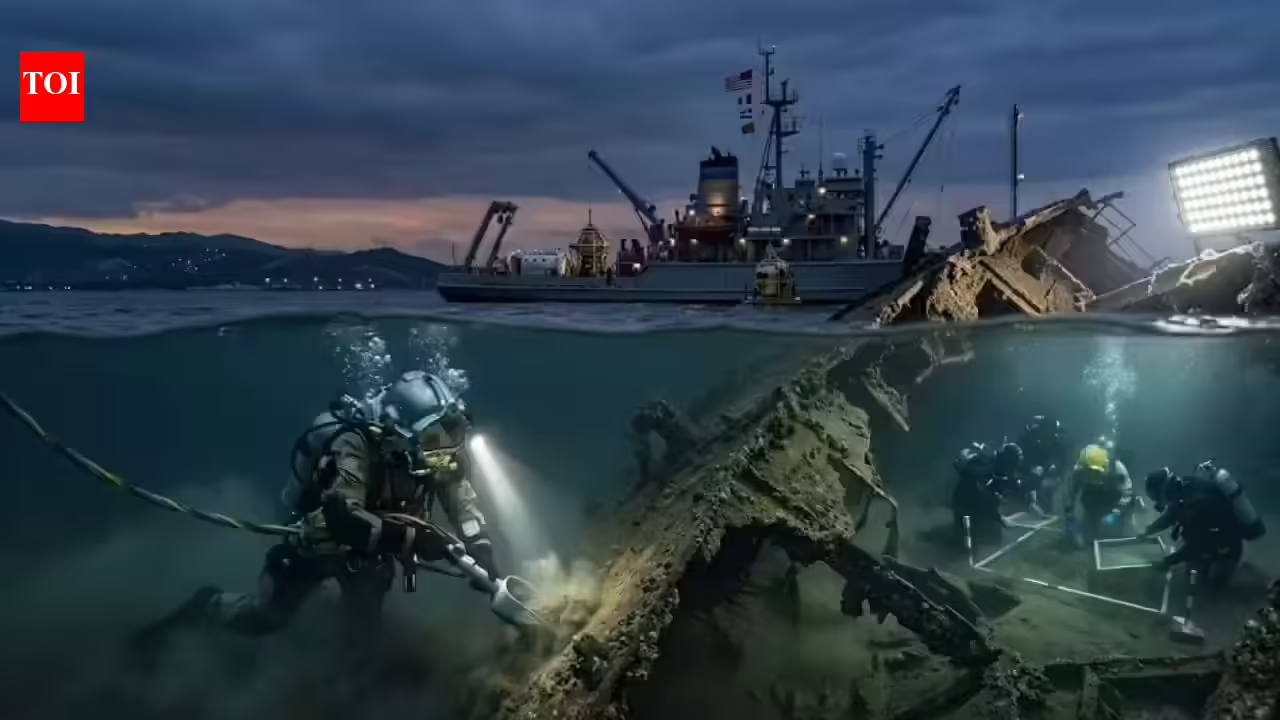
For eight decades the wreck remained undiscovered. Post‑war records were fragmentary and contradictory, Allied action reports gave only approximate coordinates, and survivors’ testimonies differed on basic details. The families of more than a thousand dead soldiers had nowhere to go to remember them.