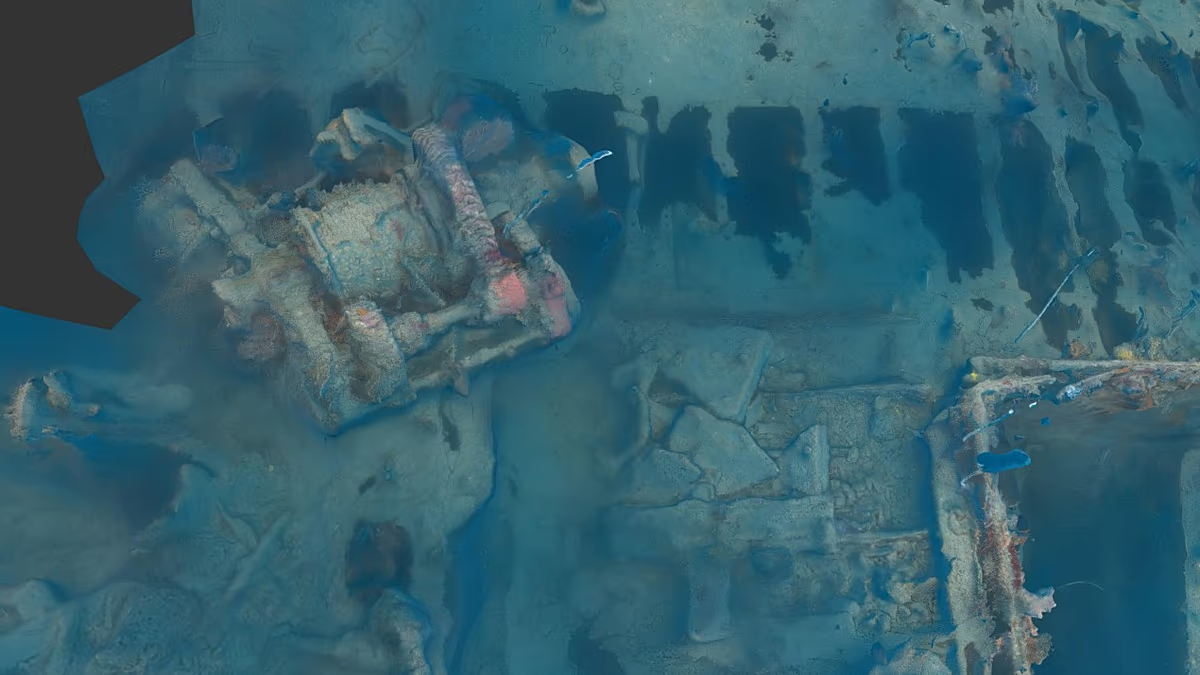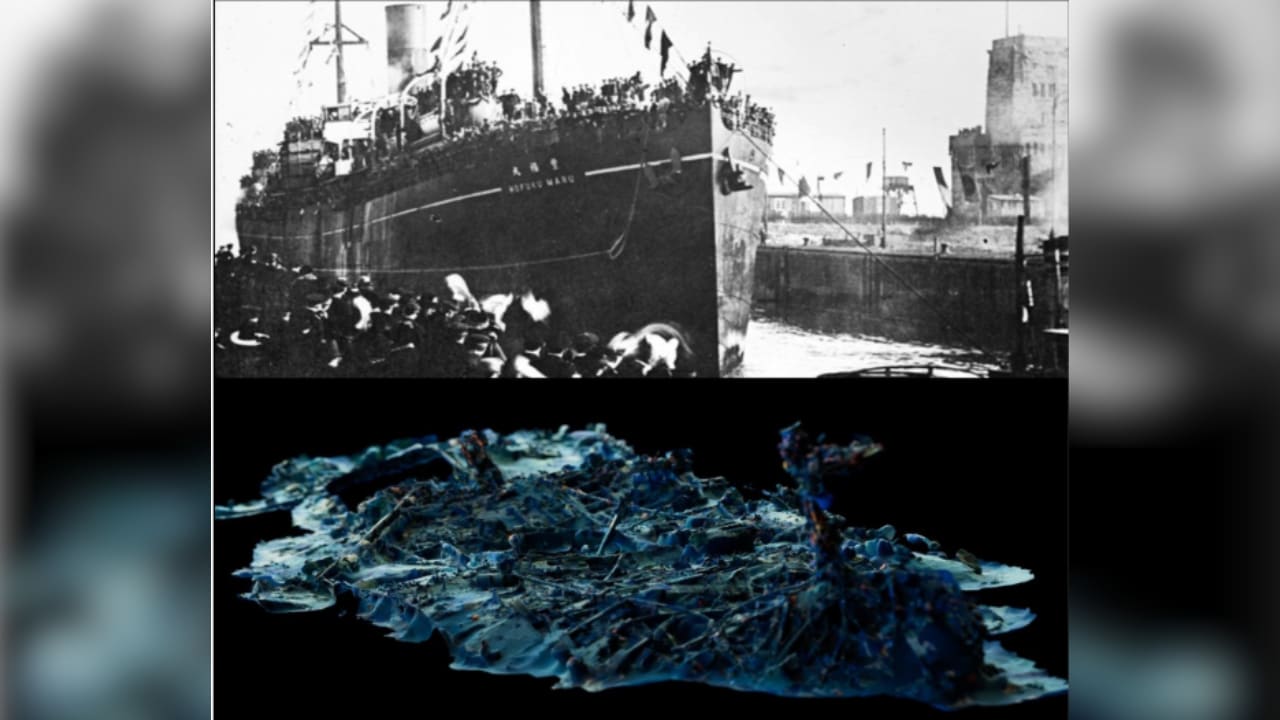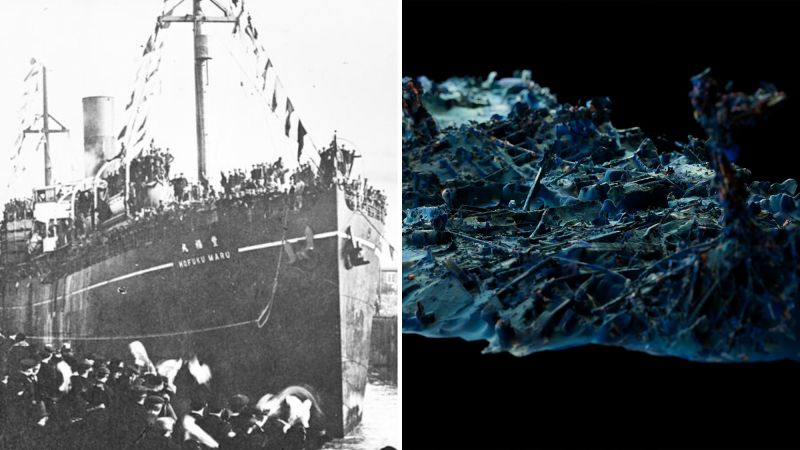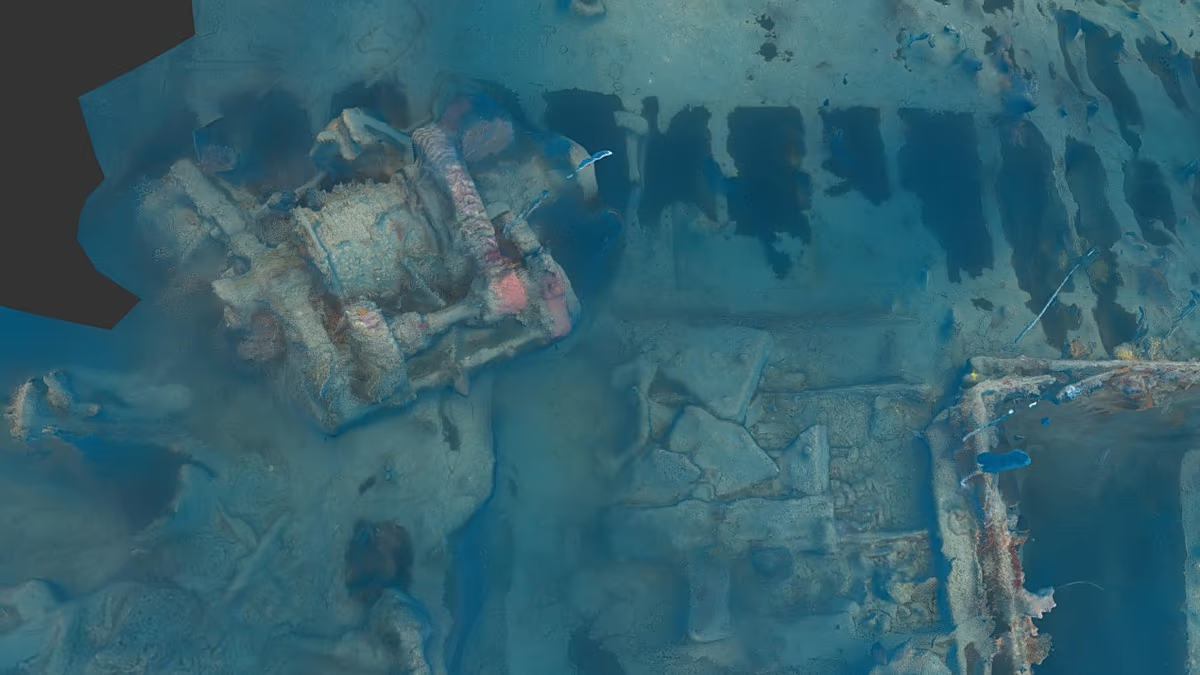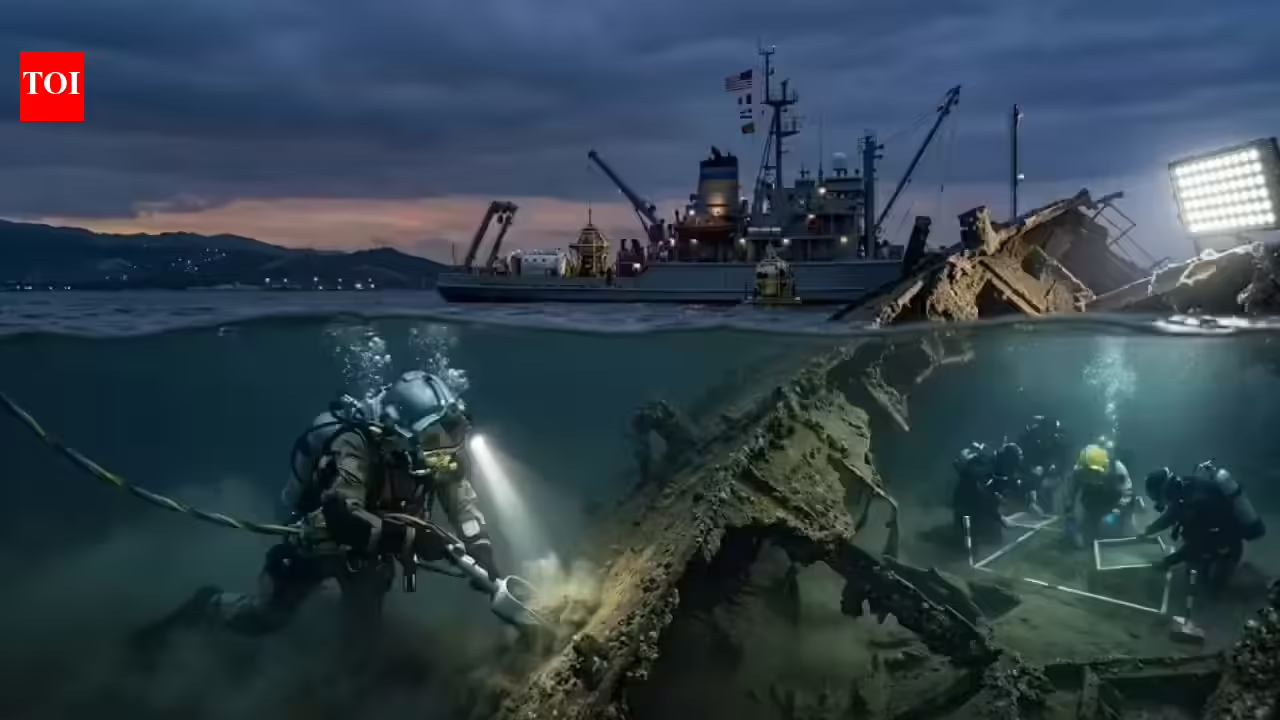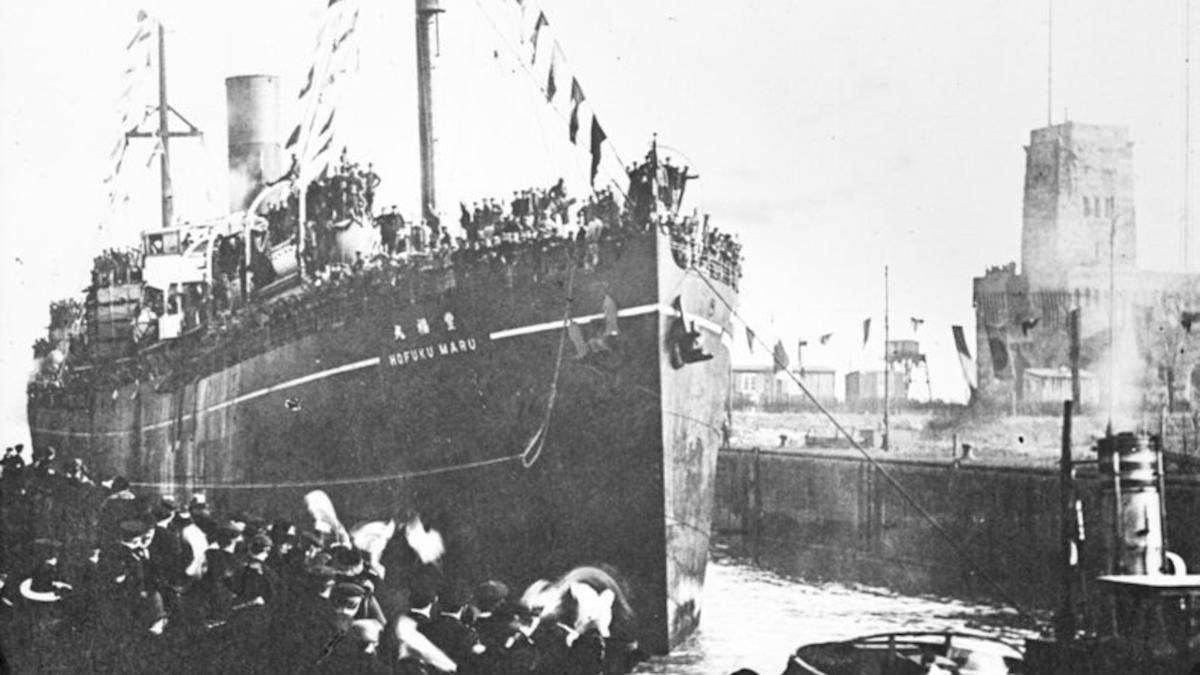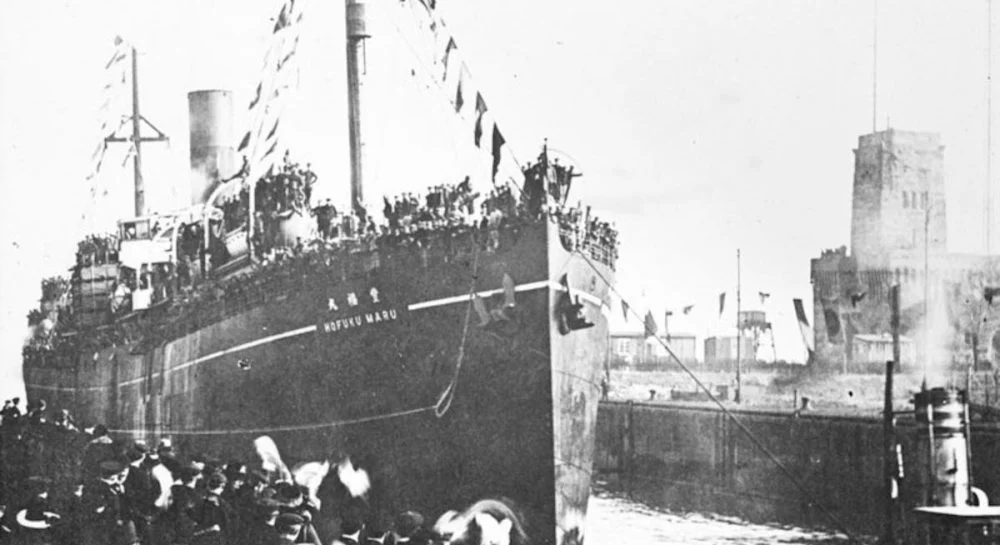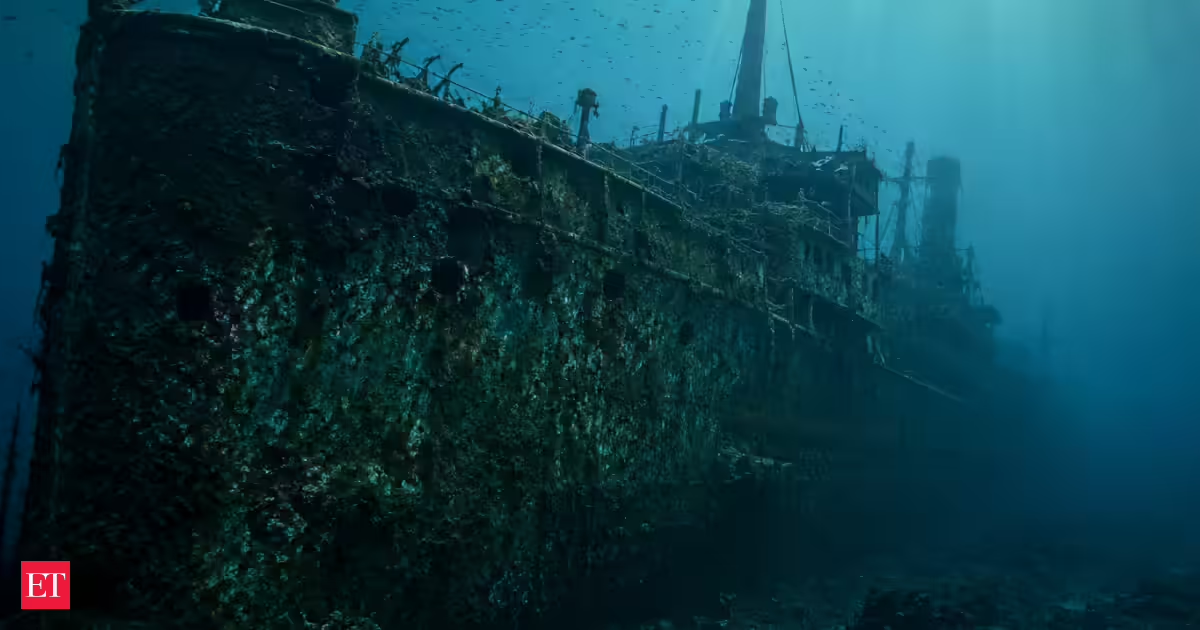
A shipwreck has finally been found off the coast of the Philippines more than 80 years after it sank beneath the Pacific Ocean, and it contains one of the darkest, least-told stories of World War II. According to “The Japanese 'Hell Ships' of World War II,” published by the U.S. Naval History and Heritage Command, 134 Japanese “hellships” carried an estimated 126,000 Allied prisoners of war on more than 156 voyages during the war, and some 20,000 of them didn’t survive the trip. That’s a staggering number, and most Americans have never heard of it.The ship at the heart of this new discovery is the Hōfuku Maru, a Japanese prison transport that sunk on September 21, 1944, after being struck by an Allied torpedo. According to the Warner Bros. Discovery press release "Lost Japanese 'Hellship' Hōfuku Maru Found in the Philippines" announcing the find, the freighter broke in half and sank in less than three minutes, with more than 1,000 British and Dutch prisoners still trapped in its holds. For more than 80 years, no one knew exactly where it was. Now they do.How a retired Navy officer solved an 80-year-old mysteryThe breakthrough was not caused by high-tech technology or a spy satellite. It came from old paperwork records gathering dust in archives that almost no one had thought to revisit.According to a Warner Bros. Discovery press release, the Hellships Memorial Foundation, a US-registered non-profit founded by retired naval officer Randy Anderson, and later joined by researchers Tim Beckensall and John Duresky, worked for years through long-overlooked documents in both American and Japanese military archives. Documents pointed to a site more than 30 miles from where the Hōfuku Maru had long been believed to have sunk."We were absolutely stunned that Japanese sources had information on where the convoy was attacked and what ships were hit; this was a smoking gun," Anderson said.The wreck that changed everything: The Hōfuku Maru as seen through deep-sea photogrammetry. Image Credit: Evan Kovacs, Marine Imaging Technologies, LLCThe same source states that explorer Josh Gates, host of Discovery Channel’s Expedition Unknown, then worked with the Foundation, underwater imaging specialist Evan Kovacs and maritime archaeologist Dr. Calvin Mires of Marine Imaging Technologies. The team used sonar technology to locate an unknown wreck more than 160 feet below the surface off the coast of Zambales province on the island of Luzon.The team conducted deep dives and detailed photogrammetry to catalog the wreck and compare it to the original blueprints of the Hōfuku Maru. The size of the ship, the layout of the cargo hold, the location of the masts, and the fact that it was violently torn in two halves all matched Japanese and American wartime accounts of the sinking."The pieces all fit," researcher Tim Beckensall told Warner Bros. Discovery. "The vessel is the right size, in the right place and from the correct period. I am convinced this is the Hōfuku Maru."The divers also found human remains in the wreckage, according to the source, a sobering reminder that this is not just an archaeological site. This is a war cemetery.What were the hellships and why should you care?If you've never heard of the hellships, you're not alone. That’s the point exactly.According to "The Japanese 'Hell Ships' of World War II" published by the U.S. Naval History and Heritage Command, more than 130 cargo ships and passenger liners were repurposed by Imperial Japan to transport Allied prisoners between forced labor camps across South Asia. The holds were described as floating dungeons, where prisoners were denied air, space, light, bathroom facilities and adequate food and water. Most of the deaths were not from these conditions but from friendly fire: Allied ships, submarines and aircraft not knowing POWs were trapped below deck.Here is where the tragedy is especially cruel. According to “American POWs on Japanese Ships Take a Voyage into Hell” by historian Lee A. Gladwin, published in Prologue: Quarterly of the National Archives and Records Administration (Winter 2003), referencing historian Gregory F. Michno's book Death on the Hellships: Prisoners at Sea in the Pacific War, more than 21,000 Americans were killed or injured from friendly fire as a direct result of being on these unmarked ships. Americans were killed, in part, by their own people with no one on either end knowing it.For decades, the hellship story has been eclipsed by other Pacific War tragedies. The Hōfuku Maru is now giving a physical location for that forgotten chapter.The U.S. military is still bringing these men homeThe Hōfuku Maru is not the only hellship making headlines these days.Photogrammetry scan of the wreck identified as the Hōfuku Maru. Image Credits: Evan Kovacs / Marine Imaging Technologies, LLCIn early 2026, the U.S. military launched what it called “the largest and most complex underwater recovery mission in the history of this program” in what will be a multi-year effort to recover remains from the Ōryoku Maru. This hellship sank in Subic Bay, Philippines, in December 1944, according to “DPAA Conducts Underwater Recovery Mission in the Philippines” published by the Defense POW/MIA Accounting Agency (DPAA). The source says DPAA estimates more than 250 Americans still unaccounted for remain inside the wreck, and forensic anthropologists are waiting at DPAA’s lab in Honolulu to analyze any remains recovered.These are the remains of real people. Men with wives and children. Men who have waited 80 years to have their names put on a place.Why this discovery matters beyond the headlineFor younger Americans, WWII can seem a distant memory. But discoveries like this make it feel visceral."The story of the hellships is a chapter in the history of WWII that demands to be brought to light," Gates said. "The research and dives that led to this groundbreaking discovery can hopefully offer closure to the families of more than a thousand servicemen who made the ultimate sacrifice."According to the Warner Bros. Discovery press release "Lost Japanese 'Hellship' Hōfuku Maru Found in the Philippines", the discovery will be featured in the two-part season premiere of Expedition Unknown, Hunt for the Hellships, premiering June 24, 2026, on the Discovery Channel. Still, hundreds of American families don't know who their fathers and grandfathers were. The Hōfuku Maru reminds us that the work to bring them home never stopped.
Largest POW grave site: In 1944, the Japanese hellship Hōfuku Maru sank with over 1,000 Allied POWs aboard, and in 2026, forgotten military documents led to a discovery no one expected 80 years later
A groundbreaking exploration reveals the long-lost Hōfuku Maru, a hellship that sank with over 1,000 Allied POWs in 1944, shedding light on a forgotten chapter of WWII history as recovery efforts continue in the Philippines.
1,036 words~5 min read