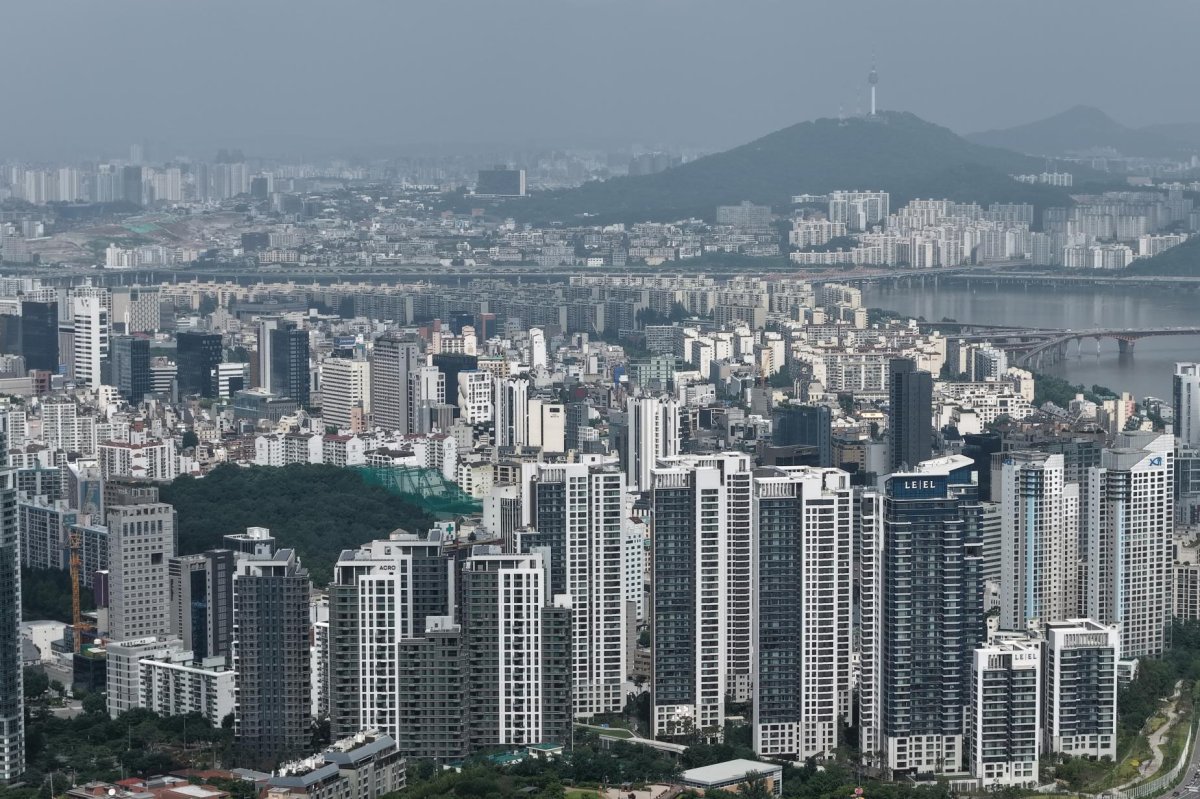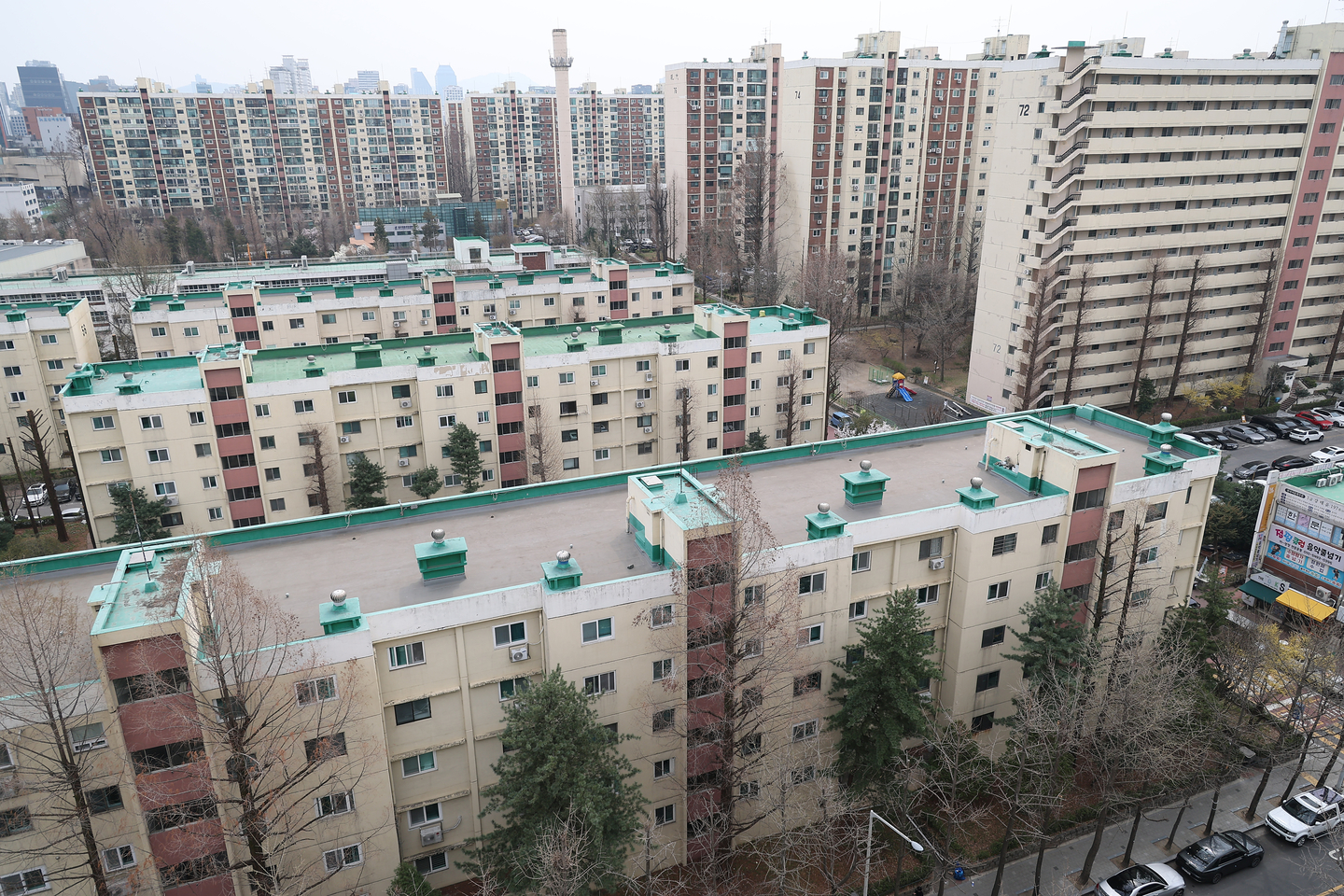
This photo taken on Sunday shows the apartment complexes in Songpa-gu, southern Seoul, one of the more affluent areas in the city. (Yonhap) Real income fell across the bottom four income quintiles among South Korea’s urban households in the first quarter, rising only for the highest-income households, government data showed Wednesday.It was the first time since the data series began in the first quarter of 2020 that inflation-adjusted income declined for the bottom four quintiles while increasing for the top 20 percent, according to data released through the Korean Statistical Information Service.An income quintile divides the population into five equal income groups. The first quintile refers to those with the lowest income, and the fifth, the highest.The last time the bottom four groups all recorded declines was in the second quarter of 2023, when income also fell for the top quintile.Real income, which strips out the effects of inflation, fell most sharply for the fourth quintile, or the second-highest income group, declining 2.3 percent from a year earlier, or by 130,585 won ($88) per month.It fell 1.7 percent for the second quintile, 1.5 percent for the middle quintile and 1.3 percent for the bottom quintile.By contrast, monthly real income for the top quintile rose 1.6 percent, or 163,368 won, from a year earlier.The increase was driven largely by transfer income rather than wages or business earnings.Wage income for the top quintile rose only 0.8 percent, while business income fell 6.3 percent and property income declined 11.8 percent.Its average monthly transfer income surged 24.6 percent to 1.12 million won. Public transfer income, including pensions and government benefits, rose 9.4 percent to 734,384 won, while private transfers increased 69.1 percent to 387,681 won.The ministry attributed the increase partly to the Lunar New Year holiday falling in the first quarter and to a rise in private transfers exchanged among top-income households.The picture was different for the bottom quintile, where transfer income fell 1.1 percent to 653,610 won per month.Private transfer income rose 4.3 percent, but public transfer income declined 3.2 percent. Transfer income accounted for 63.6 percent of the bottom quintile’s total real income, making the decline in public benefits particularly significant for the lowest-income households.
Only top 20% of urban households saw real income rise in Q1
Real income fell across the bottom four income quintiles among South Korea’s urban households in the first quarter, rising only for the highest-income household
364 words~2 min read