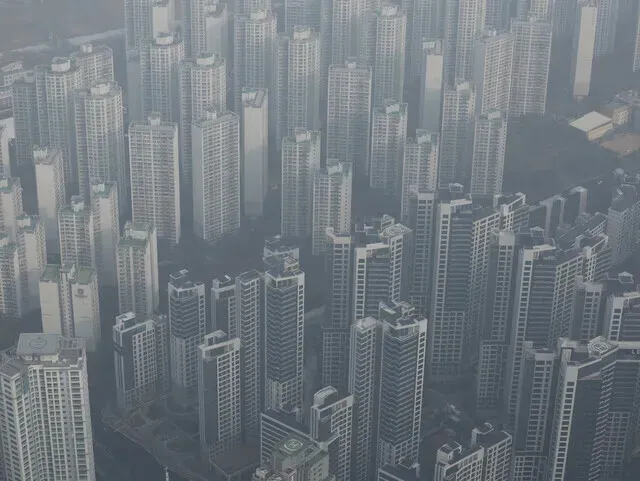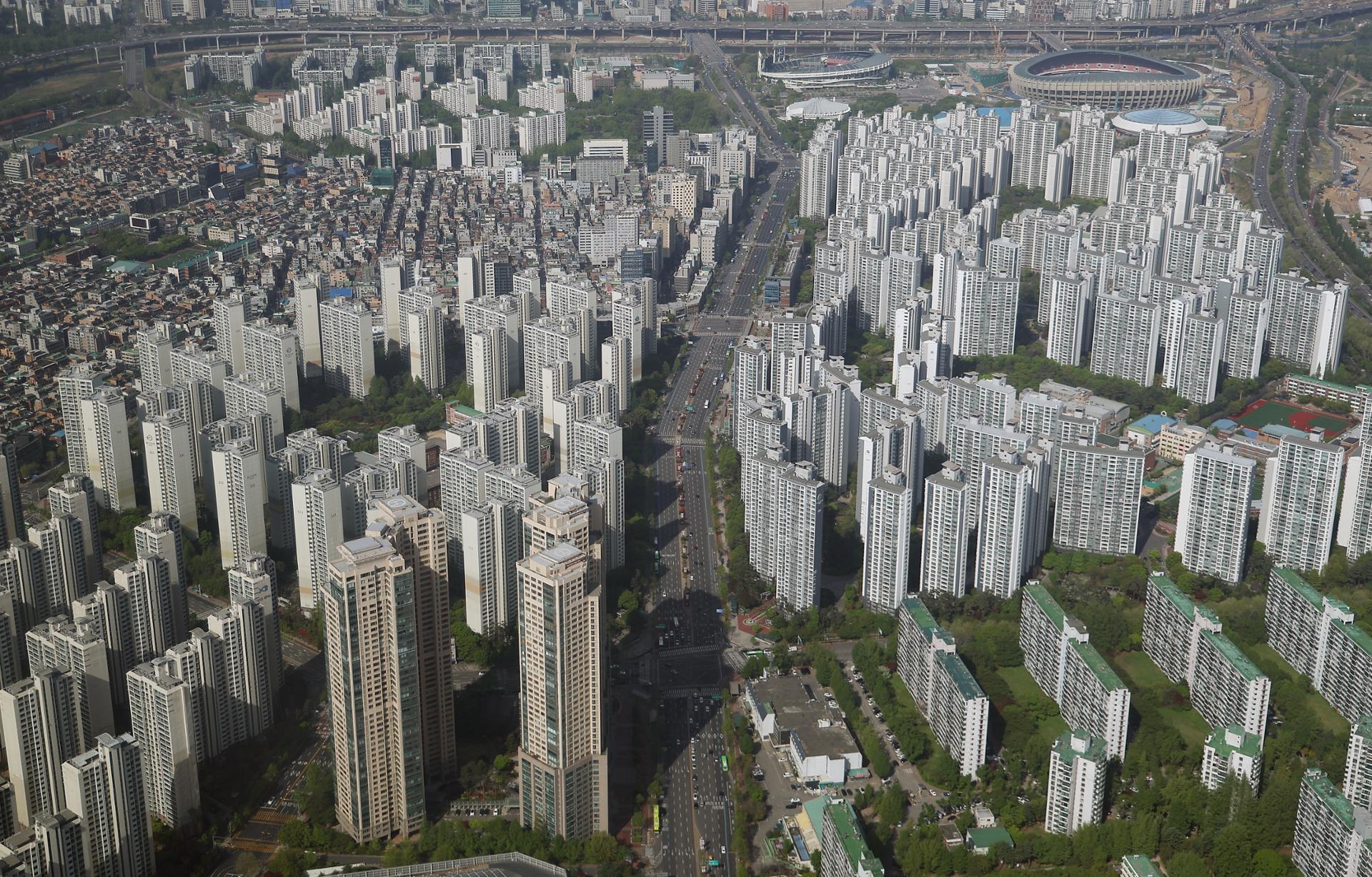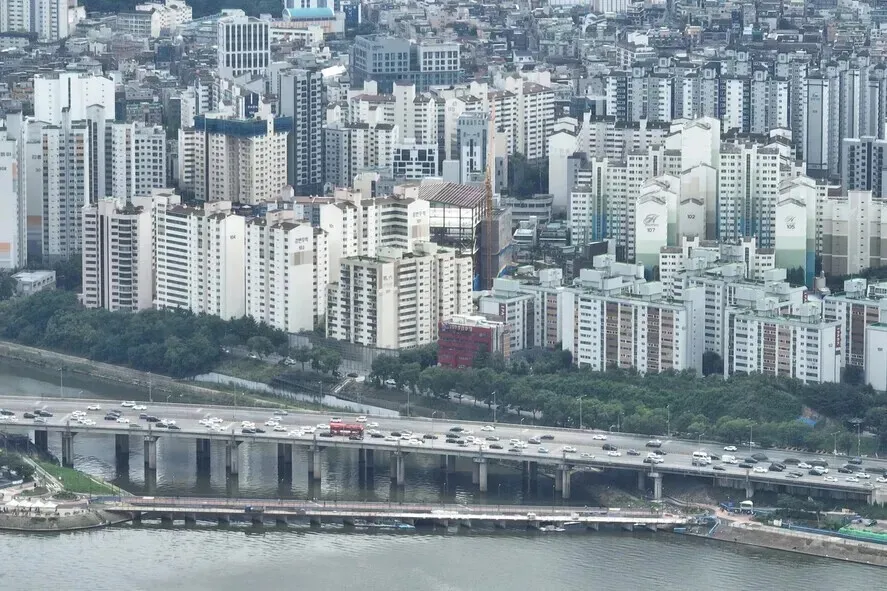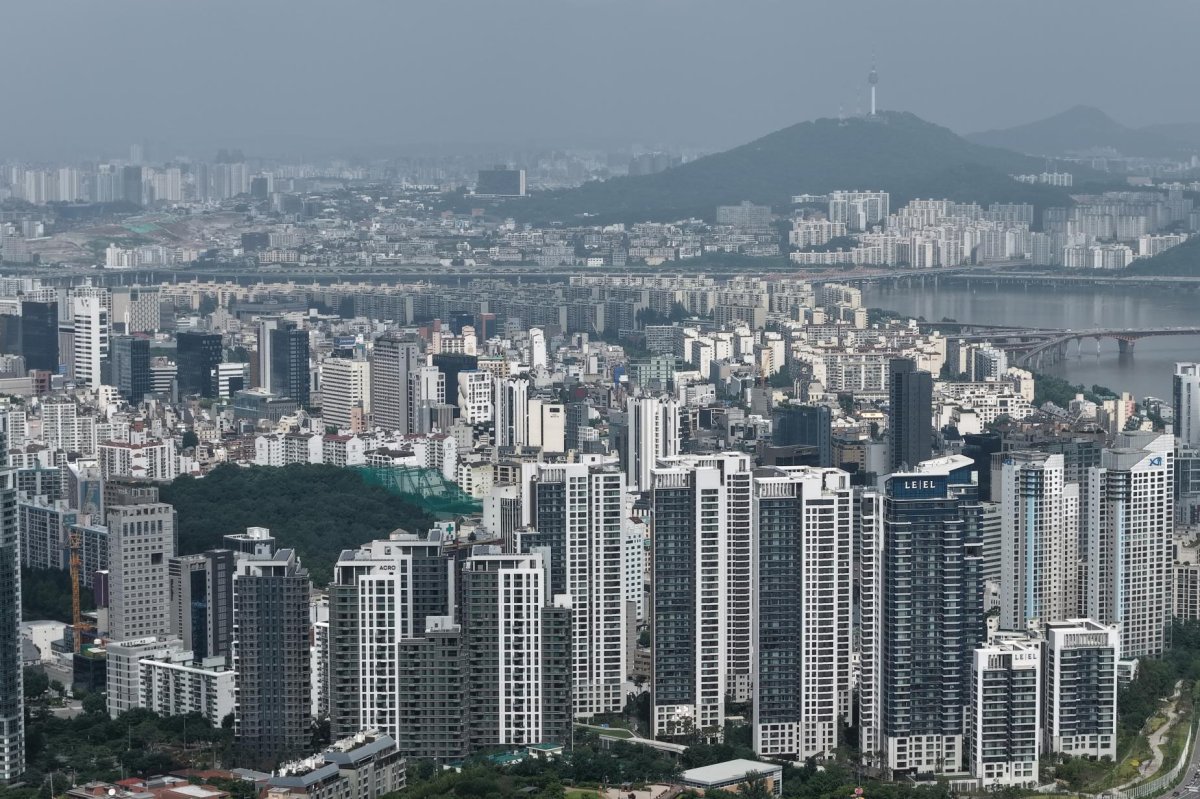
Seoul apartments seen from N Seoul Tower. (Yonhap)
By Jun Sung-in, former professor of economics at Hongik UniversityThe world has changed. Not that it ever stood still, but the world today is certainly different from that of the past — or even just a few years ago. New and unfamiliar economic trends have also emerged.One new trend is how rising export prices are driving inflation in the overall economy. Another is the significant gap between the growth rates of production and income. Many experts have indicated the discrepancy between the current account balance and the foreign exchange rate. This truly is a “brave new world.”Some challenges have remained unchanged, persisting like chronic conditions. Two stand out: the employment “cliff” that is keeping young Koreans out of work and housing prices that spring back up like a coil despite efforts to suppress them.First, let’s look at the employment drop-off. The economy has shown brisk growth this year, but hiring is not rising as expected. Employment data in June showed that the number of manufacturing jobs decreased by approximately 100,000 from the same month last year, attesting to the reality of jobless growth.Youth employment data paints an even bleaker picture. The number of employed young people last month fell by approximately 200,000 year on year as the youth employment rate fell for the 26th straight month to 43.9%. This figure is roughly half that of 81% for those in their 30s and 40s and even lower than 48% for those aged 60 and older. The youth unemployment rate of 7% is far higher than the overall figure of 2.3%. It’s no exaggeration to say that a truly precipitous employment cliff is standing in the way of the younger generation.How, then, are young people supporting themselves? If they are not entering the workforce, are they relying on alternative income streams?Even in the absence of labor income, capital gains can help sustain livelihoods. Take, for example, Korean retail investors in domestic and overseas stocks. They provide capital through stock investments and earn profits such as dividends. So even if they have no jobs or are part of the non-economically active population, they can still earn capital income, though whether the amount is sufficient is another matter.But do young people who cannot find jobs have sufficient capital for stock investments? Unless they come from wealthy families, the answer is most likely no. This is where the tragedy of the younger generation begins; they have no source of income whatsoever. Their plight of poverty amid plenty marks the early stages of the intergenerational transmission of poverty, where the social mobility ladder has been cut off.The second chronic problem — home price inflation — is yet another seemingly insurmountable obstacle and a deep source of frustration and hopelessness. First, from the perspective of employed young people, housing prices are not at levels allowing them to buy homes through normal savings and loans, driving them into despair. As for unemployed youth? Enough said.But there’s more to why high home prices are making young Koreans feel hopeless. Historically, real estate has been viewed as one of the safest and most profitable ways to build wealth in South Korea. Older generations accumulated much of their wealth through property investments, from using the jeonse (lump-sum deposit lease) system and purchasing homes through presale programs to later selling them at a premium. Some also engaged in “gap investment,” buying properties with the help of large tenant deposits.To put it nicely, it’s an investment; to put it bluntly, it’s speculation. Most of the older generation did just that.But this most reliable method of building wealth is effectively off-limits to the younger generation. Not only are housing prices soaring, but loan requirements like income screening and other criteria have grown extremely stringent. Buying a home is simply out of the question for many.Of course, the employment cliff and housing inflation are nothing new. But in today’s brave new world, an emerging structure is automatically exacerbating both problems.Productivity that does not create jobs drastically widens the gap between labor income and capital gains. The share of labor income diminishes while that from capital overflows. But a major portion of capital earnings flows into real estate, which is historically the safest investment with guaranteed high returns. This, in turn, exacerbates the employment divide and creates conditions in which housing prices continue to climb.This is where the need for policy comes in, specifically toward youth and real estate. But the government is limited in its capacity to resolve problems through youth policy, particularly in employment. This is because the private sector must take the lead in creating jobs. And in the new economic climate with the rapid rise of artificial intelligence, it remains uncertain whether humans — let alone young people — can continue providing meaningful labor.In contrast, real estate policy offers a bit more wiggle room for policy intervention. No one measure is a panacea, and a combination of actions is likely needed to curb speculation, expand supply and enforce generation-specific support for young homebuyers. The key is recognition of real estate policy as a crucial foundation for future economic policy and focusing policy efforts on it.Time is running out. The clock is ticking for young people as a brave new world is knocking on the country’s door.Please direct questions or comments to [english@hani.co.kr]