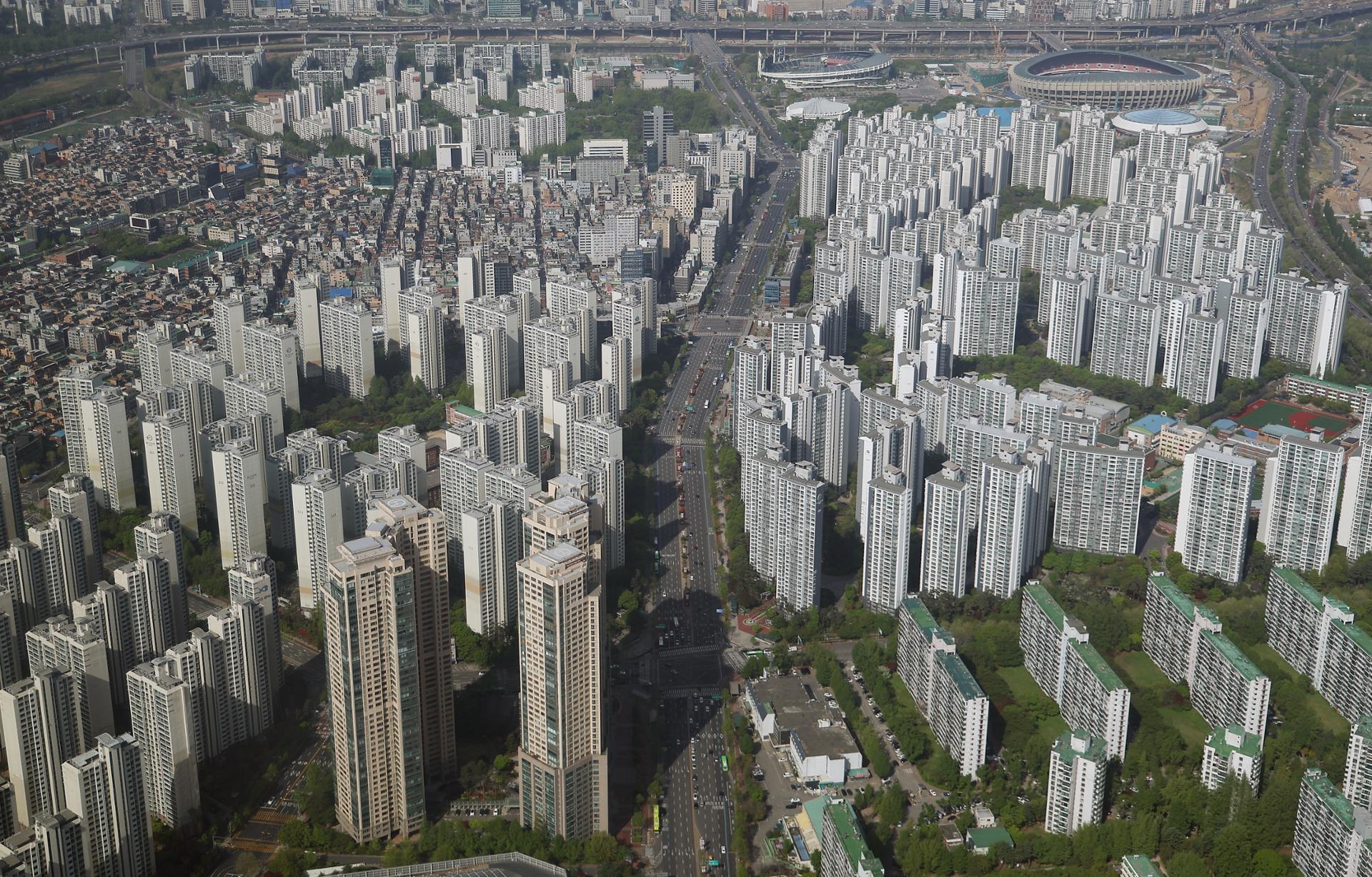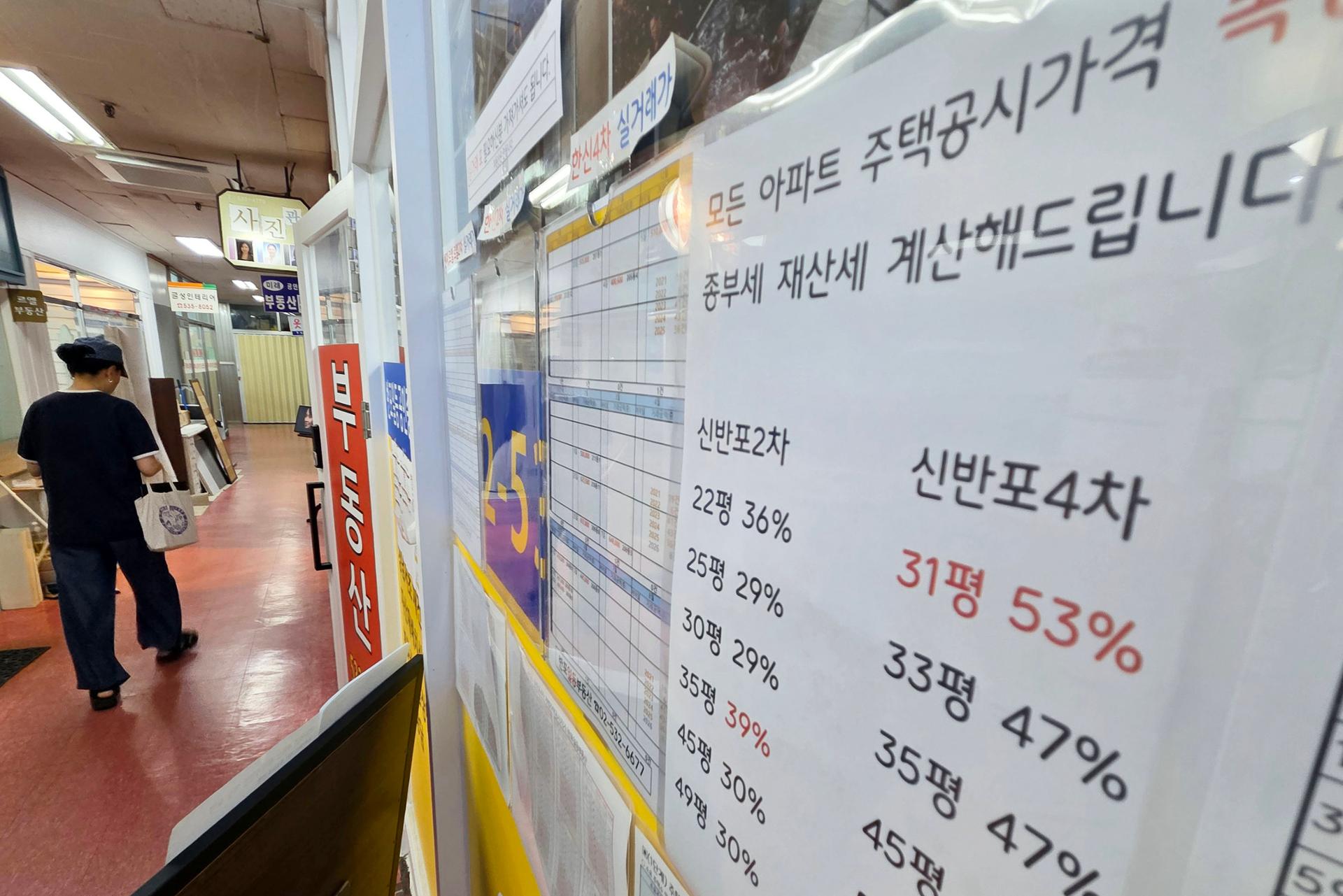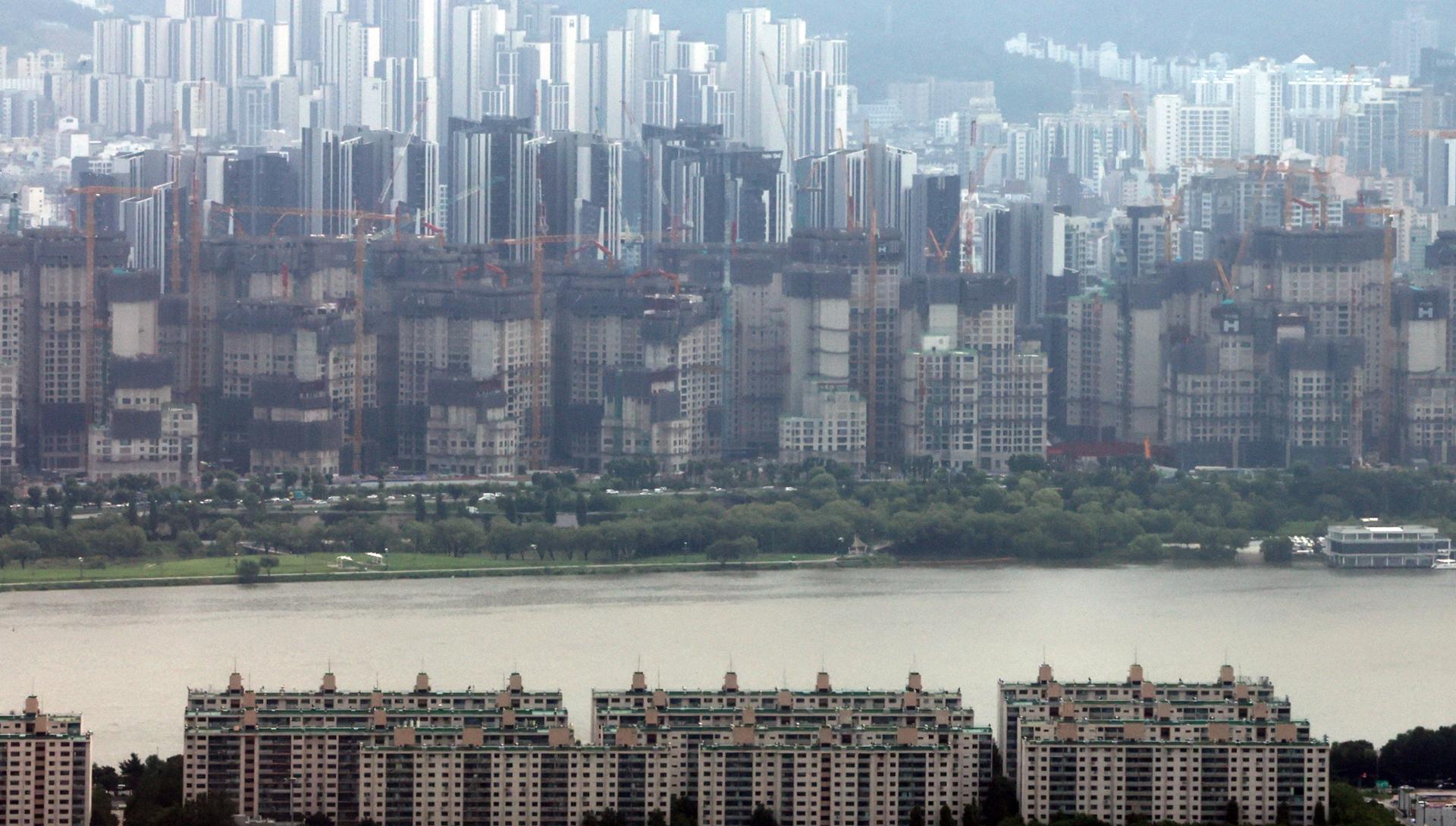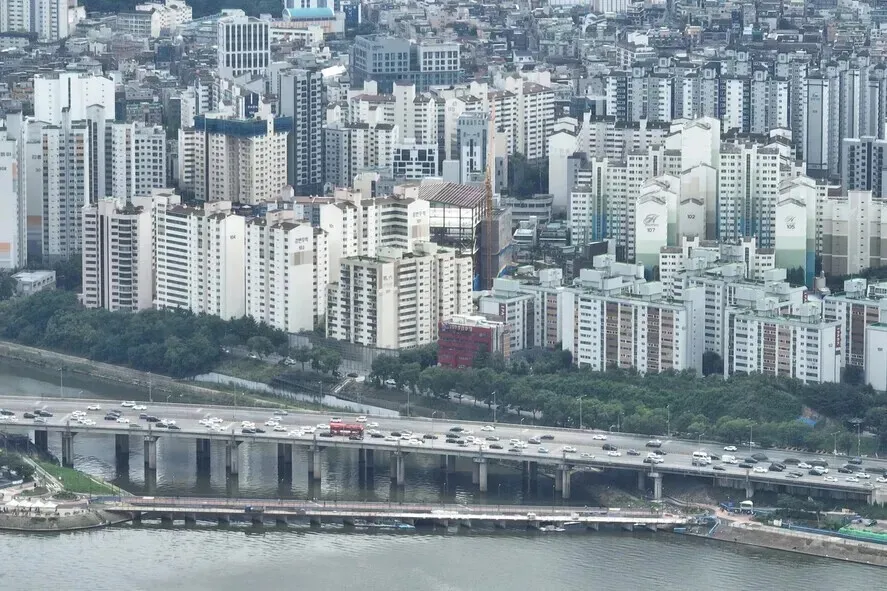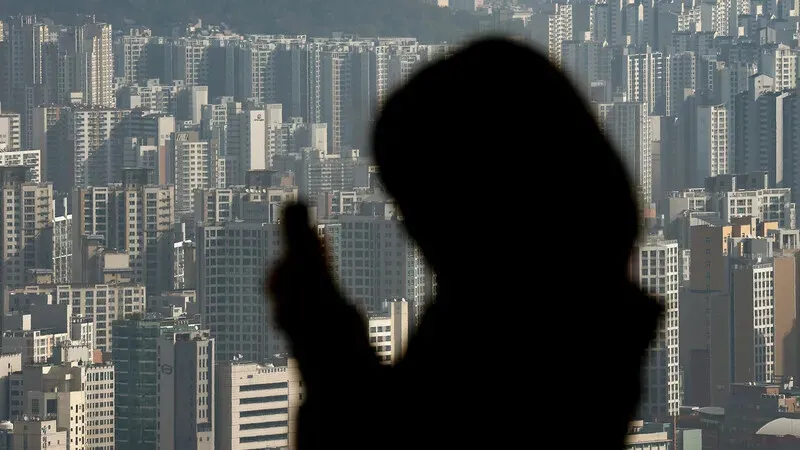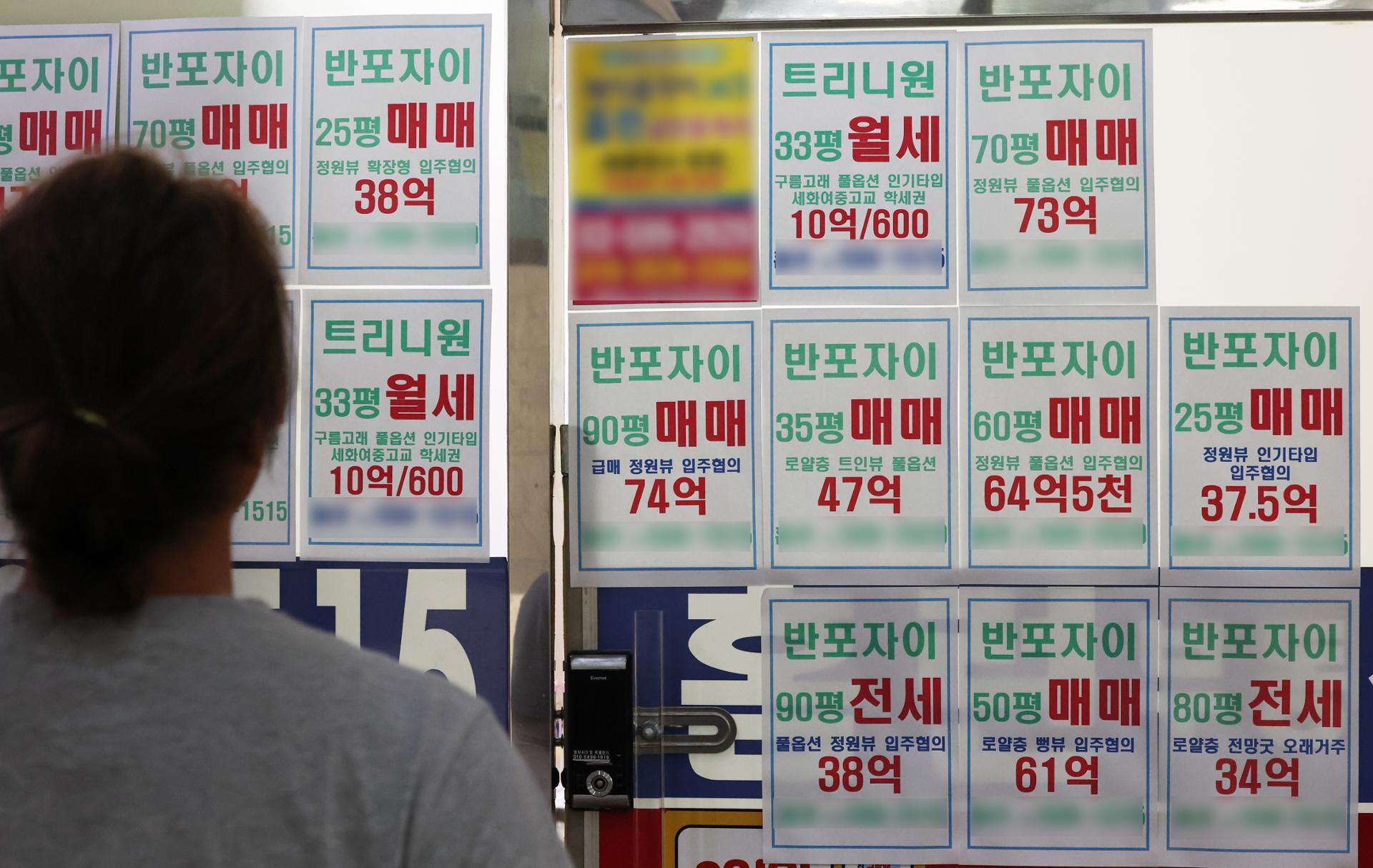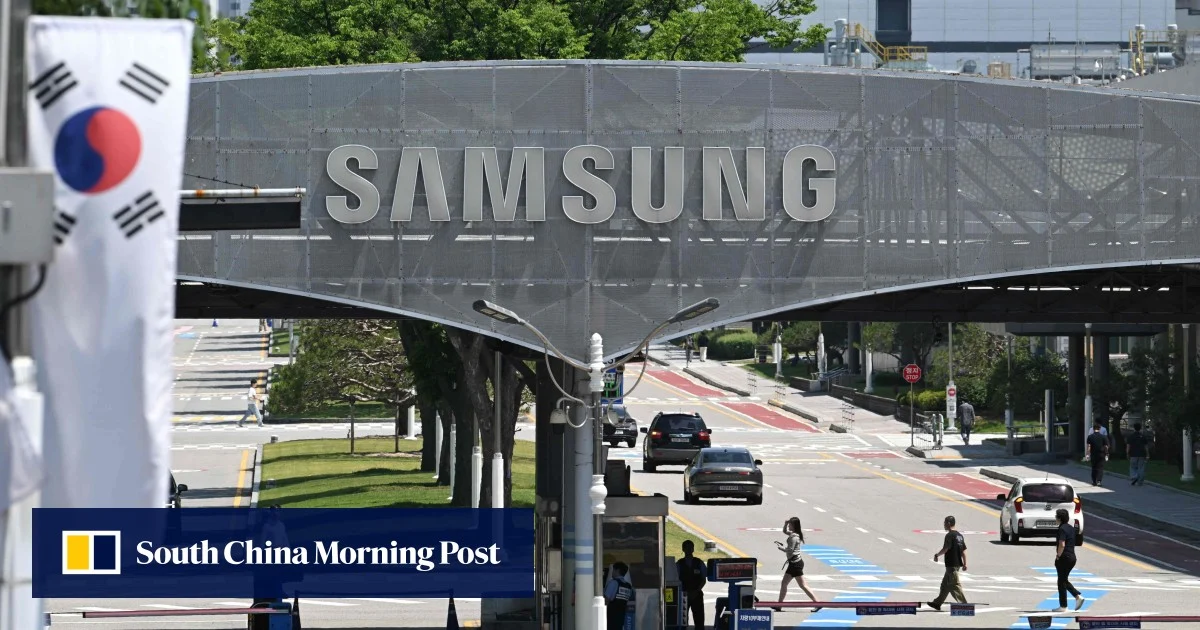
Kim, a 33-year-old office worker and newlywed, recently looked into leasing properties under the jeonse system, where people pay large lump-sum deposits instead of monthly rent, but ultimately took out a 400 million won (US$260,500) loan to purchase an apartment in Suwon’s Paldal District in Gyeonggi Province. Jeonse listings were practically nonexistent, and the available properties were far too expensive. “Paying over 3 million won every month in principal and interest is a burden, but seeing housing prices rise at alarming rates triggered my anxiety that I might never be able to buy a home if I waited any longer, which far outweighed that burden,” Kim said. He and his wife took on this financial strain to avoid being left out while others capitalized on rising home values. Financial income generated by the stock market’s earnings rally driven by the semiconductor sector and performance bonuses in the hundreds of millions of won paid by large corporations are flowing into the real estate market. Wealthy and high-income earners are heating up the real estate market by using money earned from stocks and performance bonuses as a springboard to purchase high-end homes. As capital flows entrench the idea that real estate is the ultimate destination for wealth in Korean society, concerns are emerging that the disparity in wealth between those who own homes in prime locations such as Seoul and the surrounding area and those who do not own property may become increasingly structural and persistent.Buying a house with stock earnings An analysis of homebuyers’ home financing plans from the Ministry of Land, Infrastructure and Transport reviewed by the Hankyoreh on Monday, showed that proceeds from the sale of stocks and bonds used to purchase homes in Seoul during the first quarter of 2026 (January to March) totaled 1.3883 trillion won, a 43.4% increase from the same quarter a year ago (968.4 billion won). Data was obtained via the office of Rep. Cha Gyu-geun of the Rebuilding Korea Party. Foreigners and corporations were excluded from the data. The amount of proceeds from stock and bond sales flowing into the Seoul real estate market has grown by trillions of won each year, reaching 1.0427 trillion won in 2023, 2.2088 trillion won in 2024, and 3.8580 trillion won in 2025. If the sharp rise in the KOSPI that continued through the first quarter of 2026 enters a consolidation phase, there is significant concern that investors may shift their money from the stock market to the real estate market in response to fluctuations in expected returns. Only an incredibly small number of investors earn enough in capital gains to buy real estate, no matter how bullish the market is. According to the Korea Securities Depository, 60.4% (8.74 million people) of all stock investors (14.46 million) held less than 10 million won (US$6,500) worth of listed stocks as of the end of 2025. High-net-worth investors, who hold more than 1 billion won in listed stocks, accounted for a mere 0.5% (79,000) of the total number of investors, yet they accounted for more than half of the KOSPI’s total market capitalization in shares. Even as the KOSPI continues to hit record highs day after day in an incredible bull market, the resulting financial gains are only filling the pockets of a select few among the elite. Reports of huge performance bonuses for those working in the semiconductor sector are also causing a stir in the real estate market. Housing prices are already skyrocketing in areas favored by employees of semiconductor companies such as Samsung Electronics and SK Hynix. The cumulative increase in apartment prices this year indicates large jumps in areas where shuttle buses or trains for semiconductor companies operate, such as Hwaseong’s Dongtan (9.6%), Yongin’s Suji (9.0%), and Seongnam’s Bundang (7.4%). The increase in those areas significantly outpaced that in Seoul (4.5%). The market expects capital to flow into the real estate sector in the second half of 2026, as transactions requiring final payments, which are scheduled for the first quarter of 2027, when Samsung Electronics’ semiconductor division follows SK Hynix to pay performance bonuses, are expected to intensify. In South Korean society, real estate is more than just a vehicle for asset concentration; it is a key pipeline that solidifies class disparities. As financial income and performance-based bonuses from the wealthy and high-income earners flow into the real estate market, the gap in real asset holdings widens. During this process, asset values rise to levels that cannot be matched by earned income, creating a cycle that further amplifies inequality. “During periods of rapid asset appreciation, when opportunity and risk coexist, asset disparities widen structurally. We must be careful not to let the severity of asset inequality be obscured by a few success stories,” said Jeong Jun-ho, a professor of real estate studies at Kangwon National University. According to KB Real Estate’s data hub, the average sale price for an apartment in Seoul was 1.5712 billion won, indicating a 32.7% increase from 2025. While homeowners who have ridden the real estate market’s upward cycle are reaping the benefits of rising asset prices and reinvesting those gains, concerns are growing that people who have been unable to enter the housing market may find it increasingly difficult to begin building wealth, as a large share of their income is consumed by housing expenses such as rent. Experts view Korean society as having reached a turning point of compounding inequalities in which the accumulation of wealth through property aggravates disparity more than the accumulation of wealth through labor. “Whether someone owns assets or not is more than just an issue of inequality in the present — it determines the opportunities throughout one’s entire life, such as access to housing, education, eligibility for marriage, having a family, and preparations for retirement,” said Woo Seok-jin, a professor of economics at Myongji University.“Unless we establish a way for the wealth generated by the semiconductor boom to be redistributed, 2026 will be remembered in history as the year that marked the beginning of widening asset inequality,” he added. By Lee Ji-hye, staff reporter; Park Su-ji, staff reporter; Lim Jae-woo, staff reporter
Stock gains and tech bonuses drive up Korean home prices, fueling asset inequality
There is growing concern that the wealth disparity between homeowners and non-homeowners could become increasingly structural and persistent
1,018 words~5 min read