Choi Ji-won
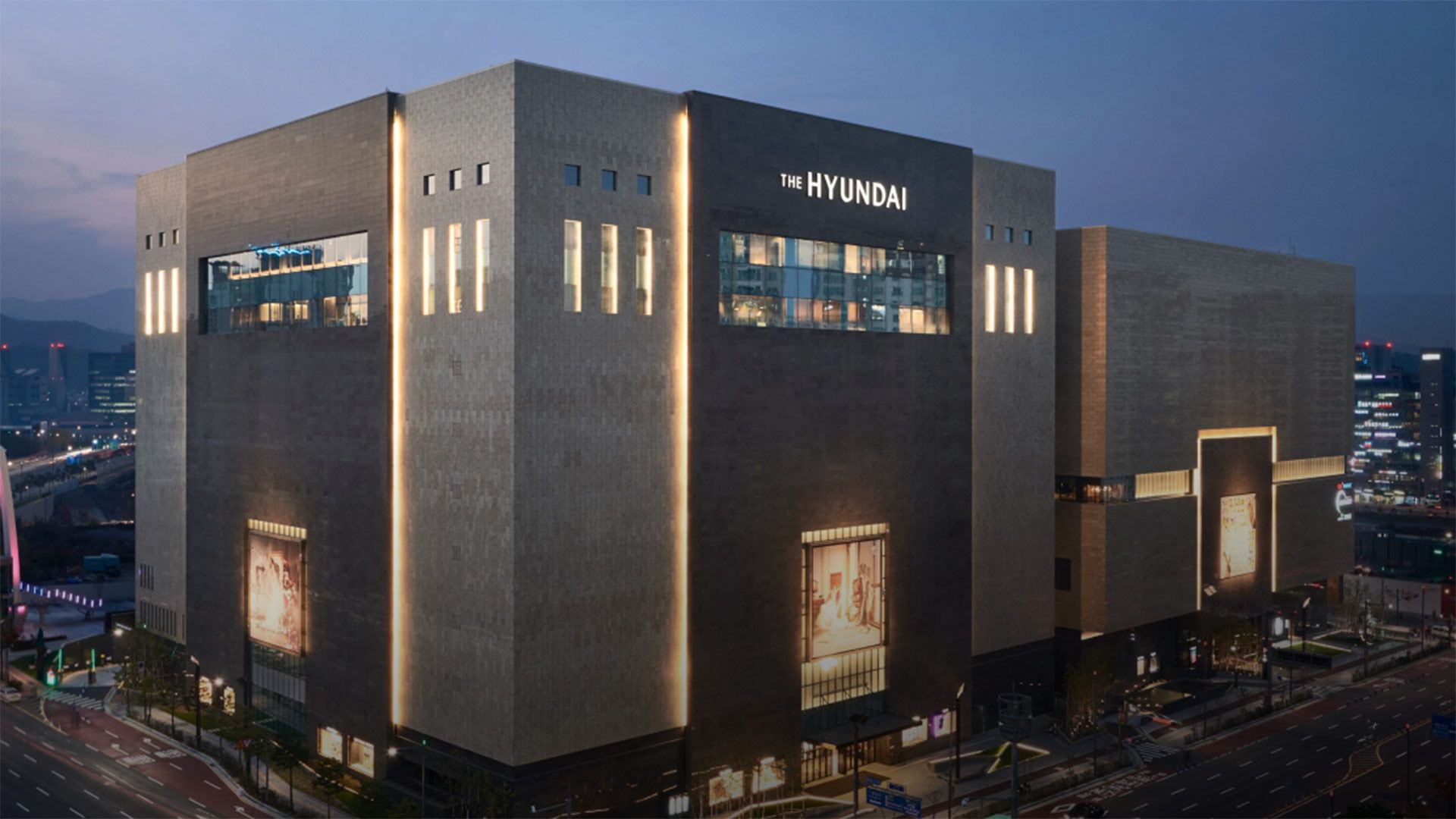
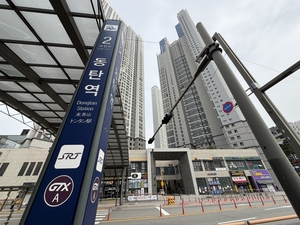
Samsung, SK hynix bonus windfalls fuel demand for homes along corporate shuttle routes Dongtan Station in Hwaseong, one of the areas benefiting from growing housing demand near the nation's semiconductor hubs. (Herald DB) "Most of the couples who came to see homes today were Samsung Electronics or SK hynix employees. Buyer inquiries have clearly increased, and chip-sector bonuses seem like a major driver in this area," a real estate agent in Yongin's Suji-gu, a Gyeonggi Province area served by chipmakers' commuter buses, said Saturday.Several young buyers had lined up that day to view well-maintained homes in large apartment complexes in the area, the agent said. Homeowners are also sensing the shift, becoming less willing to negotiate and, in some cases, raising asking prices.The scene captures a new force moving through Korea's housing market: young semiconductor workers with high incomes, large expected bonuses and access to company-backed housing loans.The buzz intensified after Samsung Electronics reached a labor deal to share part of its chip division's operating profit with employees, while SK hynix's memory windfall has fueled expectations for unusually large bonuses.The payouts are big enough to be seen as fresh liquidity for the housing market.SK hynix is setting aside 10 percent of its operating profit for cash bonuses, with market projections pointing to more than 1 billion won ($662,000) per employee. Samsung chip workers could receive up to 600 million won each under the new profit-sharing deal, though the payout will come in shares, with one-third immediately sellable. Local reports have also noted that Samsung's package includes low-rate housing loans of up to 500 million won, further boosting purchasing power.Chip bonuses fuel 'sheosegwon'The influx is giving momentum to a new real estate keyword: "shuttle-zone" apartments.Known in Korean as "sheosegwon," the newly coined term refers to residential areas served by commuter buses for Samsung Electronics and SK hynix. It is a play on "yeoksegwon," or station-area homes, where proximity to subway stations has long supported property prices. SK hynix's planned chip production cluster in Yongin, Gyeonggi Province (SK hynix) This time, the premium is not being attached to public transit, but to corporate shuttle routes carrying some of Korea's best-paid semiconductor workers. For the housing market, shuttle access is becoming another selling point, sitting alongside schools, subway access and nearby commercial areas.The areas drawing the most attention are large residential districts across southern Gyeonggi Province, where Samsung Electronics and SK hynix shuttle routes overlap. Yongin's Suji, Seongnam's Bundang, Suwon's Yeongtong, Hwaseong's Dongtan and parts of Hanam have been cited as beneficiaries offering access to semiconductor workplaces in Suwon, Hwaseong, Giheung, Pyeongtaek and Icheon.The trend is no longer just online chatter.Apartment prices in key shuttle-zone areas across southern Gyeonggi Province are rising at some of the fastest rates in the province. Hwaseong's Dongtan posted a record weekly gain of 0.49 percent in the fourth week of May, according to the Korea Real Estate Board, far outpacing Gyeonggi Province as a whole and topping Seoul's 0.25 percent increase. Other areas with strong shuttle access, including Yongin's Suji and Suwon's Yeongtong, have also logged gains close to or above Seoul's average.The effect is also showing up beyond housing.Sales at department stores in beneficiary areas have surged, with Lotte Department Store's Dongtan branch and Hyundai Department Store's Pangyo branch each posting on-year growth of around 40 percent for the first 20 days of May, according to company data. At Shinsegae South City in Suji, luxury jewelry sales jumped nearly 150 percent on-year during the same period, while watch sales rose 85 percent.More than a premiumBut experts say the phenomenon should not be read simply as a short-term premium for neighborhoods with chipmakers' shuttle stops. Rather, it reflects new liquidity from the chip sector entering a housing market already strained by tight supply and rising prices. Apartment complexes in Bundang, Gyeonggi Province (Herald DB) Kim In-man, head of Kim In-man Real Estate Research Institute, said shuttle-zone demand reflects improved purchasing power among people who were already considering home purchases."This is more than a simple price premium from bonuses. It reflects a fundamental imbalance in supply and demand," Kim said. "Rental and jeonse homes are scarce, especially in Seoul and nearby areas. With home prices expected to rise further and people seeking housing stability, those with more buying power are moving when they can."Korea's unique jeonse system allows a tenant to live rent-free by handing over a large deposit to the landlord.Yet buyers are not treating every shuttle stop equally. Kwon Dae-jung, a professor of real estate studies at Hansung University, said money is flowing into areas that already have strong infrastructure, including transport links, schools and commercial facilities."Subway stations or GTX stations cannot be moved, but bus stops can always be relocated," Kwon said. "Shuttle bus premiums may affect prices in the short term, but more fundamentally, housing values rise when liquidity is abundant and demand is increasing."Kwon said the bigger driver is not the size of individual bonuses alone, but the market's bet that semiconductor plants, data centers and related investment will keep drawing people and capital into the region."Home prices rise for two reasons: One is when supply is short and demand increases. The other is when there is more liquidity," Kwon said."What ultimately matters is future value."