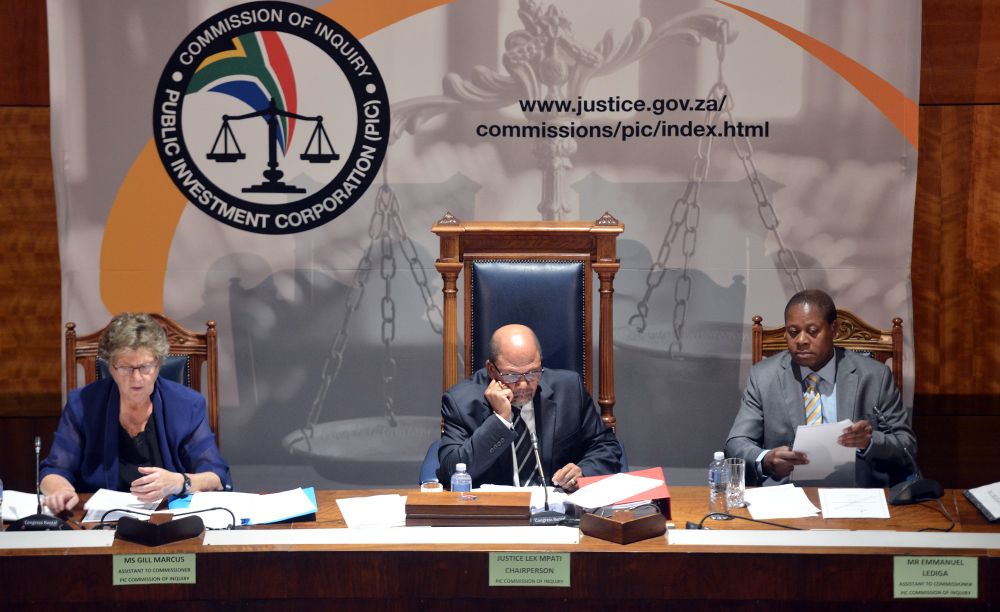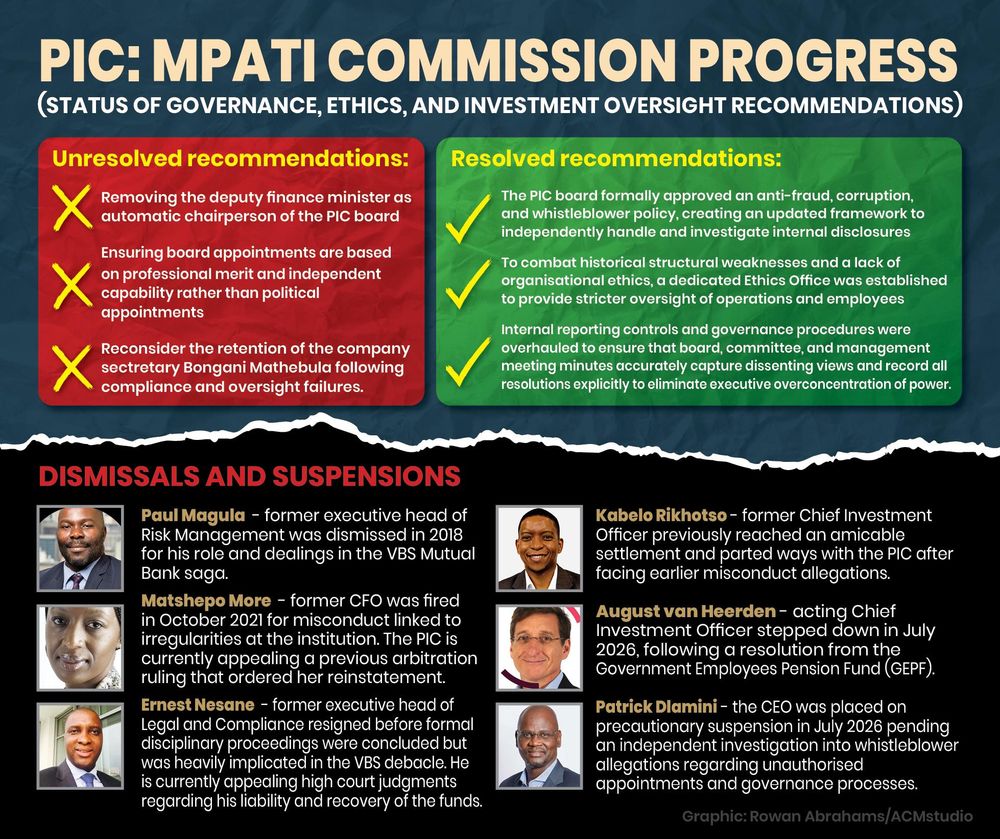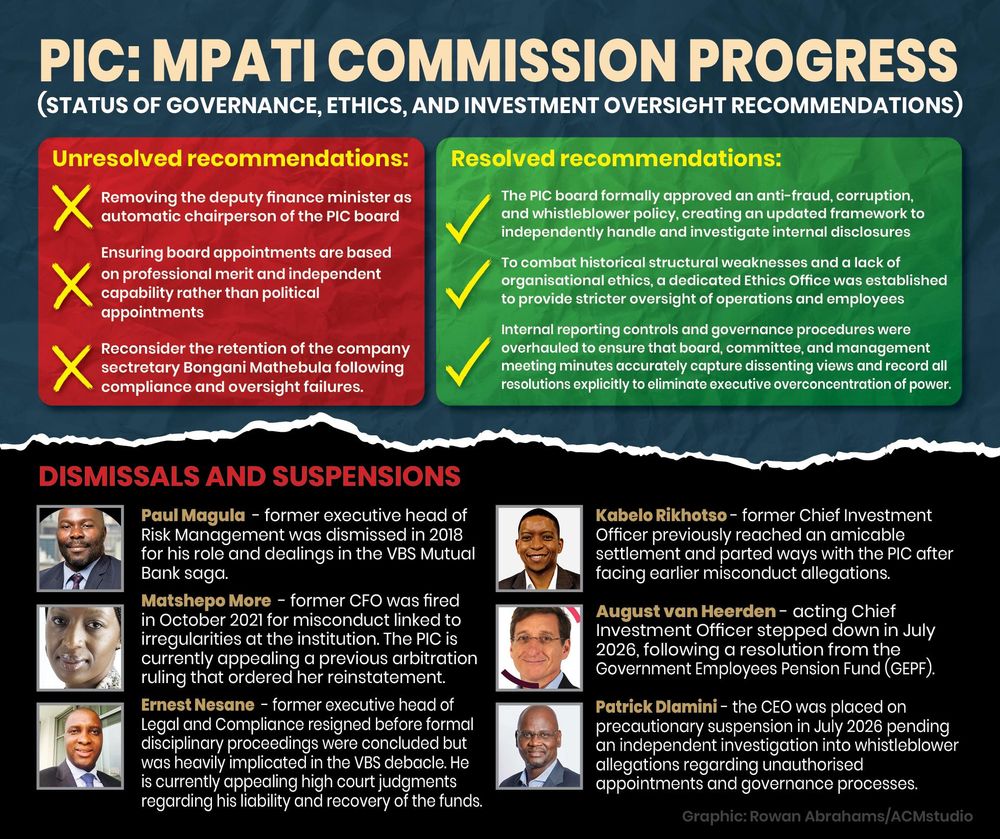
There is one main problem with the governance structure of the Public Investment Corporation (PIC), which manages more than R3-trillion of funds for other state institutions, the biggest of which is the Government Employees Pension Fund (GEPF).The problem surfaced during the events that have led to the precautionary suspension of Patrick Dlamini, PIC CEO. They also triggered an investigation by the Financial Sector Conduct Authority into the governance, leadership stability, transparency and “the potential impact of these developments on the integrity and confidence in one of South Africa’s important financial institutions”.The problem is that the prescriptive nature of the PIC’s governance arrangements automatically shields the process of appointing the chair of the PIC board from scrutiny by financial sector regulators.The main problem with the prescriptive nature of the PIC board’s composition is that there are no qualification criteria for appointment to the cabinet or being appointed a deputy minister. It’s a political decision by whoever is elected president of the country. This means that someone who is surfaced by a political process, who may never have managed anything in his or her life, can automatically become the chair of an institution that manages more than R3-trillion of the retirement funds of government employees.What’s worse is that the set-up automatically shields such an appointment from the “fit and proper test” by financial sector regulators. No financial institution can appoint a chair of its board, for example, without the approval of the relevant regulator. But the person appointed to chair the board of the PIC, one of Africa’s largest fund managers, is exempt from this scrutiny.The main problem with the prescriptive nature of the PIC board’s composition is that there are no qualification criteria for appointment to the cabinet or being appointed a deputy minister. It’s a political decision by whoever is elected president of the country. The tradition that the deputy minister of finance becomes the chair of the PIC board began under Trevor Manuel’s tenure as finance minister. But it was not written in law. This changed in February 2021 after President Cyril Ramaphosa signed into law amendments to the Public Investment Corporation Act.The amended legislation prescribes that the minister of finance must designate his deputy, or “in consultation with cabinet”, any other deputy minister in the cabinet’s economic cluster as the chair of the PIC board.In his parting shot, Reuel Khoza, who had steered the PIC’s interim board from mid-2019, warned in his chair’s report for financial 2021 that the “amendment act is prescriptive on the constitution of the PIC board”. The amended act further called for the 10-member board to include a representative of National Treasury, two representatives from the GEPF, and a representative from a “depositor” whose investments account for 10% or more of the PIC’s assets under management. It added that three board members must be representatives of trade unions ― two of which must come from unions with the majority of the members of the GEPF.Khoza added that the interim board’s view had been that the PIC should be run by nonexecutive directors largely from the private sector, “ideally chaired by an independent nonexecutive director” ― in other words, not a political office bearer. This, he said, had also been “elucidated by the recommendations of the Mpati commission report”.The Mpati commission was emphatic: “The deputy minister of finance should not be the PIC chair. This has caused considerable instability. Skills needed to chair the board may well be different from those that the deputy minister of finance brings. The role of the chair should be defined and the skills and personal qualities needed codified in the MOI [memorandum of incorporation].”But political expediency won the day.• Sikhakhane, a former spokesperson for the finance minister, National Treasury and Reserve Bank, is the editor of The Conversation Africa. He writes in his personal capacity.
JABULANI SIKHAKHANE | Politics should not determine who chairs the PIC
Institution's governance model leaves board appointments insulated from regulatory scrutiny
636 words~3 min read