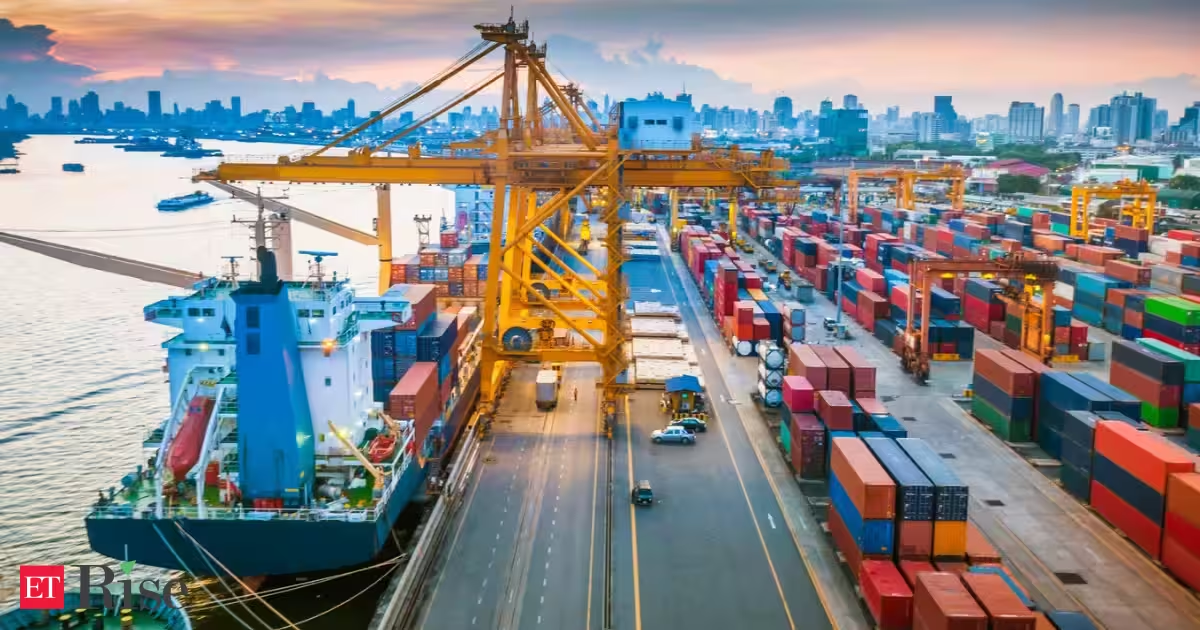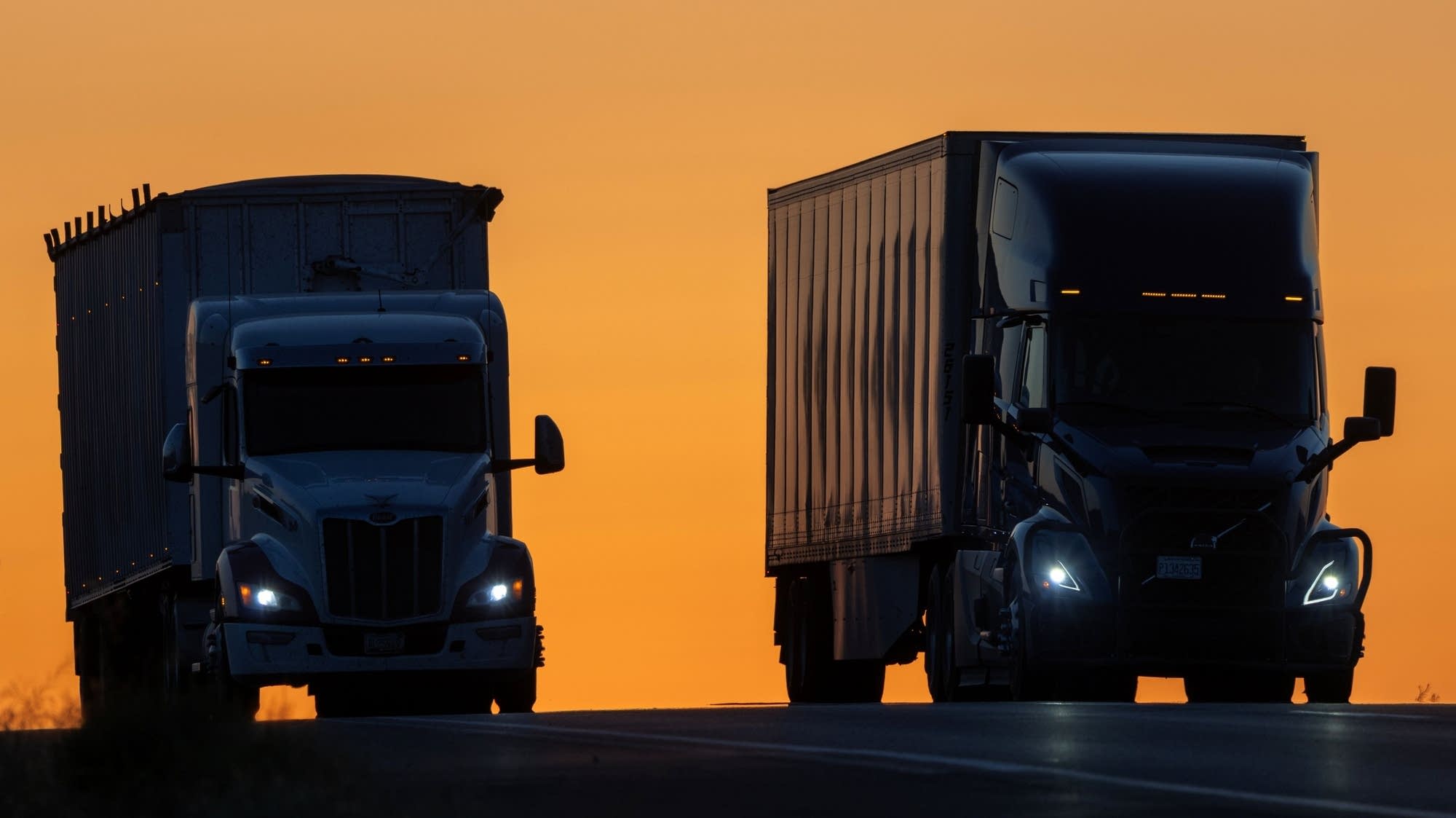
Even though oil prices are lower than they were at the start of the war in the Middle East, the effect that the conflict has had on energy prices is continuing to push up all kinds of other costs throughout the economy. One of those is the cost of transporting goods around the country. Last month, trucking rates were up almost 30% since the same time a year ago, according to DAT Freight & Analytics. That has meant that business owners across the country have had to strategize around those higher trucking costs.Ever since oil prices spiked earlier this year, Randy George has been paying more to truck in ingredients for the bakery he runs in Middlesex, Vermont called Red Hen Baking Company.“What we normally see when we see these kinds of spikes is a fuel surcharge,” George said.George said that’s affecting the cost of butter, nuts, olives, and flour.“A trailer truck can hold 26 tons of flour,” George said. “I know that because we buy it by the truckload. 26 tons — that’s a lot of fuel every mile.”Fuel isn’t the only thing that’s making transportation more expensive. Businesses are still having to pay tariff surcharges.“Even just the overall rate that these companies are charging, we see that going up all the time,” said Kyle LaFond, the founder of Natural Contract Manufacturing, a company in Madison, Wisconsin that makes deodorant, skin creams, and other men’s grooming products.LaFond said the company’s been doing what it can to buy more supplies from domestic companies to help bring down his tariff costs.“If I can find a domestic manufacturer of an ingredient that we’ve been sourcing overseas, that’s obviously a win,” LaFond said.But LaFond said he can’t rely on domestic manufacturers for everything. And either way, he still has to truck those products in. So, to help the company deal with the higher cost of trucking, he’s planning to pass on those costs to his customers.“We’re developing a plan to basically transfer those costs to our clients, to have our own fuel, transportation, shipping surcharge of some sort,” LaFond said.Not every business is passing on these higher costs. Pat Whelan, president of Sahadi’s, a grocery store in Brooklyn that specializes in products from the Mediterranean and the Middle East, said his trucking costs have gone up around 10-12% in recent months. But for now, he’s just going to eat that cost.“If you’re going to react to every 2, or 3, or 4, or 8, or 12% move, you’d spend your entire day adjusting,” Whelan said.Whelan said he is importing more products right now, including spices and olive oil, in case fuel costs rise even more, or if tariffs go up again. But he said he’s not overdoing it.“I’m probably at 20% more — not 50%, not 80%, not 200% — maybe 20% more, maybe a little bit,” Whelan said. “Capital’s still expensive, interest rates are still relatively high, storage rates are still relatively high.”And after going through the pandemic, along with President Donald Trump’s rapidly-changing tariff policies, Whelan said he knows not to overreact to any one supply chain challenge. “You learned not to get caught up in the big bomb that blew up in front of you that day,” Whelan said. “There may be another one tomorrow, and there may be another one after that, and I’m just going to take it day-by-day.”Meanwhile, George has been building out a warehouse that the business will start using later this year. That will let him store more flour on site, which, in turn, will let him buy more flour from local mills.“As long as the volume that we purchase is high enough, it allows us to work directly with a mill,” George said.And being able to rely more on local mills will let him rely less on flour distributors farther away.“When it comes from 150 miles away, that’s far less fuel than it would be if it came from 2,000 miles away,” George said.In other words, shorter supply chains can be cheaper, too.
How business owners are grappling with higher trucking costs
Trucking and other transportation costs are up, thanks in part to the war in the Middle East. As a result, business owners are strategizing on whether to absorb those higher costs or pass them on to their customers.
669 words~3 min read