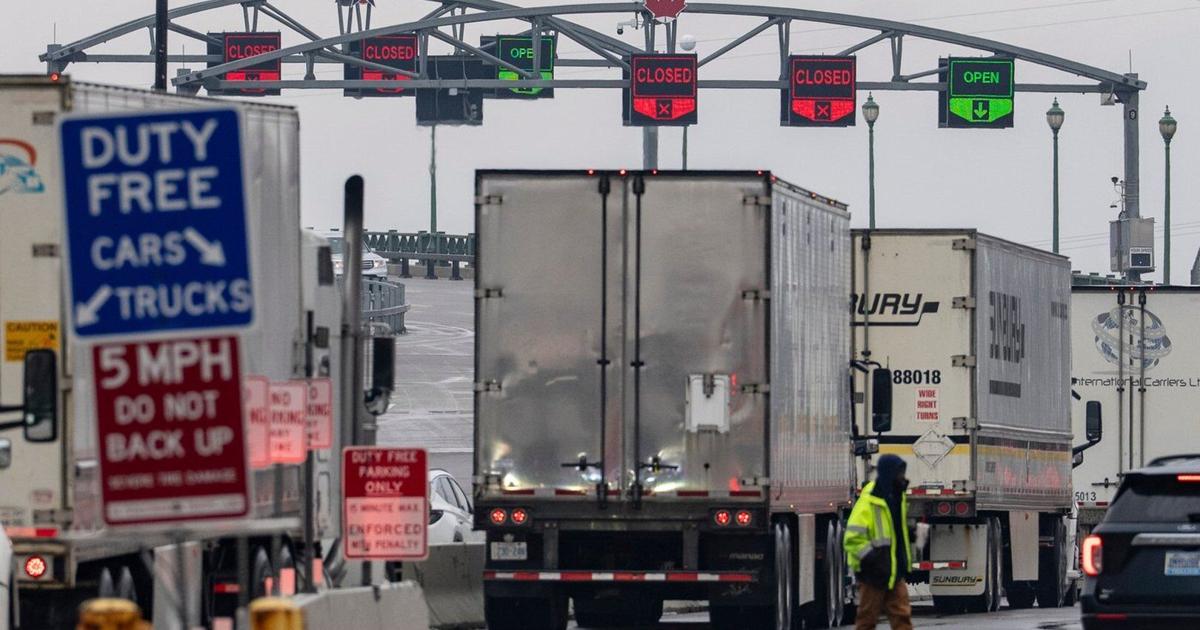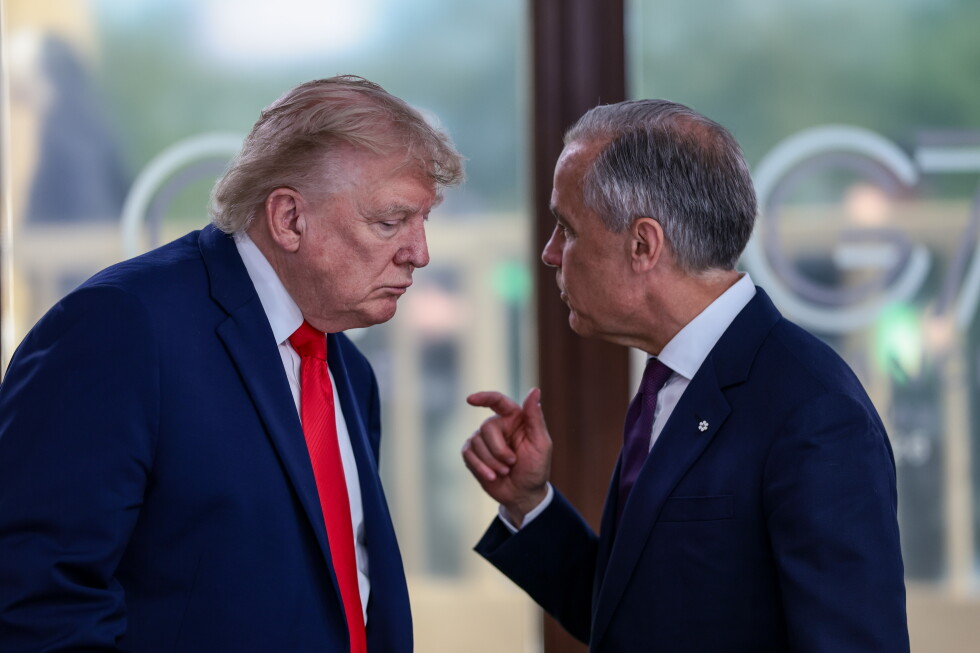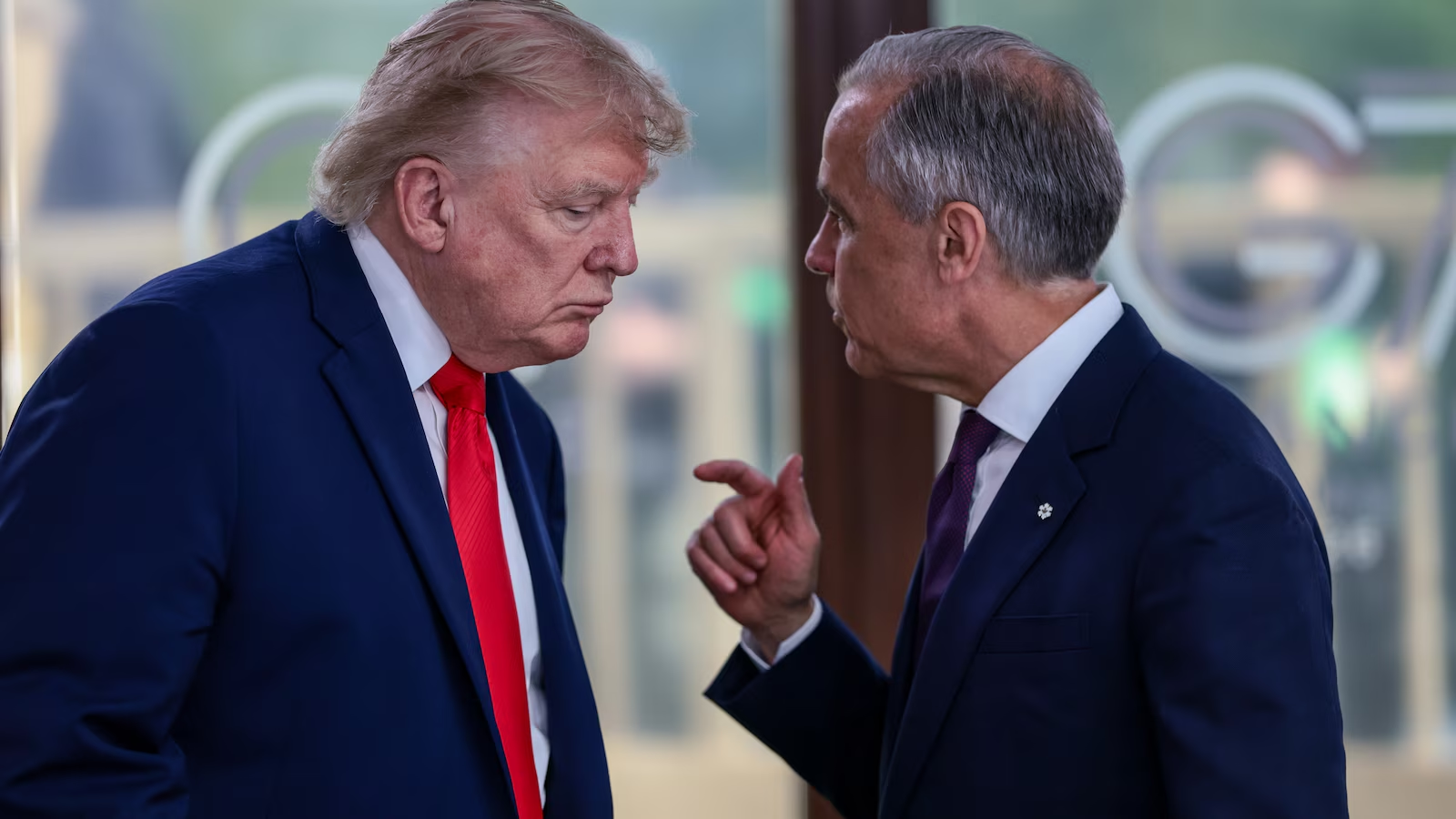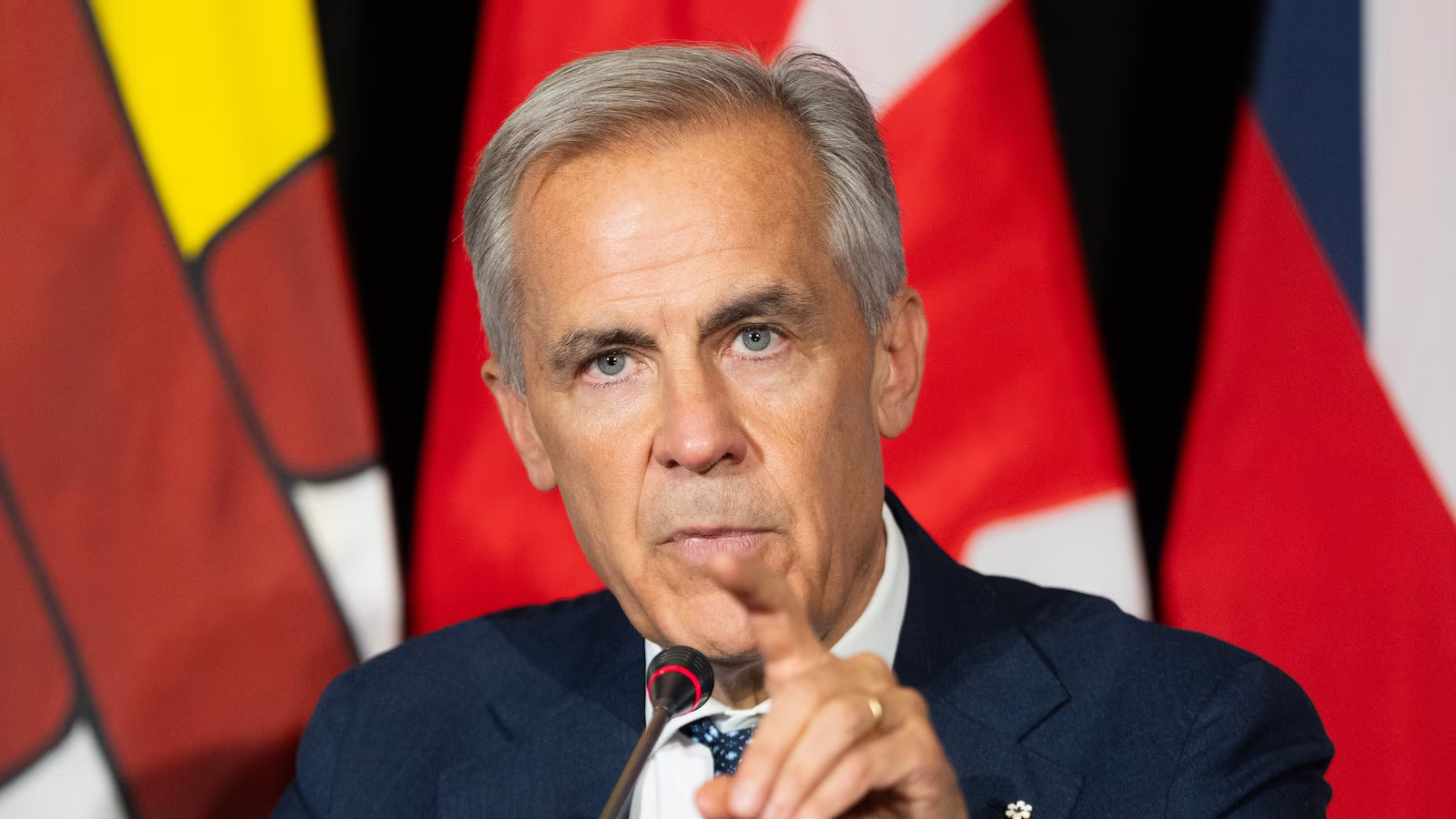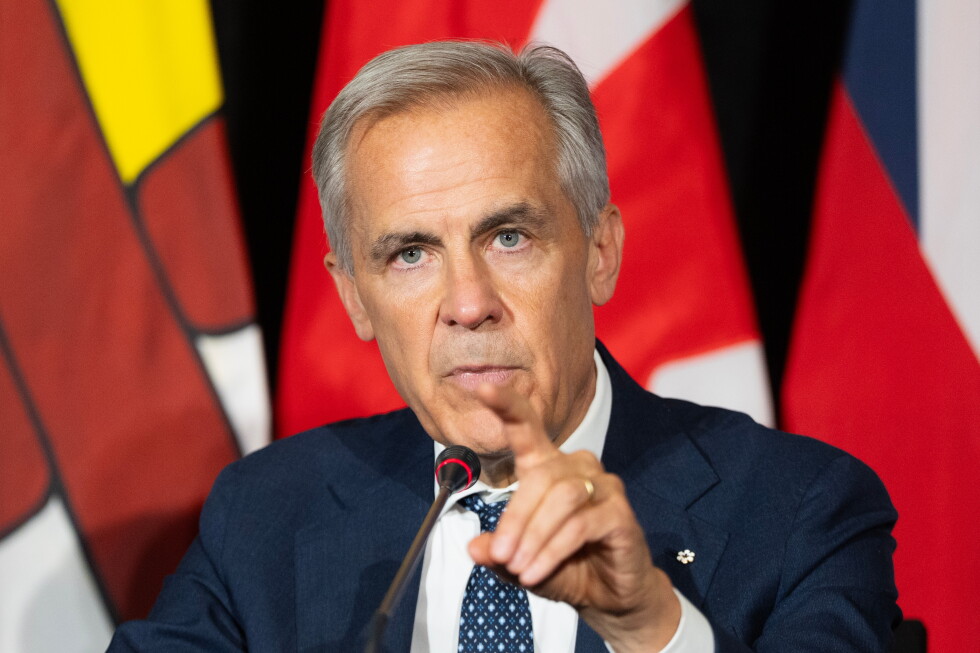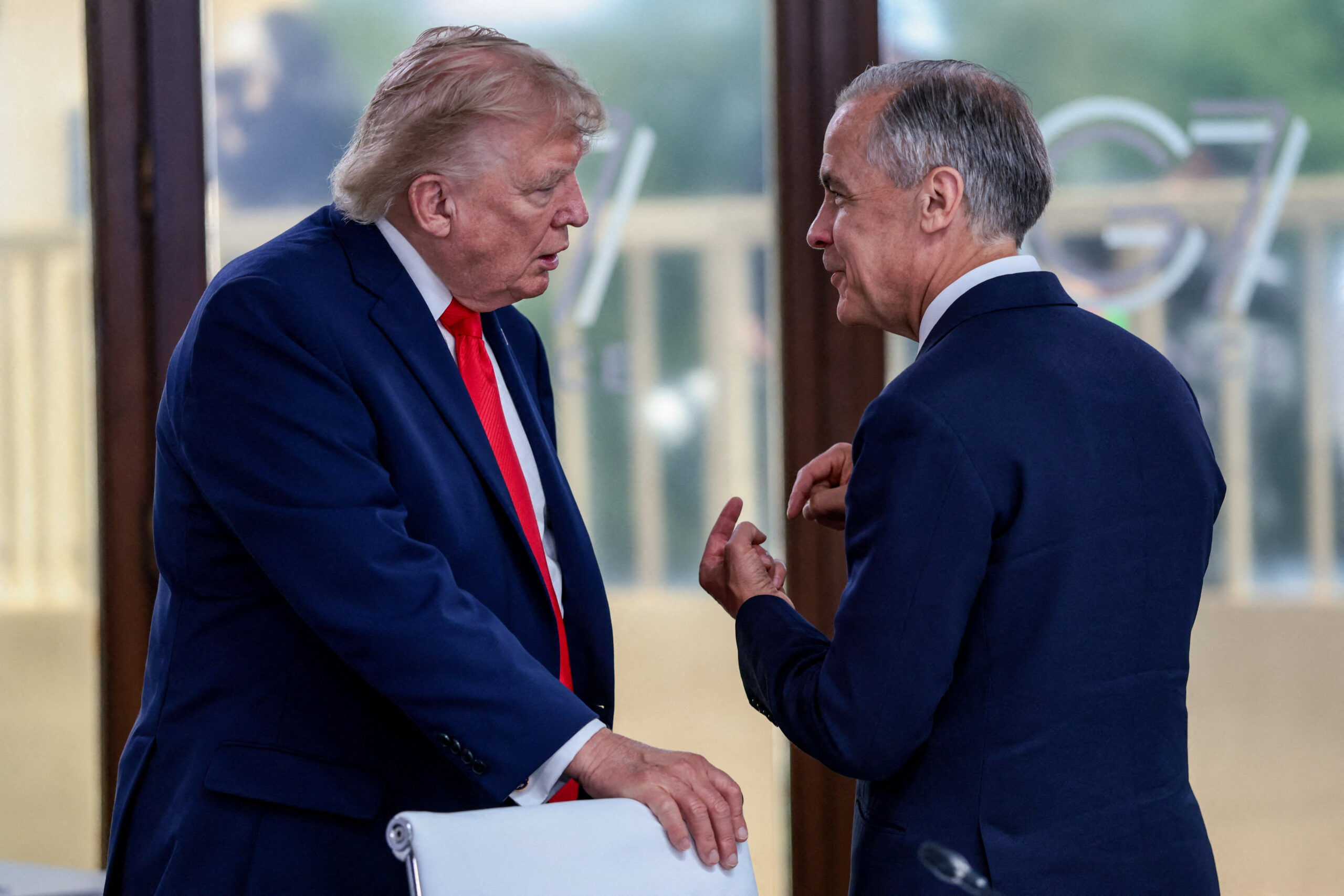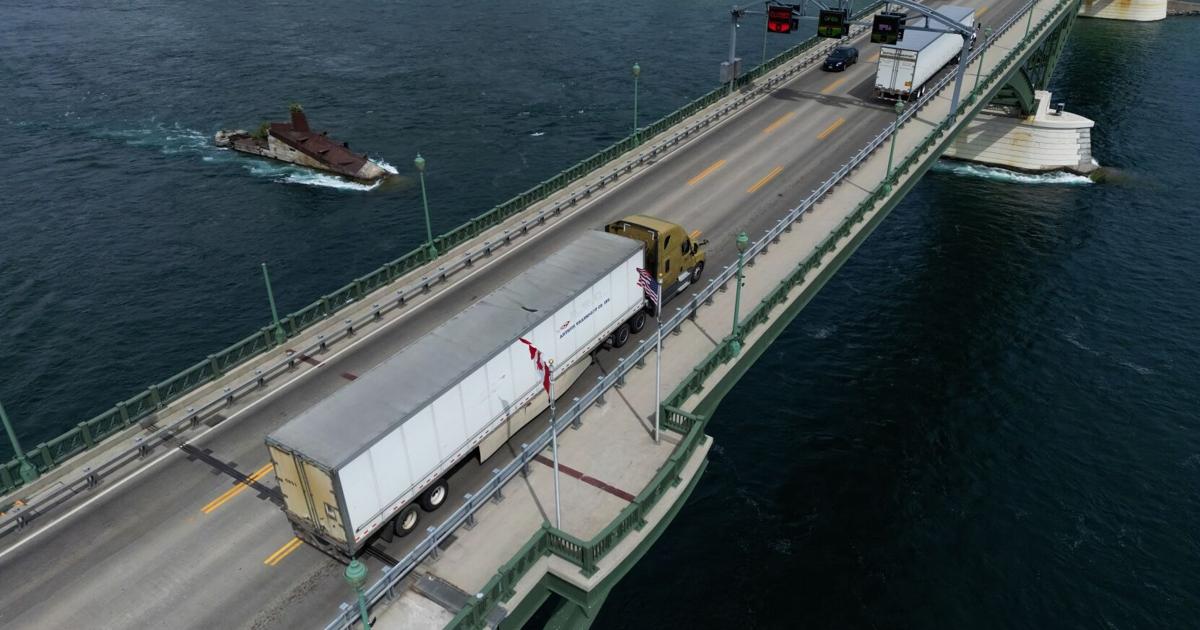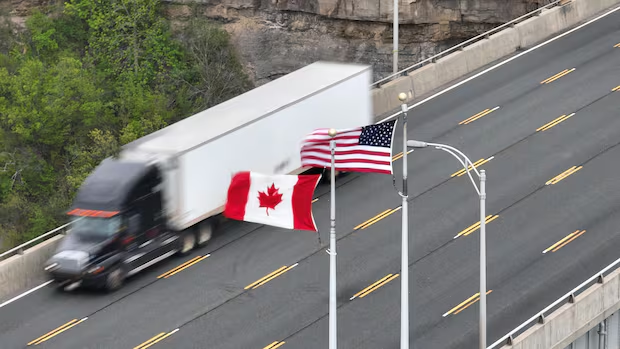
Business·NewWhile some businesses plan to hold steady in the face of a new tariff threat, others are dreading what they say could be a death knell. And with specific industries likely to be hit hard, business leaders are hoping the new threats could spur momentum on a trade deal with the U.S.Business leaders hoping new threats could ultimately spur momentum on a trade dealAbby Hughes · CBC News · Posted: Jul 21, 2026 6:37 PM EDT | Last Updated: 24 minutes agoListen to this articleEstimated 7 minutesThe audio version of this article is generated by AI-based technology. Mispronunciations can occur. We are working with our partners to continually review and improve the results.A transport truck crosses the Lewiston-Queenston Bridge from Canada to New York state. Many Canadian exports to the U.S. will face a 50 per cent tariff as of Aug. 19 — and that has business leaders on this side of the border worried about the impact. (Patrick Morrell/CBC)For hockey stick seller Joey Walsh, the latest round of U.S. tariffs are maddening. "We've been down this road time and again and it's so frustrating," Walsh said. His company, Hockey Stick Man, gets about half of its business from U.S. customers, according to Walsh. Since the start of the trade war, the removal of the de minimis exemption on low-value packages and constantly changing tariff rates have removed any sense of consistency for his business.He says he's paid extra costs to the tune of $2 million, which he hopes to recoup in the form of a refund from the U.S. government, since the Supreme Court struck down earlier tariffs by U.S. President Donald Trump's administration.In the past, he's tried to ship products over the border before the tariffs took effect to minimize their impact. But after the announcement Monday of new 50 per cent tariffs on a wide range of Canadian exports — including hockey sticks — Walsh says he's not changing a thing."We're not even going to react because this is politics," Walsh said. "It's not sustainable … to just throw a 50 per cent charge on your neighbour and give you 30 days notice."While some business leaders like Walsh are holding steady in the face of fresh 50 per cent tariffs, others are dreading what they say could be a death knell while holding out hope that a deal with the U.S. could be reached soon.A shopper searches for a hockey stick at Hockey Stick Man in Toronto. Hockey sticks are one of a laundry list of items set to be hit with a 50 per cent tariff next month, but Hockey Stick Man owner Joey Walsh says he isn't changing how he runs his business. (CBC)The Trump administration intends to hit Canada with 50 per cent tariffs on a range of goods beginning Aug. 19, citing discrimination against American dairy, alcohol and motor vehicles.Some of the new tariffs apply to Canadian dairy and alcohol products in a direct response to American grievances over Canadian trade policy, which the federal government made in response to previous U.S. tariffs. But a number of other goods are also being taxed — from honey to doorknobs to dog leashes.Trump's new 50% tariffs to hit even CUSMA-compliant goodsAccording to a senior source in the Canadian government with direct knowledge of the trade situation, the value of the goods impacted by the new tariffs is about $28-billion — though the government is still verifying that estimate.That's roughly five per cent of the trade Canada does with the U.S., and it will push the effective tariff rate up by a few percentage points, according to deputy chief economist of CIBC, Benjamin Tal. For the broader economy, Tal said, "It's not good but it's not devastating."He says the impact will be felt acutely by specific industries rather than across the Canadian economy writ large, and he is especially worried about makers of alcohol and the lumber sector.An analysis by BMO economist Robert Kavcic also indicated that manufacturers of chemicals, plastics, electronics and industrial equipment might be particularly hit by the new slate of tariffs.And unlike past rounds of tariffs, these proclamations by Trump don't offer exemptions for goods compliant with Canada-U.S.-Mexico Agreement (CUSMA) — which has so far shielded lots of Canadian exports from tariffs."This is one of the first real attacks on the guts of the CUSMA agreement," said Dan Kelly, president of the Canadian Federation of Independent Businesses (CFIB). 50% isn't just expensive — it's prohibitiveAt a 50 per cent rate, the tariff could mean sending some products to the U.S. would be so expensive, it simply wouldn't make economic sense, according to Tal. That means some businesses could effectively lose access to the U.S. market altogether."It will take them a while to divert into other markets, other geographies and … to the domestic market. So this is a very significant issue," Tal said.Tal points out that these tariffs come at a time when other duties have already been causing massive pain for some industries for more than a year — especially steel and aluminum, which have been taxed at 50 per cent since last June. WATCH | Dairy Farmers of Canada president reacts to latest tariff threat:‘It just never seems to go away’: Dairy Farmers of Canada president reacts to Trump’s tariff threats4 hours ago|Duration 5:10U.S. President Donald Trump has announced plans to impose 50 per cent tariffs on a range of Canadian exports, including dairy products such as milk and cream. David Wiens, president of Dairy Farmers of Canada, assesses the potential impact on local producers. He says Canadian farmers have honoured CUSMA guidelines and expect federal support to help protect Canada’s agricultural sectorRichard Martin, CEO of Dynamo Playgrounds, says steel and aluminum tariffs have already made the playground equipment his company makes incredibly expensive for U.S. buyers — so much so that many of his American distributors have already stopped selling his products.Because the U.S. usually makes up 80 per cent of his business, he says tariffs have already forced him to cut his staff from about 63 employees down to 17.He's still trying to understand whether the newest tariffs will impact his business, but he expects new levies on plastics, which his company uses in parts of its playground sets, could be devastating.UpdatedFrom keeping booze boycotts to withholding energy, premiers talk how to hit back at TrumpAnalysisWhy Trump is threatening new 50% tariffs on Canadian exports right now"It could be the end of Dynamo," Martin said. "I'm asking, how is our government gonna help out? And I cannot take another loan."He says diversifying his business to sell to other countries isn't so easy. While he does sell playsets in Canada, he says the Canadian market isn't enough to sustain his business. Adapting to regulations in different countries and changing a marketing strategy to fit another country are also major hurdles.A large playground structure in a U.S. park made by Dynamo. The company's CEO says steel and aluminum tariffs have already hit his business hard, and he worries that new tariffs on plastics could cause even further pain. (Submitted by Richard Martin)Still, Martin says he's trying his best to break into other markets, and holding out hope that a trade deal could turn things around for his business."I'll never lose hope, I'll fight till the end. But I just hope that it all stops soon," Martin said.Hope for negotiationsAs bad as things are for some business owners, economists and leaders are still hopeful that the fresh tariffs could just be a negotiation tactic."In a very twisted way, this might be actually good news, because maybe Mr. Trump is collecting cards for his negotiations," said Tal.The U.S. is still talking trade with Mexico, with negotiators from both countries meeting Tuesday for a third round of bilateral talks. The conversations between Canada and the U.S. to renegotiate CUSMA have stalled, though Prime Minister Mark Carney said on Tuesday that he and Trump had agreed to "intensify" discussions.WATCH | Carney says Trump agreed to 'intensify' trade talks:Carney: Trump agreed to ‘intensify’ trade talks6 hours ago|Duration 1:36Prime Minister Mark Carney said U.S. President Donald Trump agreed to ‘intensify’ trade talks after ramping up his trade war against Canada. Carney’s comments come as Trump announced a 50 per cent tariff on a wide range of Canadian exports, in retaliation for what he calls ‘unequal treatment’ of U.S. dairy, alcohol and automotive exports.If this is about leverage, Tal says it could mean the U.S. wants to come back to the table and actually reach a deal, which would be good news for businesses.Kelly of the CFIB agrees. He says ever-changing trade rules have been one of the biggest sources of pain for businesses in Canada, so finally reaching a deal would be welcome news.Given the U.S. proclamations name specific areas of grievance — dairy, autos and alcohol — Kelly hopes that negotiations could now start to address the U.S.'s concerns."We can't dismiss this, but nor should we panic," Kelly said.ABOUT THE AUTHORAbby Hughes is a writer with CBC News based in Toronto. Originally from Orillia, Ont., she studied journalism at Toronto Metropolitan University. She covers news from the worlds of business, entertainment, health, science and education, and her favourite stories focus on the real people in those areas — the customers, fans, patients, citizens and students. You can reach her with story ideas at abby.hughes@cbc.ca.With files from James Dunne, Nisha Patel and Shawn Benjamin
Canadian Businesses brace for the latest round of U.S. tariffs | CBC News
While some businesses plan to hold steady in the face of a new tariff threat, others are dreading what they say could be a death knell. And with specific industries likely to be hit hard, business leaders are hoping the new threats could spur momentum on a trade deal with the U.S.
1,568 words~7 min read