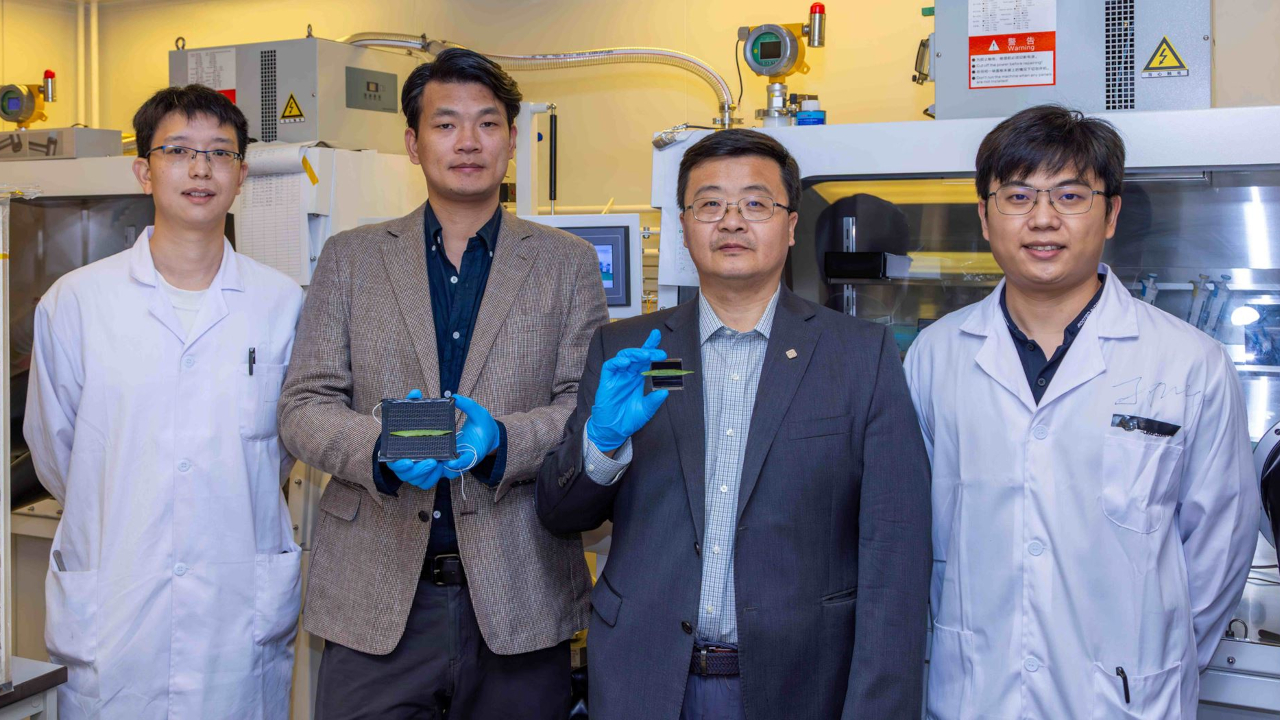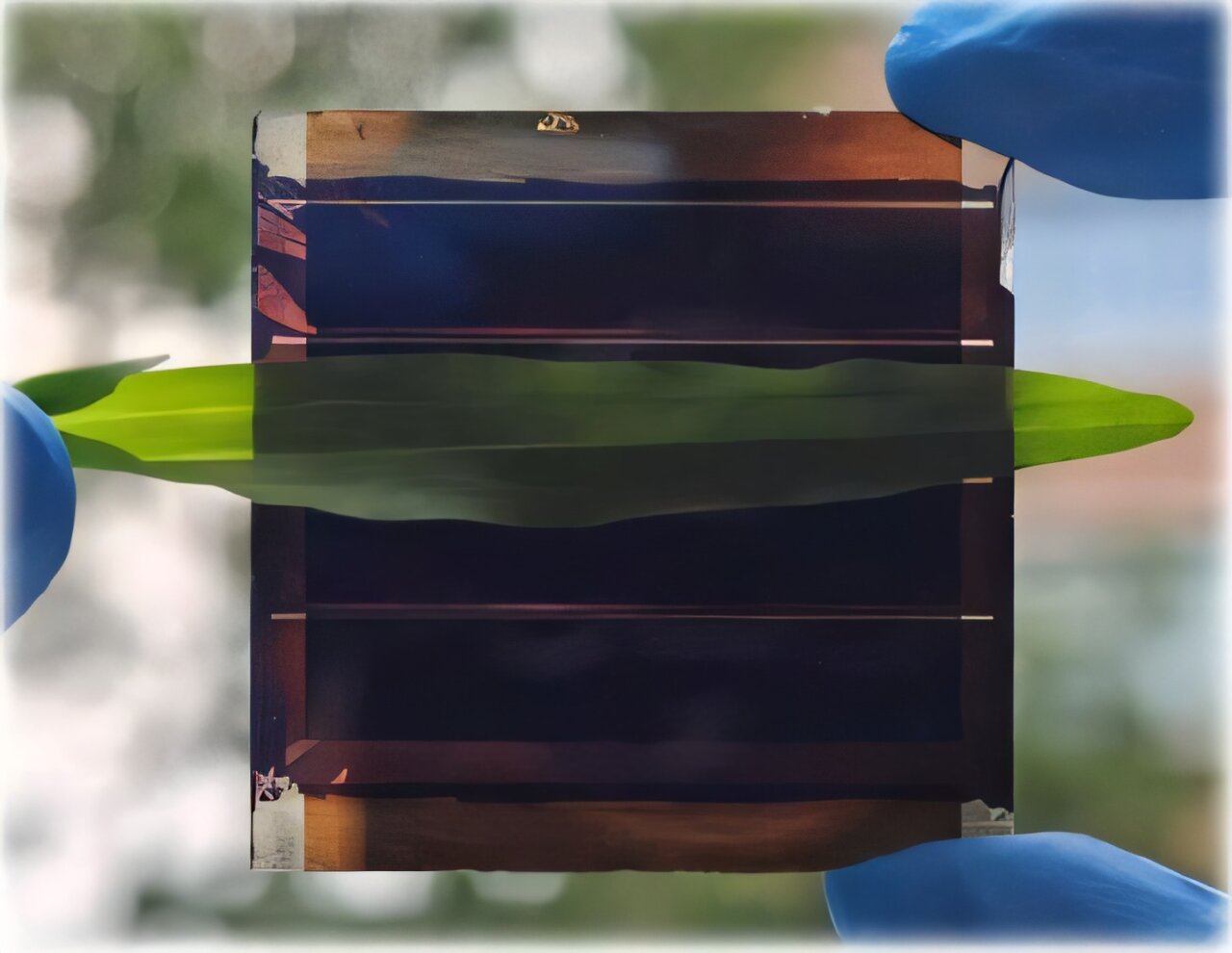
a, Photograph of the POTSC minimodule. Credit: Nature Materials (2026). DOI: 10.1038/s41563-026-02541-6
It is common for solar panels to be shaded by trees, clouds, birds or buildings. For thin-film solar technologies, however, such shading can cause shaded areas to develop reverse-bias stress (negative voltage), which can reduce power-generation efficiency and even damage solar cell modules.
A research team at The Hong Kong Polytechnic University (PolyU) has developed a new generation of perovskite–organic tandem solar cells (POTSCs) that not only deliver high power-generation efficiency but also effectively resist damage caused by negative voltage. Even under an extreme reverse bias of -40 V, the tandem devices retain more than 90% of their initial power-generation efficiency, far surpassing all existing thin-film solar technologies—marking a key step toward the practical application of thin-film solar technology.
Thin-film solar technologies, such as cadmium telluride (CdTe), copper indium gallium selenide (CIGS), perovskite and organic solar cells, offer distinct advantages, including lightweight, flexibility and cost-effective manufacturing.
However, these materials share a common weakness: Because of their electron-ion hybrid conducting properties, once a solar cell is partially shaded and generates negative voltage, maintaining sustained performance becomes difficult and components may even be damaged. The ability to resist reverse bias is therefore key to determining whether thin-film solar technology is durable and capable of stable, long-term operation.