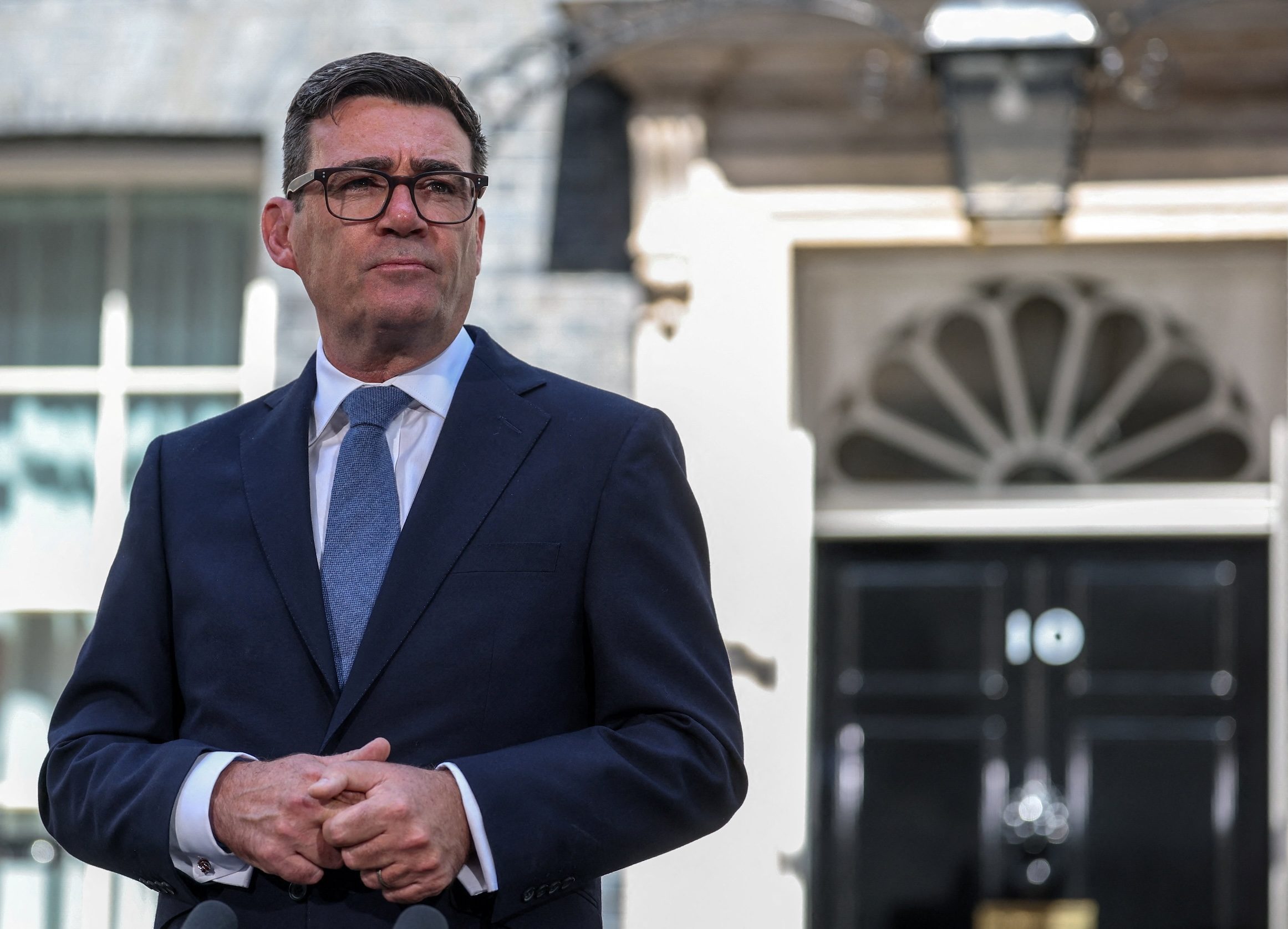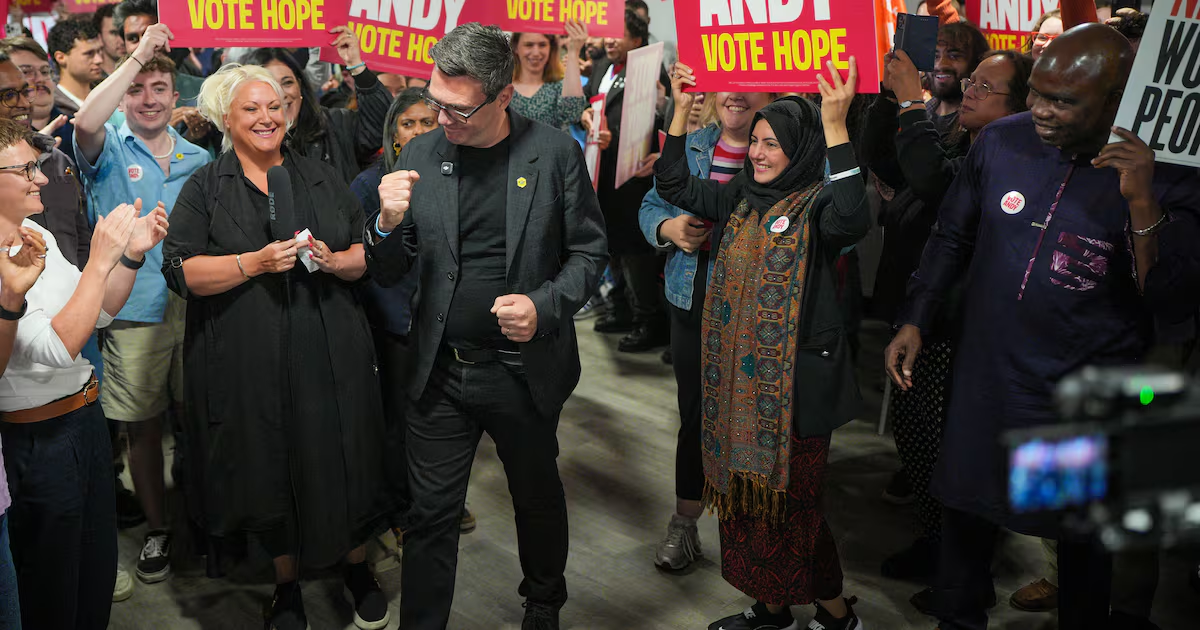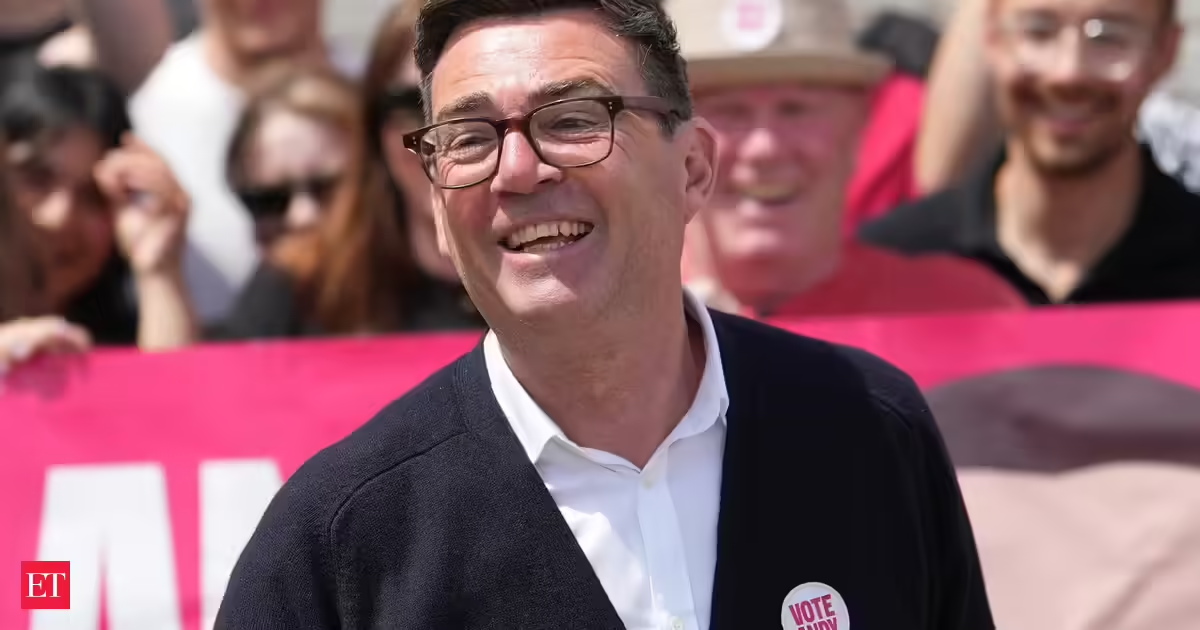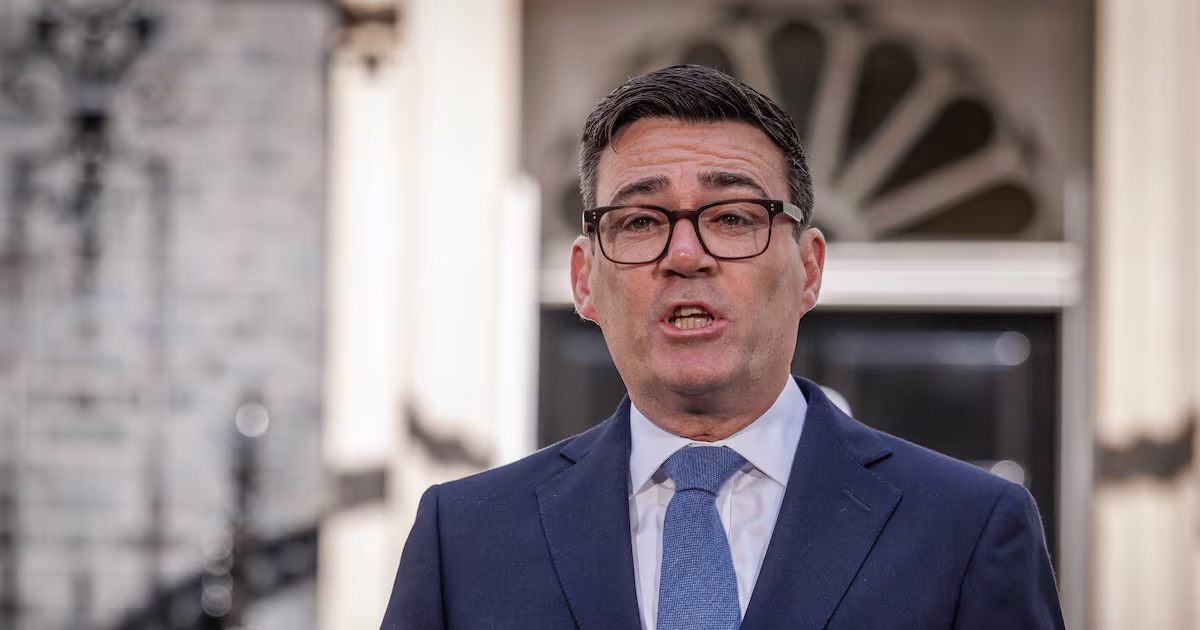
Britain’s new prime minister, Andy Burnham, will surely want Northern Ireland to remain low on his list of priorities but equally he will know that won’t stop northern politicians clamouring not to be ignored.On Monday, after he took office, Sinn Féin leader Mary Lou McDonald was sharp out of the blocks calling for a referendum on a united Ireland. “Ireland is moving towards a referendum on unity ... preparation must begin now,” she insisted.DUP leader Gavin Robinson was on her heels with a demand that Burnham must recognise “the need for tender attention to the political situation in Northern Ireland” – a shorthand warning to keep away from incendiary constitutional issues.Burnham has, from time to time, mentioned his Donegal and Louth antecedents. When he addressed the annual Alliance Party conference in March, he told delegates: “If only my ancestors, who left Drogheda for Liverpool in the late 1800s, could see me now!” (The exclamation mark was his.)While Sinn Féin has made clear there will be no lessening in the pressure for a Border poll, it is reasonable to assume this early into his premiership it won’t register strongly on Burnham’s urgent matters-to-attend-to list.Regardless of his pride in his Irish heritage, there is no evidence he is particularly “green”. Unionists will be looking for a line from Burnham establishing that he adheres to the union. But the push for a referendum is part of the political discourse and Burnham also must pay some attention to the matter.The most pressing issue facing Stormont at the moment is the failure to agree a budget and the complaint of underfunding from the British treasury. Robinson pertinently asked this week what precisely “Manchesterism” and “Burnhamism” really meant when it came to supporting devolution. On this Burnham has been high on rhetoric but low on detail. He has pledged to shift power from Westminster to the regions but what is the point of more devolution if current devolution isn’t working especially well in Northern Ireland? Regardless, the bottom-line question from Stormont politicians is: does more devolution mean more money for the North?It will be interesting to see how Burnham negotiates this issue. Since the start of the financial year in April, public services have been operating under contingency arrangements because the four Northern Executive parties – Sinn Féin, the DUP, Alliance and the Ulster Unionists (the SDLP is in opposition) – can’t agree a budget.Stormont says there is a shortfall of up to £1.6 billion (€1.9 billion) in funding even after considering “significant efficiency and savings measures”.But here there is a standoff with the British treasury. In April it published a review stating that more than £3 billion could be added to Stormont’s budget if Ministers agreed to increase rates, introduce water charges and cut jobs in the North’s civil service.These are poisonous matters for northern politicians, particularly with Assembly elections due next May. SDLP leader Claire Hanna summarised it coldly and succinctly for Burnham. “As regards this region, the fact is our budget process is so chaotic,” she said. “There is so little responsibility-taking by Executive parties. In years when we are well funded, it’s in short-term tranches of money, a collapse here, a crisis there, a side deal, rather than a degree of clarity for public services and what they can do.”“We will want the UK government to take a more strategic approach, but that will also include the Executive parties accepting that they sought and won power at the ballot box, and that also means running the place,” she added.The question, therefore, for Burnham and for his new Secretary of State for Northern Ireland, Chris Bryant, is: does he just pay up or demand some quid pro quo hard choices from the Executive Ministers? Unless he is a soft touch, one would expect more combat between the treasury and the Northern Executive before this hurdle is overcome.Earlier this month the respected but now sacked northern secretary Hilary Benn said a political process aimed at moving Northern Ireland’s finances on to a “long-term sustainable” footing was to begin. He said the recurring crises could not be resolved through “one-off” fixes. If the new Northern Secretary follows up on this work, perhaps a solution could be found.Burnham’s sacking of ministers, including Benn, put one in mind of Albert Reynolds famous clear-out of old-guard Fianna Fáil ministers when he took over as taoiseach from Charlie Haughey in 1992. Benn was expected to stay but maybe Burnham’s purge was a demonstration that he is boss and will be no rollover, even for supplicant Northern Ireland politicians.Another sensitive matter is the legacy legislation agreed with the Irish Government currently slowly making its way through Westminster. Amendments introduced earlier this year by Benn to “safeguard” former British soldiers who served in Northern Ireland have already proved controversial and Burnham will have to decide how he walks this particular tightrope – or whether to leave it to Bryant to sort out.Whoever take on the issue of legacy will probably face considerable pressure from some MPs and sections of the British media to water down the legislation to provide effective immunity for veterans. Any move in that direction would infuriate nationalists and republicans – and potentially upset the currently positive Irish-British relations. Some unionists – the Traditional Unionist Voice leader Jim Allister in particular – will continue to complain about the “hated Irish Sea Border” post-Brexit arrangements for Northern Ireland trade but for Burnham to venture too far into that area would seem as unlikely as it would be foolhardy.Northern Ireland always is work in progress. It requires skilful management to maintain what passes for relatively harmonious and effective politics. Burnham and his new Northern Ireland Office team must keep their eye on the ball and also be prepared for the unexpected, which the North likes to throw up from time to time. Let’s not forget the summer racist: riots and the continuing baleful grip, in some loyalist and republican communities, of the paramilitaries. There is one curious positive note to conclude on. So far there has been no evidence of any unionist politician publicly complaining that Burnham’s Catholic background is somehow undermining the Glorious Protestant Revolution of 1688-89. Time was it would have been a live and toxic matter.
What does Andy Burnham taking over as British PM mean for Northern Ireland?
The new man in Downing Street will at some point have to address awkward issues such as funding and demands for a referendum
1,039 words~5 min read