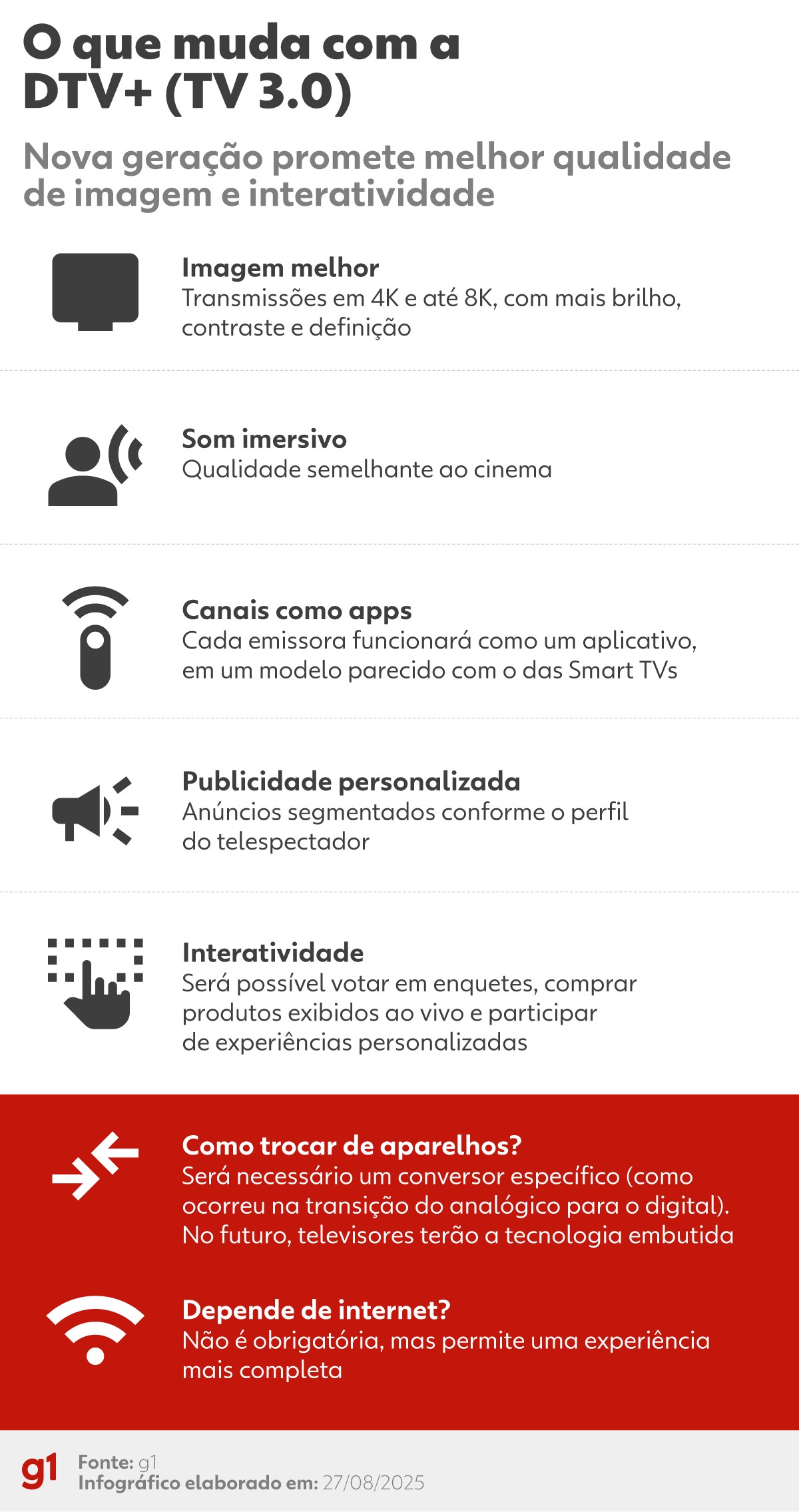
Most people picture broadcast television as finished technology, more or less frozen in time. It isn't. Brazil is designing the next generation of its terrestrial TV system right now, and the interesting part for engineers is how it's being put together: an IP-centric platform that borrows the best pieces from several different standards.
I work on TV 3.0, so this is the introduction I wish I'd had the first time someone asked me, "wait, isn't TV just... TV?"
What we have today
Brazil's current digital TV system is SBTVD (also called ISDB-Tb), an evolution of Japan's ISDB-T. Two things about it matter for what comes next.
Transmission runs on a dedicated broadcast physical layer: robust, and designed for antennas and for reception on the move. Interactivity runs on Ginga, the middleware shipped in millions of TVs and set-top boxes across Brazil and Latin America. Ginga is what lets a broadcaster deliver an app alongside the video.