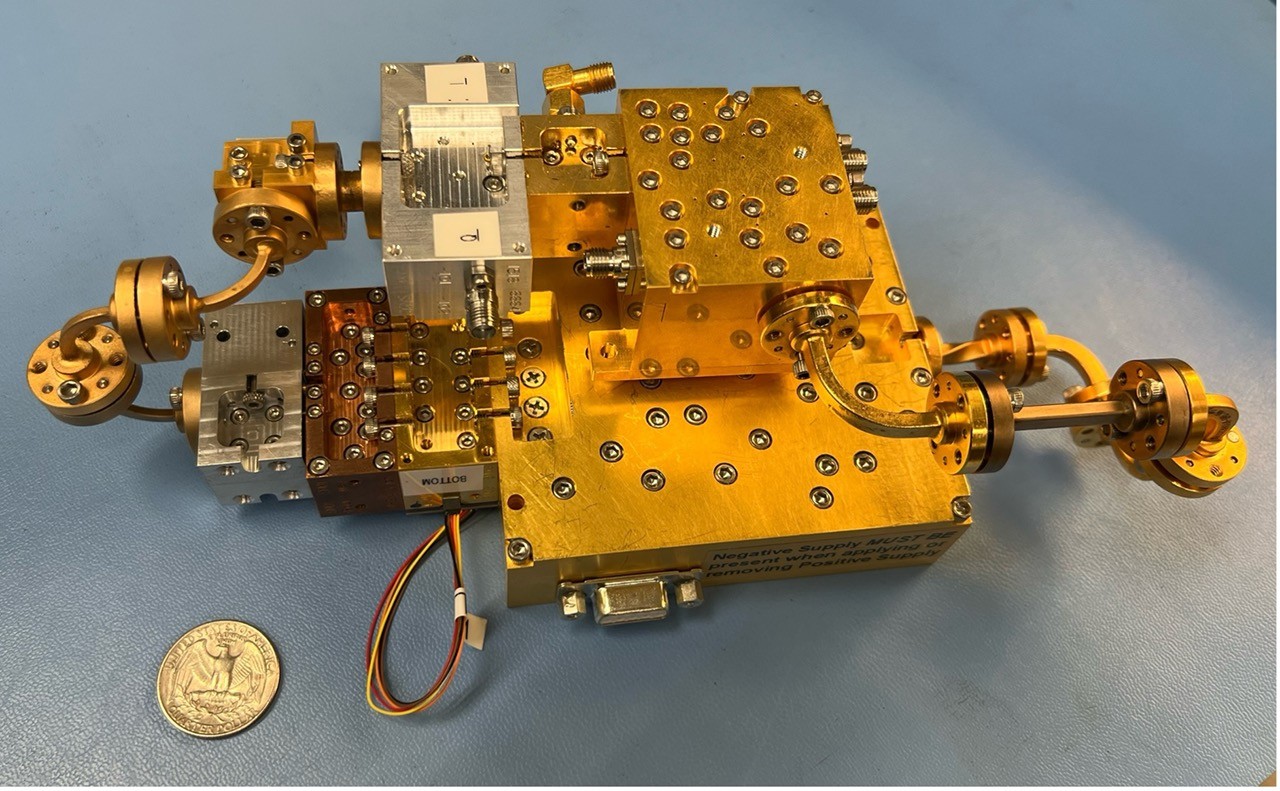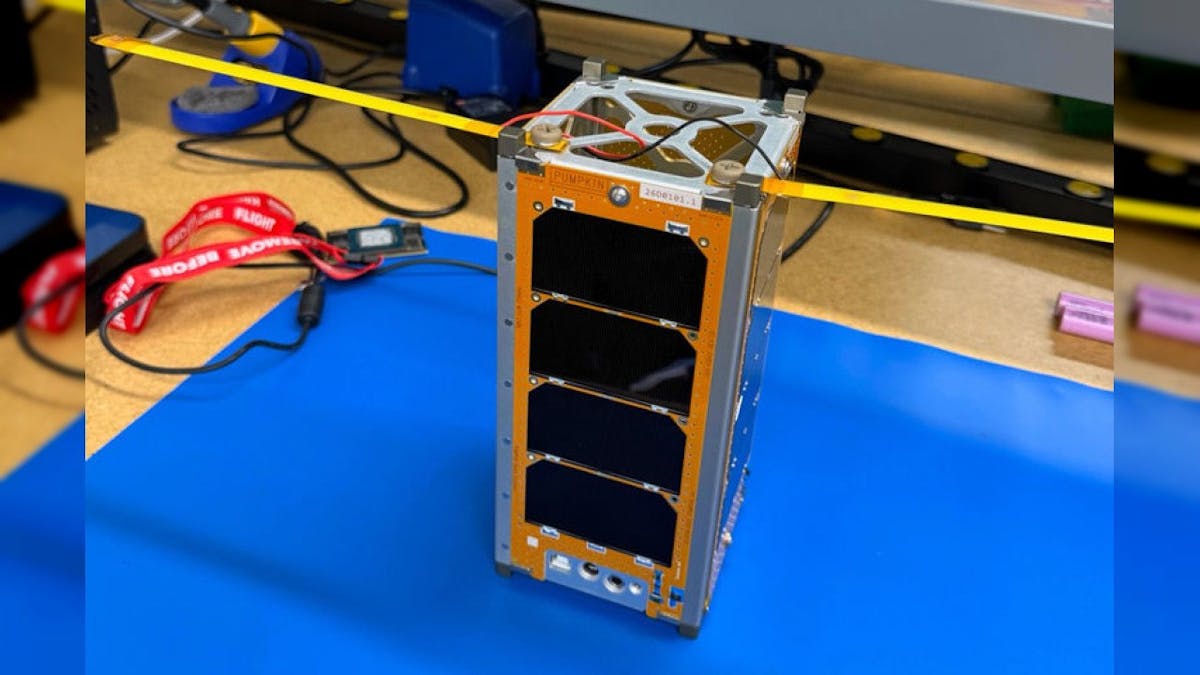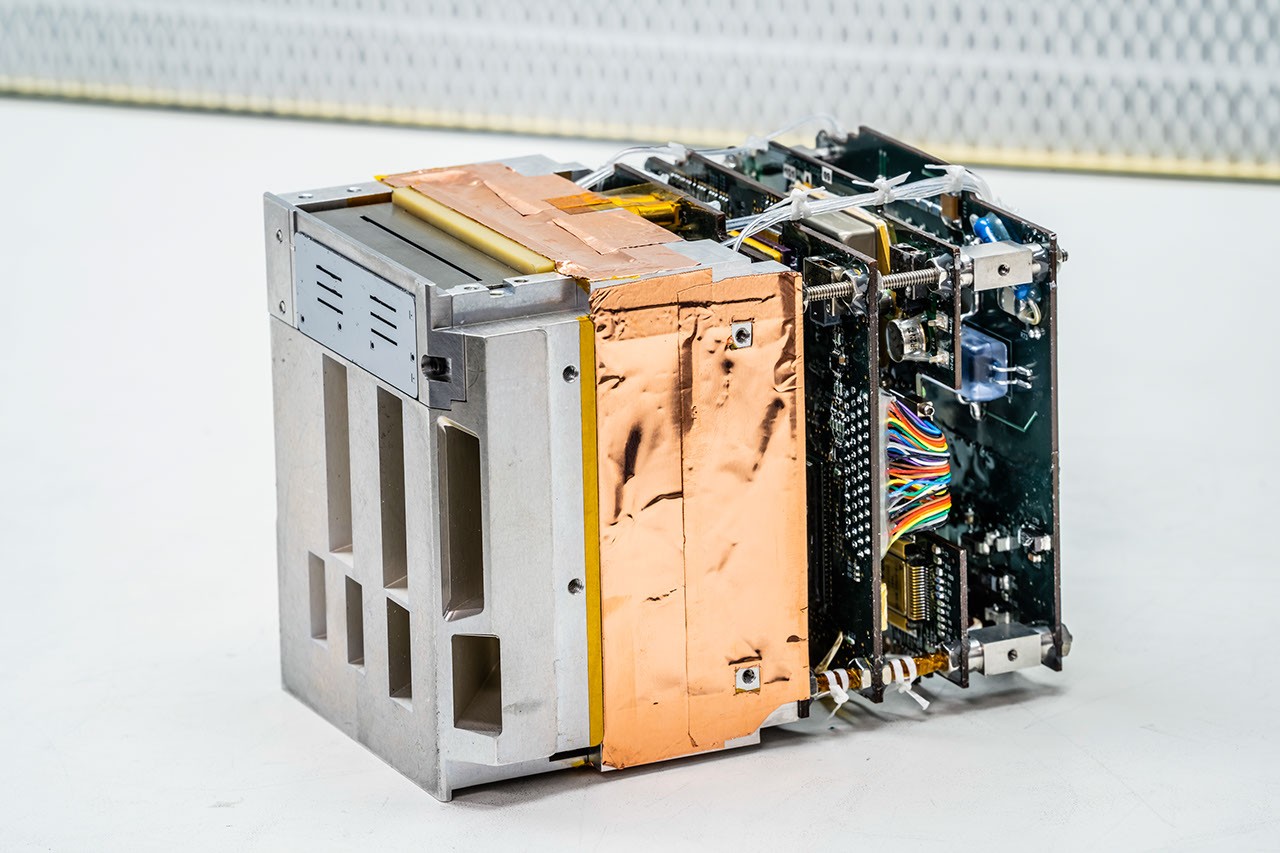
A team of NASA-sponsored scientists and engineers has developed a novel approach to observing high-energy particles in the near-Earth space environment, incorporating miniaturized sensors into a compact, multi-view particle detection instrument unlike any before it. Built for NASA’s Relativistic Electron Atmospheric Loss (REAL) CubeSat mission, the innovative instrument (also called REAL) enables more complete measurements of how energetic particles are transported and lost in Earth’s radiation environment, opening the door to improved understanding of space weather effects in low Earth orbit (LEO) while also making these unparalleled observations accessible to future small, low-cost spacecraft.
Billions of high-energy charged particles are magnetically trapped around Earth in doughnut-shaped regions called the Van Allen radiation belts. These belts typically form two distinct zones: an inner belt dominated by high-energy protons and an outer belt composed primarily of energetic electrons. Together, they pose a persistent hazard to satellites throughout Earth orbit that modern society depends on, including GPS satellites, and satellites that provide telephone and internet services. The outer belt, in particular, contains so-called killer electrons — particles energetic enough to penetrate satellite shielding and trigger damaging electrical discharges or operational anomalies.