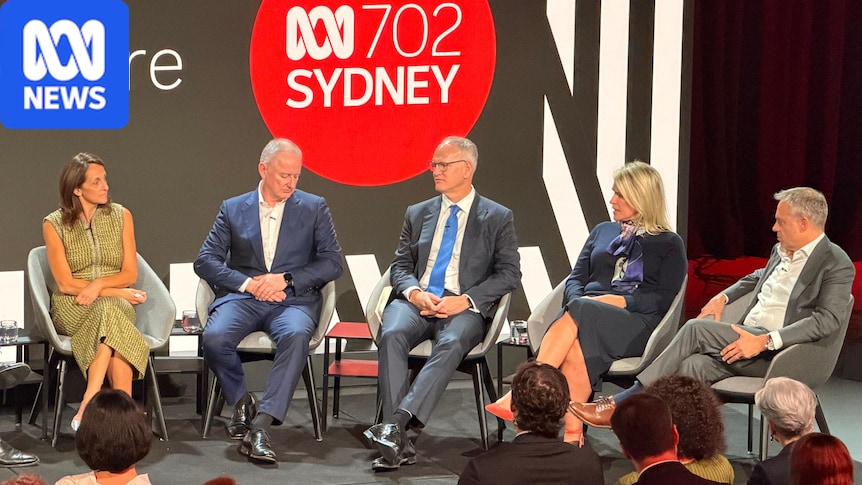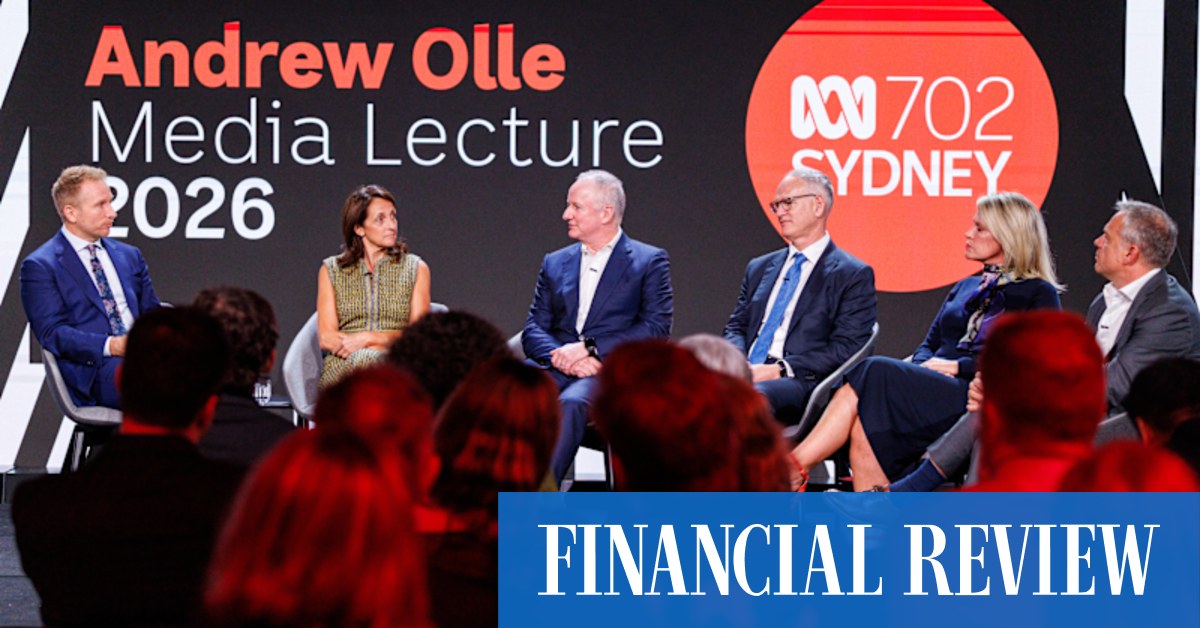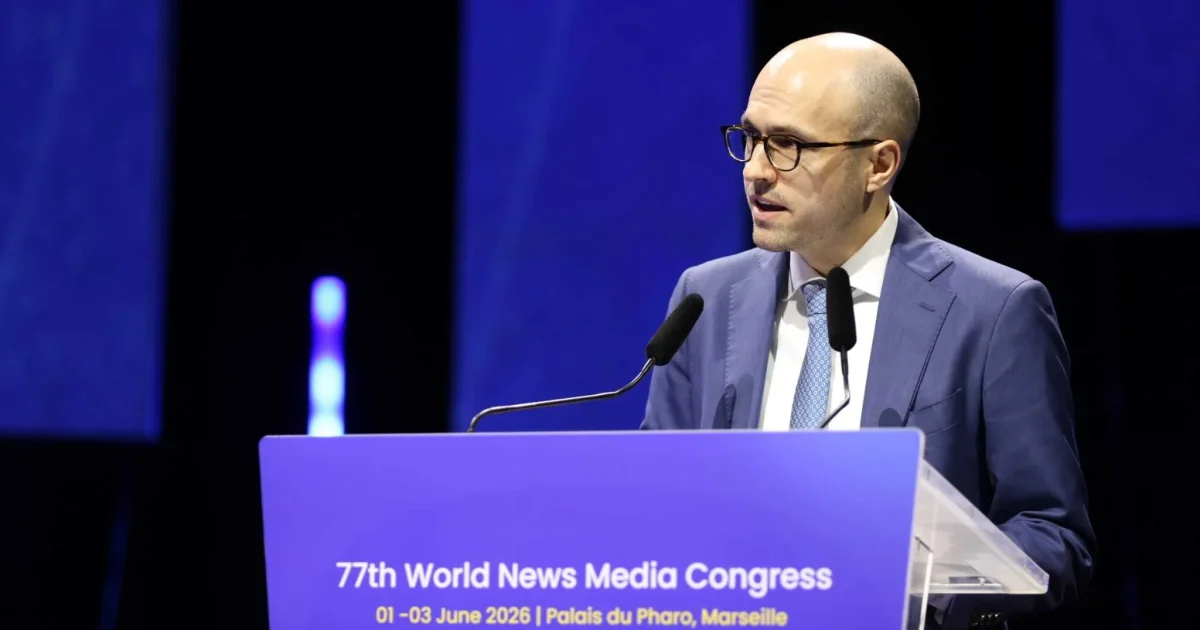
Australia’s news companies must set aside traditional rivalries when it comes to exposing the dangers of artificial intelligence, the editor-in-chief of one of the world’s oldest media organisations has urged.“News organisations are competitors. That is healthy,” Reuters boss Alessandra Galloni said while delivering the annual Andrew Ollie Lecture in Sydney on Tuesday night.“Competition is how journalism gets better and thrives, but there are things we do not compete on.”Reuters is one of the world’s oldest and largest news agencies with more than 3100 journalists and photojournalists working in 165 countries, publishing in 16 different languages.“When one of our reporters is in Kyiv or Khartoum or Gaza City, and a reporter of another news organisation is in the same street, our security teams talk to each other,” Ms Galloni said to a room full of Australia’s leading media executives including News Corp Australasia executive chairman Michael Miller, ABC boss Hugh Marks, Nine Entertainment chief executive Matt Stanton, and SBS chief Jane Palfreyman. “We share what we know about the threat, about safe corridors, about medical evacuation. “We do this because the alternative – hoarding information about how to keep human beings alive as a form of competitive advantage – would be unconscionable and because we have learned that shared knowledge about how to operate safely in dangerous places is worth more than any individual outlet’s competitive edge.“AI is still a very nascent technology. Our use of it is too, as are our partnerships with AI companies. “We are navigating uncharted waters, so what I propose to you all is that there could be a benefit from sharing what we all are learning every day about how to use AI responsibly in our newsrooms.”She said this included “how we caught an AI-generated fake before it aired, or how we noticed a synthetic voice on a source’s phone call or identified a co-ordinated campaign to seed a false story into a search index”. “What our governance committees are learning, quarter by quarter, about what the machines can and cannot yet be trusted with,” Ms Galloni said.“I would venture that it is our collective responsibility – to the public, to society – to enhance our and their understanding about the pitfalls and possibilities of AI”.Galloni said the Reuters Institute Digital News Report 2026 found 10 per cent of news consumers globally used AI chatbots to get their news, with almost one in five (16 per cent) of those aged under 35. She said these numbers could even be greater given they didn’t include “AI-generated summaries in Google, embedded AI in news apps or the AI your phone surfaces before you even open a browser”.Ms Galloni said this had led to tech giants profiting from the journalism and work of others.“AI companies have expropriated the content we have worked hard to gather and have used it to train their models, stripping us of our intellectual property largely without consent or compensation,” Ms Galloni said.“Meanwhile, mainstream media companies have mustered little resistance and, as a result, the revenue that should accrue to newsrooms and the audiences we have built are instead going to tech giants – a plunder that will undermine original reporting into the future.”In a panel discussion led by ABC journalist Hamish McDonald, ABC managing director Hugh Marks said there was a delicate balance for media groups doing deals with AI companies.He said AI companies were wanting access to audio and video as well as news being produced by media companiesNews Corp’s Michael Miller said AI companies had already shown they were already scraping content, describing it as “theft”.“They highly value what we do,” he said.“That’s why we call it scraped, but they could get stolen their content already.”Mr Miller said “the reason” the AI companies “want to do deals” is because they want “legitimate access because they know there’s a lot of risk and negativeness that they’ve taken others’ work”.The discussion came a week after Anthony Albanese revealed he would establish the Office of AI within the Department of Prime Minister and Cabinet to oversee Australian standards and the impacts of AI.Nine Entertainment chief executive and managing director Matt Stanton said the 30 journalist jobs axed by Nine on Tuesday were “not directly” related to increased use of AI. “We are constantly evolving our business model,” Mr Stanton said. “So the announcements we made today, which is always a difficult one to do, but it is about reshaping our business to continue changing.” “I think people have got to realise it’s not just journalism. It’s journalistic journalism and I mean that by investment in tech and product as well.”
Media boss urges rivals to unite against AI threat
Australia’s news companies must set aside traditional rivalries when it comes to exposing the dangers of artificial intelligence, the editor-in-chief of one of the world’s oldest media organisations has urged.
766 words~3 min read