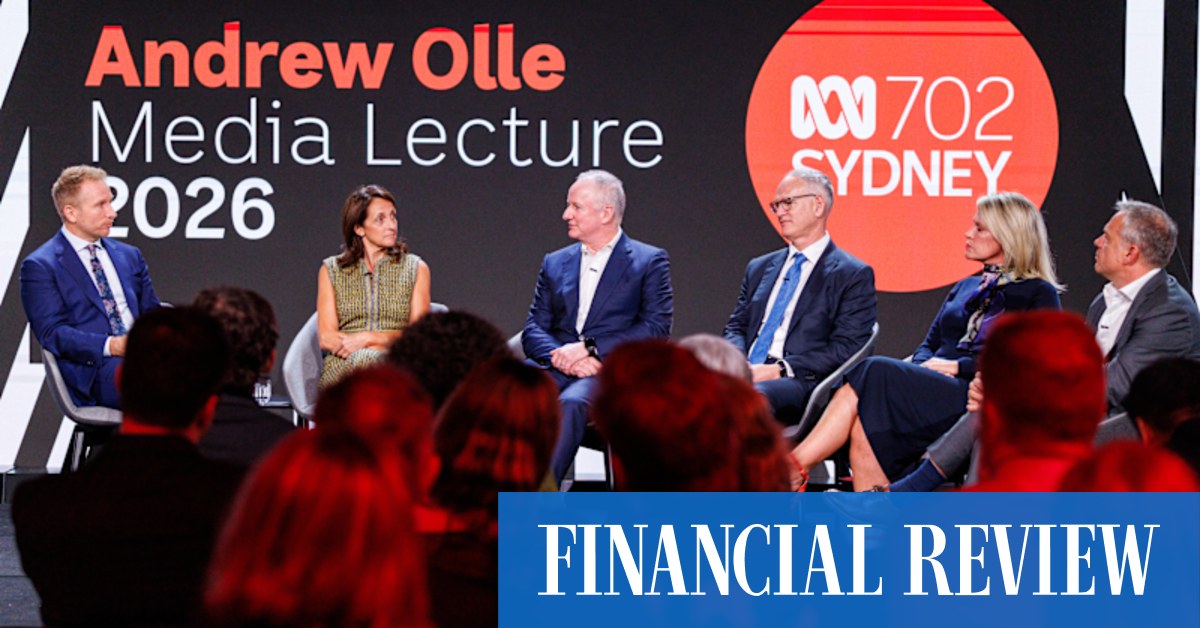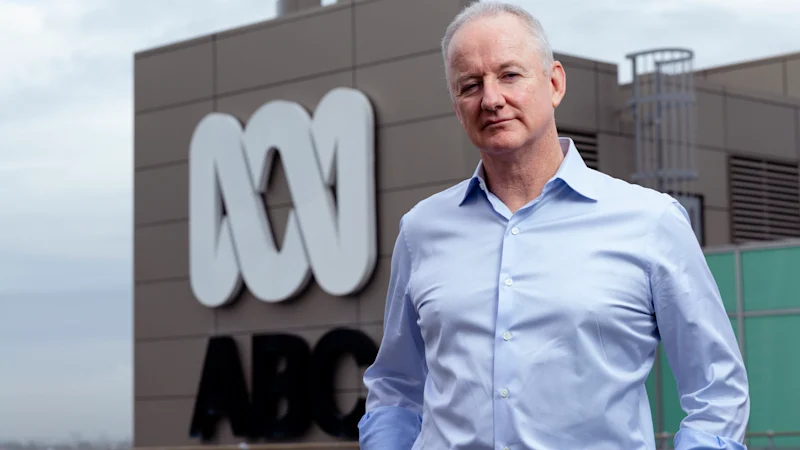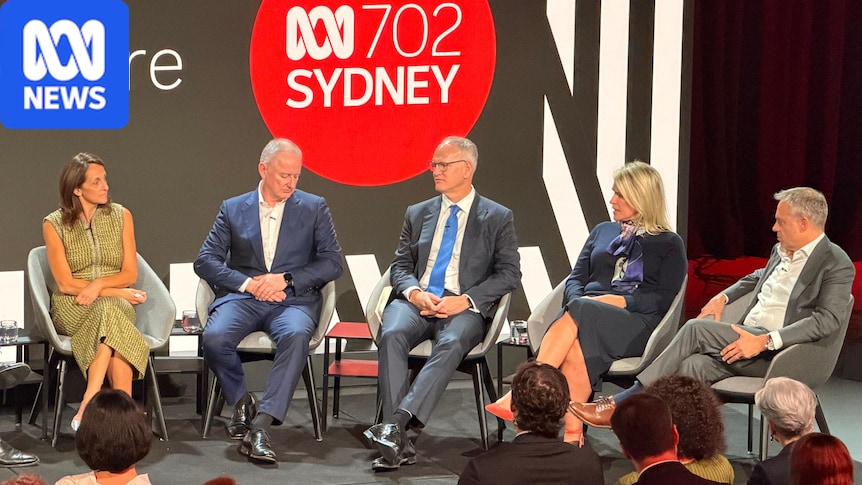
The heads of Australia's biggest media companies have demanded that AI companies pay for the "public good" of Australian news and culture used without permission to train their technology.Australian news agencies are already in talks over licensing deals, with the ABC's chief revealing that AI developer Anthropic had approached it about audio and video that capture how Australians speak.The heads of Australia's biggest media companies discussed AI at the annual Andrew Olle lecture. (AAP: Andrew Drummond)The comments came during a panel featuring the heads of the ABC, SBS, Nine and News Corp Australasia at the annual Andrew Olle lecture last night.The wideranging discussion covered everything from the role of AI in journalism to new detail about the departure of former Today show host Karl Stefanovic.Hugh Marks has revealed that AI firm Anthropic approached the broadcaster seeking audio and video of Australians speaking. (Reuters: Dado Ruvic)ABC managing director Hugh Marks told the audience journalism was a public good that had to be protected."If we lose sight of the work that's being done … then I think we'll have a worse nation," he said.Mr Marks argued that AI companies should strike deals with Australian news companies to license works, but also acknowledged a "delicate balance" to provide high-quality information to Australians using AI.This obligation to inform should not mean that news organisations should be expected to let AI companies train on news free of charge, SBS managing director Jane Palfreyman said. "Our collective view on that would be no."Hugh Marks says AI developers should pay Australian news organisations to license their content. (ABC News: John Gunn)News Corp Australasia executive chairman Michael Miller said AI companies knew that the "theft" of Australian works was a "risk to their business in Australia".Nine chief executive and managing director Matt Stanton said his company's recent licensing deal, under which its journalism will be cited in answers from Microsoft's AI tool Copilot, was a "good deal for both sides".Mr Stanton said that Nine's decision to cut 30 jobs was not "directly" a result of AI, when pressed by panel moderator ABC Radio Sydney Mornings host Hamish Macdonald.He also said Stefanovic's "different directions" of his podcast had prompted Nine's decision to part ways with the former Today host, even before his controversial podcast with Tommy Robinson.Paying for journalismThe panel discussion followed a lecture by global news agency Reuters's editor-in-chief Alessandra Galloni, who urged news organisations to set firm terms for artificial intelligence companies using their work and to share what they learned when AI tools went wrong.Ms Galloni said journalism remained the source of reliable, first-hand reporting which people and increasingly AI systems depended.She cited recent research showing that 10 per cent of people accessed chatbots for news each week, including 16 per cent of people under 35.Ms Galloni argued publishers had no reason to give up on reaching those audience but should strike deals to have their journalism correctly attributed, accurately represented and paid for by the AI companies."Our journalism should be licensed, not taken," she said.She cited a speech by Prime Minister Anthony Albanese last week in which he promised that Australian writers, musicians, artists and journalists would retain control over work used to build and train AI.Using AI in the newsroomMs Galloni argued that it was the responsibility of news organisations to help society understand the "pitfalls and possibilities of AI".She said Reuters used AI to help reporters search large collections of documents, find patterns and turn official material into fast news updates, summaries and translations.She cited investigations that used AI to document thousands of social media posts and speeches by US President Donald Trump, and to convert 20,000 pages of Syrian government documents into searchable text used in an investigation that uncovered a mass grave.Reuters is also using AI to produce headlines from press releases, draft first paragraphs in urgent stories, generate bullet-point summaries and translate stories, Ms Galloni said.But Reuters only published journalism produced with AI once it had been reviewed by a journalist and its use was disclosed when it played a significant role in what was published, she said.She said that, on top of AI's struggles with nuance and context, it was also vulnerable to hallucinations and other mistakes. One third-party tool tested by Reuters had once mistaken a SpaceX spacecraft for a missile."Thankfully we caught it," she said.Ms Galloni said even advances in AI could not replace the reporting that made news valuable in the first place.Reuters has 2,600 journalists in 165 countries, she said, including 70 staff covering the war in Ukraine and Russia."In my conversations with tech companies, I have often been struck by how little they understand about what original, first-hand, on-the-ground journalism is and looks like," she saidSharing what worksMs Galloni called on rival news organisations to share the lessons emerging from those experiments, drawing a comparison to the way that competing journalists would exchange safety information when in war zones."I would venture that it is our collective responsibility — to the public, to society — to enhance our and their understanding about the pitfalls and possibilities of AI," she said.The Andrew Olle media lecture was first held in 1996 to honour the ABC radio and television broadcaster who died from an undiagnosed brain tumour in 1995.Each year's lecture features a speech on the future of journalism in Australia and raises funds for charity Brain Cancer Australia.Previous lecturers have included New York Times executive editor Joseph Kahn, Ray Martin and former News Corp co-chairman Lachlan Murdoch, as well as ABC journalists Leigh Sales and Fran Kelly.
AI companies 'stole' Australian culture, news bosses say
The heads of the ABC, SBS, Nine and News Corp say AI companies should strike licensing deals rather than freely train on Australian news, warning journalism is a public good that must be protected.
920 words~4 min read