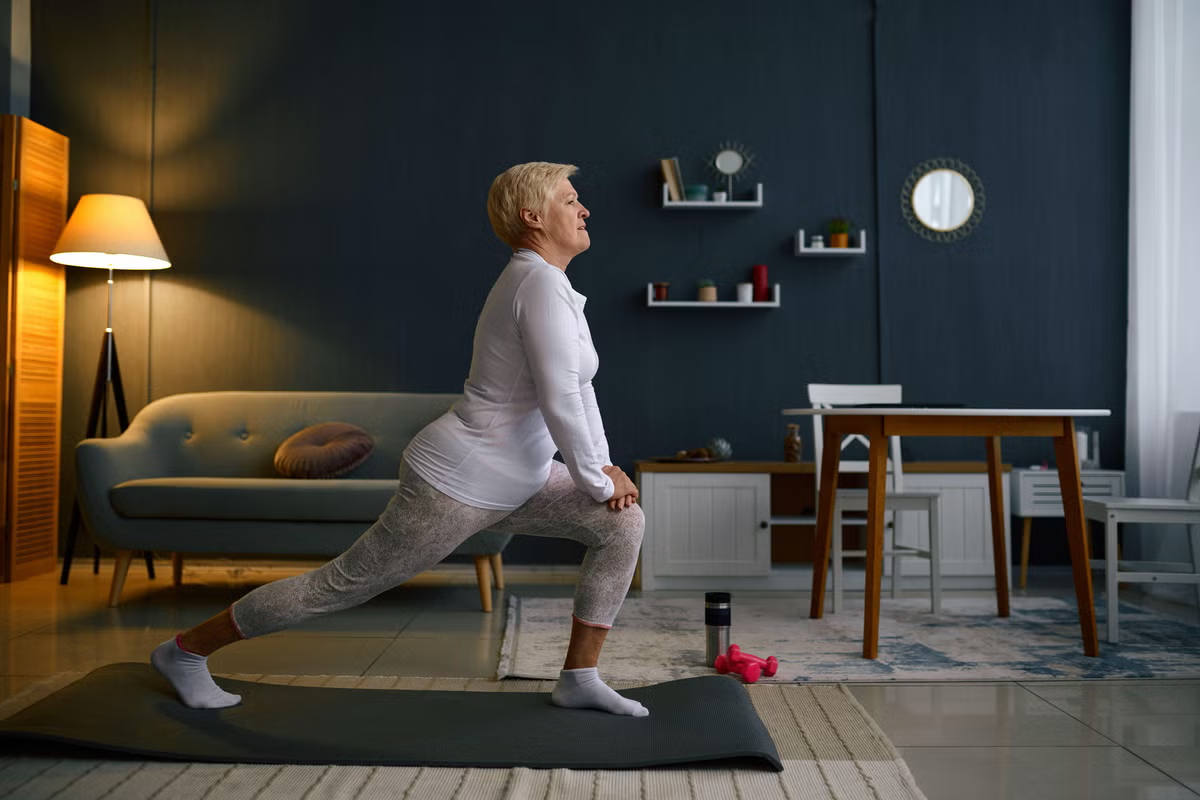
The summer holidays often bring a flurry of childcare, social events and sunny distractions, which can make it easy for exercise to fall by the wayside. Yet, maintaining fitness this season needn't be a difficult or time-consuming endeavour, as sometimes the simplest exercises can be the most effective.For both seasoned enthusiasts and beginners, here are five simple exercises to try this summer that can make a big difference to your mood, strength and health.1. Squats“Squats are great because they help you build lower-body strength,” says Sam Quinn, personal training lead at Nuffield Health. “They work the quads and glutes, which are two of the biggest muscles in the body.”He highlights that the great thing about squats is that the movement is transferable in everyday life.“This squatting movement pattern is used in daily life, like picking things up from the floor, for example,” notes Quinn.‘Squats are great because they help you build lower-body strength,’ says Sam Quinn (PA)Start with your feet shoulder-width apart.“As you squat down make sure that your quads are parallel to the floor,” advises Quinn. “Keep your torso nice and upright and keep looking forwards.”It’s also an exercise that can be easily scaled.“If you haven’t done squats before you might want to start with chair squats,” suggests Quinn.For this you do the same movement and slowly lower yourself until you lightly tap a chair and then stand back up again.2. Inchworm“Start with your feet hip-width apart and hinge forward at the hips,” instructs Quinn. “Put your hands on the floor, and then slowly walk yourself out, and then walk yourself back up to a standing position.”This exercise gives you a great balance of upper-body strengthening and lower-body stretching at the same time.“The inchworm will be predominantly targeting your hamstrings, but it’s also going to help your upper body as well,” says Quinn.“It’s definitely going to help with the flexibility and strength of your hamstrings.”3. Plank“One of the simplest but most effective core exercises is the plank,” says Quinn.There are lots of different variations you can try.“It’s a really easy and accessible exercise because you can do it on your knees, on your elbows, or on your hands,” says Quinn.“You can also make it more difficult by coming into a side plank or by adding in shoulder taps or foot raises.”‘One of the most simple but most effective core exercises is the plank,’ says Quinn (PA)Don’t let your hips sink down and try to avoid sticking your bum up in the air.“I would recommend doing the plank on your elbows to start with because it gives you a nice stable base,” advises Quinn. “Lay on the floor in a prone position (lying face down) and support your body weight on your elbows with your arms straight out in front of you.“Then take the weight through your feet with your knees off the ground, and make sure that your body is parallel to the floor.”4. Press-ups“If you want to make a noticeable change to your upper-body strength or the appearance of your upper body without any equipment, I would recommend doing some press-ups,” advises Quinn.“It’s quite an easy, accessible exercise that works out your shoulders, arms and chest.”Try to maintain a rigid, straight body line from head to heels (PA)Try to maintain a rigid, straight body line from head to heels.“You want a nice and straight back, and for a full rep you want to make sure that you’re getting within a fist width away from the ground,” says Quinn. “Little quarter reps are not going to be as effective for getting the stimulus that you want, so make sure you go all the way down and do full reps.”Similarly to planks, it’s a very scalable exercise.“You can start on your knees and then progress to a full press-up,” suggests Quinn. “You can gradually increase the amount of repetitions that you’re doing, or can increase the angle or elevate your feet.”5. Lunges“Lunges are great for single-leg strength and core stability,” says Quinn. “You can do forward lunges or reverse stepping lunges.”Regardless of the type of lunge, your feet should remain hip-width apart to maintain balance.“Keep your torso up and step one foot forward and lower your body until both knees are bent at a 90° angle,” says Quinn.Your back knee should hover just above the floor, and your front knee should track directly over your ankle without extending past your toes.
Five easy exercises with the biggest impact for your busy summer schedule
These simple exercises can make a big difference to your mood, strength and health
731 words~3 min read