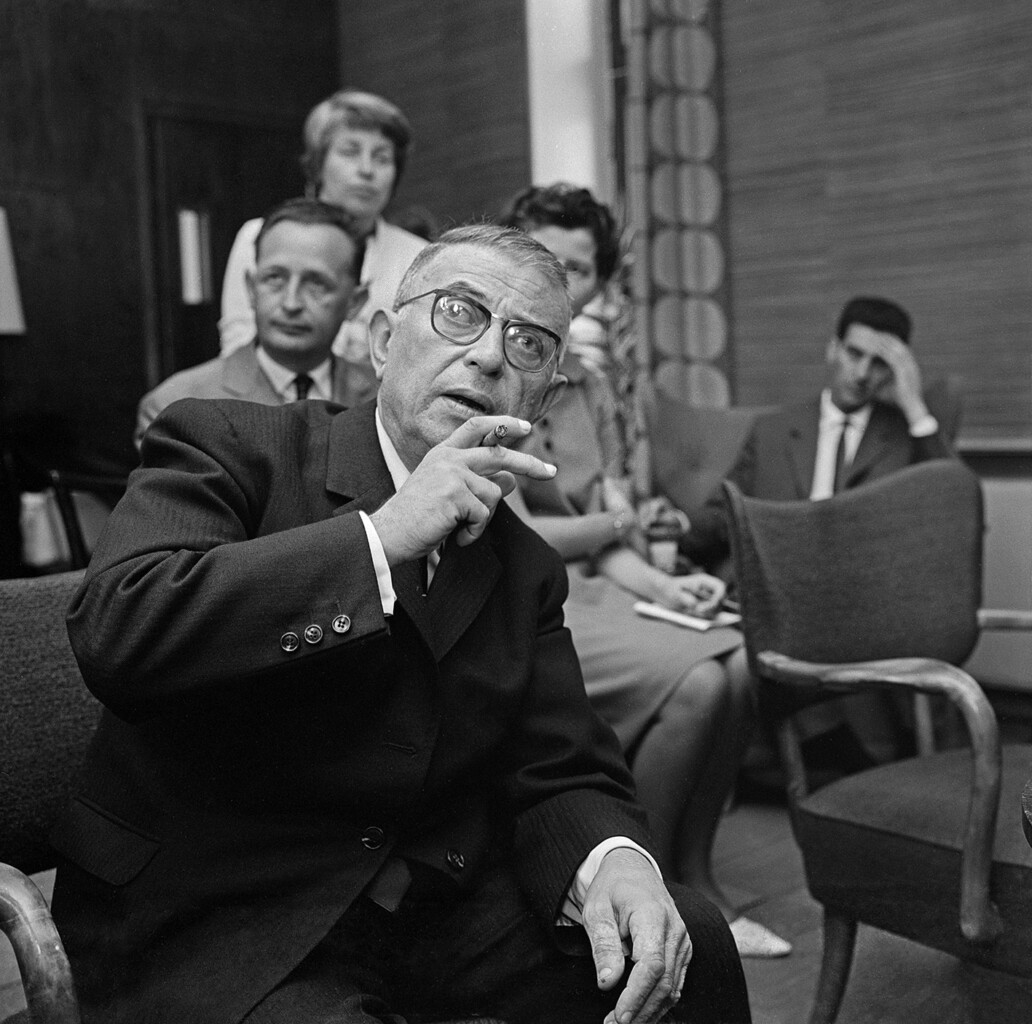
It’s hard to overstate the enthusiasm of French intellectuals for Marxist theory in the 1950s and ’60s. If Sartre was the most important living philosopher, Marx was the most important dead one. And the École Normale, an institution filled with young men “overeducated in the art of interpretation,” as Derrida put it, was a central incubator of Marxist zeal. Newspapers, literary journals, and bookstore shelves teemed with work by normaliens staking out their positions on Marx, Stalin, the working class, and the revolution—and attacking anyone who opposed them.Article continues after advertisement
A lot of this work is almost unreadable now, the pained efforts of young eggheads twisting themselves into rhetorical knots over the moral conundrums posed by real-world applications of Marxist principles. It was impossible to deny that the Soviets’ attempt to turn their country into a workers’ paradise had fallen short. The French knew about some of Stalin’s excesses—the show trials, the labor camps, the bloody purges of those who strayed from the party line. But for hardcore believers, this didn’t mean that the philosophy undergirding the Soviet experiment was wrong. Certainly Soviet communism was preferable to the imperialistic capitalism of the United States. (The term antiaméricanisme first appeared in France in 1948 and quickly caught on, reaching a crescendo during the Vietnam War.) “Whatever the nature of today’s Soviet society, the Soviet Union is, by and large, and given the balance of power, on the side of those who are struggling against the forms of exploitation we are so familiar with,” declared Les Temps Modernes in an editorial in 1950. “The fact that Russian communism is decadent does not mean that the class struggle is a myth, that ‘free enterprise’ is either possible or desirable, or, more generally, that the Marxist critique is dated.”