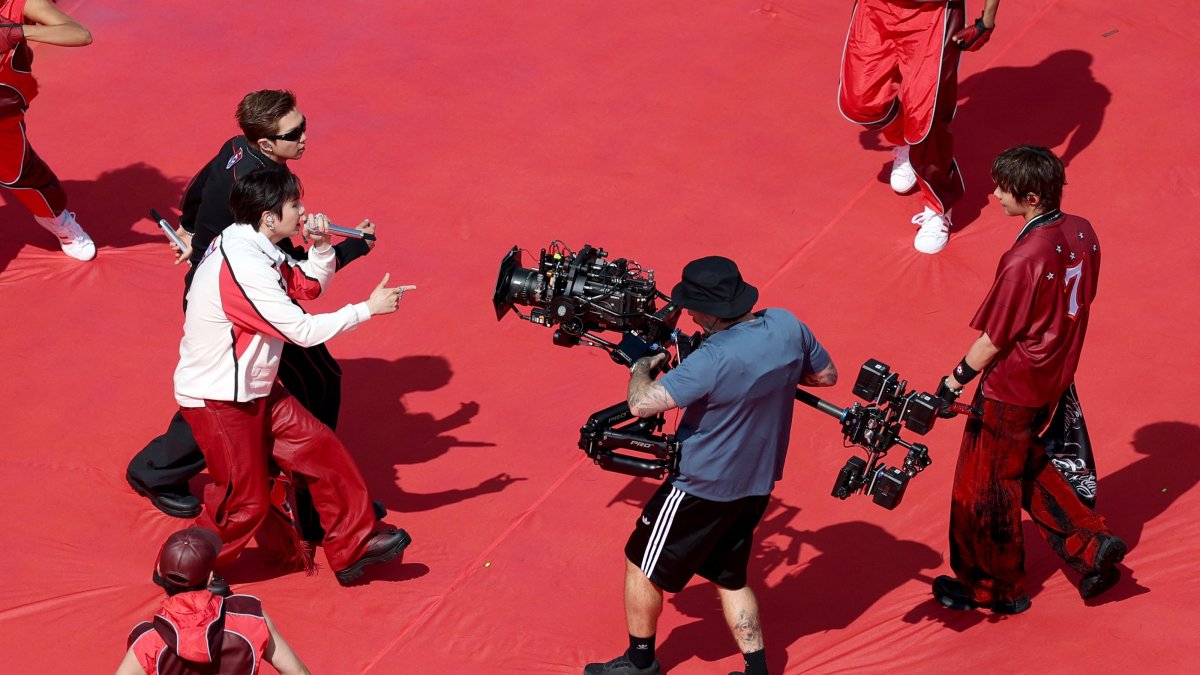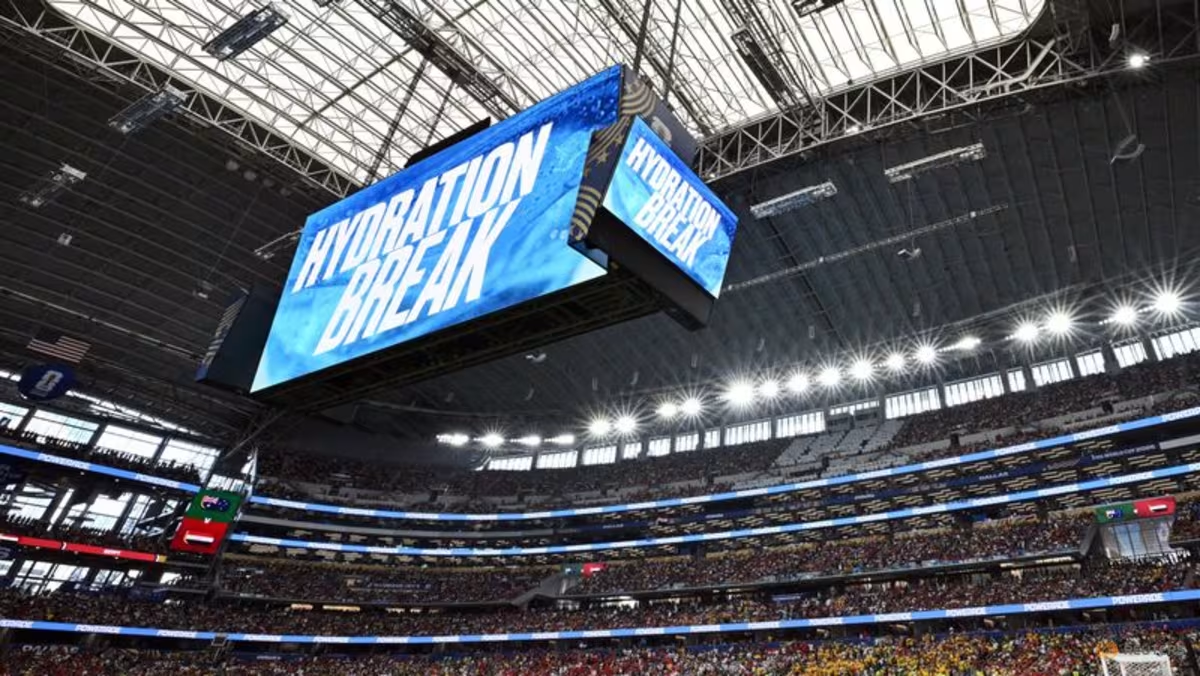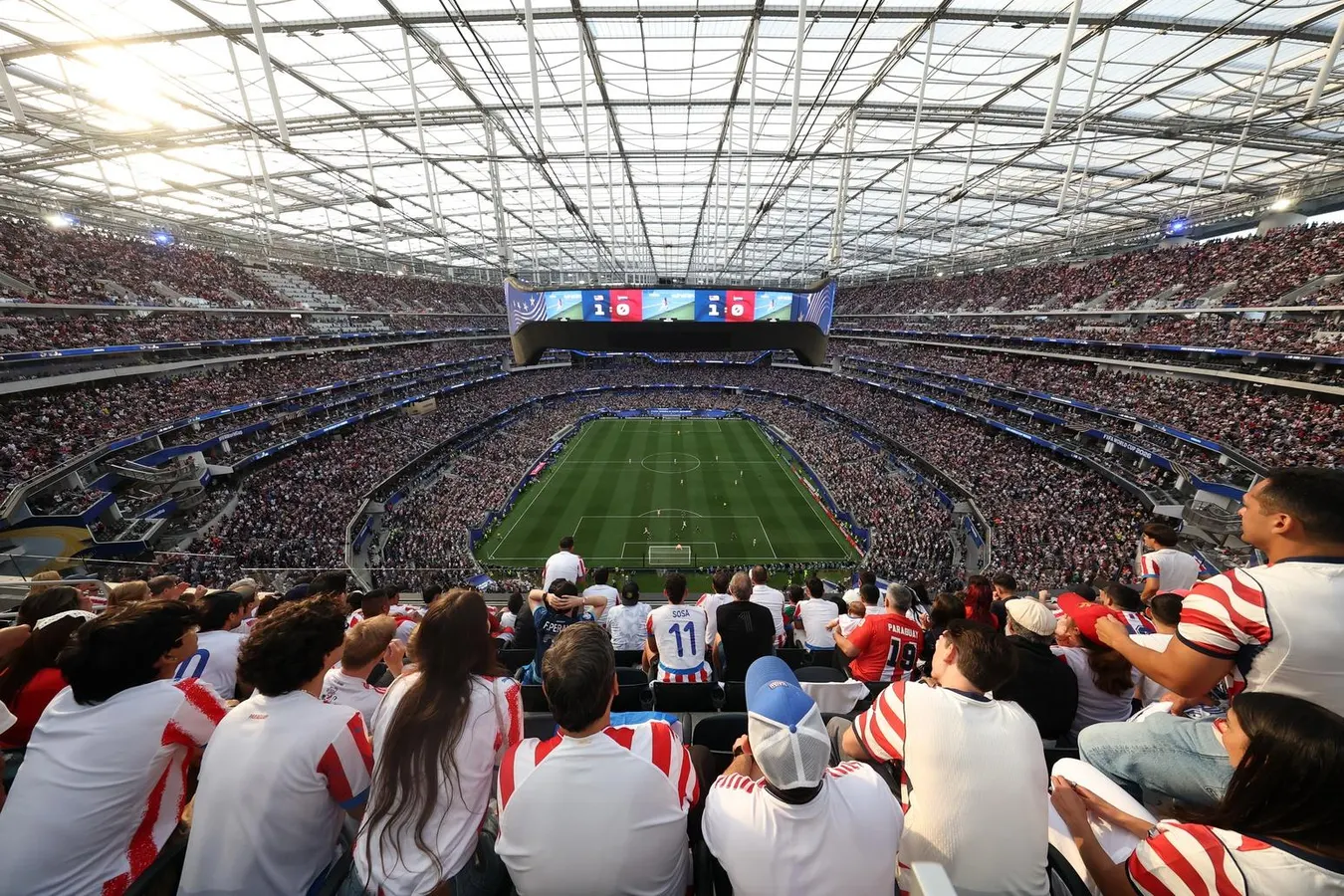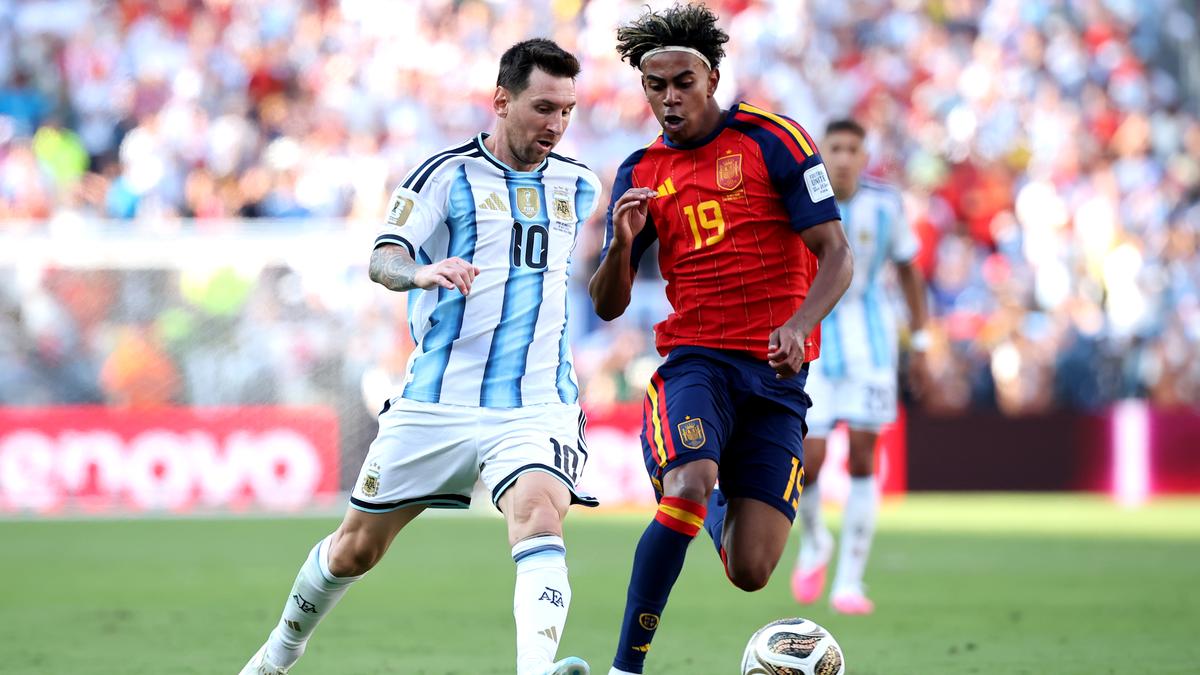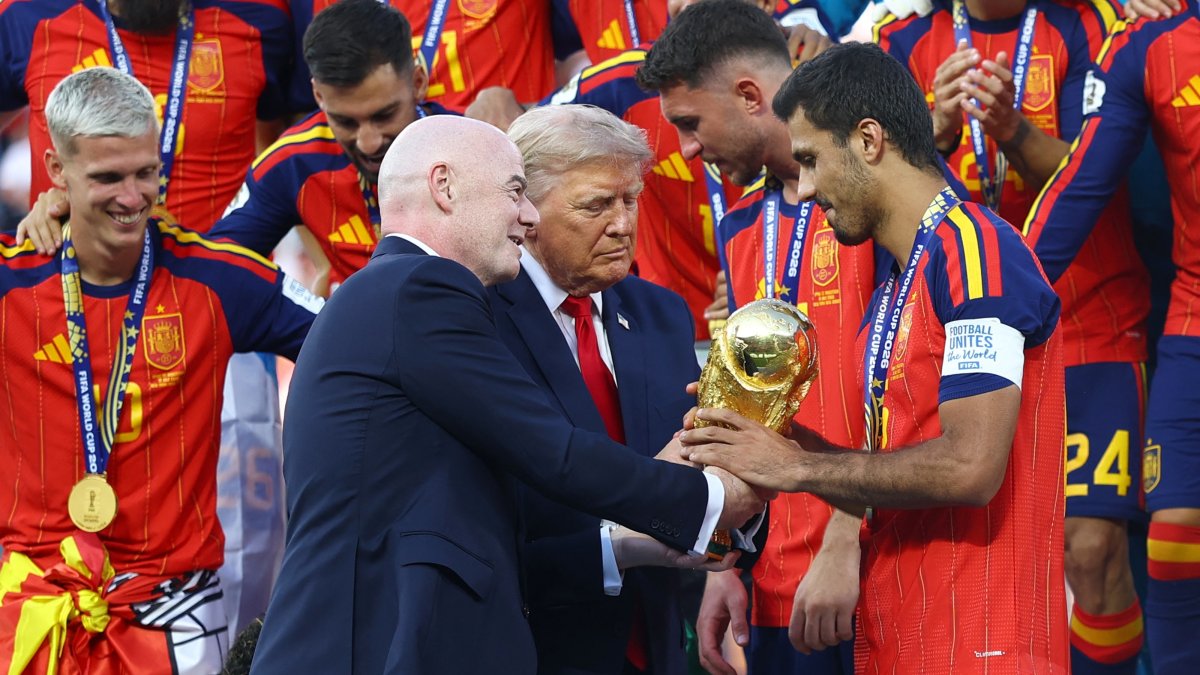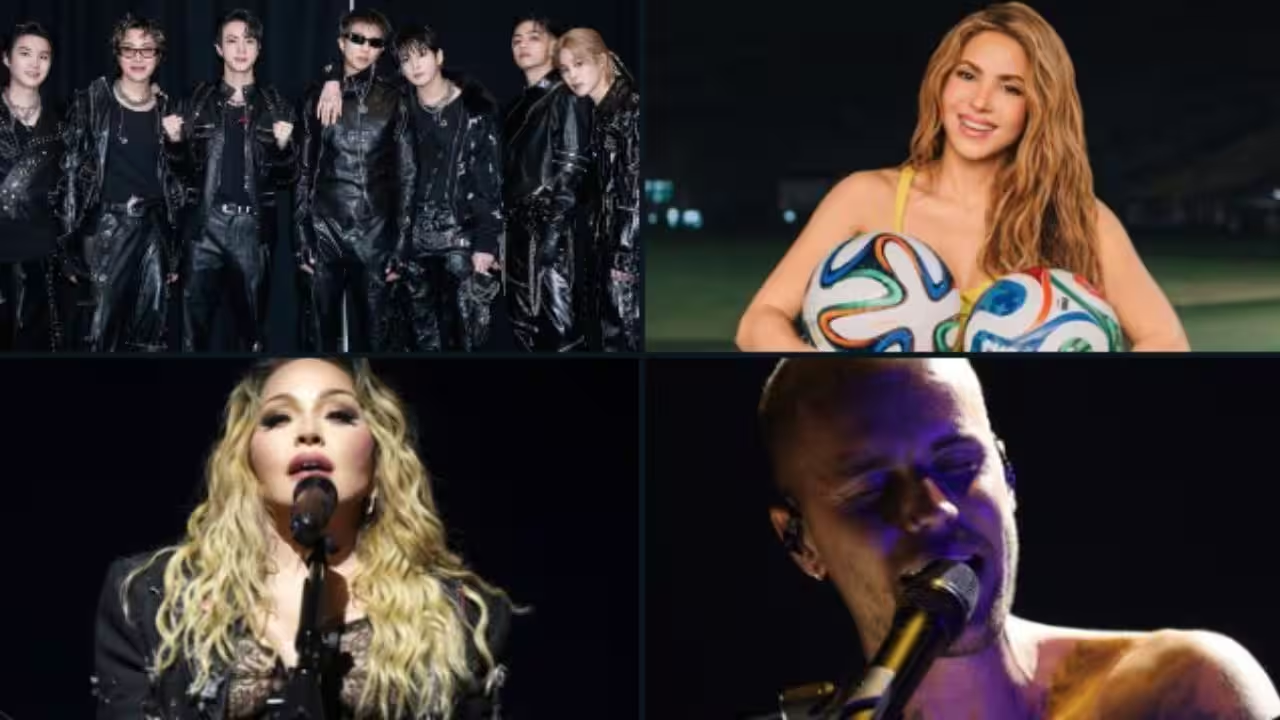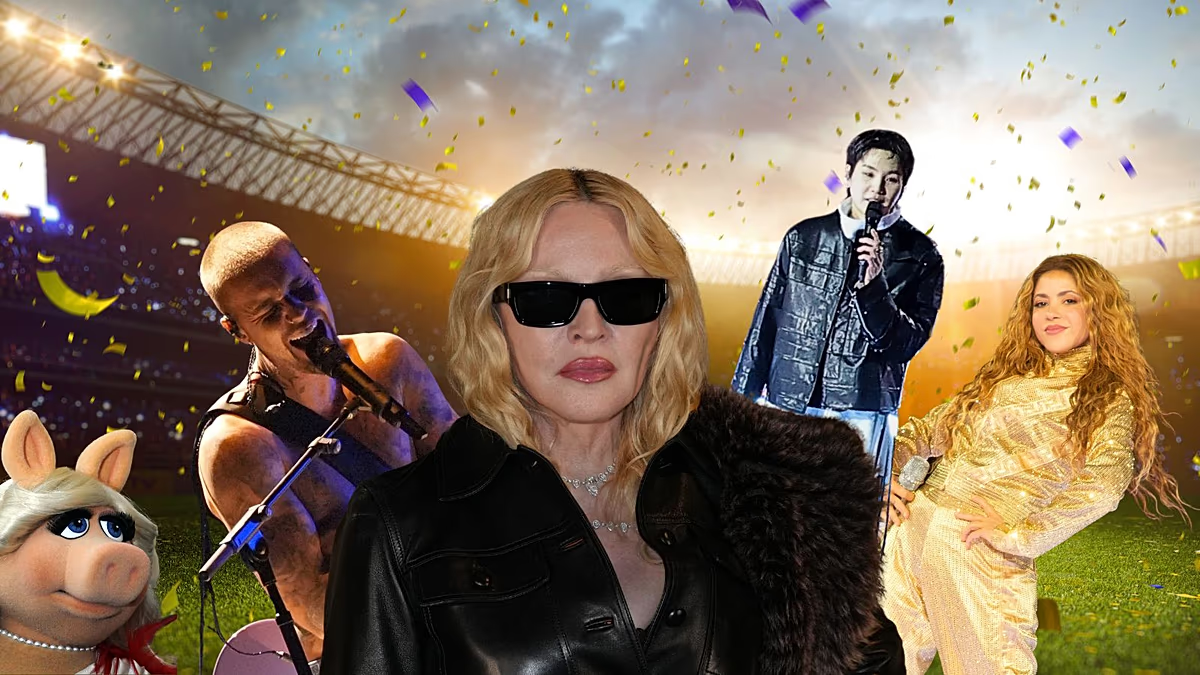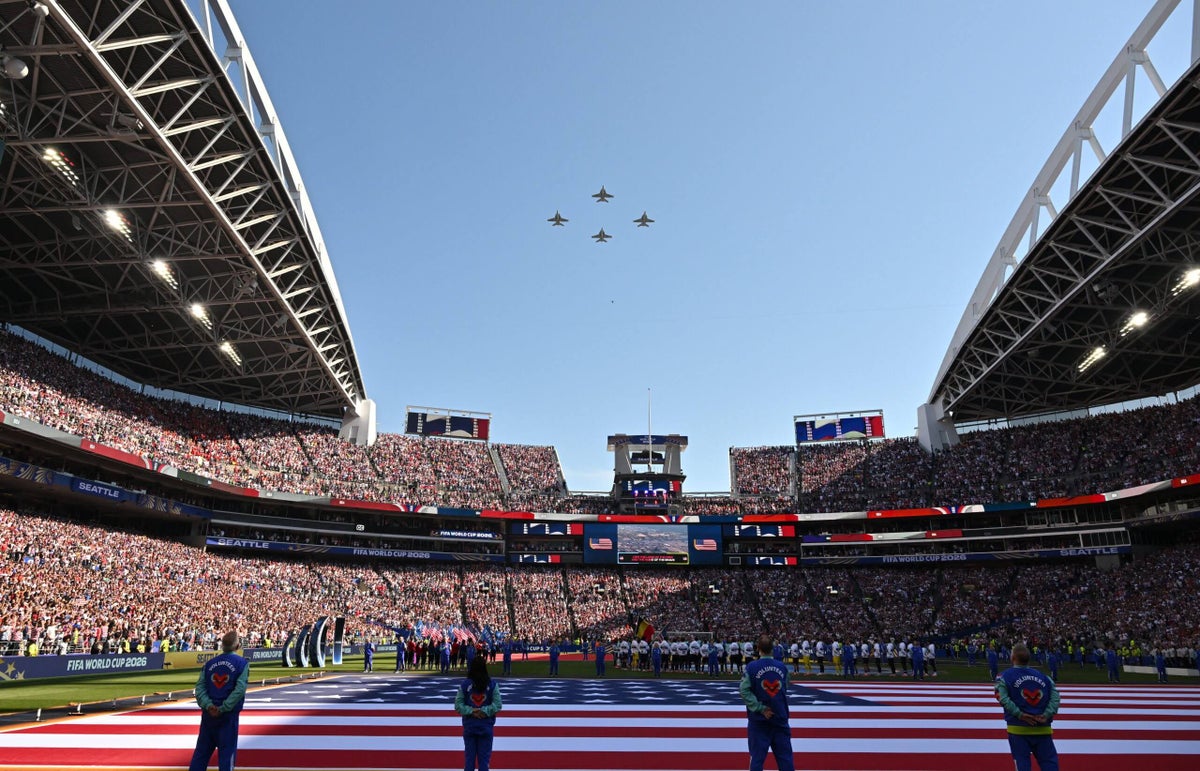
At the 2026 World Cup, two halves became four quarters. Ticketing was a ruthless game of revenue maximization, and the final became a stage for Madonna and Justin Bieber. From start to finish, and especially at the 78 games held in the United States, soccer’s showpiece felt inescapably American. The question, now, is whether it will feel that way forever.For 39 unforgettable days, the 2026 edition featured flyovers, Dallas Cowboys cheerleaders, and the Buffer brothers booming their combat sports catchphrases.It featured celebrities — so many celebrities — and overbearing event production. It began last December with Donald Trump dancing to the Village People’s “YMCA.” It ended with Spanish players receiving championship rings and FIFA selling replicas for $12,000.The Americanization of the World Cup did not begin in 2026. It is part of a broader multinational movement to commercialize sports and spike them with ancillary entertainment. Long before this summer, there were opening ceremonies, fireworks and countdowns to kickoff. Four years ago in Qatar, there were in-stadium hosts and pre-match pop music. Everywhere, it seems, there are sponsors and hospitality experiences, because making money is the only way to stay ahead or keep up.But FIFA, the global soccer governing body that runs the World Cup, used its American adventure to accelerate this movement. It tapped into American consumerism. It commodified everything from “Limited Edition Host City Jerseys” to grass. It tried to turn World Cup final week into a truncated version of Super Bowl week. It started some matches on time but others late to accommodate pregame performances. It played to patriotism by trumpeting the U.S. national anthem into stadiums around an hour before kickoff.Some welcomed the adoption of American culture and norms. It gave this tournament a unique flair and feel, not unlike the ceremonial Māori calls that preceded 2023 Women’s World Cup games in New Zealand. It distinguished 2026 from 2022, 2018 and 2014, from what some felt had become a monotone, uniform backdrop for world-class soccer.But it also rankled fans, because it distracted from the soccer. It excluded many from a once-inclusive sport. In some cases, such as the mid-half hydration breaks, it materially changed the game. And it left the world wondering if the changes are here to stay.Why the U.S. was actually the perfect host for the World CupHenry Bushnell and Lia GriffinTicketingThe World Cup first felt aggressively American last fall when FIFA’s approach to ticketing came into focus.FIFA had already milked millions of dollars out of fans by selling the “right to buy” tickets. It ultimately made billions by selling the actual tickets at unprecedented prices; by raising those prices from one sales phase to the next; and by leaning into the relatively unregulated U.S. resale market.Its strategy led to accusations of “betrayal” and deception. It led to investigations by public authorities in both the U.S. and Europe. None of the fury deterred FIFA in 2026, but it will color discussions around ticketing moving forward.FIFA officials certainly heard the uproar, and it’s fair to assume that ticket prices in 2030 will be lower — though still probably the second-most expensive in World Cup history. Why? Because the market and laws in Spain, Portugal and Morocco, the three main co-hosts in 2030, are somewhat different.In 2026, rather than restrict the resale of tickets, FIFA launched its own resale platform and took a 30% cut on every purchase. It also used the unchecked secondary market — and the unparalleled price of North American sports tickets generally — to justify its high prices.Despite sky-high ticket prices, Spain fans turned out at the World Cup final to watch their team lift the trophy (John Sibley / Reuters)It likely won’t have such a convenient excuse four years from now. Tickets to domestic soccer matches in the three Mediterranean countries, and throughout Europe and Africa, mostly cost less than $100. Portugal has laws restricting the resale of tickets, and some within the Spanish government have tried to legislate a crackdown. European lawmakers and courts have also looked at FIFA with a critical eye. There are numerous forces, therefore, that should compel FIFA to rein in its shameless pursuit of ticketing revenue — including the simple fact that there is less wealth in Spain, Portugal and Morocco than there is in North America.Whether the fury of fans is one of those factors is unclear. Mattias Grafström, FIFA’s secretary general, was asked in April if he understood the concerns about 2026 World Cup ticket prices. “Well, I think, I will always have understanding for fans and their opinions, but I think there are quite a wide array of ticket prices,” he said. “And it’s also a reality of the market in North America.”When asked if he worried that the anger among fans would harm the legacy of this year’s tournament, he referenced FIFA’s plan to re-distribute the ticketing revenue to its 211 member associations, the national soccer federations in countries and territories around the world.“I think the legacy is also what we will be able to do with the money … in 211 countries,” Grafström said. “This is a true legacy, through the Forward program, and in order to really develop the game of football in our member associations. And this will have a true impact.“But of course, we listen, and we take into account the comments. And of course, as for every World Cup, we will review and see how we do it for the next one.”Norway players take a hydration break in the World Cup quarterfinals, a new wrinkle that was widely booed throughout the tournament (Marco Bello / Reuters)Hydration breaksOnce the tournament began, the most frequent source of complaint was the hydration breaks.FIFA mandated them at all 2026 World Cup matches. And although it wasn’t explicitly an American innovation, it clearly echoed American sports, such as football and basketball, where games are split into four quarters.The breaks were uncontroversial when tied to heat and humidity, but otherwise seemed unnecessary and driven by commercial considerations — especially at the 39 matches played under roofs in controlled climates. They halted the momentum, rhythm and flow of matches. They allowed players to reset and coaches to make tactical adjustments in a way they couldn’t before.And although FIFA has not said they’re a permanent change, they are likely here to stay.Why? Because, as a one-off measure, FIFA would not have been the primary beneficiary. Most of its broadcast contracts were already signed long before it decided to implement the breaks late last year. So, while broadcasters such as Fox could make hundreds of millions of dollars by selling ads during the breaks, it’s unclear how much FIFA directly benefited, if at all.That said, there is indirect benefit if this year’s breaks set a precedent. FIFA will soon negotiate with U.S. broadcasters, for example, over rights to the 2030 and 2034 World Cups. If the broadcasters know they’ll be able to sell mid-game ad spots, they’ll be willing to pay FIFA more money.“It would be hard to move backwards once hydration breaks have been shown to work because of the dollars associated with it,” David Levy, an experienced broadcast executive, told ESPN. “And if it’s not hydration breaks, it will be something else.”Infantino, in a statement last month defending the breaks, insisted that “there is no additional revenue for FIFA, as all commercial agreements were signed well in advance. So, this is not a financial issue for us. For us, it is purely a sporting matter.”He could likely use the same rhetoric again in four, five and eight years. Temperatures in Spain, Portugal and Morocco can stretch into the 80s and 90s Fahrenheit during June and July. The 2031 Women’s World Cup will be back in the United States, with a handful of games in Mexico, Jamaica and Costa Rica. The 2034 men’s tournament will be in Saudi Arabia — at a time of year that remains to be determined because of extreme heat.Infantino, in his statement, said: “The main reason is the heat, but we also have to understand that in a competition like the World Cup, played over 39 days, with teams potentially playing eight matches in those 39 days, having a moment to rest is extremely important.“What matters even more to us is ensuring that all teams, in every match, are playing under the same conditions. And it’s very difficult to accept that a coach might have the opportunity to influence a match by making adjustments simply because it’s hotter, while in another match, where the temperature is slightly lower, the same coach doesn’t have the same opportunity. We want to ensure equal conditions for everyone, and that’s why these breaks are implemented in every match.”Whether or not money is the true reason, the rationale will apply again in the future. The more interesting question is whether the breaks will be implemented at the 2027 Women’s World Cup, which will be played in the Brazilian winter; and/or in club competitions around the world.Ronaldinho, Madonna and Ronaldo at the 2026 World Cup final halftime show (Hannah Mckay / Reuters)Halftime shows, in-stadium entertainmentThe 2026 experience felt most explicitly American in and around stadiums.It felt that way in the asphalt parking lots that ring some venues, such as MetLife or Arrowhead Stadium. But it mostly struck fans once they entered. Some couldn’t take their eyes off the monstrous video boards at SoFi Stadium near Los Angeles or AT&T Stadium near Dallas.Once inside, they were inundated with noise and color. They were often politely asked to stand for the “Star Spangled Banner.” They were then treated to American playlists and sometimes even to live music. At AT&T Stadium’s semifinal, Steve Aoki deejayed from a platform before kickoff, and Zac Brown Band performed “Chicken Fried” from the concourse at halftime.In quieter moments, video boards and an announcer walked the crowd through FIFA’s player “power rankings,” which felt like a way to dumb down the sport for first-timers. There were “fan cams,” live shots of the stands that captivate attendees, largely because they hope to see themselves on the big screens.There were also hype men urging fans to “make some nooooiiiiise,” and a meter on the video boards to show off decibel levels. All of it left little room for supporters to create their own organic atmosphere. Once the games began, there was plenty of organic singing and chanting, but much of the rest was manufactured. Even during the match, cameramen and directors were obsessed with seeking out celebrities.And then there was the final, a dizzying spectacle without precedent in soccer. There were live performances of three national anthems, rather than the instrumental versions that amplify the voices and emotions of fans and players. There was a Tom Cruise prelude, and then a halftime show that stretched a typically 15-minute interval past 27 minutes.It felt almost like a parody of the American sporting experience. There was no story being told, nothing authentic. There was just an endless stream of popular people and brands blasting popular things into your eyeballs and eardrums.Was it a one-time tactic to capture American attention? Or a glimpse into FIFA’s vision for the future of the world’s most-watched event?Probably a mix of both.There is method to some of the apparent madness. The hype men, and the gargantuan flags, and the 52-player parade onto the field, ensure that every match feels like a big occasion. Without them, some would feel even bigger, more raw and dramatic, but others — especially in America, where many neutrals came specifically for the spectacle rather than for either team — could feel subdued and forgotten. Even in 2030, much of the event production will likely continue.Some of it, though, was enabled by new-age American stadiums. And some of it will likely be scaled back to suit the sensibilities of Spaniards, Portuguese and Moroccans. There will, hopefully, be more of a focus on football culture than on famous people. There will be ceremonial aspects that feel uniquely Spanish, Portuguese or Moroccan, but there need not be military aircrafts flying overhead or the host country’s anthem played before matches.As for the halftime show, it attracted ridicule but also attracted viewers who wouldn’t have otherwise tuned in. It is a way to woo new fans to soccer’s biggest moment, as a gateway to the sport. Sunday’s show felt chaotic and contrived; it lacked purpose. But conceptually, FIFA knows there are BTS fans who’ve never heard of Rodri — just like the NFL knows there are Bad Bunny fans who couldn’t tell you a thing about the Super Bowl champions.Perhaps the show won’t always force the halftime break to 27 minutes; and perhaps it won’t always feature performances on the field. But the modus operandi of modern-era FIFA is to go bigger and bolder than before. So, expect more halftime hoopla. Don’t expect country music and cheerleaders in 2030, but expect plenty of non-soccer entertainment. This is the World Cup’s direction of travel, and whether or not you consider it American, the 2026 tournament accelerated it.
FIFA Americanized the World Cup in 2026. Are hydration breaks, halftime shows here to stay?
Plenty aspects of the 2026 World Cup were utterly American or catered to an American audience. Will any of the changes stick?
2,163 words~10 min read