Bristol Myers Squibb just became the first pharmaceutical company to get its hands on Nvidia’s latest-generation AI supercomputer. The company announced on July 20 that it has acquired a DGX SuperPOD built on Nvidia’s Vera Rubin architecture, a system it plans to aim squarely at the notoriously slow and expensive process of discovering new drugs.
What BMS actually bought
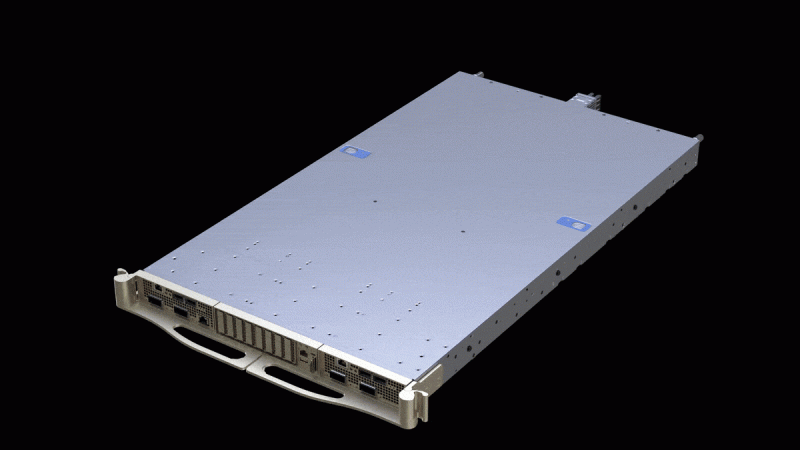
The new deployment consists of eight DGX Vera Rubin NVL72 systems, packaged together as a single DGX SuperPOD. BMS says it represents more than a tenfold increase in computing capacity compared to the AI infrastructure it installed around 2023. BMS claims this is now the most powerful and energy-efficient Nvidia infrastructure operating anywhere in life sciences.
The deal also gives BMS access to Nvidia’s BioNeMo platform and Agent Toolkit. These tools let the pharma giant train its own proprietary foundation models and build agentic AI workflows — essentially autonomous AI agents that can run complex drug discovery tasks with minimal human involvement.
BMS and Nvidia have been collaborating for roughly three years. The earlier DGX SuperPOD deployment already proved its worth by cutting AI-enabled target identification times from weeks to dramatically shorter windows. BMS also reported a 55% reduction in computing costs for certain workloads during that initial phase.